
Can roller manufacturers perform mirror roller polishing?
In the industrial roller field, mirror rollers are widely used in plastic calendering, coating, flexible packaging, electronic materials, and high-end printing industries due to their ultra-precise surface, extremely high gloss, and surface treatment capabilities for materials such as films, metals, leather, and paper.
The high processing difficulty of mirror rollers lies in the extremely stringent requirements for polishing precision, substrate processing quality, and plating processes.
This leads many to wonder: Can roller manufacturers perform mirror roller polishing? The answer is—yes, and professional roller manufacturers possess the complete capability from design to polishing.
- - Jinhang Machinery, a professional roller manufacturer in China, not only manufactures various industrial rollers but also provides customized processing, deep processing, precision polishing, plating, hard chrome plating, and tungsten carbide spraying processes based on customer drawings, achieving perfect processing of mirror rollers from substrate to surface finish Ra0.01µm or even lower.

Why do roller manufacturers possess mirror roller polishing capabilities?
Essentially, mirror rollers are a type of industrial roller, and their manufacturing involves the following basic steps:
• Roller design
• Material selection
• Turning
• Fine grinding and ultra-fine grinding
• Coating (such as chrome or tungsten carbide plating)
• Ultra-mirror polishing
• Inspection
For professional roller manufacturers, these steps are often standard procedures in their daily work. Therefore, roller manufacturers with mature manufacturing systems can fully perform the polishing process for mirror rollers.
Taking "Jinhang Machinery" as an example, as a high-quality industrial roller manufacturer in China, they can produce:
• Mirror rollers
• Heated rollers
• Cooled rollers
• Chrome-plated rollers
• Industrial rubber rollers
• Tungsten carbide rollers
• Various special-coated rollers
They can also provide customized design and processing services based on customer drawings, demonstrating that their process capabilities fully encompass all the key steps required for mirror roller polishing.
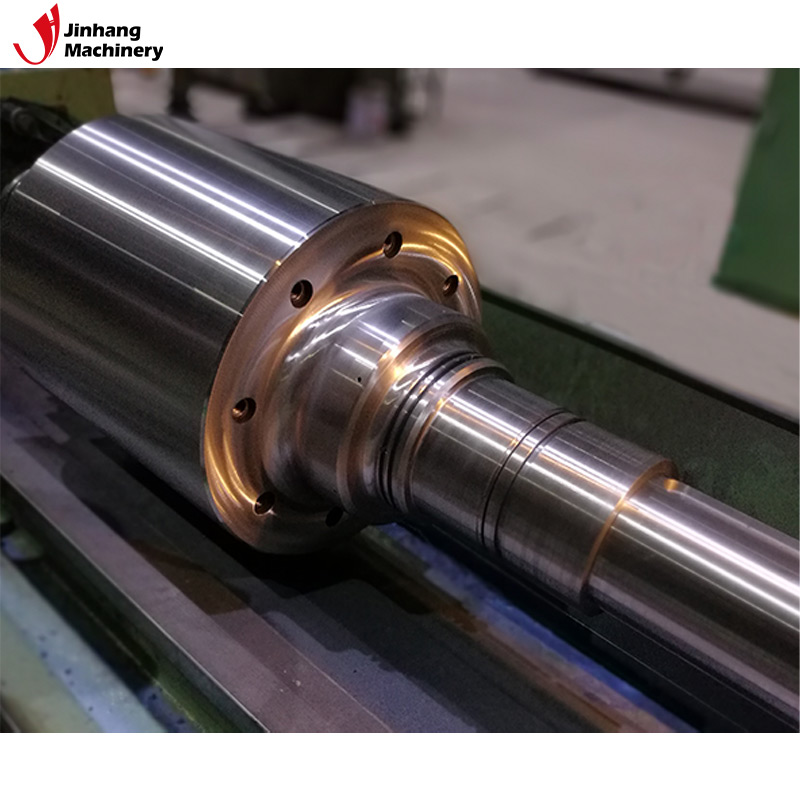
What is the core technology of mirror roller polishing?
Why are roller manufacturers good at it?
Mirror roller polishing is not a simple surface treatment, but a deep process. Roll manufacturers achieve high-quality mirror polishing by mastering the following key technologies:
1. Precision Turning and Substrate Machining Capabilities
Polishing quality depends on the precision of the substrate. Roll manufacturers possess:
• CNC lathes
• High-precision grinding machines
• Ultra-precision grinding equipment
Ensuring that the roller core's coaxiality, circular runout, and surface roughness meet the prerequisites for mirror polishing.
2. Coating Technology (Chromium Plating, Tungsten Carbide, etc.)
The brightness, hardness, and wear resistance of mirror rollers often depend on the coating performance. Roll manufacturers can provide:
• High-hardness chromium plating
• HVOF sprayed tungsten carbide
• Nickel-based coatings
• Special functional coatings
Therefore, mirror roller performance can be customized according to equipment requirements.
3. Ultra-precision Polishing Equipment
Professional roller manufacturers are equipped with:
• Polishing machines
• Ultra-mirror finishing equipment
• Diamond polishing systems
Achieving a mirror finish with Ra 0.01~0.02μm.
4. Surface Inspection Equipment
Includes:
• Roughness tester
• Roundness tester
• Runout tester
• Mirror gloss tester
Ensuring stable and verifiable polishing quality.
It is evident that roller manufacturers inherently possess a process chain advantage in mirror roller polishing.
What are the steps in mirror roller polishing?
How do roller manufacturers achieve high precision?
To help users better understand the capabilities of roller manufacturers, the mirror roller polishing process is systematically broken down below:
1. Roller Body Rough and Finishing
Includes turning, straightening, and substrate grinding. Ensure:
• Circular runout is within allowable tolerances
• Surface is free of tool marks and vibration marks
This is the foundation of polishing quality.
2. Plating or Coating
Depending on the application of the roller, roller manufacturers may choose:
• Chrome plating (most common)
• HVOF tungsten carbide
• Special alloy layer
Plating thickness is typically between 0.03–0.3 mm.
3. Fine Grinding and Ultra-Fine Grinding
To ensure more stable polishing, rough peaks and valleys are first removed through grinding, achieving a medium surface roughness.
4. Step-by-Step Polishing
Polishing is typically divided into:
• Pre-polishing
• Fine polishing
• Mirror polishing
• Ultra-mirror polishing (e.g., requiring Ra 0.01μm or less)
Each stage uses abrasive materials of different grit sizes.
5. Inspection and Calibration
Roll manufacturers repeatedly inspect roughness, surface finish, and hardness to ensure consistent final performance.
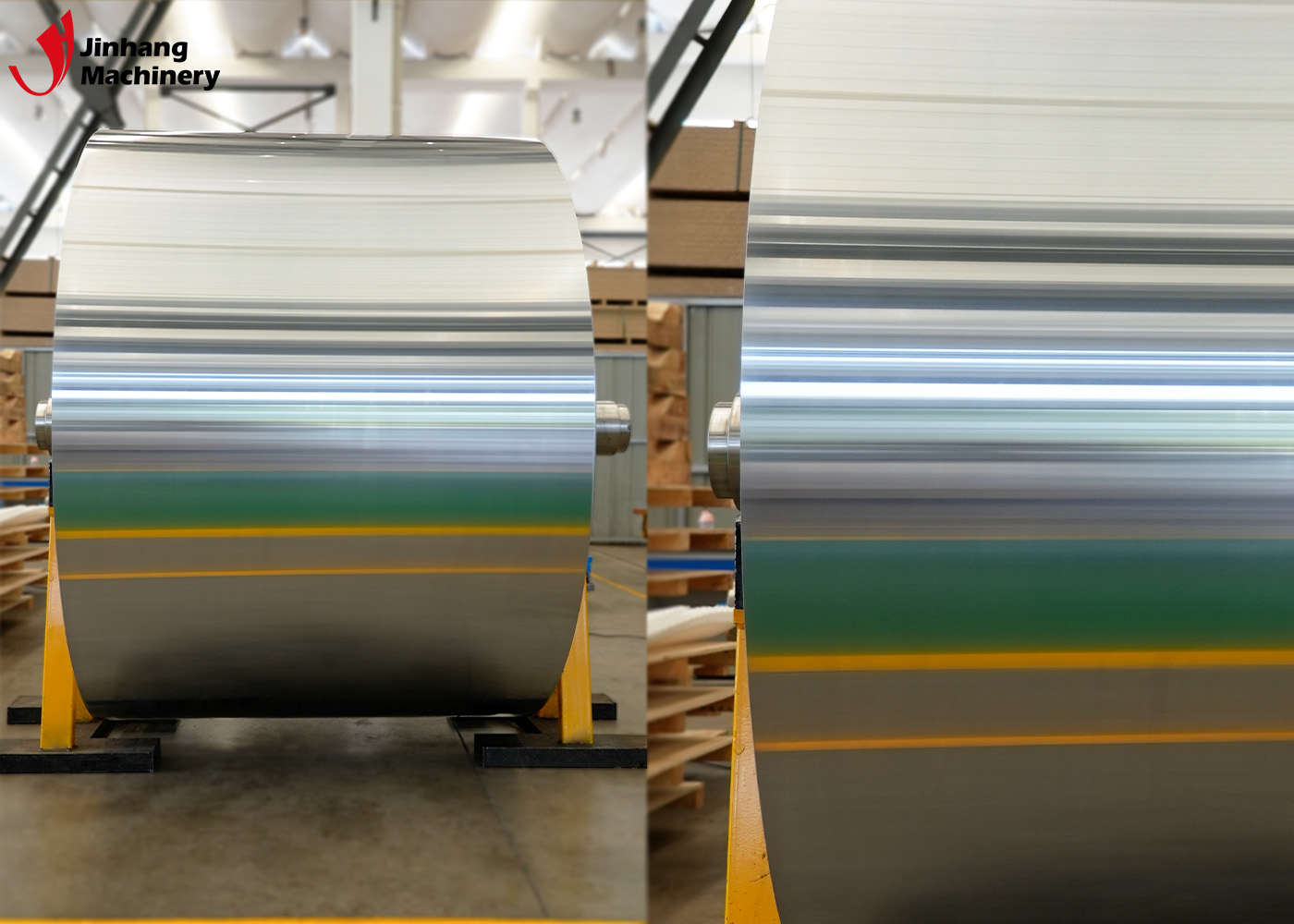
Which industries require mirror roller polishing from roller manufacturers?
Mirror roller polishing directly affects product surface quality, therefore its applications are very broad:
• Plastic films
• Printing and packaging
• Paper calendering
• Metal sheet finishing
• Lithium battery separators
• Optical films
• Rubber and plastic calendering
Industries often require a surface finish of Ra 0.02 or lower for mirror rollers, thus requiring professional roller manufacturers for polishing and coating treatments.
Can roller manufacturers design mirror rollers according to customer requirements?
The answer is also yes.
Professional roller manufacturers not only polish rollers but also handle the entire process from design and manufacturing to processing and testing.
For example:
• Jinhang Machinery can customize production based on customer-provided drawings.
• Roller dimensions can be designed according to equipment structure.
• Coatings and materials can be selected based on the customer's operating environment.
• Polishing levels can be matched to different process requirements.
This is especially important for high-requirement industries such as film and food packaging.
What performance characteristics are affected by the polishing quality of mirror rollers?
Mirror roller polishing not only affects appearance but also directly impacts the production process:
1. Product surface smoothness and gloss: The brighter the mirror roller, the smoother the product.
2. Heat transfer efficiency: A well-polished mirror roller provides more uniform contact and more stable temperature transfer.
3. Film thickness uniformity: High-precision mirror rollers reduce uneven film thickness.
4. Scratch resistance: Polishing improves hardness and wear resistance, reducing process scratches.
5. Production Stability: The more precise the surface finish, the smoother the equipment operation.
How to Choose a Suitable Roller Manufacturer for Mirror Roll Polishing?
The following are commonly used industry criteria:
1. Does the manufacturer have a complete processing chain?
Including roughing, fine grinding, coating, and polishing.
2. Can the polishing capability meet your requirements?
For example, can it achieve Ra0.02μm or lower?
3. Can the manufacturer handle different types of roller materials?
Such as tungsten carbide rollers, heated rollers, rubber rollers, etc.
4. Does the manufacturer allow customization based on drawings?
Companies like "Jinhang Machinery" can provide this capability.
5. Does the manufacturer provide testing reports?
Including roughness, hardness, and dimensional tolerances.
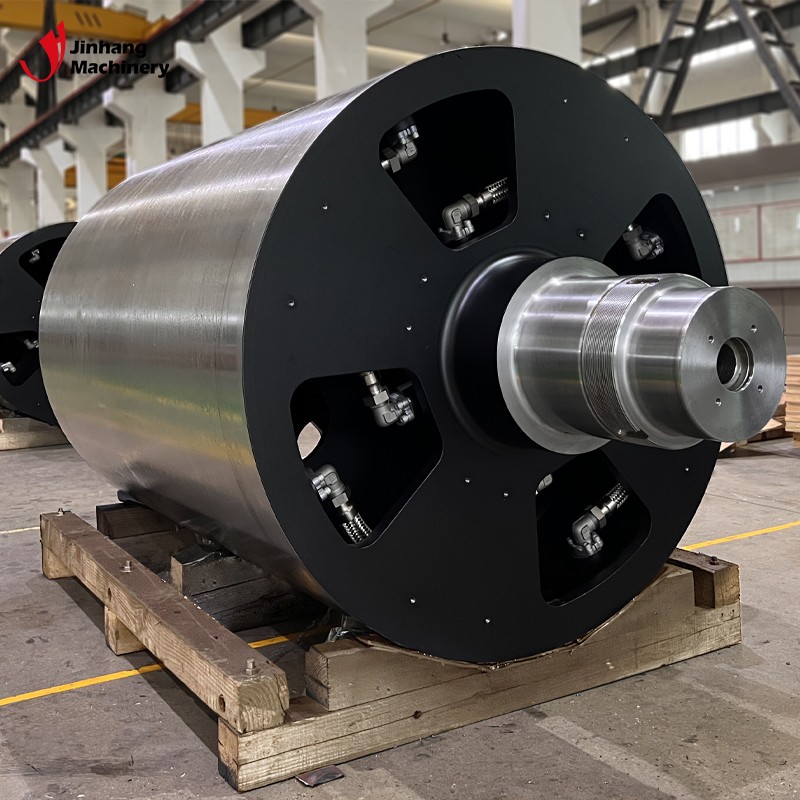
Can roller manufacturers perform mirror roller polishing?
Yes, and they are highly professional.
Mirror-finish rollers are typical high-precision industrial rollers, and their manufacturing requires:
• High-precision substrate processing
• Coating or spraying capabilities
• Ultra-precision polishing
• A rigorous testing system
These processes are precisely what professional roller manufacturers excel at. Therefore, choosing a roller manufacturer for mirror-finish roller polishing is the most reliable, professional, and economical approach in the industry.
Established roller manufacturers like Jinhang Machinery can not only perform mirror-finish roller polishing but also:
• Design roller bodies according to customer requirements
• Manufacture various industrial rollers
• Provide custom processing
• Meet various high-precision application needs
Therefore, when you need mirror-finish roller polishing services, choosing a professional roller manufacturer is definitely the right decision.