
Do Stainless Steel Industrial Heating Rollers Turn Black After Heating?
In industrial production processes, stainless steel heating rollers serve as core equipment widely utilized in material preheating, drying, heat setting, calendering, and lamination operations. Characterized by their corrosion resistance, high-temperature durability, strong thermal stability, and superior surface finish, stainless steel heating rollers have long been an integral component in industries such as plastic films, papermaking, textiles, lithium-ion battery separators, and metal foils.
However, many users and engineering technicians frequently encounter a common question during the long-term operation of these heating devices:
Will stainless steel heating rollers turn black after being subjected to high-temperature heating?
If they do turn black, what is the underlying cause?
Does this discoloration affect their performance?
And how can it be prevented?
Drawing upon five key perspectives—materials science, surface chemistry, thermal oxidation mechanisms, metallic structural characteristics, and industrial operating environments—this article will provide an in-depth analysis of whether stainless steel heating rollers turn black after heating, while comprehensively elucidating the principles and influencing factors associated with this phenomenon.
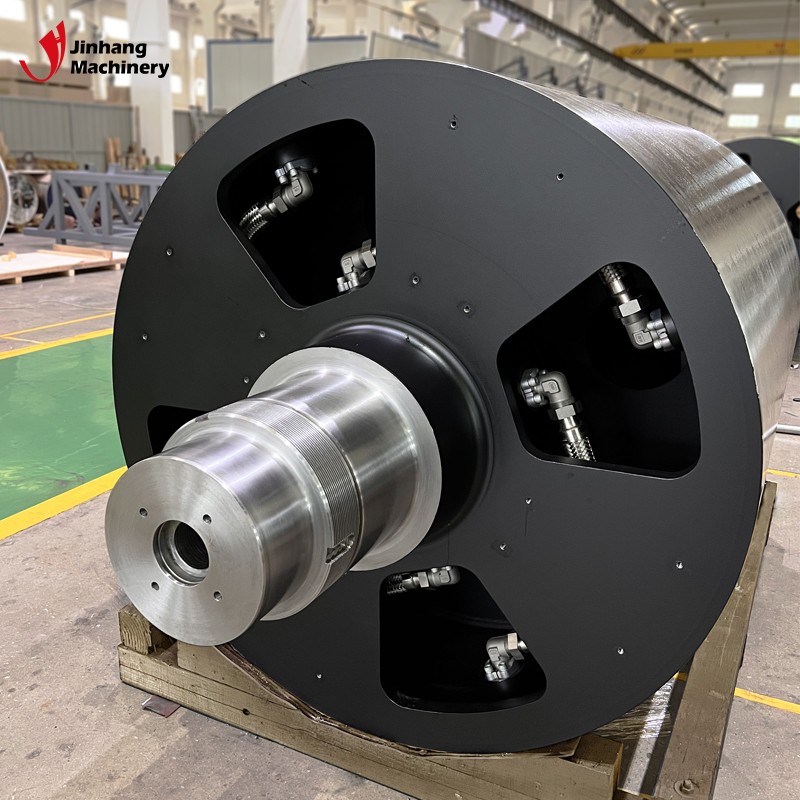
Why Do People Worry That Stainless Steel Heating Rollers Might Turn Black After Heating?
In industrial settings, the surfaces of certain pieces of equipment do indeed exhibit phenomena such as color shifts, darkening, blackening, or the appearance of blue or brown oxidation tints following prolonged exposure to high temperatures. Since stainless steel is a metallic material containing alloying elements such as nickel and chromium, any changes in its color are typically linked to alterations in its surface oxide film or changes within its internal material structure.
Consequently, engineering professionals commonly express concerns regarding the following:
•Will stainless steel heating rollers undergo oxidative blackening when heated to temperatures between 200°C and 500°C?
•Does a higher operating temperature increase the likelihood of oxidative color changes?
•Does frequent thermal cycling (heating and cooling) accelerate surface discoloration?
•Does the surface treatment applied to the roller influence its color after heating?
•Do environmental factors—such as humidity, oil residues, or surface contaminants—promote the blackening process?
These questions all point directly to a central issue: the surface stability of stainless steel heating rollers and the underlying mechanisms of thermal oxidation reactions.
We will now proceed with a step-by-step, in-depth analysis of these points.
Why Might Stainless Steel Heating Rollers Exhibit Surface Color Changes After Heating?
Stainless steel is an iron-based alloy containing chromium (Cr). When exposed to oxygen, the chromium on the metal's surface reacts to form an extremely thin yet dense protective oxide film—specifically chromium(III) oxide (Cr₂O₃). It is this protective film that endows stainless steel with its exceptional resistance to corrosion. However—even with the presence of this protective film—stainless steel may still undergo the following phenomena during prolonged, continuous operation at high temperatures:
•Thickening of the oxide film
•Changes in the composition of the oxide film (varying ratios of FeO, Fe₂O₃, and Fe₃O₄)
•Appearance of high-temperature oxidation discoloration
•Carbonization of surface contaminants due to high heat
•Localized stress oxidation within the metal microstructure
•Uneven oxidation caused by humidity in the heated air
Color changes may include:
•Golden yellow
•Brown
•Blue-violet
•Dark brown
•Black
Fundamentally, these color changes do not signify that the material has been "burnt out," but rather result from variations in the thickness of the surface oxide film or the carbonization of contaminants.
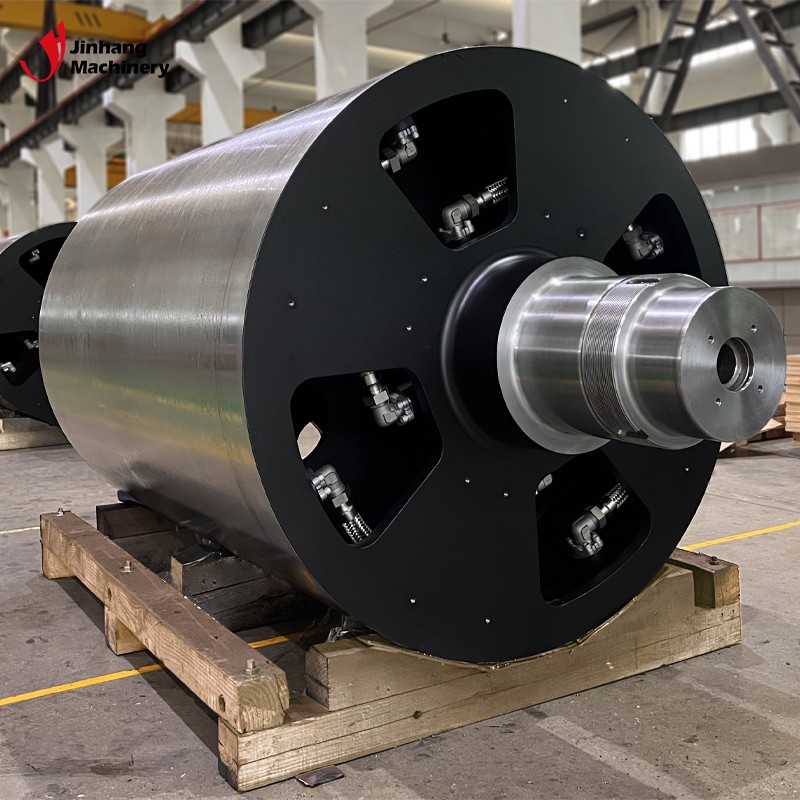
Under what conditions are stainless steel heating rollers more prone to turning black?
The key factors governing color changes are the following five elements:
1. Temperature: The fundamental condition determining color change
Different temperatures result in varying oxide film thicknesses:
•200°C: Essentially no color change
•300°C: Faint yellow discoloration may appear
•400°C: Blue-violet discoloration may appear
•Above 500°C: The likelihood of a black oxide layer forming on the surface increases
Therefore, if a stainless steel heating roller operates continuously within a temperature range exceeding 450°C, the appearance of blackening is considered a normal oxidation phenomenon.
2. Oxygen concentration in the air
The higher the oxygen content, the more pronounced the oxidation.
If the heating roller operates in an environment with ample ventilation, high airflow velocity, and a rich oxygen supply, the rate of color change will accelerate.
3. Surface cleanliness
The following residues will carbonize and turn black at high temperatures:
•Greases and oils
•Adhesives/resins
•Condensates from evaporating solvents
•Material residues
•Scale deposits formed by moisture
These carbonized residues significantly compromise the surface finish of the roller, resulting in a visually perceived "blackening."
4. Stainless steel grades vary in their oxidation resistance
Common stainless steel grades used for heating rollers include:
•304
•316
•316L
•410
•420
•Duplex stainless steel
In terms of oxidation resistance, the ranking is as follows: 316L > 316 > 304 > 410 > 420. The higher the grade of the material, the better its resistance to high-temperature oxidation, and the less prone it is to turning black.
5. The longer the usage duration, the thicker the oxide film becomes
Initially, the oxide film is transparent; however, as it gradually thickens over time, it will:
•Increase light absorption
•Cause the surface to darken or turn black
•Cause certain areas to appear dark brown
This represents a long-term oxidation process and does not constitute damage to the metal itself.
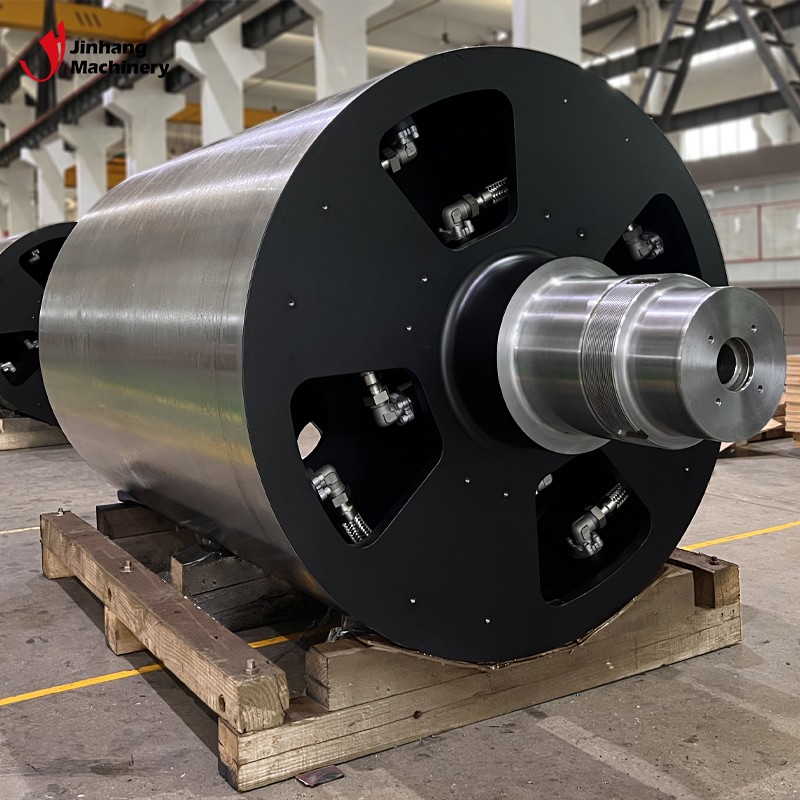
Does the blackening of a stainless steel heating roller constitute material damage?
Generally, it does not constitute material damage.
The reasons include:
1. The blackening is primarily caused by the surface oxide film and does not affect structural strength
The oxide film itself does not compromise the following properties:
•Structural stability
•Strength
•Rigidity
•Hardness
•Service life
It merely represents a change in surface color.
2. In most cases, the discoloration is a "reversible process."
A minor oxide film can be removed—thereby restoring the metal's original luster—through processes such as:
•Polishing
•Grinding
•Cleaning
•Electrolytic treatment
3. If the blackening is caused by the carbonization of contaminants, it still does not affect the roller body itself
However, the carbonization of contaminants will affect:
•Heat transfer efficiency
•Calendering quality
•Surface flatness
In such instances, standard maintenance procedures are required.
Under what circumstances does a stainless steel heating roller exhibit abnormal blackening?
While normal blackening does not impair functionality, special attention is required if any of the following abnormal phenomena occur:
1. Blackening accompanied by surface roughness, peeling, or significant flaking
This may indicate:
•High-temperature oxidation exceeding the material's limits
•Surface corrosion
•Chromium depletion
•Formation of a degraded oxide layer
In such cases, maintenance or replacement is necessary.
2. Severe blackening in localized areas, appearing as distinct spots or patches
Possible causes:
•Surface contamination on the roller
•Uneven heat distribution
•Carbonization of adhering material residues
•Excessively high temperatures in specific zones
Such localized black spots can compromise heating uniformity.
3. Thickening of the surface black layer, resulting in changes to frictional properties
If the black oxide layer or carbonized deposits adversely affect:
•The coefficient of friction
•Surface roughness
•Material slip characteristics
then immediate remedial action is required.
How can the phenomenon of stainless steel heating rollers turning black after heating be minimized?
The key to preventing discoloration lies in controlling oxidation and contamination.
The following analysis examines this issue from four perspectives: structure, materials, usage, and environment.
1. Material Selection
Select stainless steel grades with superior resistance to high-temperature oxidation:
•316L Stainless Steel Heating Rollers
•316 Stainless Steel Heating Rollers
These grades outperform models such as 304, 410, and 420.
2. Surface Treatment
The following treatments can significantly reduce surface blackening:
•Chrome plating
•Nickel plating
•Mirror polishing
•Electropolishing
•Nanocoating
•Oxide film strengthening treatment
These treatments render the roller surface smoother, less prone to adsorbing contaminants, and less susceptible to oxidation.
3. Operational Practices
•Avoid excessively high temperatures.
•Employ an appropriate heating rate.
•Control the humidity within the heating environment.
•Maintain a clean roller surface.
•Avoid contact between the roller and chemical substances or grease while at high temperatures.
4. Regular Maintenance
•Periodically clean the roller surface.
•Remove any accumulated residues.
• Inspect the surface roughness of the roller body.
•Apply appropriate treatment to the oxide film.
Consistent maintenance can significantly reduce instances of discoloration.
Does the blackening of a stainless steel heating roller affect its heating efficiency?
This depends on two distinct scenarios:
Scenario 1: Blackening caused by the formation of an oxide film (Normal)
This condition has a negligible impact on heating performance.
•It does not compromise the structural strength of the roller body.
•It does not impede heat conduction.
•It does not affect operational precision.
•It does not compromise temperature stability.
In fact, the oxide film itself can actually enhance corrosion resistance to some extent.
Scenario 2: Blackening caused by the carbonization of contaminants (Abnormal)
Potential consequences include:
•Reduced heat transfer efficiency.
•Surface irregularities.
•Uneven calendering/processing.
•Marks or blemishes appearing on the processed material surface.
•Degraded sliding/friction performance.
In this scenario, immediate cleaning and remediation are mandatory.
How can one determine whether the blackening of a stainless steel heating roller requires remedial action?
Assessment can be performed in the following ways:
1. Check for color uniformity
Uniform darkening: Normal
Localized spots: Requires cleaning
2. Check for surface roughness
Smooth with darkening: Normal
Rough with darkening: Requires treatment
3. Check for uniform temperature distribution
Excessive temperature difference → Surface issue or internal malfunction
4. Check if material processing results are affected
If any of the following occur:
•Calendering marks
•Sticking to the roll
•Uneven slippage
Then the roll surface requires treatment.