
What Are Tungsten Carbide Industrial Rollers?
In the realm of modern industrial manufacturing, various types of rollers play an indispensable role in processes such as material extrusion, calendering, support, guiding, coating, cooling, heating, and surface treatment. Among the multitude of materials used for rollers, tungsten carbide industrial rollers have emerged as critical components for high-strength, high-precision, and heavy-load operating conditions, thanks to their exceptional hardness, superior wear resistance, stable dimensional accuracy, and long service life.
But what exactly are tungsten carbide industrial rollers? Why are they able to maintain stability under heavy loads and extreme operating conditions? How do tungsten carbide rollers differ from ordinary steel rollers, chrome-plated rollers, or other roller materials? Which industries absolutely require the use of tungsten carbide rollers? Where do their advantages stem from? And how are they manufactured?
From a professional engineering perspective, this article will provide an in-depth analysis of the concept, composition, characteristics, application fields, and key technical specifications of tungsten carbide industrial rollers, enabling you to gain a comprehensive understanding of the true value of this high-end roller product.
Why Are Tungsten Carbide Industrial Rollers Necessary?
In industrial material processing, many scenarios impose extremely rigorous demands on the rollers involved—for instance:
•High-frequency friction
•Continuous extrusion under heavy pressure
•Contact with highly corrosive materials
•High-speed operation
•High-temperature or low-temperature environments
•Prolonged, continuous production cycles
•Requirements for maintaining surface precision over the long term
Under these operating conditions, ordinary steel rollers or chrome-plated rollers are prone to issues such as:
•Surface wear
•Scratching
•Coating peeling
•Deformation
•Deterioration of surface finish (increased roughness)
•Shortened service life
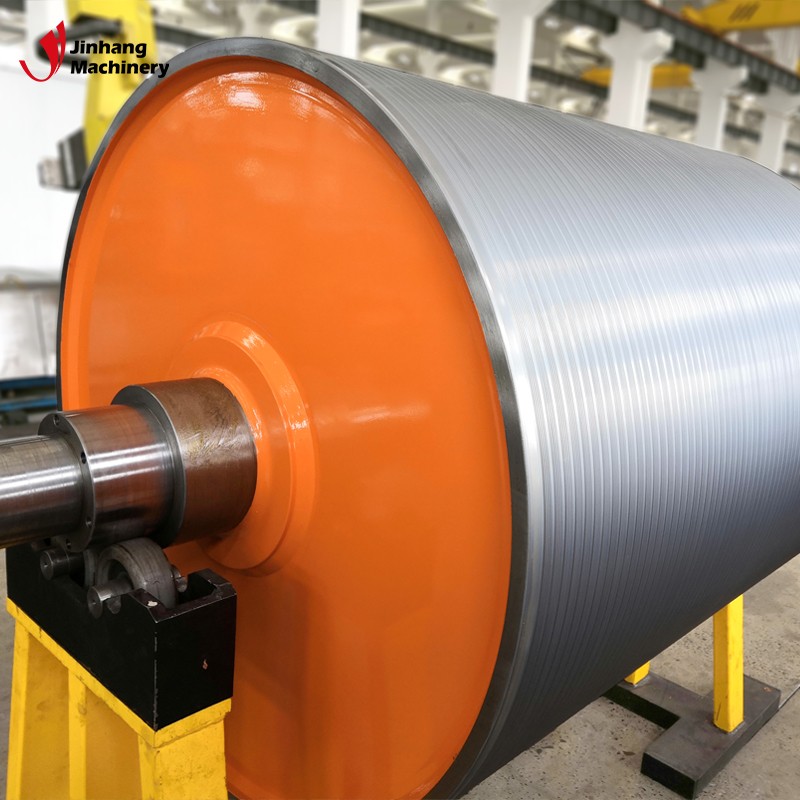
To address these challenges, tungsten carbide industrial rollers—with their superior hardness and wear resistance—have emerged as the definitive solution. Fundamentally, a tungsten carbide industrial roller is a high-performance industrial roller that utilizes carbide materials (such as tungsten carbide) to form its functional working surface.
What Are Tungsten Carbide Industrial Rollers Composed Of?
Carbide industrial rollers typically consist of two main components:
1. The Roller Body Substrate (Steel or High-Strength Alloy Steel)
Designed to withstand:
• Torque
• Bending stress
• Internal pressure
• Mechanical shock
Common substrate materials include:
• High-strength steel
• Alloy steel
• Stainless steel
• Heat-treated steel
Its primary function is to provide structural strength and stability.
2. The Carbide Working Layer*(Primarily Tungsten Carbide)
This includes:
• Tungsten carbide coatings (e.g., WC-Co, WC-Ni)
• HVOF (High-Velocity Oxygen Fuel) sprayed coatings
• Carbide cladding layers
• Sintered carbide sleeves
The carbide layer features:
• Ultra-high hardness
• Exceptional wear resistance
• Corrosion resistance
• High-temperature resistance
• Superior surface stability
This layer serves as the core source of the carbide industrial roller's performance capabilities.
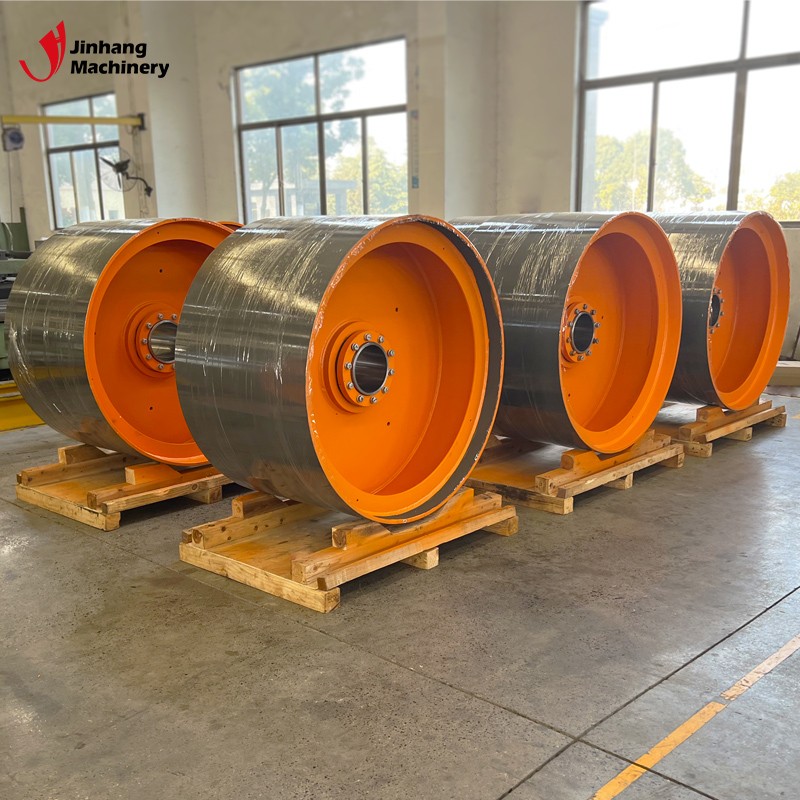
How Hard Are Carbide Industrial Rollers?
The most prominent characteristic of carbide industrial rollers is their "hardness."
The hardness of standard steel rollers is generally:
• Around HRC 40–55
The surface hardness of chrome-plated rollers is generally:
• HV 800–1000
In contrast, carbide (tungsten carbide) materials can reach:
• HV 1300–1400
• Certain specialized materials can even exceed HV 1500
The higher the hardness:
• The greater the wear resistance
• The longer the service life
• The stronger the resistance to scratching and galling
• The better the surface stability
Consequently, carbide industrial rollers significantly outperform other roller materials in high-load operating environments.
What Are the Key Characteristics of Carbide Industrial Rollers?
Carbide industrial rollers are widely utilized because they possess the following key characteristics:
1. Is the wear resistance of carbide industrial rollers superior to that of standard roller materials?
Yes—and the difference in wear resistance is substantial. Due to their high hardness and dense structure, industrial carbide rollers are capable of withstanding:
•High-frequency friction
•Contact with abrasive materials
•Prolonged wiping or calendering operations
•Impacts generated by high-speed operation
Compared to chrome-plated rollers, their wear resistance is enhanced by a factor of 5 to 10 or more.
2. Can industrial carbide rollers withstand high-temperature operating conditions?
Carbide materials possess excellent high-temperature stability:
•Their hardness exhibits very minimal degradation at elevated temperatures
•They are highly resistant to oxidation or structural breakdown
•Their surface microstructure remains stable
Consequently, they are well-suited for applications involving:
•Hot pressing
•Heat setting
•High-temperature wear resistance
•Coating processes involving high thermal loads
•High-temperature continuous production lines
This is a primary reason why many industries choose industrial carbide rollers.
3. Do industrial carbide rollers offer superior corrosion resistance?
Yes, they do.
Tungsten carbide materials demonstrate exceptional performance when exposed to the following substances:
•Acidic substances
•Alkaline substances
•Humid and hot environments
•Water vapor
•Salt spray
•Specialized chemical coatings
They are significantly more resistant to corrosion compared to standard steel rollers or chrome-plated rollers.
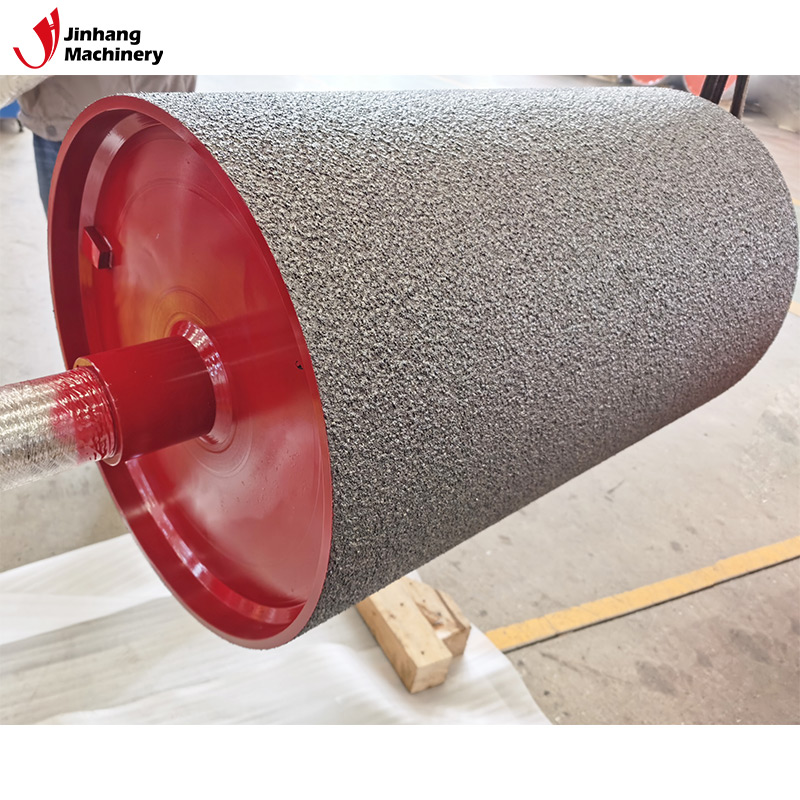
Do industrial carbide rollers have a longer service life?
The service life of industrial carbide rollers is typically several times longer than that of chrome-plated rollers. Under identical operating conditions, their lifespan can range from 5 to 15 years (depending on specific operating conditions and maintenance practices); this longevity is a key factor contributing to their high cost-effectiveness.
Can industrial carbide rollers maintain a more stable surface roughness?
Even after prolonged exposure to friction, the surface of carbide rollers:
•Resists becoming dull or matte
•Is highly resistant to scratching
•Retains its specified roughness for extended periods
•Maintains a superior mirror-like finish compared to chrome-plated surfaces
They are particularly well-suited for applications that:
•Require the long-term preservation of a mirror-finish surface
•Demand high precision in calendering flatness
•Require processes with uniform and stable surface characteristics
Consequently, they are widely utilized in high-end calendering and coating processes.
How are industrial carbide rollers manufactured?
The manufacturing of industrial carbide rollers is a complex process involving a variety of precision machining techniques.
The main steps involved in manufacturing cemented carbide industrial rollers include:
1. Roller Body Substrate Processing
Turning, milling, heat treatment (quenching and tempering), rough machining, etc.
2. Surface Pre-treatment
Sandblasting, surface roughening, degreasing, and adhesion enhancement.
3. Cemented Carbide Coating Application or Cladding
Common processes include:
•HVOF (High-Velocity Oxy-Fuel) spraying
•Plasma spraying
•Spray welding
•Sintered cemented carbide sleeve cladding
•Multi-layer composite structures
4. Heat Treatment and Stress Relief
Ensuring a strong bond between the coating and the substrate.
5. Precision Grinding
Using hard abrasives to machine the surface of the coating.
6. Super-finishing and Polishing
Achieving the required surface roughness specifications, such as:
•Ra 0.05 μm
•Ra 0.02 μm
•Ra 0.01 μm (Mirror finish grade)
7. Inspection and Calibration
Including:
•Surface roughness inspection
•Runout inspection
•Dynamic balancing
•Coating thickness inspection
The entire manufacturing process demands high precision and strict process control, which are critical to the quality of cemented carbide industrial rollers.
Which industries utilize cemented carbide industrial rollers?
Due to their high hardness, exceptional wear resistance, and long service life, cemented carbide industrial rollers are widely used in the following industries:
•Steel processing
•Aluminum foil rolling
•Copper foil processing
•Paper manufacturing
•Coating applications
•Lithium-ion battery separator manufacturing
•Lithium-ion battery electrode calendering
•Plastic film calendering
•Textile processing equipment
•Printing machinery
•Food packaging machinery
•High-speed coating equipment
•Rubber extrusion and calendering lines
They are the preferred choice—often the first choice—particularly in environments involving abrasive materials, corrosive substances, or heavy-load operating conditions.
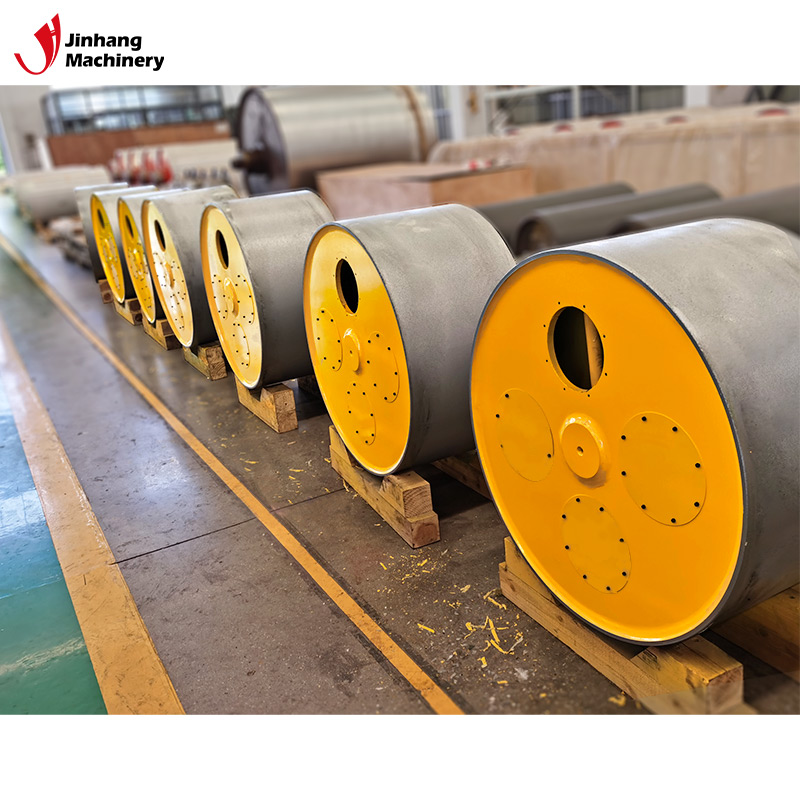
How do cemented carbide industrial rollers differ from chrome-plated rollers?
Feature | Chrome-Plated Roll | Carbide Industrial Roll
Hardness | 800–1000 HV | 1300–1500 HV
Wear Resistance | Moderate | Very High
Service Life | 2–5 Years | 5–15 Years
Corrosion Resistance | Moderate | High
Surface Retention | Prone to Scratching | Stable; Highly Wear-Resistant
Cost | Lower | Higher
Applicable Conditions | Moderate Loads | High Loads, High Speeds, Abrasive Materials
As is evident, carbide industrial rolls significantly outperform chrome-plated rolls in terms of performance; however, their higher cost means they are typically utilized in more demanding industrial applications.
What are the different types of carbide industrial rolls?
Based on their application environment and structural configuration, carbide industrial rolls can be categorized as follows:
•Carbide Calender Rolls
•Carbide Mirror-Finish Rolls
•Carbide Guide Rolls
•Carbide Support Rolls
•Carbide Cooling Rolls
•Carbide Coating Rolls
•Carbide Plated Rolls
•Carbide Wear-Resistant Rolls
Each specific type of carbide industrial roll is designed to address distinct industrial requirements.