
Heating Roller: What Problems Occur If It's Too Large or Too Small?
In continuous industrial production equipment, heating rollers are core components that are extremely sensitive to dimensions. Whether used in plastic sheet processing, film calendering, rubber processing, composite material shaping, or in coating, laminating, and heat transfer processes, the diameter, length, wall thickness, and overall structural dimensions of the heating roller directly affect temperature uniformity, mechanical stability, and product quality.
Many users, when selecting or customizing heating rollers, often focus on materials, surface treatment, or heating methods, but underestimate the importance of dimensional matching. In fact, heating rollers that are too large or too small can cause a series of systemic problems, even leading to instability in the entire production line.
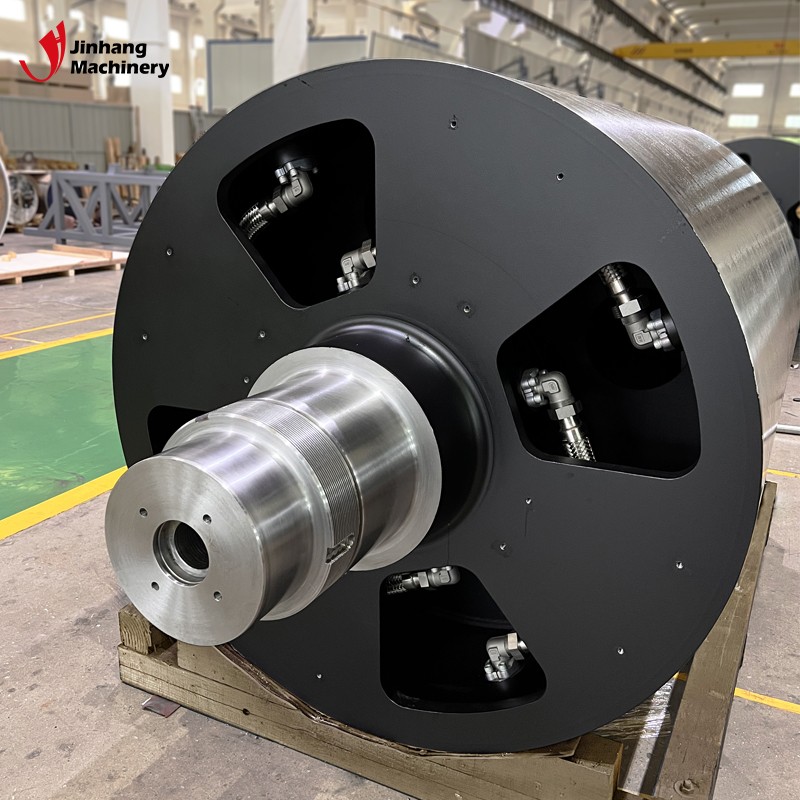
What exactly does the "size" of an industrial heating roller refer to?
Before discussing the size issue, it must be clarified that: The size of a heating roller is not simply its diameter.
The main dimensional parameters involved in industrial heating rollers include:
• Roller outer diameter
• Effective roller length
• Roller wall thickness
• Shaft head size and length
• Internal heating channel structure dimensions
These dimensions collectively determine the hot oil roller's:
• Heating capacity
• Thermal stability
• Load-bearing capacity
• Rotational rigidity
• Temperature uniformity
Therefore, any unreasonable design of any of these dimensions will affect the actual operation of the heating roller.
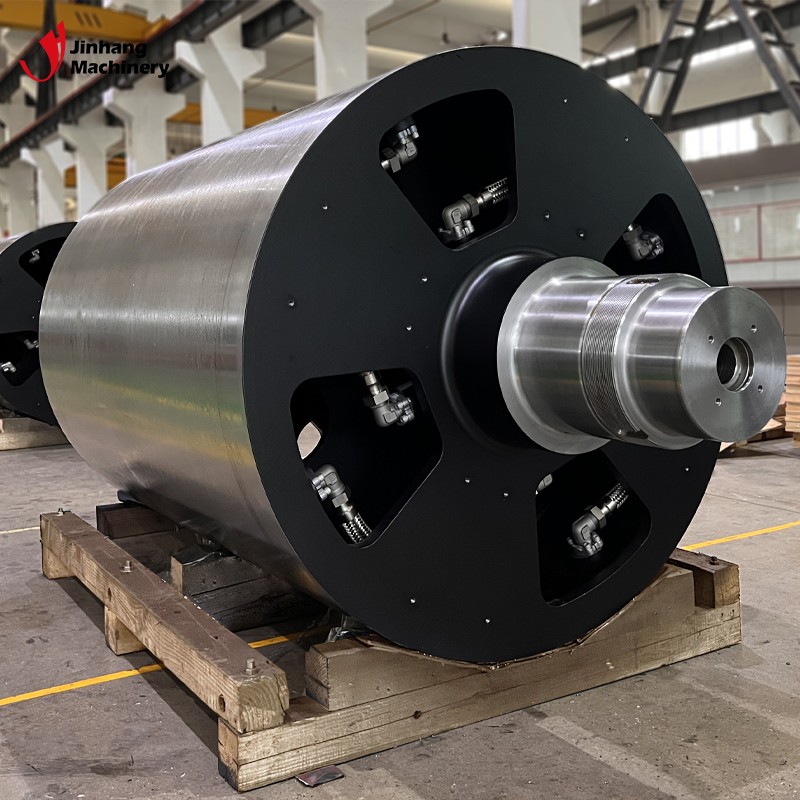
Why is the design of heating roller dimensions considered a systematic engineering project?
A heating roller is not a simple "heating cylinder," but a composite functional component that simultaneously undertakes heat conduction and mechanical transmission.
Dimensional design needs to simultaneously meet three types of requirements:
1. Thermal requirements: stable temperature and uniform heat transfer
2. Mechanical requirements: sufficient strength, no bending, no vibration
3. Process requirements: matching material width, linear velocity, and contact area
Simply enlarging or shrinking the hot oil roller size, or only meeting one requirement, will disrupt the overall balance.
What problems arise if the industrial heating roller is too small?
Many users, in an effort to save costs or reduce equipment space, tend to choose small-sized heating rollers that are simply "good enough," but this is often the root of problems.
What risks are associated with hot oil rollers with excessively small diameters?
1. Significantly Increased Temperature Fluctuations
A heating roller with an excessively small diameter means:
• Low heat capacity
• Extremely sensitive to changes in external loads
When production line speed, material thickness, or contact pressure changes, the surface temperature of a small-diameter heating roller is more prone to fluctuations, leading to unstable product heating.
2. Insufficient contact arc length affects heat transfer
The smaller the diameter of the hot oil roller, the more:
•the shorter the contact arc length on the roller surface
•the less actual heating time
This directly leads to:
•incomplete heating
•uneven surface temperature
•deterioration in setting effect
3. Concentrated surface pressure increases material risk
Under the same linear pressure conditions:
• Smaller diameter heating rollers have higher pressure per unit area
This may cause:
• localized material deformation
• surface indentation
•uneven calendering
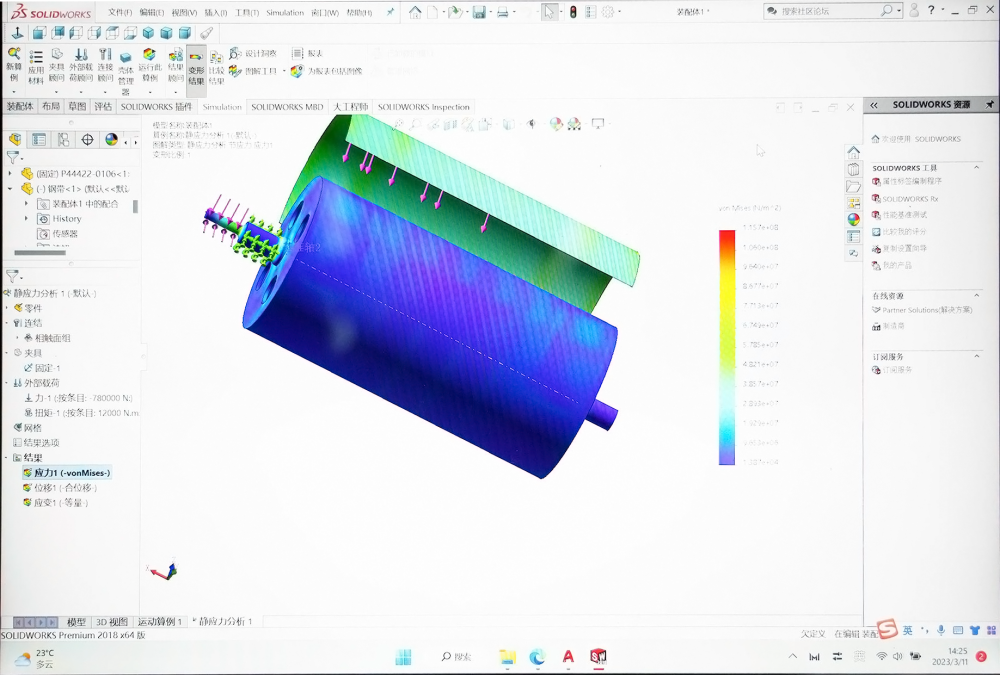
What impact does an excessively short hot oil roller length have on production?
1. Insufficient Coverage of Material's Effective Width
If the effective length of the hot oil roller is insufficient:
• Material edges cannot be adequately heated
• Significant temperature differences at the edges
This will lead to:
• Differences between the material's edge and center
• Uneven tension in subsequent processes
2. More Severe Heat Loss at the Edges
If the heating roller length is too short, the ends of the roller body will experience:
• Increased heat dissipation ratio
• Difficulty in maintaining heat
The result is inconsistent temperatures between the center and edges, affecting overall quality.
What are the hidden dangers of excessively thin hot oil roller walls?
1. Insufficient Rigidity, Prone to Deformation
Heating rollers with excessively thin walls:
• Reduced bending resistance
• Prone to micro-deformation under high temperatures and loads
Even minute deformations are enough to affect:
• Surface smoothness
• Rolling uniformity
2. Decreased Temperature Uniformity
Excessively thin roller walls:
• More unstable heat distribution
• More pronounced influence from internal heat sources
Prone to localized overheating or underheating.
What are the problems with excessively large industrial heating rollers?
Contrary to the misconception that "too small" hot oil rollers equate to better performance, many people mistakenly believe that larger heating rollers always mean better performance.
In reality, excessively large hot oil rollers can also cause significant problems.
What problems arise from an excessively large heating roller diameter?
1. Significantly Extended Heating Time
Larger heating roller diameter:
• Greater heat capacity
• Longer heating time
This leads to:
• Increased start-up time
• Increased energy consumption
• Slower process response
2. Increased Burden on the Temperature Control System
Excessively large hot oil rollers:
• Higher power requirements for the temperature control system
• Slower adjustment speed
Once temperature adjustments are needed, the system response is noticeably delayed, reducing production flexibility.
What structural risks are associated with excessively long heating rollers?
1. Increased self-weight leads to deflection issues
The longer the heating roller, the more:
• the greater the self-weight
• the higher the risk of sagging in the middle
Even with a support design, an excessively long heating roller may still cause:
• micro-deflection
• temperature difference in the middle
• uneven surface contact
2. Significantly increased manufacturing and processing difficulty
During the manufacturing process of ultra-long hot oil rollers:
• higher difficulty in machining internal channels
• greater difficulty in controlling coaxiality
• greater difficulty in ensuring surface precision
This directly affects the consistency of the actual performance of the hot oil roller.
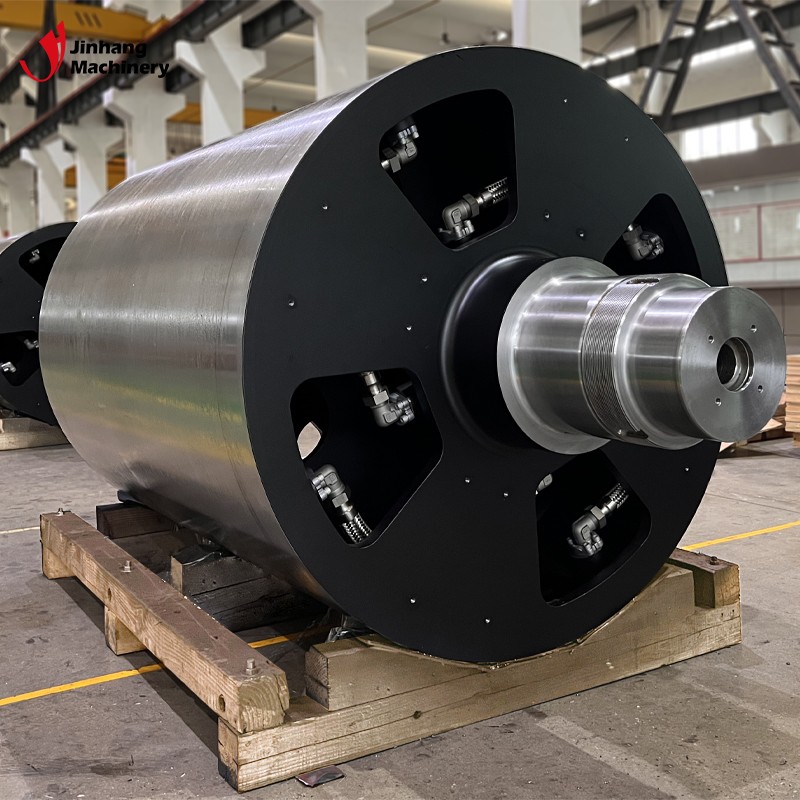
Does an excessively large hot oil roller size affect temperature uniformity?
The answer is: Yes, and very significantly.
Reasons include:
• longer internal heating medium flow path
• amplified inlet and outlet temperature difference
• greater difficulty in balancing heat distribution
If the internal structure design is inadequate, large-sized hot oil rollers are more prone to:
• axial temperature difference
• radial temperature difference
What is the relationship between heating roller size and mechanical strength?
Larger size does not necessarily mean higher strength.
Many people mistakenly believe that "larger size = higher strength," but in reality:
• Larger size → Increased stress area
• Simultaneously → Increased bending moment and torque.
If the wall thickness, material, or structure is not reinforced accordingly, it can actually reduce the overall safety factor.
Why must the size of the hot oil roller match the process parameters?
Heating rollers do not work in isolation; their size must be designed in conjunction with the following factors:
• Production line speed
• Material thickness
• Line pressure
• Operating temperature
• Type of heating medium
Dimensions deviating from process conditions will inevitably lead to decreased efficiency or quality risks.
What direct impacts will an unreasonable heating roller size have on the product?
Whether the size is too large or too small, it will ultimately manifest in the product:
• Inconsistent surface gloss
• Increased thickness fluctuations
• Unstable shaping
• Uneven thermal stress distribution
These problems are not accidental but are "systematically amplified" by improper hot oil roller size design.
How to determine if the heating roller size is "appropriate"?
The following aspects can be considered when assessing heating roller size:
1. Is the temperature stable and controllable?
If the heating roller responds too quickly or too slowly to load changes, it may indicate an improperly sized roller.
2. Is the surface heating uniform?
Significant edge-to-center differences are often related to the length or diameter selection.
3. Are there any abnormal vibrations or noises during equipment operation?
This may be related to insufficient rigidity or excessive size of the heating roller.
What are the core issues associated with industrial heating rollers being too large or too small?
From an engineering perspective:
Too small size
• Insufficient heat capacity
• Large temperature fluctuations
• Poor mechanical rigidity
Too large size
• Slow heating
• High energy consumption
• Increased manufacturing and maintenance difficulty
The size of the heating roller is not simply a matter of "it can fit," but must be precisely matched to the process conditions.
A truly optimal heating roller size should strike a balance between: thermal performance stability, mechanical structural reliability, and adaptability to process requirements.
Do you offer grinding and balancing services?
Yes. Our capabilities include precision grinding (including POMINI universal grinding) and dynamic balancing for high-speed rollers to reduce vibration and extend service life. We operate multiple surface grinders and balancing machines to meet stringent tolerances. These services are provided by our factory to both OEM customers and aftermarket buyers.