
Industrial Mirror Rollers: Why is Roughness Control Necessary?
In modern industrial production, mirror rollers are crucial high-precision industrial rollers widely used in continuous production equipment for films, sheets, coatings, lamination, metal foils, papermaking, printing, rubber, and polymer materials.
The core characteristic of mirror rollers is their highly smooth surface, but this is not simply a matter of "the smoother the better," but rather requires strict control over roughness.
Many users make a misconception when purchasing or using mirror rollers: they believe that a sufficiently bright surface is sufficient. However, in actual industrial operation, roughness control of mirror rollers is a highly specialized and systematic engineering problem that directly affects product surface quality, material adhesion behavior, operational stability, and overall equipment performance.
This article will analyze the question of "Why does roughness control need to be controlled for industrial mirror rollers" from the perspectives of technical principles and functional requirements, helping you truly understand the importance of roughness control for mirror rollers.
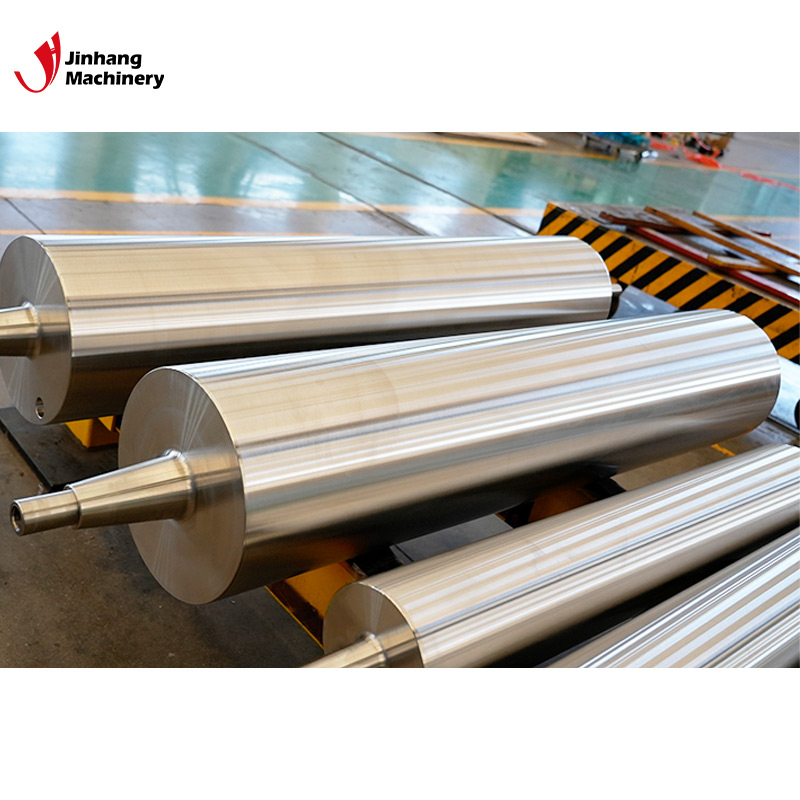
What is the Roughness of Industrial Mirror Rollers?
The roughness of a mirror roller typically refers to a quantitative indicator of the degree of microscopic unevenness on the roller surface, usually expressed by parameters such as Ra and Rz. Even though it appears mirror-like to the naked eye, the surface of a mirror roller still has subtle undulations at the microscopic level.
These microscopic undulations:
• Determine the actual contact state between the material and the mirror roller
• Affect the spreading, sliding, and peeling behavior of the material on the roller surface
• Directly affect the final surface quality of the product
Therefore, a mirror roller is not "absolutely smooth," but rather "precisely controlled smoothness."
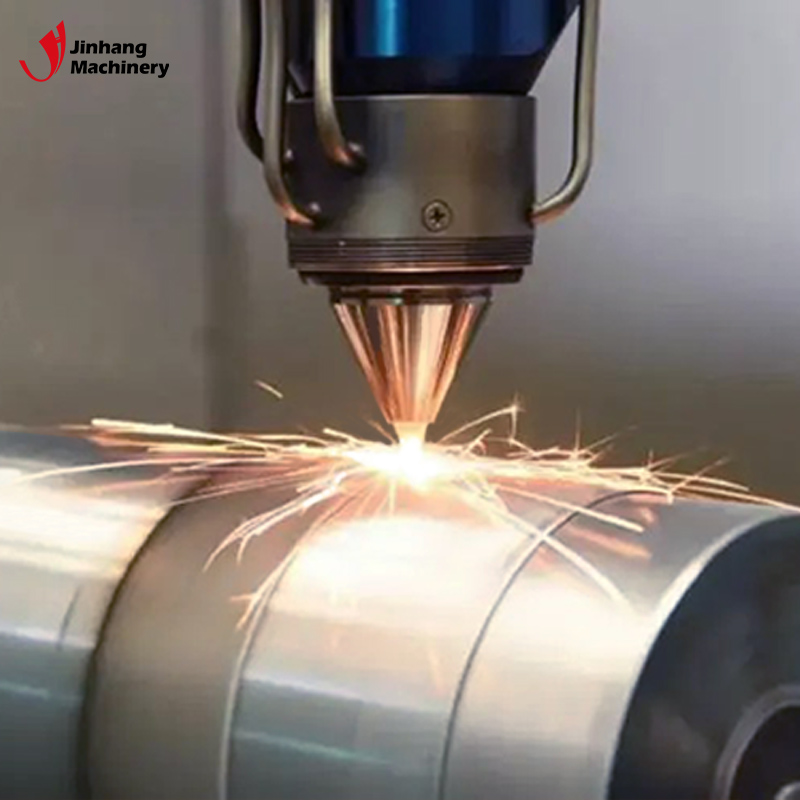
Why can't the roughness of a mirror roller be set arbitrarily?
Many people believe that as long as the mirror roller is polished to a sufficiently bright and smooth state, it must be the optimal state. However, in industrial applications, this understanding is one-sided.
Roughness is a "functional parameter," not a decorative parameter.
The roughness of a mirror roller is not for visual effect, but to meet specific process requirements. Different manufacturing processes have significantly different requirements for the surface roughness of mirror rollers. For example:
• Does the material need to be adhered to the mirror roller surface?
• Is rapid peeling required?
• Is coating transfer involved?
• Are there high temperatures or pressures?
• Is the coefficient of friction controlled?
If the roughness is not set properly, even if the mirror roller itself has high machining precision, it may lead to production problems.
How does the surface roughness of mirror rollers affect the contact state of materials?
In industrial operation, when material comes into contact with the surface of a mirror roller, the entire surface is not "adhered." The actual contact occurs at microscopic protrusions.
Excessive roughness:
• Reduced contact points
• Concentrated contact pressure
• Prone to localized indentations or surface defects
Insufficient roughness:
• Excessive contact area
• Material may experience an "adhesion effect"
• Difficult peeling
Therefore, mirror rollers must strike a balance between contact stability and peeling controllability.
Why does the surface roughness of mirror rollers affect product surface quality?
The surface condition of a mirror roller is directly "replicated" or "transferred" to the processed material, especially noticeable in the following processes:
• Hot pressing
• Calendering
• Coating
• Lamination
• Sheet forming
Impact of excessively high mirror roller roughness:
• Microscopic textures may transfer to the product surface
• Decreased gloss of the finished product
• Poor surface uniformity
• High-end appearance products cannot meet standards
Impact of extremely low mirror roller roughness:
• Vacuum adhesion easily forms on the surface
• Stringing and ripples may occur during material peeling
• Material is prone to sticking to the roller at high temperatures
Therefore, mirror roller roughness control is not about pursuing the lowest possible value, but rather a reasonable range.
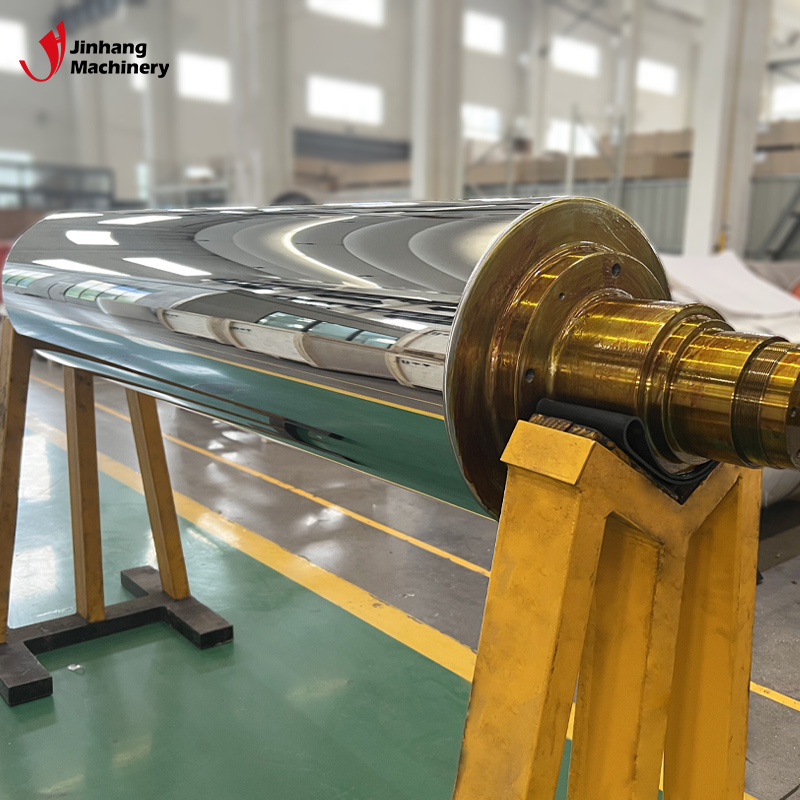
Why does mirror roller roughness affect operational stability?
In continuous production equipment, mirror rollers are typically subjected to:
• High speed
• Continuous operation
• Long-term load
At this time, surface roughness directly affects the operating condition.
Problems that may arise from improper roughness of mirror rollers:
• Unstable coefficient of friction
• Unstable material trajectory
• Tension fluctuations
• Increased operating noise
• Abnormal surface wear
By precisely controlling the roughness of mirror rollers, the material can achieve a predictable and controllable motion state on the roller surface.
Why can't mirror rollers simply pursue a "mirror-level" finish?
Many non-professional users ask: "Since it's called a mirror roller, why not just make it completely mirror-like?"
Industrial mirror finish ≠ Optical mirror finish
The "mirror finish" of an industrial mirror roller is an engineering concept, not an optical one. A true industrial mirror roller needs to consider:
• Surface smoothness
• Friction behavior
• Thermal conduction
• Material release properties
If you blindly pursue extreme smoothness:
• Increased processing costs
• Reduced production stability
• Potentially causing material adhesion problems
Therefore, the roughness of mirror rollers is "designed," not "pushed to the limit."
How to match mirror roller roughness with process parameters?
Mirror rollers do not exist in isolation; they always work in conjunction with process parameters, including:
• Temperature
• Pressure
• Speed
• Material type
• Surface tension
Roughness must be matched with these parameters to achieve optimal results.
For example:
• High-temperature processes: Too low a roughness is more likely to cause roller sticking problems.
• High-pressure processes: Too high a roughness can easily cause imprinting patterns.
• High-speed operation: Uneven roughness amplifies vibration and tension fluctuations.
Therefore, roughness control of mirror rollers is a systematic engineering process.
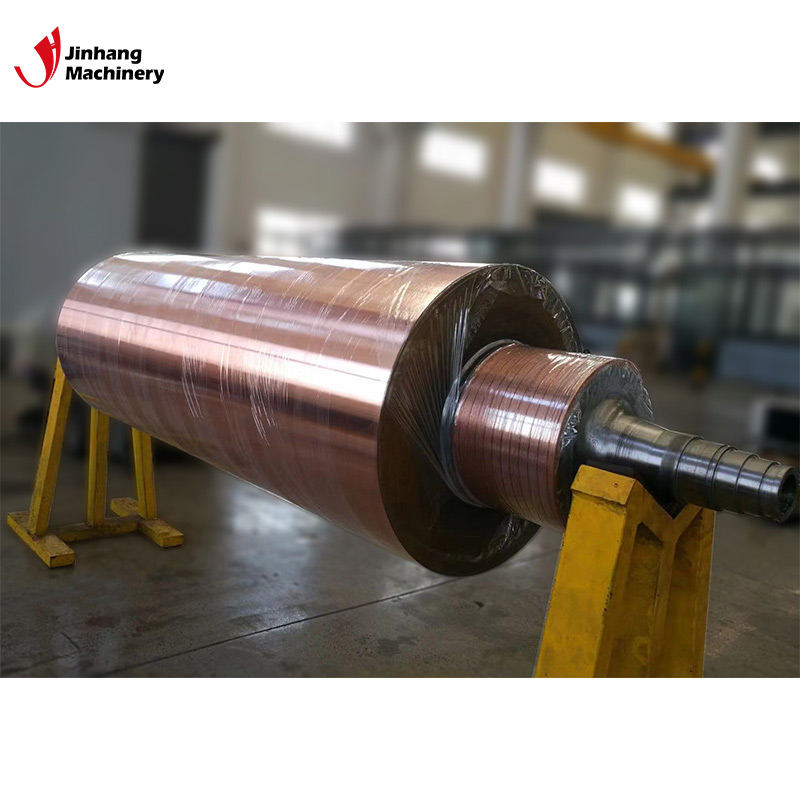
How is the roughness of mirror rollers precisely controlled?
Precision machining is fundamental
Roughness control of mirror rollers relies on:
• High-precision turning
• Multi-pass precision grinding
• Staged polishing
• Dedicated testing equipment
Each processing step affects the final roughness.
Inspection and Consistency Control
Truly high-quality mirror-finish rollers must not only achieve the target roughness value but also ensure:
• Consistent surface roughness across the entire roller surface
• Absence of localized anomalies
• Uniformity along the length direction
This places extremely high demands on the roller manufacturer's processing capabilities and quality control system.
Why do different applications have different roughness requirements for mirror-finish rollers?
Mirror-finish rollers are used in various industries, and different processes have significantly different roughness requirements:
• Some processes require moderate friction
• Some processes emphasize rapid peeling
• Some processes pursue ultimate surface gloss
• Some processes require preventing adhesion
Therefore, the roughness of mirror-finish rollers is not a "uniform standard" but rather "custom-made to demand."
This is why professional roller manufacturers focus on roughness parameters, rather than simply emphasizing "polishing grade," when designing and manufacturing mirror-finish rollers.
What problems might arise from improper roughness control of mirror-finish rollers?
Improper roughness control of industrial mirror rollers can lead to a series of chain reactions:
• Product surface defects
• Unstable material handling
• Difficulty controlling tension
• Difficulty in sticking to or peeling off the roller
• Abnormal roller surface wear
• Increased downtime
These problems often don't manifest immediately, but gradually amplify during continuous operation, ultimately impacting overall production efficiency.
What is the core logic of roughness control for industrial mirror rollers?
The roughness of mirror rollers is not about being as small as possible, but about achieving the "just right" result.
The roughness control of industrial mirror rollers essentially involves striking a balance between the following factors:
• Surface finish
• Material adhesion and release
• Friction and slippage
• Stable operation
• Surface replication effect
This is precisely the fundamental difference between industrial mirror rollers and ordinary polishing rollers.
What is your factory scale and workforce?
Jinhang Machinery operates a standard workshop of approximately 13,000 square meters and employs more than 60 skilled technicians and support staff. This capacity allows us to accept both small-batch customized orders and higher-volume production runs. As a manufacturer and supplier, we can provide competitive prices and discounts for bulk purchasing, and we maintain production flexibility for urgent quotes or scheduled deliveries.