
Which industries use ultra-low roughness industrial mirror rollers?
In modern industrial production, mirror rollers are no longer just ordinary rollers with a "highly shiny surface," but key components that directly determine product surface quality, functional performance, and finished product consistency. Especially in industries with extremely high requirements for surface defects, microtexture, thickness uniformity, transparency, or functional layer integrity, ultra-low roughness industrial mirror rollers are almost a "rigid requirement."
However, a practical issue is that not all industries need to use ultra-low roughness mirror rollers, and "the smoother the better" is not always true.
Different industrial sectors have vastly different requirements for the Ra roughness of mirror rollers. Choosing the wrong grade can not only increase costs but may also affect process stability.
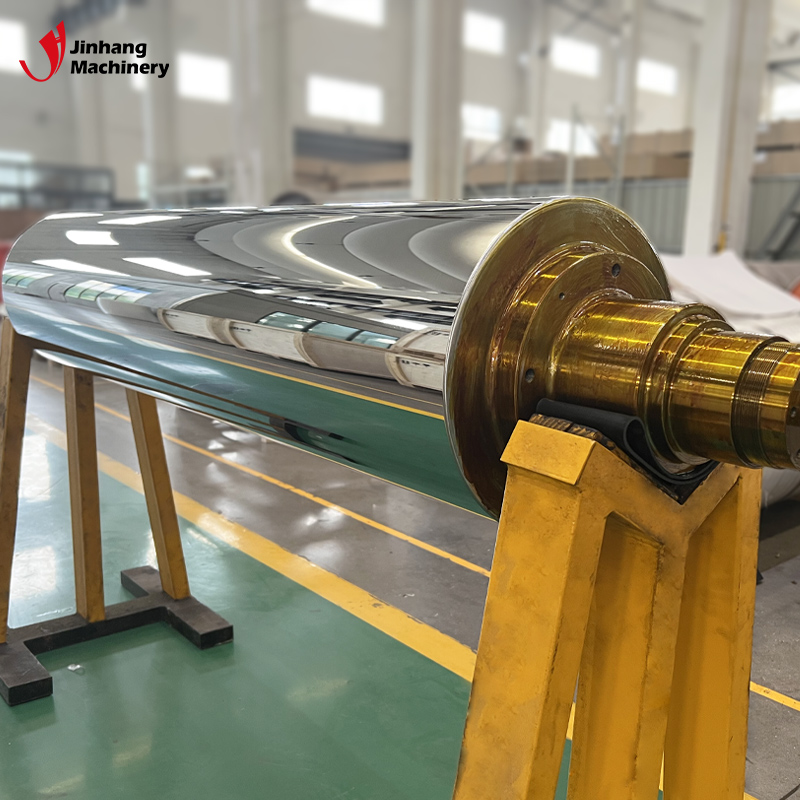
What are ultra-low roughness industrial mirror rollers?
Before discussing industries, we must first clarify a basic concept: what kind of mirror roller qualifies as "ultra-low roughness"?
Basic Ra Value Range for Industrial Mirror Rollers
In the industrial field, mirror rollers are typically classified according to their surface roughness (Ra):
• Ra 0.4–0.8 μm: Quasi-mirror or finely ground rollers
• Ra 0.2–0.4 μm: Standard industrial mirror rollers
• Ra 0.1–0.2 μm: High-precision mirror rollers
• Ra 0.05–0.1 μm: Ultra-precision mirror rollers
• Ra ≤0.05 μm: Ultra-low roughness industrial mirror rollers
Generally, the industry term "ultra-low roughness mirror roller" refers to industrial mirror rollers with Ra ≤0.1 μm, especially Ra 0.05 μm and below.
Why don't all industries need ultra-low roughness mirror rollers?
Lower surface roughness is not always better.
The Ra value of a mirror roller essentially affects:
• The contact state between the material and the roller surface
• Friction and release properties
• Surface replication accuracy
• Gas entrainment and fluid spreading behavior
In some processes, if the mirror roller is too smooth, it may actually lead to:
• Material slippage
• Traction instability
• Coating defects
• Abnormal winding tension
Therefore, only industries with extreme requirements for surface replication, transparency, and functional layer integrity "must" use ultra-low roughness mirror rollers.
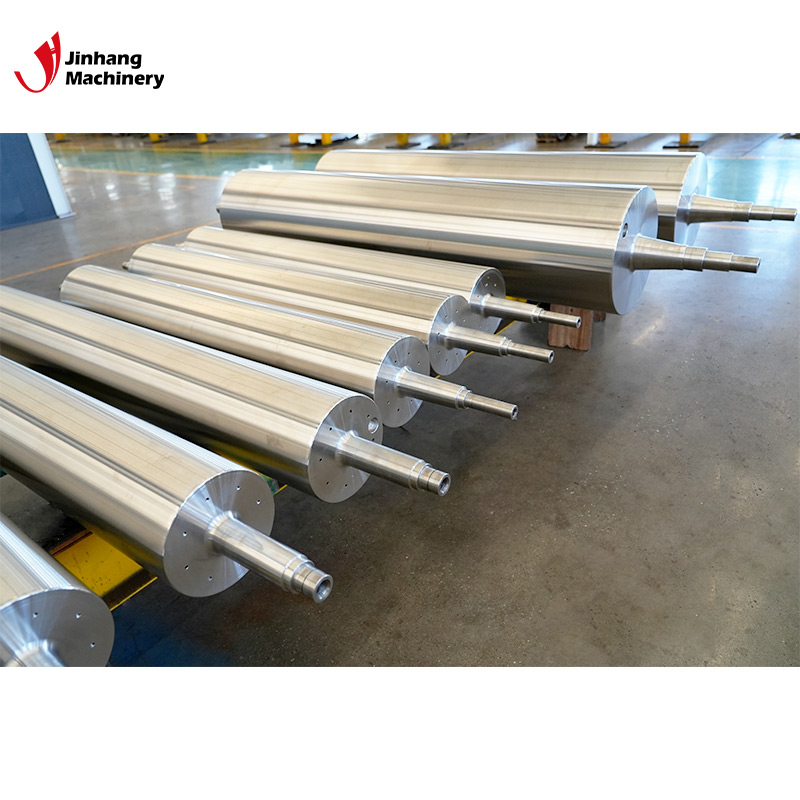
Which industries must use ultra-low roughness industrial mirror rollers?
The following will explain, by industry, which industries have extremely high requirements for the Ra value of mirror rollers and the reasons why.
Why is the optical thin film and functional thin film industry inseparable from ultra-low roughness mirror rollers?
This is one of the industries with the highest requirements for mirror roller roughness.
Industry Characteristics
• Extremely thin product thickness
• Extremely sensitive to surface micro-defects
• Any micron-level texture will be completely replicated
Why is an ultra-low roughness mirror roller necessary?
In optical thin film production, the mirror roller directly determines:
• Film surface smoothness
• Light scattering level
• Haze
• Light transmittance
If the Ra value of the mirror roller is too high, the micro-peaks and valleys on the roller surface will be "replicated" onto the film surface, leading to a significant decrease in optical performance.
Common Ra Value Requirements
• Ra ≤ 0.05 μm
• High-end functional films even require Ra ≤ 0.03 μm
In this industry, ultra-low roughness mirror rollers are not an option, but a necessity.
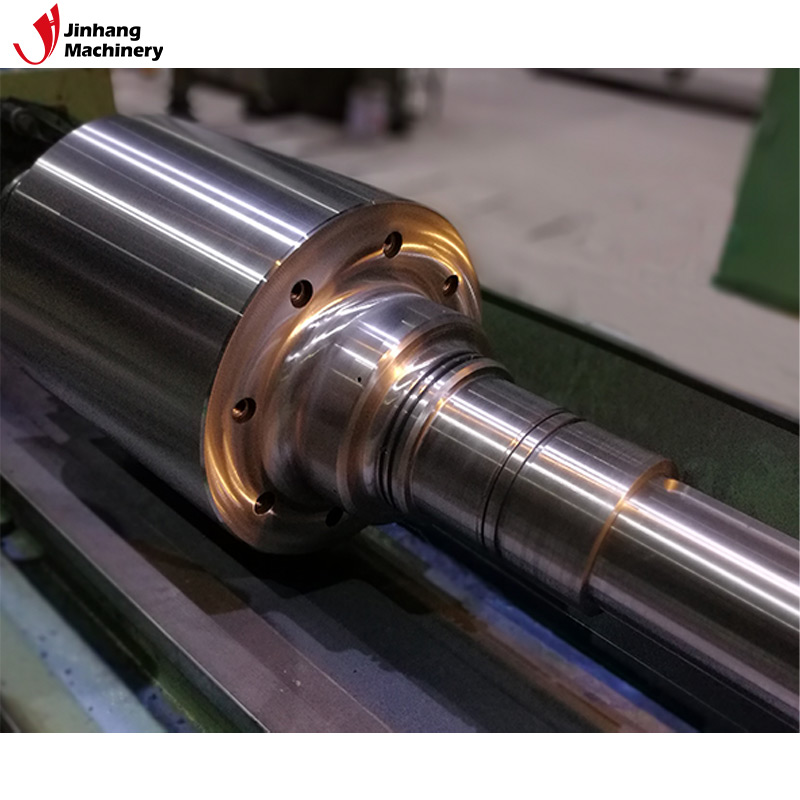
How stringent are the roughness requirements for mirror rollers in the electronic materials industry?
The electronic materials industry also falls into the category of fields with extremely high requirements for mirror rollers.
Materials Involved:
• Lithium-ion battery separators
• Electronic-grade films
• Flexible circuit substrates
• Functional coating materials
Why is surface roughness crucial?
Electronic materials often involve:
• Insulation performance
• Electric field distribution
• Thickness consistency
• Microporous structure stability
The surface roughness of mirror rollers directly affects:
• Film thickness fluctuation
• Localized stress concentration
• Coating continuity
Typical Ra requirements for mirror rollers:
• Ra 0.03–0.08 μm
• High-consistency processes typically require Ra ≤0.05 μm
Therefore, in the field of electronic materials, ultra-low roughness mirror rollers are a fundamental requirement for ensuring yield.
Is the high-end plastic film and packaging industry required to use ultra-low roughness mirror rollers?
The requirements in this industry are relatively "stratified."
Not all plastic films require ultra-low Ra.
Ordinary packaging films and industrial films have relatively lower requirements for mirror rollers.
However, ultra-low roughness mirror rollers are virtually irreplaceable in the following specific areas:
• High-transparency films
• High-gloss packaging films
• Pre-composite calendering processes
Why do high-end films require lower Ra values?
• Surface gloss depends on the quality of roller surface replication
• Microscopic roughness directly affects visual appearance
• Surface defects are very noticeable under magnification
Common Ra value ranges
• Ordinary films: Ra 0.2–0.4 μm
• High-gloss films: Ra 0.05–0.1 μm
In the high-end packaging field, mirror roller roughness is directly equivalent to the product's appearance grade.
Why is the coating industry extremely sensitive to mirror roller roughness requirements?
In the coating process, mirror rollers are not only "support rollers" but also "surface shaping tools."
The role of mirror rollers in coating
• Determines coating smoothness
• Affects coating spreading behavior
• Controls surface leveling effect
What problems arise from excessively high roughness?
• Uneven coating thickness
• Orange peel effect
• Micropores and pinholes
Typical Ra Requirements
• Precision coating: Ra 0.05–0.1 μm
• Ultra-thin functional coating: Ra ≤0.05 μm
Therefore, the precision coating industry must use industrial mirror rollers with ultra-low roughness; otherwise, it is impossible to consistently control coating quality.
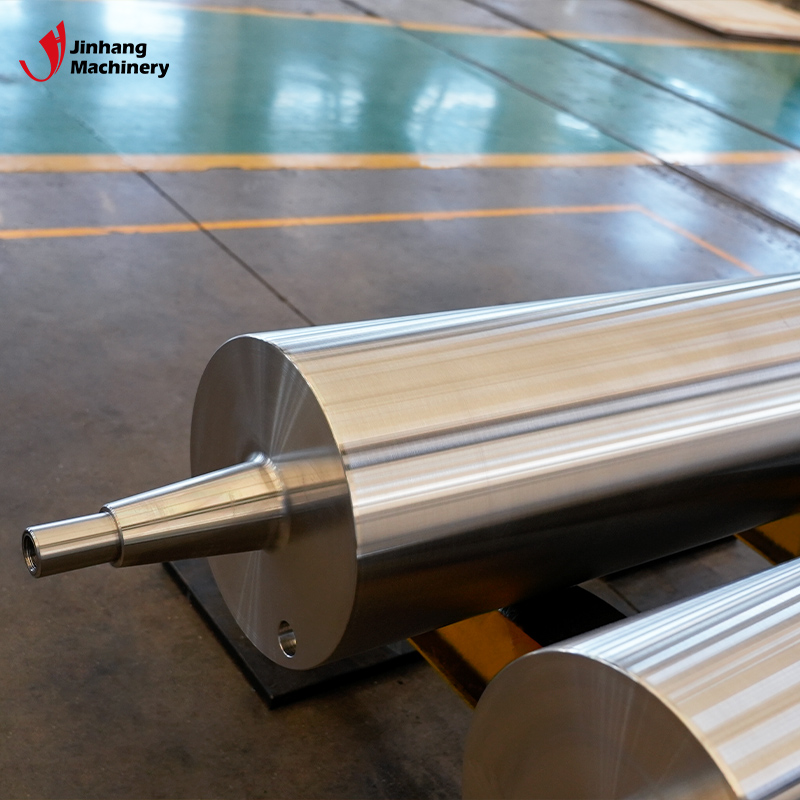
Do the artificial leather and decorative film industries also require ultra-low roughness mirror rollers?
This industry has rather specific requirements for mirror rollers.
Is extremely low Ra always necessary?
Not entirely.
• If the goal is a high-gloss, textureless surface → low Ra is required.
• If a leather-like texture is required → a mirror roller that is not necessarily as smooth as possible is not always better.
Common Ra Ranges
• High-gloss decorative film: Ra 0.05–0.1 μm
• Ordinary decorative film: Ra 0.1–0.3 μm
As can be seen, whether ultra-low roughness mirror rollers are needed depends on the surface design goals of the final product.
Is the Ra value requirement for mirror rollers high in the metal foil industry?
Mirror rollers also play a crucial role in industries such as aluminum foil and copper foil.
Key Influencing Factors
• Surface reflectivity
• Flatness after rolling
• Risk of surface microcracks
Ra Value Requirements
• Ordinary rolling: Ra 0.1–0.2 μm
• High reflectivity, high flatness products: Ra ≤0.05–0.08 μm
Therefore, in high-end metal foil processing, ultra-low roughness mirror rollers are an important condition for achieving high surface quality.
How to determine if your industry "must" use ultra-low roughness mirror rollers?
You can determine this by asking the following three questions:
1. Will the product surface replicate the microstructure of the roller surface?
If the answer is "yes," then the Ra value is very critical.
2. Is the product sensitive to optical, appearance, and functional layer integrity?
If any microdefects will lead to performance degradation, low-Ra mirror rollers must be used.
3. Are there precision processes such as coating, film coating, or calendering?
These processes almost all have strict requirements on the surface roughness of the mirror rollers.
Should all companies choose mirror rollers with the lowest Ra grade?
The answer is a clear no.
Reasons include:
• Ultra-low roughness mirror rollers are significantly more expensive.
• Polishing and maintenance requirements are more stringent.
• Not all processes require extreme Ra grades.
The correct engineering logic is to rationally select Ra grades that match actual process requirements.
Which industries must use ultra-low roughness industrial mirror rollers?
Industries with an almost rigid requirement for ultra-low roughness mirror rollers include:
• Optical thin film industry (Ra ≤0.05 μm)
• Electronic materials industry (Ra 0.03–0.08 μm)
• Precision coating industry (Ra ≤0.05–0.1 μm)
• High-end functional films and high-gloss packaging films
• High-precision metal foil processing
Whether to choose a mirror roller with the lowest Ra should always be based on:
• Process mechanism
• Product performance requirements
• Cost and maintenance balance
Mirror rollers are not necessarily better the smoother they are, but rather the more "suitable" they are.