
Industrial Hot Oil Rollers vs. Water-Heated Rollers: What Are the Disadvantages?
In the field of industrial heating equipment, the choice of heat transfer medium directly impacts production efficiency, energy consumption, product quality, and long-term operating costs. This is particularly true in industries such as coating, lamination, papermaking, plastic calendering, textile heat setting, and new energy material manufacturing. As critical heat-processing equipment, the performance of heating rollers significantly affects the stability of the entire production line. Common heating rollers on the market—categorized by heat transfer medium—include steam-heated, water-heated, electric-heated, and industrial thermal oil-heated rollers. Thermal oil-heated rollers are widely used in high-temperature processes—especially in continuous production scenarios requiring temperatures exceeding 150°C or even 300°C—because they can achieve high temperatures while maintaining low system pressure.
However, while thermal oil-heated rollers offer distinct advantages regarding high-temperature capabilities, they are not necessarily superior to water-heating systems in all operating conditions. In fact, for many low-to-medium temperature industrial applications, water offers greater cost-effectiveness, easier maintenance, and superior safety performance. When selecting equipment, enterprises often focus solely on the high-temperature performance of thermal oil-heated rollers while overlooking potential drawbacks related to cost, safety, maintenance, environmental impact, and operational management.
This article explores the topic "What are the disadvantages of industrial thermal oil-heated rollers compared to water-heated rollers?" by analyzing several key dimensions, helping enterprises gain a comprehensive understanding of the practical operational characteristics of thermal oil-heated rollers.
Working Principle and Application Context of Industrial Thermal Oil-Heated Rollers
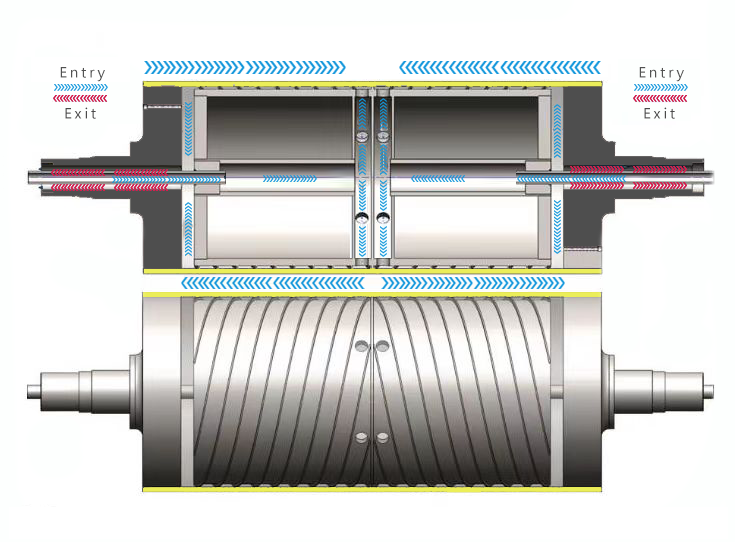
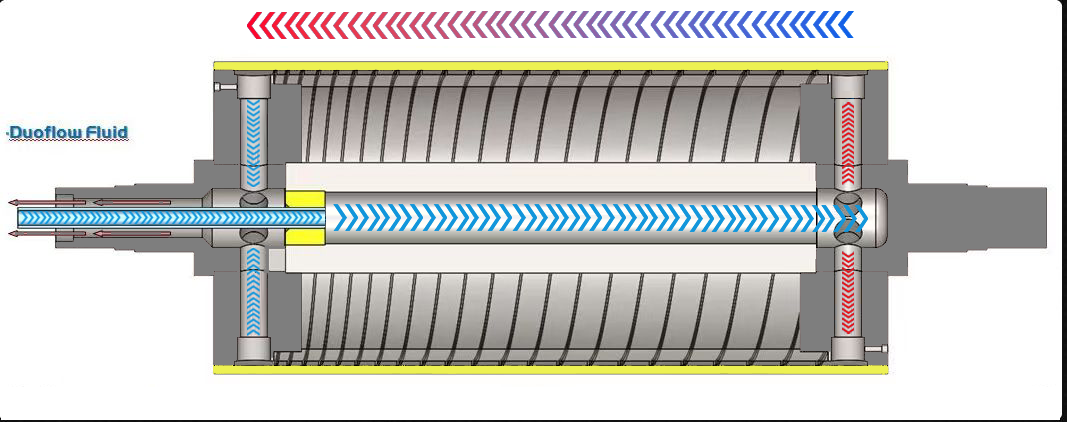
Fundamentally, an industrial thermal oil-heated roller is a high-temperature heating device that utilizes thermal oil as the heat transfer medium. The process typically involves heating the thermal oil to a set temperature in an external heater and then using a circulation pump to transport the hot oil into the internal flow channels of the roller, thereby raising the roller's surface temperature to the level required by the process. Because the boiling point of thermal oil is far higher than that of water, these rolls can maintain stable operating temperatures between 150°C and 350°C at relatively low pressures—a range difficult for standard water-heating systems to achieve.
In contrast, the working principle of a water-heating system is simpler. Water is heated and circulated within the roller body, utilizing its high specific heat capacity and efficient thermal conductivity to transfer heat. Under atmospheric pressure, the upper temperature limit for water is approximately 100°C; even in pressurized systems, the temperature is typically controlled between 120°C and 180°C. Consequently, while oil-heated industrial rolls hold a clear advantage regarding high-temperature capabilities, a broader perspective—considering the equipment's entire lifecycle—reveals several significant drawbacks.
Oil-heated industrial rollers entail significantly higher initial investment costs than water-based systems
One of the most immediate disadvantages of oil-heated industrial rollers is the high cost of procurement and installation. During the project planning phase, enterprises often face the challenge of the oil-heated system's initial investment being far higher than that of a water-based system.
This is because a complete oil-heated roller system comprises more than just the roll itself; it requires auxiliary components such as a thermal oil heater, expansion tank, oil storage tank, circulation pump, temperature control system, safety pressure-relief module, and insulated piping. Since thermal oil operates at high temperatures, the system demands superior heat resistance, sealing performance, and control precision, all of which significantly drive up manufacturing costs. In contrast, water-based heating systems feature a relatively simple structure, typically requiring only a water tank, pump, heater, and basic temperature control system for deployment.
Taking a typical medium-sized industrial production line as an example, the investment for a water-heated roller system might range from 30,000 to 80,000 RMB, whereas an oil-heated system of the same specifications usually costs between 80,000 and 200,000 RMB—with large-scale, wide-format equipment potentially exceeding 300,000 RMB. In terms of capital expenditure, oil-heated systems often cost 30% to 150% (or even more) than water-based systems. If a production process requires a temperature range of only 80°C to 110°C, investing in an oil-heated system clearly results in a significant waste of resources.
Oil-heated industrial rollers incur higher operating costs
Beyond the substantial initial investment, oil-heated industrial rollers often impose greater cost pressures during long-term operation compared to water-based systems. Enterprises frequently underestimate this factor, as procurement decisions often focus solely on the equipment's purchase price while overlooking ongoing operational expenses.
First, thermal oil itself is not an inexpensive medium. Industrial heat transfer oils generally require high thermal stability, oxidation resistance, low volatility, and excellent heat transfer capabilities; consequently, they are far more expensive than ordinary water. Mineral-based heat transfer oils on the market typically cost between 15 and 30 yuan per liter, while synthetic oils can range from 30 to 60 yuan per liter or even higher. A medium-sized industrial heat transfer oil heating roller system often requires 300 to 1,500 liters of oil; the initial fill alone can cost anywhere from several thousand to tens of thousands of yuan, whereas the cost of water as a medium is virtually negligible.
More importantly, heat transfer oil is a consumable, whereas water is not. When industrial heat transfer oil heating rollers operate in high-temperature environments over long periods, the oil undergoes gradual thermal cracking, oxidation, and polymerization. These changes lead to increased viscosity and acidity, reduced fluidity, and the eventual formation of coke deposits. Industry experience indicates that when these systems operate consistently above 280°C, the annual performance degradation of the heat transfer oil typically ranges from 8% to 15%. This means most systems require an oil change every two to five years. Each change entails not only the cost of new oil but also expenses related to downtime, system cleaning, and waste oil disposal—combined costs that far exceed the maintenance expenditures for water-based systems.
Industrial heat transfer oil heating rollers pose higher safety risks than water systems
Safety is one of the fundamental differences between industrial heat transfer oil heating rollers and water systems. Although these oil-based systems are often marketed as "low-pressure, high-temperature," low pressure does not equate to low risk.
Most industrial heat transfer oils are organic heat transfer fluids that are flammable. Flash points typically range from 180°C to 260°C, and auto-ignition temperatures generally fall between 350°C and 450°C; yet, the operating temperatures of these rollers often approach or even exceed the oil's flash point. Consequently, if a leak occurs, the high-temperature oil can rapidly form an oil mist upon contact with air, potentially igniting under specific conditions.
In contrast, water systems pose virtually no risk of flammability. From a fire safety perspective, industrial oil-heated rollers clearly require higher-level risk control measures, including leak monitoring, automatic alarms, thermal insulation, and emergency shutdown protection. For small and medium-sized enterprises with limited management capabilities, these safety management requirements can pose a significant burden.
Common Safety Hazards of Industrial Oil-Heated Rollers
The safety risks associated with industrial oil-heated rollers primarily fall into three categories. First is oil leakage caused by seal failure—particularly at rotary joints, flange connections, and pump shaft seals—where high-temperature operating conditions accelerate seal degradation. Second is localized overheating caused by carbon deposits; as the heat transfer oil ages, carbon deposits adhere to heater surfaces, leading to abnormal localized temperature spikes. Third is improper management of expansion pressure; high-temperature heat transfer oil exhibits significant thermal expansion within a closed system, and a poorly designed expansion tank can lead to localized overpressure or even equipment damage.
These risks are far lower in water-based heating systems; consequently, industrial oil-heated rollers inherently place greater demands on a company's safety management system.
Greater Maintenance Complexity for Industrial Oil-Heated Rollers
Equipment maintenance is a key factor influencing the total cost of ownership for industrial machinery, and in this regard, oil-heated rollers are significantly less user-friendly than water-based systems.
Because heat transfer oil gradually degrades at high temperatures, carbon deposits and sludge tend to form within the system. These deposits typically accumulate on the inner walls of piping, the surfaces of heating elements, and the internal flow channels of the roller body. Although a carbon deposit layer may appear thin, its thermal conductivity is extremely poor. Industry test data indicates that a carbon layer just 1 millimeter thick can reduce overall heat transfer efficiency by more than 10% while significantly increasing energy consumption for heating.
This means that the longer an industrial oil-heated roller operates, the more likely it is to experience issues such as slower heating rates, increased temperature fluctuations, and localized hot spots. Once these issues reach a critical level, extensive maintenance becomes necessary, involving oil draining, chemical cleaning, circulating flushes, and refilling with fresh oil. A complete maintenance cycle often requires 1 to 3 days of downtime—a costly proposition for enterprises engaged in continuous production.
In contrast, even when water-based systems develop scale, the cleaning process is generally simpler, and maintenance costs are lower. Therefore, from a long-term operations and maintenance perspective, industrial oil-heated rollers place greater demands on technical personnel and maintenance systems.
Industrial oil-heated rollers do not necessarily offer superior heat transfer efficiency compared to water systems in low-to-medium temperature applications
Many people assume that industrial oil-heated rollers are inherently more efficient than water-based systems, but this is a common misconception. In reality, water often outperforms heat transfer oil in terms of heat transfer performance within low-to-medium temperature ranges.
Regarding thermophysical properties, the specific heat capacity of water is approximately 4.186 kJ/(kg·K), whereas that of heat transfer oil typically ranges from only 1.8 to 2.6 kJ/(kg·K). Furthermore, the thermal conductivity of water is about 0.58 W/m·K, compared to just 0.10–0.15 W/m·K for heat transfer oil. This indicates that, given the same mass and temperature difference, water can absorb more heat and facilitate faster heat transfer.
This explains why water heating systems often achieve faster heat-up times and higher heat transfer efficiency within the 60°C to 120°C range. In other words, if a company's process does not require high temperatures, adopting industrial oil-heated rollers may not yield efficiency gains; instead, it could lead to increased energy consumption and higher operational burdens.
Industrial oil-heated rollers suffer from slow cooling rates and low efficiency during production line changeovers
Another often-overlooked drawback of industrial oil-heated rollers is their slow cooling rate after shutdown. Due to the significant mass of the roller body, the large volume of internal heat transfer oil, and the system's overall high thermal capacity, these rollers often require a long time to cool down after operating at high temperatures.
For instance, an industrial oil-heated roller operating at 250°C typically takes 4 to 10 hours to cool down to 80°C under natural cooling conditions, depending on the equipment's size and insulation structure. In contrast, water systems can rapidly dissipate heat through cold water circulation, resulting in significantly higher cooling efficiency.
This difference has a particularly pronounced impact on enterprises that frequently switch production lines, engage in small-batch custom manufacturing, or process a wide variety of products. Since every process changeover entails waiting for the system to cool down and then heat up again, production line utilization is directly reduced. For modern factories prioritizing flexible manufacturing, industrial oil-heated rollers do not offer an advantage in this regard.
Environmental Compliance Challenges for Oil-Heated Industrial Rollers
As environmental regulations tighten, the environmental performance of industrial equipment has become a growing concern for enterprises; oil-heated industrial rollers face significant shortcomings in this regard.
Once thermal oil degrades, it becomes industrial waste fluid; it cannot be discharged directly and must be recovered, transported, and disposed of in accordance with regulations for hazardous industrial waste. Enterprises incur disposal costs and must file the necessary environmental compliance reports. Furthermore, oil-heated rollers may emit small amounts of volatile organic compounds (VOCs) during high-temperature operation—particularly when oil oxidation or thermal cracking intensifies—leading to oil mist, odors, and VOC emissions.
In contrast, water-based systems are virtually free of these issues, making them a clearly more environmentally friendly choice for compliance.
Which Industries Are Best Suited for Oil-Heated Industrial Rollers?
Despite the aforementioned drawbacks, oil-heated industrial rollers remain a valuable solution. In fact, they are often the optimal choice when process temperatures consistently exceed 150°C or when the production process demands exceptional high-temperature stability. Industries such as lithium-ion battery electrode drying, high-end composite material hot pressing, plastic calendering, and optical film manufacturing frequently rely on oil-heated rollers.
However, if process temperatures primarily range between 40°C and 120°C—such as in food processing, standard textile drying, pharmaceutical packaging, or small-to-medium-scale lamination equipment—water-based systems typically offer better cost-effectiveness.
FAQ
Q1: Are oil-heated industrial rollers always superior to water-heated rollers?
Not necessarily. For lower process temperatures, water-based heating systems are generally more economical, safer, and easier to maintain.
Q2: How often does the thermal oil in oil-heated rollers need to be replaced?
Typically every 2 to 5 years; however, high-temperature conditions or continuous operation can shorten this interval.
Q3: What is the ideal temperature range for oil-heated industrial rollers?
They offer the most significant advantages in high-temperature processes, typically above 150°C.
Q4: What are the primary disadvantages of oil-heated industrial rollers?
Key drawbacks include high costs, complex maintenance, higher safety risks, and greater pressure regarding environmental compliance.