What types of carbide-coated rollers can we customize?
In modern industrial equipment and continuous production processes, the quality and surface performance of rollers directly impact product precision, production efficiency, and service life. Traditional steel or chrome-plated rolls often fail to meet the demands of long-term, stable production—particularly under operating conditions involving high wear, corrosion, pressure, and speed. Consequently, carbide-coated rolls have become essential components across numerous industries.
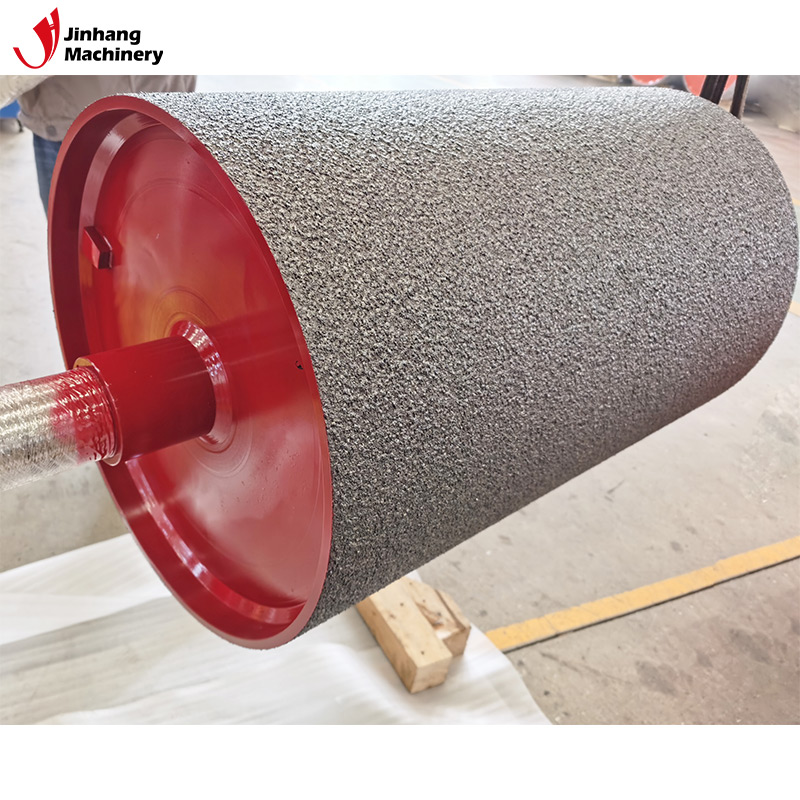
Carbide-coated rollers are created by applying carbide, metal alloy, or ceramic coatings to the roller surface, imparting exceptional hardness, superior wear and corrosion resistance, and robust surface stability. These characteristics make them indispensable components for demanding, high-intensity operating environments.
As a supplier deeply rooted in the roller manufacturing industry, Jinhang Machinery offers customized carbide-coated rollers with outer diameters up to 2000mm, lengths up to 8000mm, and machining precision as fine as 0.002mm. These capabilities allow us to meet the high-precision requirements of sectors such as metallurgy, lithium-ion battery manufacturing, papermaking, packaging, film production, printing, and specialized equipment.
So, what specific types of carbide-coated rollers can we customize for clients? What are the characteristics of the various coating types? For which operating conditions are they suitable? Why do different carbide-coated rollers suit different environments?
This article provides a systematic and in-depth answer to these questions.
Why are carbide-coated rollers essential for modern industrial applications?
Carbide-coated rollers are able to replace traditional rollers due to the following fundamental advantages:
•Enhanced roller hardness (up to HV1300–1500+)
•Improved wear resistance
•Enhanced corrosion resistance
•Greater surface roughness stability
•Suitability for high-speed and high-pressure conditions
•Reduced maintenance frequency and downtime costs
•Extended overall service life
These advantages make carbide-coated rollers the ideal choice for industries requiring high-load or high-precision performance.
Why do different industries require different types of carbide-coated rollers?
While "carbide-coated roller" is a general term, there are significant differences between the various types of coatings from a process perspective, such as:
•Tungsten carbide coatings
•Chromium carbide coatings
•Ceramic oxide coatings
•Metal alloy coatings
•Polymer coatings
•Anti-corrosive Teflon coatings
Different coatings offer distinct properties, such as:
•High hardness (suitable for high-wear applications)
•Strong corrosion resistance
•Electrical insulation
•Low friction coefficient (suitable for easy release)
•High-temperature resistance
•Anti-stick and anti-fouling characteristics
Therefore, to meet diverse process requirements, Jinhang Machinery can customize a wide range of carbide-coated rollers.
What types of carbide-coated rollers can you customize?
Carbide coatings represent the most common category of coatings for these rollers, primarily including:
•Tungsten carbide (WC) coatings
•Chromium carbide (CrC) coatings
•Other hard carbide composite coatings
Jinhang Machinery manufactures carbide-coated rollers using High-Velocity Oxy-Fuel (HVOF) spraying technology. HVOF spraying offers high deposition rates, resulting in dense coatings with strong substrate adhesion.
Consequently, rollers coated with cemented carbide via this process feature:
•Extremely high hardness
•Excellent wear resistance
•Impact resistance
•Resistance to coating delamination/spalling
•Long service life
•Low porosity
•Stable surface precision
They are particularly well-suited for:
•High-wear applications
•Calendering
•High-speed friction environments
•Abrasive contact conditions
•Processes involving intense scraping forces
•Sheet metal calendering
•Battery electrode rolling
Customizable cemented carbide coated roller types include:
•Cemented carbide calendering rollers
•Cemented carbide mirror-finish rollers
•Cemented carbide backup rollers
•Cemented carbide guide rollers
•High-wear-resistance cemented carbide work rollers
•High-load cemented carbide super-calendering rollers
Cemented carbide coated rollers are the optimal choice for any equipment requiring high wear resistance, high hardness, and surface stability.
What types of ceramic-coated rollers do you offer?
In addition to carbide coatings, ceramic-coated rollers represent a significant category within our range of carbide-coated rollers. Jinhang Machinery utilizes plasma spray technology to manufacture ceramic-based hard alloy coated rolls.
Coating types include:
•Aluminum oxide (Al₂O₃)
•Chromium oxide (Cr₂O₃)
•Zirconium oxide-based materials
•Rare-earth oxides (e.g., neodymium oxide)
Key characteristics of ceramic coatings include:
•Exceptional corrosion resistance
•Excellent electrical insulation
•Medium to high hardness
•Strong chemical resistance
•Good thermal stability
Suitable for the following industries and applications:
•Insulation processing
•Corrosion-resistant rollers for papermaking machinery
•Contact rollers for chemical processing equipment
•High-temperature rollers
•Chemically demanding coating and calendering processes
•Specialized surface treatment equipment
Customizable ceramic-based hard alloy coated rollers include:
•Ceramic-coated guide rollers
•Corrosion-resistant ceramic hard alloy coated rollers
•Ceramic insulating rollers
•Wear-resistant ceramic rollers
•Hard alloy coated rollers for high-temperature applications
Ceramic-based hard alloy coated rollers are an ideal choice for industries requiring a combination of hardness and corrosion resistance or electrical insulation.
What types of metal alloy coated rollers can be customized?
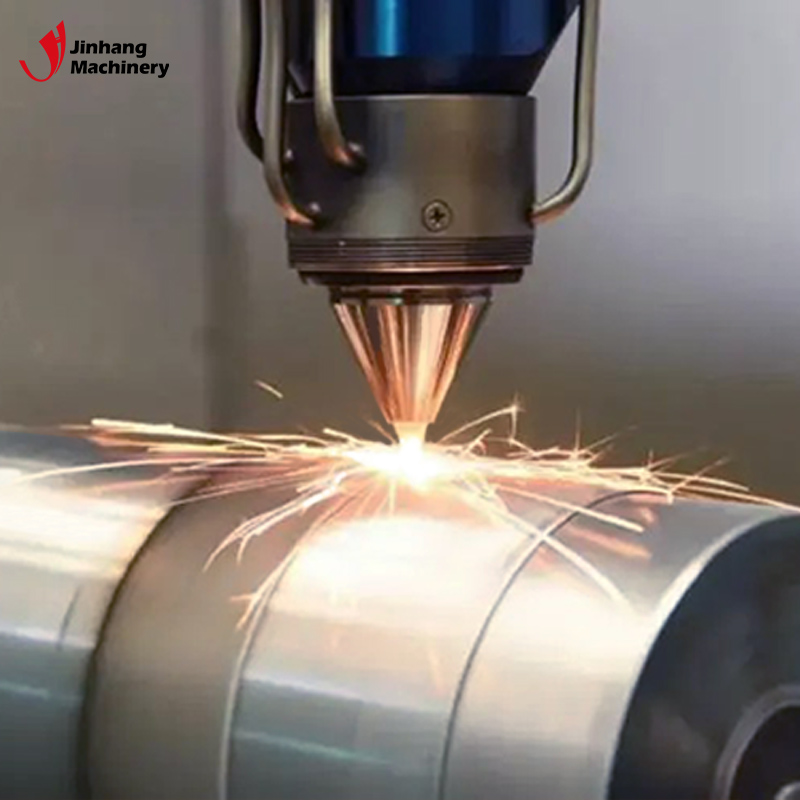
Jinhang Machinery offers a supersonic arc spray process capable of applying various metal alloy materials to roller surfaces, including:
•Zinc
•Aluminum
•Copper
•Stainless steel
•Iron-based amorphous alloys
•Other metal composite materials
Advantages of metal alloy and hard alloy coated rollers include:
•Increased surface strength
•Enhanced corrosion resistance
•Flexible material combinations
•High adhesion strength
•Good ductility and impact resistance
Suitable for:
•Marine environments
•Corrosive chemical environments
•Moderate wear conditions
•High-impact scenarios
•Humid indoor processing environments
Customizable metal and hard alloy coated rollers include:
•Anti-corrosion metal rollers
•Composite metal-sprayed hard alloy coated rollers
•Amorphous alloy coated rollers
•High-ductility hard alloy coated rollers
Metal-coated rollers are commonly used in industries requiring corrosion and impact resistance, as well as specific operating temperatures or frictional characteristics.
What types of abradable seal-coated rollers can you customize?
In addition to carbide, ceramic, and metal coatings, Jinhang Machinery can also apply:
•Nickel-based coatings
•Graphite-containing nickel coatings
•Aluminum-silicon polymer materials
•Abradable seal coatings
These coatings feature:
•Low coefficient of friction
•Strong self-lubricating properties
•Good sealing performance
•Moderate wear resistance
•Excellent corrosion and chemical stability
Commonly used for:
•Low-friction conveyor systems
•Light-load wear-resistant rollers
•Sealing-structure rollers
•Specialty anti-stick equipment
•Applications in the food or chemical industries
Customizable abradable seal-coated rollers include:
•Low-friction coated rollers
•Seal-coated drums
•Self-lubricating coated rollers
These rollers are critical for applications sensitive to friction coefficients or requiring anti-stick properties or sealing structures.
Which Teflon/resin anti-corrosion coated rollers can be customized?
Jinhang Machinery also offers:
•Electrostatic Teflon spraying
•Pneumatic Teflon spraying
•Organic resin coatings
These coatings are suitable for:
•Highly corrosive chemicals
•Applications requiring non-stick properties and low friction
•Food-grade corrosion-resistant systems
•Flexible material processing
•Equipment operating in high-humidity environments over long periods
Features of Teflon-based and hard-alloy coated rollers include:
•Excellent corrosion resistance
•Extremely low coefficient of friction
•Strong non-stick capabilities
•Good chemical resistance
•High thermal stability
Customizable roller types include:
•Teflon non-stick rollers
•Resin-coated corrosion-resistant rollers
•Low-friction transport rollers
•Hard-alloy coated rollers for chemical pipelines
Although these coatings are not as hard as carbide or ceramic alternatives, they are irreplaceable in certain operating conditions.
How do manufacturing capabilities support the customization of hard-alloy coated rollers?
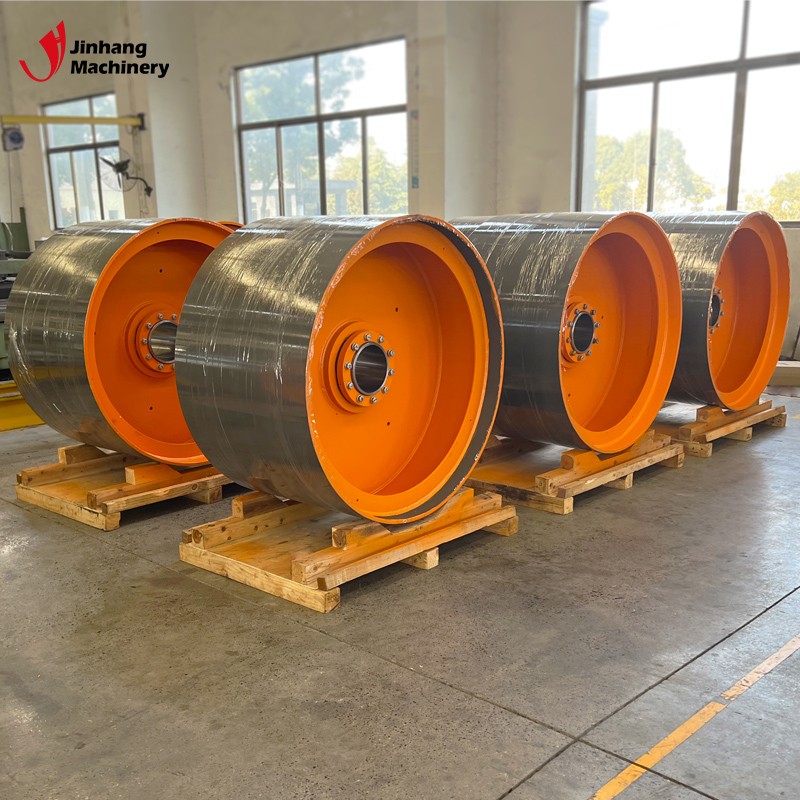
Jinhang Machinery possesses capabilities for processing large-scale roller bodies:
•Maximum outer diameter: 2000 mm
•Maximum length: 8000 mm
•Maximum machining precision: 0.002 mm
This enables us to customize:
•Extra-long rollers
•Large-diameter rollers
•High-precision mirror-finish rollers
•Rollers for heavy-duty applications
•Rollers with complex structures
We can apply hard-alloy coatings to various structural designs to meet diverse industry requirements.
Why choose Jinhang Machinery for custom hard-alloy coated rollers?
Jinhang Machinery’s strengths include:
•Capabilities in multiple coating technologies (HVOF, Plasma, Arc Spray, resin spraying)
•Capacity for customizing extra-large components
•Polishing and grinding with micron-level precision
•Extensive experience across multiple industries
•A wide range of coating types to meet complex requirements
•Focus on roller structural strength, coating adhesion, and surface performance
•Comprehensive quality inspection processes
•Highly stable and durable products
Regardless of the specific type of carbide-coated roller required, we provide systematic solutions covering material selection, coating strategies, structural design, and machining precision.