Who Can Customize Industrial Rollers? — "Jinhang Machinery"
In the modern industrial landscape, "industrial rollers" have emerged as indispensable core components within the manufacturing sector. Widely utilized across industries such as metallurgy, mining, lithium battery production, packaging, printing, and automotive testing equipment, they serve as foundational elements for critical processes including material conveyance, heating, cooling, calendering, coating, and surface treatment. As industry demands for precision, stability, and reliability continue to escalate, standardized industrial rollers are increasingly unable to satisfy enterprises' specific requirements regarding unique dimensions, specialized performance characteristics, or non-standard structural designs.
Consequently, the question—"Who can customize industrial rollers?"—has become a critical challenge that many enterprises must address during production upgrades, equipment retrofits, and the development of new projects.
In response to this challenge, Jinhang Machinery—a prominent Chinese manufacturing enterprise—has become a preferred partner for numerous domestic and international companies seeking industrial roller solutions, distinguished by its specialized manufacturing capabilities, high-precision machining expertise, and profound adaptability across diverse industrial sectors.
This article will delve into this central theme, offering an in-depth analysis of the capabilities required for industrial roller customization, the inherent manufacturing complexities, the specific demands characteristic of various industries, and the compelling reasons why Jinhang Machinery possesses the requisite strength to provide customized industrial roller solutions across a broad spectrum of industrial applications.
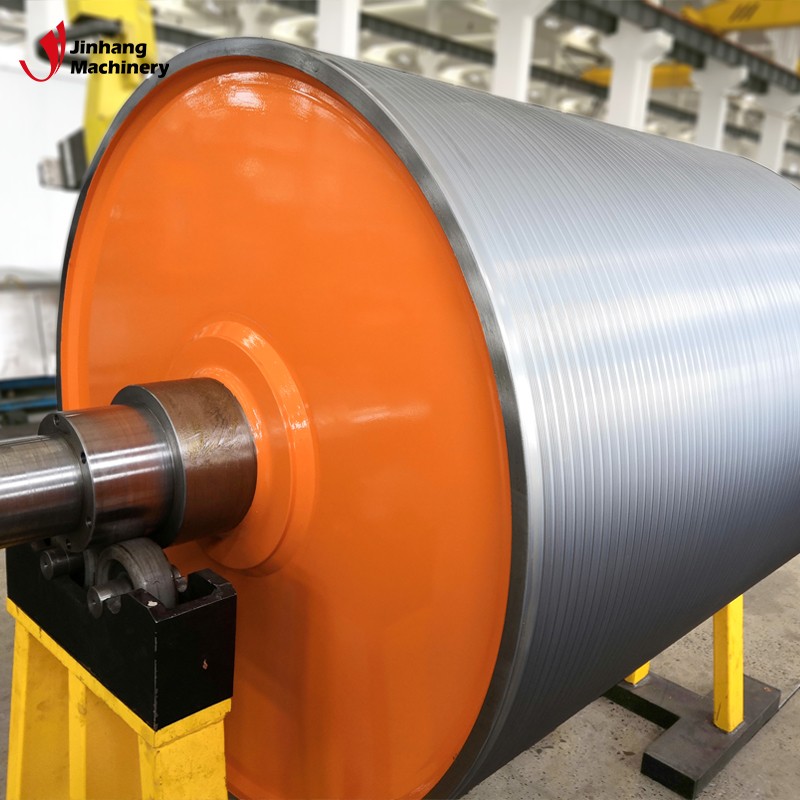
Why Do Industrial Rollers Require Customization?
Far from being mere simple mechanical components, industrial rollers fulfill highly specific and complex functions within machinery and equipment. These functions include:
•Transmitting mechanical pressure
•Facilitating high-precision surface treatments
•Controlling heat input or dissipation
•Performing calendering, rolling, and shaping of materials
•Serving as drive rollers or support rollers
•Providing specific frictional properties or specialized surface functionalities
Different industrial production lines impose vastly different requirements on industrial rollers, encompassing parameters such as:
•Outer diameter and length
•Surface roughness
•Surface material composition
•Type of surface coating
•Hardness level
•Thermal conductivity
•Corrosion resistance
•Concentricity and dynamic balance
•Temperature control method (e.g., heating, cooling, thermal oil circulation, water circulation, etc.)
Consequently, the vast majority of industrial rollers must be custom-tailored to meet the specific demands of their respective production lines.
This also implies that not all manufacturers possess the requisite capabilities to customize the diverse array of industrial rollers required by modern industry.
Who Truly Possesses the Capability to Customize High-Precision Industrial Rollers?
Many people assume that manufacturing industrial rollers requires nothing more than a lathe, a rolling machine, or a simple coating process. In reality, however:
To produce a high-precision industrial roller that truly meets international standards, the following prerequisites are essential:
1. Large-Scale Machining Capabilities
Industrial rollers are typically large in size. Jinhang Machinery’s machining capabilities allow for:
•Maximum Outer Diameter: 2000 mm
•Maximum Length: 8000 mm
•Machining Precision: 0.002 mm
Such machining capabilities are beyond the reach of ordinary machine shops.
2. Highly Stable Turning and Grinding Capabilities
The most challenging aspects of processing industrial rollers involve:
•Ensuring the long shaft remains free of deformation
•Guaranteeing uniform surface grinding
•Maintaining strict concentricity
•Achieving a mirror-finish or specialized surface treatment
High-precision grinders, CNC lathes, and specialized roller-specific equipment are all indispensable components of this process.
3. Coating and Material Processing Capabilities
Different industrial rollers require the use of different surface materials, including:
•Rubber coatings
•Chrome plating
•Tungsten carbide coatings
•Hard materials such as ceramics
•Engineering composite materials
Each material corresponds to a specific manufacturing process and set of post-processing requirements; not all manufacturers possess the capability to handle this entire end-to-end workflow.
4. In-Depth Understanding of Industry-Specific Processes
Manufacturing industrial rollers involves more than just fabrication; it requires a deep understanding of their specific application processes—for instance:
•The temperature stability requirements for hot rollers used in lithium-ion battery electrode production
•The demands for hardness and wear resistance in metal processing applications
•The surface roughness tolerances required for mirror-finish rollers in the packaging film industry
•The requirements for elasticity and chemical resistance in rubber rollers used in the printing industry
•The heavy-load bearing and processing requirements found in the metallurgical industry
Only by truly understanding the industry can a major manufacturer genuinely deliver "customization on demand."
Consequently, manufacturing industrial rollers is not a task just anyone can undertake; producing custom industrial rollers, in particular, serves as a comprehensive test of a manufacturer's overall capabilities.
So—who is capable of professionally customizing a wide variety of industrial rollers?
Jinhang Machinery is a specialized manufacturing enterprise based in China, dedicated to providing custom industrial roller solutions—featuring high precision, complex designs, and specialized structures—to a diverse range of industries.
The following section provides a detailed analysis of our key capability areas.
1. What types of industrial rollers can Jinhang Machinery customize?
As a professional manufacturer, Jinhang Machinery is capable of manufacturing and providing customized support for a wide range of industrial rollers, including:
•Industrial Rubber Rollers
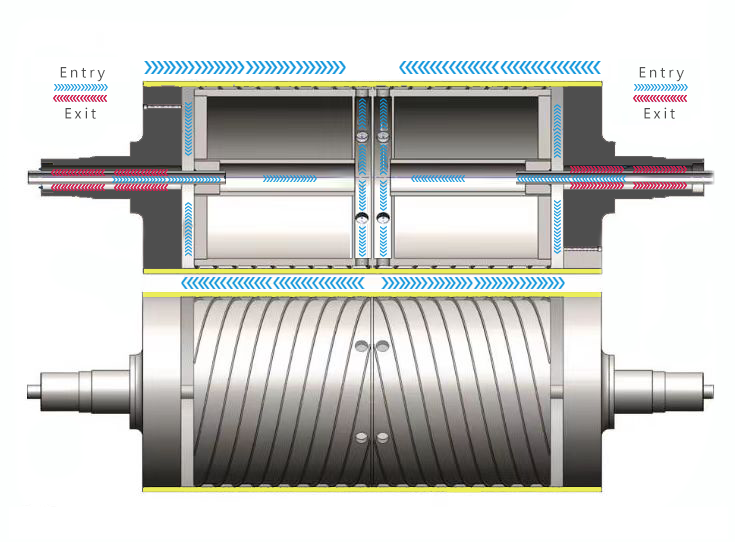
•Heating Rollers (Oil-circulating, Water-circulating, Internal-circulating)
•Cooling Rollers
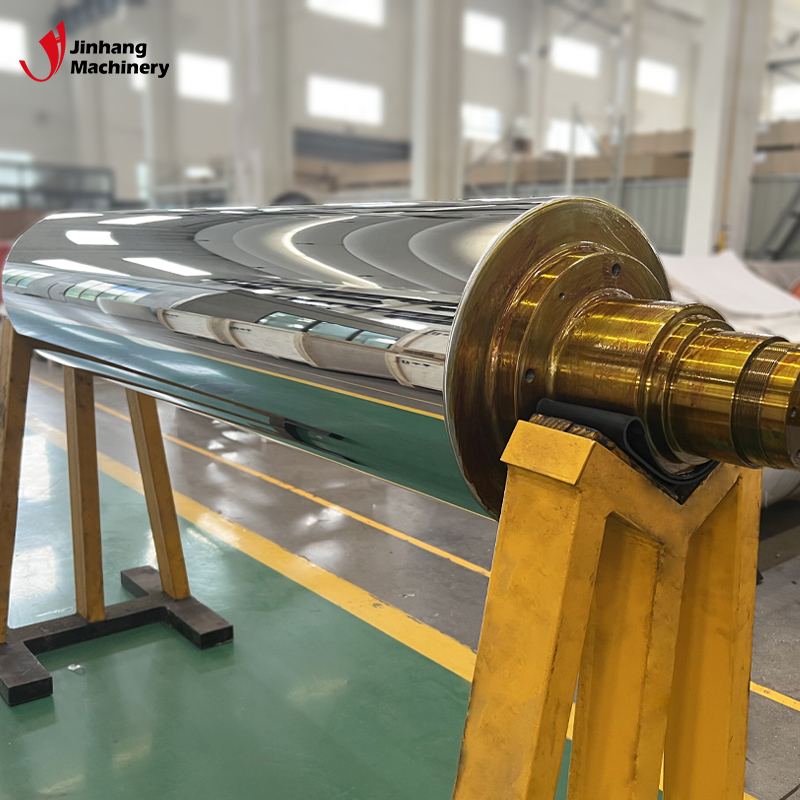
•Mirror-finish Rollers (Precision-polished to mirror grade)
•Chrome-plated Rollers
•Tungsten Carbide Rollers
•Special Carbide-coated Rollers
•Custom Rollers for Specialized Industries
Whether the requirement involves rollers designed to bear heavy loads, rollers requiring precision surface finishes, or rollers with complex thermal control structures, Jinhang Machinery offers comprehensive, end-to-end manufacturing solutions.
2. Which industries are served by Jinhang Machinery’s industrial rollers?
Given the demand for highly customized solutions, Jinhang Machinery’s industrial rollers have been widely adopted across a vast spectrum of industries, including:
•Metallurgy
•Mineral Material Processing
•Packaging Machinery
•Printing Equipment
•Lithium-ion Battery Electrode & Separator Equipment
•Automotive Testing Equipment
•Composite Material Processing
•Rubber Calendering
•Plastic Film Production
•Electronic Material Manufacturing
This cross-industry manufacturing experience enables Jinhang Machinery to propose specific roller structural designs tailored to the performance requirements of various sectors, ensuring that every roller delivers stable and reliable performance within its specific industrial environment.
Why is high-precision manufacturing capability so critical for industrial rollers?
The precision of an industrial roller determines:
•The uniformity of material compression
•The consistency of surface finishes
•The stability of film thickness
•The uniformity of coating application
•The accuracy of printing
•The smoothness of power transmission
•The stability of process temperatures
If an industrial roller lacks precision—no matter how advanced the production line may be—it can lead to issues such as:
•Wrinkling
•Uneven stretching
•Thickness fluctuations
•Surface defects
•Pattern misalignment
•Thermal instability
This is precisely why Jinhang Machinery’s capability to achieve a machining precision of 0.002 mm is of such paramount importance.
Why do large-scale industrial rollers require even more specialized manufacturing expertise?
For large-scale, long-dimension industrial rollers, the manufacturing difficulty increases almost exponentially.
The challenges involved include:
•Long shafts are prone to deformation.
•Maintaining concentricity is difficult with large diameters.
•High-strength materials are required to withstand heavy loads.
•Thermal deformation must be strictly controlled during the machining process.
•Long-span grinding operations require specialized equipment.
•Dynamic balancing demands extremely high precision.
•Controlling coating uniformity becomes significantly more challenging.
Jinhang Machinery is capable of manufacturing:
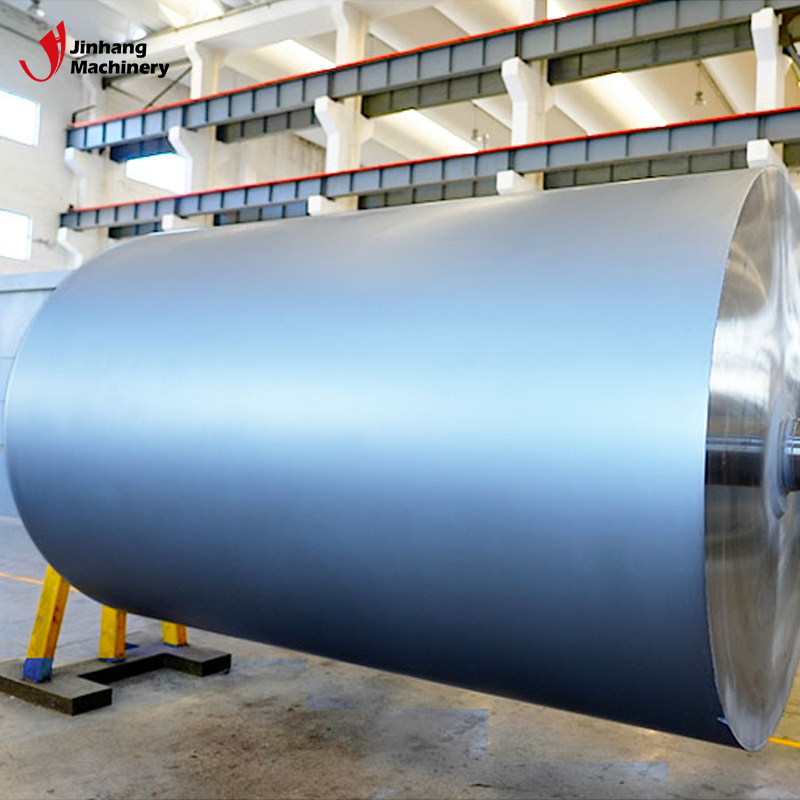
•Maximum Outer Diameter: 2000 mm
•Maximum Length: 8000 mm
This demonstrates that the company's equipment scale, machining systems, and technical capabilities have all reached international standards.
Why do different industrial rollers require different materials and surface treatments?
The surface material of an industrial roller determines its specific function.
1. Rubber Rollers
Suitable for printing, packaging, and rewinding equipment; the primary focus is on elasticity and chemical resistance.
2. Chrome-Plated Rollers
Highly wear-resistant and hard; suitable for processing optical-grade materials and for metalworking applications.
3. Mirror-Finish Rollers
Require extremely high surface smoothness (low roughness); used in the production of plastic films, lithium-ion battery materials, and coating equipment.
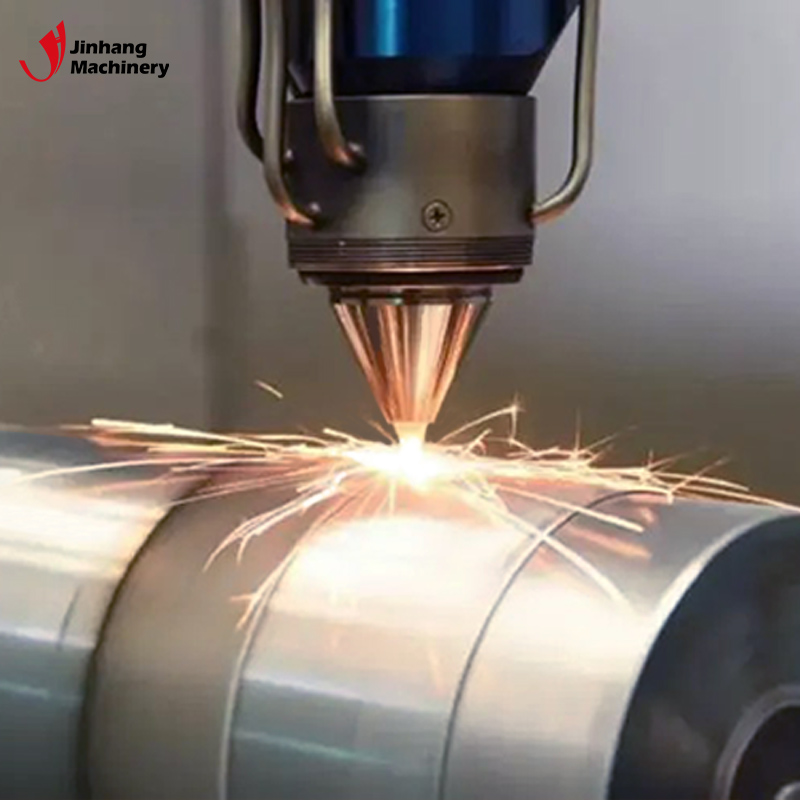
4. Tungsten Carbide Rollers
Possess exceptional hardness and wear resistance; suitable for use in the mining, metallurgy, and heavy-duty industrial sectors.
5. Heating Rollers
Used for heat treatment, calendering, and setting processes; require internal oil or water circulation channel structures.
6. Cooling Rollers
Used for rapid cooling processes; require materials with high thermal conductivity and high tensile strength steel.
Jinhang Machinery offers a wide range of materials and coating technologies, allowing us to engineer the performance of industrial rollers to meet diverse requirements and ensure a perfect fit with the client's production line.
What are the key technical features of Jinhang Machinery's industrial roller manufacturing?
1. High-Precision Machining System
Equipped with specialized machinery dedicated to roller processing, ensuring stability and balance during the machining of long shafts.
2. Precision Surface Treatment Capabilities
Capable of executing a variety of specialized surface treatments, including mirror finishes, super-mirror finishes, matte/frosted finishes, hard chrome plating, electroplating, and carbide thermal spraying.
3. Custom-Engineered Internal Structures
Particularly for heating and cooling rollers, the following features can be—and often are—custom-engineered to meet specific process requirements:
•Oil circulation channel design
•Water circulation channel design
•Heat exchange layout optimization
•Fluid flow path optimization
•Structures designed for uniform temperature distribution
All such features are customized to an engineering-grade standard based on actual operational requirements.
4. High-Strength Material Supply Chain
Available Options:
•High-strength steel
•Wear-resistant alloy steel
•Engineering composite materials
•Specialized hard alloy coatings
— Tailored to meet the demands of diverse operating environments.
5. Dynamic Balancing Inspection for Roller Bodies
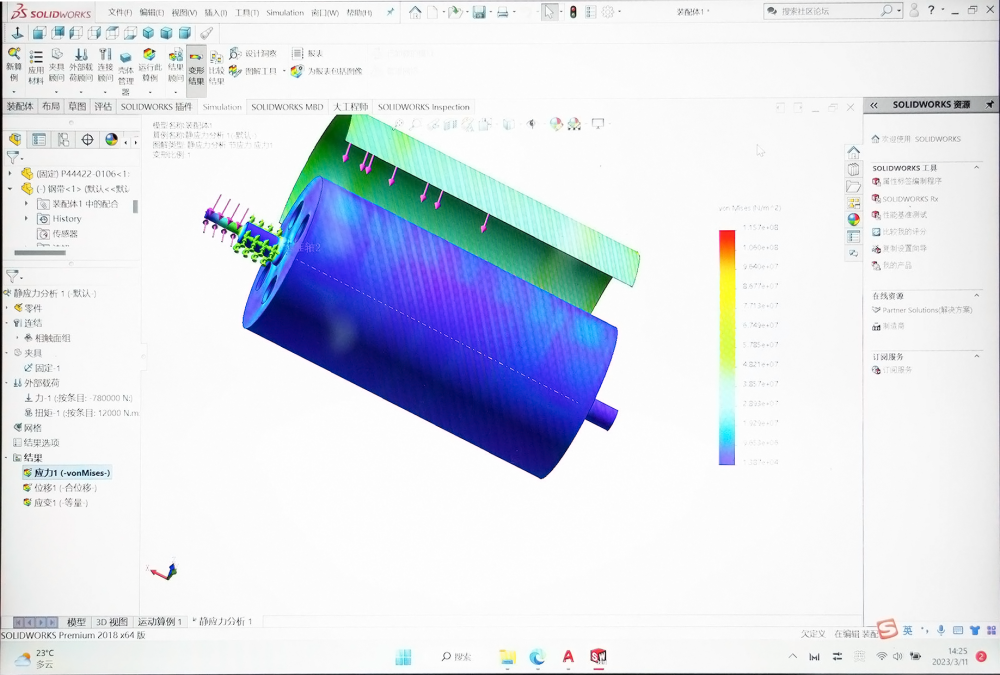
Large-scale and high-speed industrial rollers require an exceptional degree of balance. Jinhang Machinery provides professional dynamic balance analysis to ensure vibration-free operation at high speeds.
Why do companies prefer Jinhang Machinery for custom industrial rollers?
1. Robust Equipment Capabilities
Capable of machining industrial rollers with dimensions up to 2000 mm × 8000 mm.
2. High Precision
A precision tolerance of 0.002 mm signifies suitability for use in high-end industrial sectors.
3. Extensive Product Range
Includes a wide variety of types, such as rubber rollers, mirror-finish rollers, heated rollers, tungsten carbide rollers, and more.
4. Rich Industry Experience
Serving sectors including lithium-ion batteries, metallurgy, printing, packaging, mining, automotive testing, and others.
5. In-Depth Customization Support
Complex structures, specialized coatings, multi-zone heating configurations, and unique geometries can all be custom-manufactured.
6. Integrated Manufacturing and Engineering Design Capabilities
We not only manufacture the rollers but also provide structural design recommendations based on specific process requirements.
These advantages establish Jinhang Machinery as a reliable and trusted supplier in the field of custom industrial rollers.
Who is capable of customizing industrial rollers?
The answer lies with professional manufacturers who can truly meet the rigorous demands of the industry.
As core components within industrial production lines, industrial rollers are subject to extremely high standards regarding precision, dimensions, materials, and structural integrity.
Companies capable of truly customizing industrial rollers must possess the following comprehensive capabilities:
•Large-scale machining capabilities
•Ultra-high precision manufacturing capabilities
•Expertise in processing a diverse range of materials
•Specialized coating application technologies
•Engineering design and fluid dynamics design capabilities
•A deep understanding of specific industry processes
Jinhang Machinery is precisely the professional manufacturer that embodies these comprehensive capabilities.
Our manufacturing scope encompasses a wide array of industrial rubber rollers, heated rollers, cooling rollers, mirror-finish rollers, chrome-plated rollers, tungsten carbide rollers, and various non-standard roller types tailored for specialized industries—all produced with world-class dimensions and precision.