
Which coating offers the greatest hardness for industrial rollers?
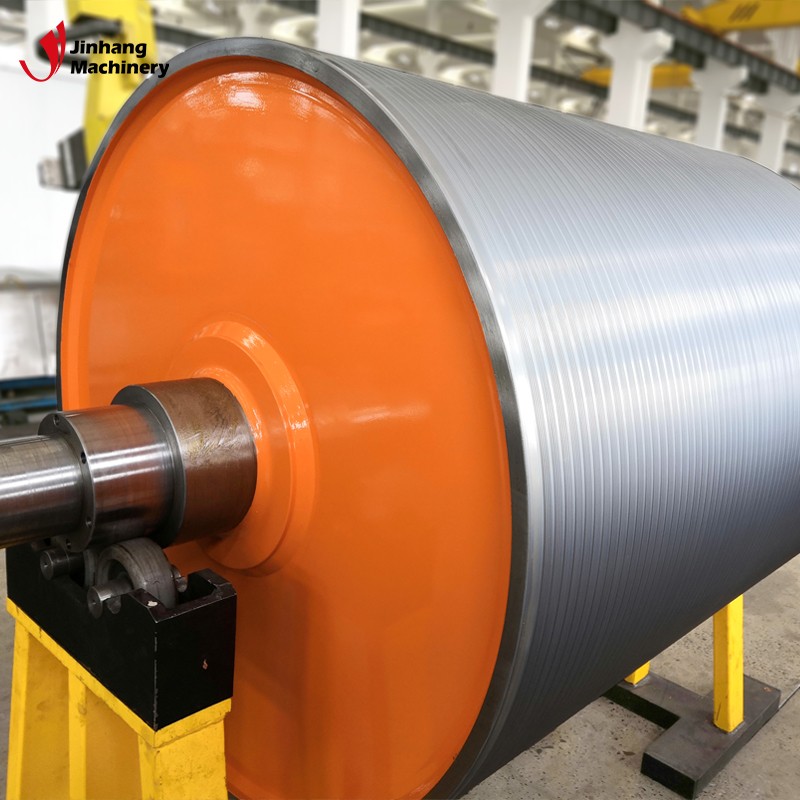
In modern industrial manufacturing, industrial rollers are critical components of many core systems. From steel rolling, papermaking, printing, textiles, and lithium-ion battery coating to the production of optical films, plastic sheets, and new energy materials, industrial rollers perform a wide range of functions, including transport, pressing, calendering, guiding, shaping, heating, and surface treatment. Although the structure of an industrial roll appears simple—typically consisting of a core, bearing seats, and a functional surface layer—the factors that truly determine its lifespan and performance are usually not the core itself, but the coating system on its surface.
In industrial settings, the most common cause of roller failure is not structural fracture, but surface wear. As production line speeds increase, material hardness rises, and process precision requirements become more stringent, roll surfaces are subjected to multiple stresses, including friction, impact, scratching, corrosion, and high-temperature thermal cycling. If the surface hardness is insufficient, issues such as scratching, abrasion, pitting, delamination, and even loss of roundness can quickly arise, ultimately compromising the stable operation of the entire production line.
Consequently, equipment engineers, procurement specialists, and roller manufacturers frequently discuss the question: Which coating provides the greatest hardness for industrial rolls?
While this question appears to focus on hardness values, it actually involves complex engineering logic. "Hardness" in a roller coating does not merely imply high micro-hardness; it encompasses multiple dimensions, such as wear resistance, crack resistance, adhesion, impact resistance, and high-temperature stability. Some coatings may possess extreme hardness but suffer from excessive brittleness, whereas others with slightly lower hardness may offer a longer actual service life.
Therefore, answering the question of which coating is the hardest requires an analysis based on both materials science and industrial application.
Why do industrial rollers require high-hardness coatings?
The fundamental reason industrial rollers require high surface hardness is to withstand long-term wear and maintain dimensional accuracy.
In most industrial scenarios, industrial rollers operate under conditions of continuous contact. For instance, calendering rolls remain in prolonged contact with metals or polymers; coating rolls must operate in tandem with slurries and doctor blades; and guide rollers are subjected to continuous film tension and friction. These operating conditions inevitably lead to gradual surface wear.
Once wear occurs, a chain reaction of problems often follows: surface roughness increases, degrading the contact quality with the material; the roller diameter changes, disrupting drive synchronization; and localized indentations may appear, resulting in uneven product thickness, pressure marks, or scratches.
Statistics on industrial equipment maintenance indicate that in continuous production facilities, approximately 35% to 50% of maintenance requirements for industrial rollers are directly linked to surface wear. In high-precision sectors—such as the manufacturing of lithium-ion battery electrodes and optical films—surface wear exceeding 10 micrometers can lead to a significant rise in product defect rates.
This is precisely why the manufacture of industrial rollers increasingly relies on high-performance coatings.
High-hardness coatings for industrial rollers offer three key benefits: significantly improved wear resistance, enhanced scratch resistance, and extended maintenance intervals (thereby reducing downtime costs).
How is the hardness of industrial roller coatings measured?
Before discussing the hardest coatings available, it is essential to understand the units of measurement.
Common hardness scales for industrial roller coatings include:
•HV (Vickers Hardness)
•HRC (Rockwell Hardness)
•Mohs (Mohs Hardness)
Vickers Hardness (HV) is the most widely used scale in the industrial sector.
For reference:
•Ordinary structural steel: approx. 150–250 HV
•Quenched steel: approx. 600–800 HV
•Industrial hard chrome plating: approx. 850–1100 HV
•Alumina (aluminum oxide) ceramic: approx. 1200–1800 HV
•Chromium carbide: approx. 1400–1800 HV
•Tungsten carbide: approx. 1800–2500 HV
•Diamond coating: over 8000 HV
In terms of numerical values, diamond is undoubtedly the hardest material. However, the suitability of a coating for industrial rollers depends on more than just theoretical hardness.
What are the common high-hardness coatings for industrial rollers?
Currently, the high-hardness coatings commonly used for industrial rollers fall into the following categories:
1. Hard Chrome Coating: The Classic Solution for Industrial Rollers
Hard chrome plating is one of the most traditional surface-strengthening processes in the industrial roller sector.
Through electroplating, a hard chrome layer—typically 20–300 microns thick—is formed on the roller's surface. The primary advantages of hard chrome rollers are their moderate cost, mature processing technology, and high surface finish.
Typical properties of hard chrome rollers:
•Hardness: 850–1100 HV
•Low coefficient of friction
•Good corrosion resistance
•Surface easily polished to a mirror finish
Hard chrome rollers remain widely used across many industries, including:
•Printing rollers
•Mirror-finish calendering rollers
•Packaging rollers
•Film processing rollers
While hard chrome rollers offer excellent performance, they do not provide the absolute highest hardness among industrial roller coatings.
Limitations of Hard Chrome
Hard chrome rollers have several limitations:
First, their service life is limited under conditions of extreme wear.
Second, micro-cracks may develop under high-impact loads.
Third, environmental regulations regarding hexavalent chromium processes are becoming increasingly strict.
Consequently, a growing number of industrial roller manufacturers are adopting thermal spray solutions.
2. Ceramic Coatings: A Key Upgrade Path for High-Hardness Industrial Rollers
Ceramic coating technology has been one of the fastest-growing areas in the high-end industrial roller sector in recent years.
Common materials for ceramic roller coatings include:
•Aluminum oxide (Alumina)
•Chromium oxide
•Zirconium oxide (Zirconia)
•Composite ceramics
The advantages of ceramic rollers lie in their high hardness and corrosion resistance.
Typical properties:
•Hardness: 1200–1800 HV
•Strong chemical corrosion resistance
•Excellent high-temperature resistance
•Controllable surface texture
Ceramic rollers are widely used in:
•Papermaking
•Lithium-ion battery manufacturing
•Printing
•Chemical processing equipment
Compared to hard chrome rollers, ceramic rollers typically offer more than double the wear resistance.
3. Chromium Carbide Coatings: An Excellent Balance of Wear and Corrosion Resistance
Chromium carbide coatings represent a significant category of thermal spray coatings for industrial rollers.
These coatings offer a combination of:
•High hardness
•Good toughness
•Oxidation resistance
•High-temperature stability
Typical hardness:
1400–1800 HV
These rollers perform exceptionally well in high-temperature environments.
Suitable applications include:
•Hot processing
•High-temperature calendering
•Metal strip processing
4. The Hardest Industrial Roller Coating: Tungsten Carbide
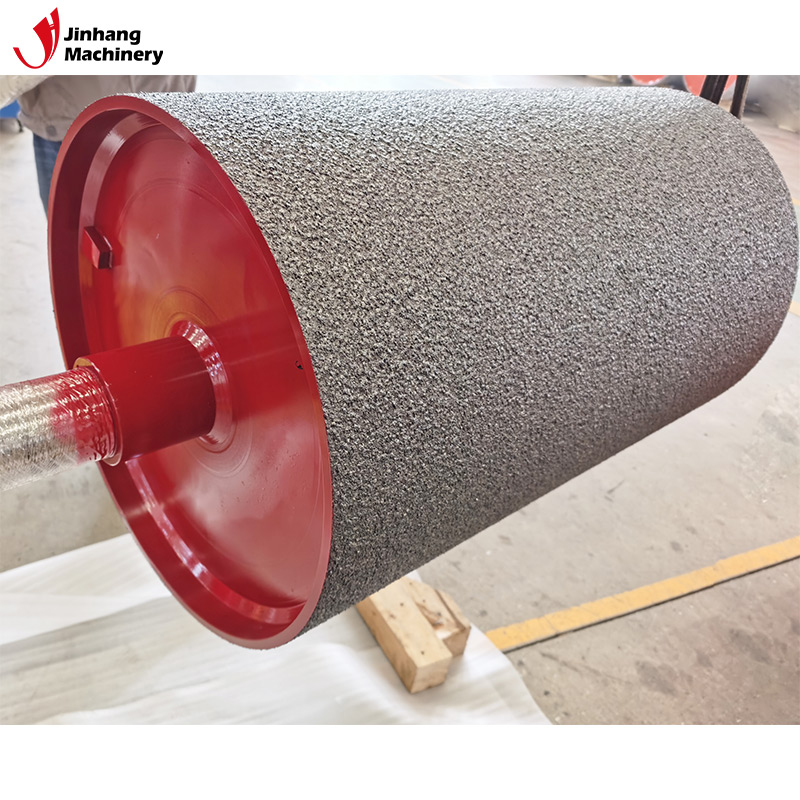
Excluding laboratory-grade diamond materials, tungsten carbide is generally considered one of the hardest and most practical coating materials for industrial rollers.
Tungsten carbide rollers are often described as setting the "gold standard" for hardness in the industry because they strike an optimal balance between hardness and engineering practicality.
Why are tungsten carbide rollers the hardest?
Tungsten carbide is inherently an ultra-hard material.
Its microhardness typically reaches:
1800–2500 HV
Some high-performance formulations achieve even higher values.
For comparison:
Hard chrome rollers are approximately 1000 HV.
Tungsten carbide rollers can achieve more than double that figure.
What does this mean?
According to the theory of abrasive wear, higher material hardness results in greater resistance to abrasive cutting. When the roller comes into contact with hard particles (such as ceramic slurries, metal powders, or mineral fillers), the tungsten carbide surface is far less susceptible to scratching.
In wear tests, the service life of tungsten carbide rollers is typically 5 to 15 times that of hard chrome rollers.
Why are tungsten carbide rollers so wear-resistant?
There are three main reasons:
First, a high content of hard phases.
Second, a dense microstructure.
Third, low porosity.
Advanced HVOF (High-Velocity Oxy-Fuel) spraying processes can keep porosity below 1%, significantly extending the coating's service life.
Where are tungsten carbide rollers used?
They are typically employed in extreme operating conditions. Examples include:
•Lithium-ion battery roller pressing
•Metal strip processing
•Steel rolling
•High-wear conveying
•Fiberglass processing
These industries share the following characteristics:
•High loads
•High speeds
•High wear
•High precision requirements
In these scenarios, standard industrial roller coatings often fail quickly.
Is diamond coating the hardest?
In terms of pure hardness, yes.
Diamond hardness far exceeds that of any other industrial roller coating.
Theoretical hardness:
8,000–10,000 HV
Far higher than tungsten carbide industrial rollers.
But why are diamond coatings rarely used on industrial rollers?
The reason lies in engineering limitations.
Practical issues with diamond coatings:
First, the cost is extremely high.
Second, it is difficult to apply to large industrial rollers.
Furthermore, diamond coatings are relatively brittle and may fail when the roller is subjected to impact.
Additionally, many industrial rollers operate at high temperatures, and diamond has stability limitations in high-temperature environments.
Therefore, while diamond is the hardest material, it is not the most practical coating for industrial rollers.
From a practical industrial perspective:
Tungsten carbide remains the hardest coating that is also viable for mass industrial application.
What should be considered when selecting high-hardness coatings for industrial rollers?
Many companies mistakenly believe that harder is always better for industrial rollers.
In reality, this is not the case.
1. Hardness is not the only metric
The service life of an industrial roller depends on more than just hardness.
It also depends on:
•Toughness
•Adhesion
•Thermal stability
•Surface roughness
For example, some industrial rollers require a mirror-like finish.
While tungsten carbide is hard, achieving a mirror finish is difficult; hard chrome coatings, conversely, make it easier to achieve a super-mirror finish.
2. The issue of brittleness
Excessive hardness usually implies increased brittleness.
If an industrial roller is subjected to cyclic impacts—such as:
•Edge loading
•Blade pressure
•Localized impacts
—an overly hard coating may crack.
Therefore, the choice of industrial roller coating must take the specific operating conditions into account.
FAQ
Q1: Is diamond the hardest industrial roller coating?
Theoretically yes, but they are less commonly used in industrial applications.
Q2: How much harder are tungsten carbide industrial rollers compared to hard chrome industrial rollers?
Typically, the hardness can reach more than double that of hard chrome industrial rollers.
Q3: Is it always better for industrial rollers to be harder?
Not necessarily; toughness and impact resistance must also be considered.
Q4: Will hard chrome industrial rollers be phased out?
Not in the short term, as they still offer significant advantages in terms of cost and processing.
Q5: Which industries are best suited for tungsten carbide industrial rollers?
They are most commonly used in the lithium battery, steel, metal processing, and high-wear industries.