
What are the differences between industrial NBR and EPDM rubber rollers?
In the field of industrial manufacturing, rubber rollers are vital components that are ubiquitous yet often underestimated. From printing and papermaking equipment to textile machinery, steel processing, film production, packaging conveyors, and new energy material manufacturing, rubber rollers are found in almost every industrial scenario requiring transport, pressing, coating, extrusion, or guiding. Although a rubber roller may appear to be simply a "metal core encased in a layer of rubber," the choice of material directly impacts equipment lifespan, processing quality, and production stability.
Among the many materials used for industrial rubber rollers, NBR and EPDM are the two most frequently utilized categories. Procurement specialists and equipment engineers often face the same question when selecting rollers: what exactly distinguishes industrial NBR rollers from EPDM rollers? Why do some machines require NBR rollers, while other operating conditions are better suited to EPDM? Is the difference merely a matter of temperature resistance, or are there fundamental disparities in oil resistance, aging resistance, and mechanical properties?
In fact, the differences between NBR and EPDM rubber rollers go far beyond surface-level specifications. They differ significantly across multiple dimensions, including molecular structure, chemical stability, resistance to media, hardness retention, compression set, and service life. These differences determine their suitability for various industrial applications and directly influence a company's maintenance costs and production efficiency.
This article provides a systematic analysis of the key differences between industrial NBR and EPDM rubber rollers, covering material principles, performance comparisons, application industries, and selection logic.
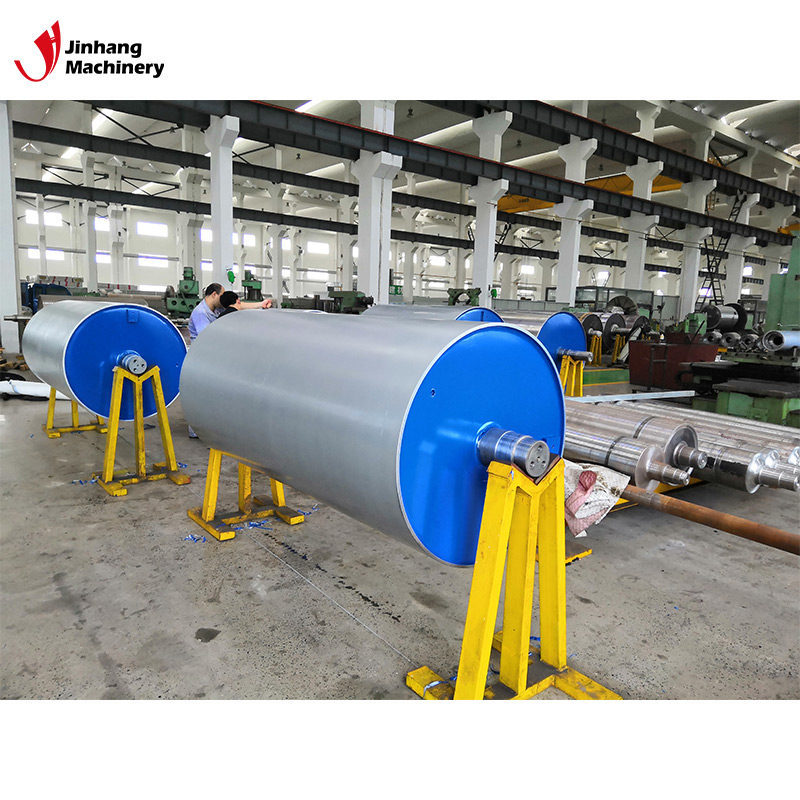
What is an NBR rubber roller?
The "NBR" in NBR rubber rollers stands for Nitrile Butadiene Rubber. Produced through the copolymerization of butadiene and acrylonitrile, it is one of the most classic oil-resistant rubber materials in the industrial sector.
The defining characteristic of NBR rubber rollers is their excellent oil resistance. Due to the presence of highly polar nitrile groups in their molecular structure, NBR rollers exhibit strong resistance to mineral oils, hydraulic fluids, greases, and various petroleum-based media. This makes them the preferred choice for industrial environments involving oil contamination, lubricants, or organic media.
In terms of basic physical properties, industrial-grade NBR rubber rollers typically fall within the following parameter ranges:
•Hardness range: 40–95 Shore A
•Operating temperature: -20°C to 120°C
•Tensile strength: 10–25 MPa
•Elongation: 250%–600%
•Compression set: Moderate to excellent
Because NBR rubber rollers combine elasticity with wear resistance, they can withstand complex mechanical loads while maintaining good roller surface stability.
In practical industrial applications, NBR rubber rollers are commonly found in:
•Printing ink rollers
•Coating rollers
•Steel sheet cleaning rollers
•Metal processing conveyor rollers
•Packaging machinery nip rollers
It can be said that whenever a production environment involves significant exposure to oily media, NBR rubber rollers are usually a top choice.
What is an EPDM rubber roller?
The "EPDM" in EPDM rubber rollers stands for Ethylene Propylene Diene Monomer. Produced by polymerizing ethylene, propylene, and a small amount of non-conjugated diene, it is a classic weather-resistant rubber material used in industry.
Unlike NBR rubber rollers, the core advantage of EPDM rubber rollers is not oil resistance, but rather their exceptional resistance to aging, ozone, high-temperature steam, and chemical corrosion.
EPDM rubber rollers feature a highly saturated molecular backbone, resulting in outstanding oxidation resistance. They tend to perform more stably than NBR rubber rollers in environments characterized by high temperatures, high humidity, intense UV radiation, and ozone exposure.
Industrial-grade EPDM rubber rollers typically exhibit the following parameters:
•Hardness range: 40–90 Shore A
•Operating temperature: -40°C to 150°C
•Short-term temperature resistance: Up to 170°C
•Tensile strength: 7–20 MPa
•Elongation: 300%–700%
As the data shows, EPDM rubber rollers generally outperform NBR rubber rollers in terms of low-temperature and heat resistance. In industrial applications, EPDM rubber rollers are commonly used in:
•Papermaking equipment
•Dyeing and finishing equipment
•Water treatment equipment
•Hot water transport systems
•Equipment operating in steam environments
EPDM rubber rollers offer distinct advantages, particularly in high-temperature, hot, and humid environments.
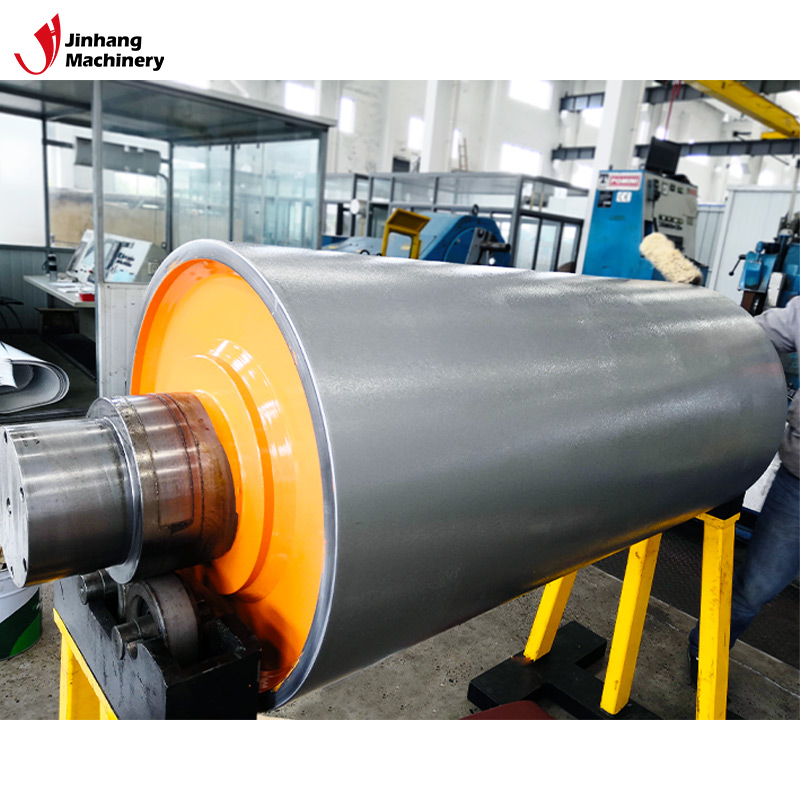
Key Differences Between NBR and EPDM Rubber Rollers
Many engineers simply assume that the difference between NBR and EPDM rubber rollers is that "one is oil-resistant while the other is heat-resistant." While this understanding is correct in principle, it is incomplete.
The true differences must be examined from multiple perspectives.
Oil Resistance Comparison: NBR Rubber Rollers Clearly Lead
When it comes to oil resistance, NBR rubber rollers are vastly superior to EPDM rubber rollers.
This is because the nitrile groups in NBR material effectively resist the penetration of non-polar oil molecules, thereby minimizing swelling. In industrial settings, swelling is the most common issue encountered when rubber rollers come into contact with oil. Swelling leads to:
•Increased roller diameter
•Reduced hardness
•Surface softening
•Loss of dimensional accuracy
Tests conducted in hydraulic oil environments show:
Standard NBR rubber rollers typically exhibit a volume swell rate of less than 10%, whereas EPDM rubber rollers can swell by more than 30% under the same conditions.
This means that EPDM rubber rollers are likely to fail rapidly upon contact with oil-based media.
Therefore:
NBR rubber rollers are the preferred choice when dealing with the following media:
•Lubricating oils
•Gear oils
•Fuel oils
•Petroleum solvents
•Printing inks
This is one of the most critical differences between the two.
High-Temperature Resistance: EPDM Rubber Rollers Perform Better
EPDM rubber rollers generally perform better in high-temperature environments.
Although NBR rubber rollers can withstand operating temperatures of around 120°C, their aging process accelerates significantly when temperatures consistently exceed 100°C. The rubber molecular chains break down, leading to hardening, cracking, and a loss of elasticity.
In contrast, due to their more stable molecular structure, EPDM rubber rollers maintain good mechanical properties even during long-term exposure to temperatures between 120°C and 150°C.
Industry test data shows:
After aging at 140°C for 100 hours:
•The hardness of NBR rubber rollers can change by 15–20 Shore A.
•The hardness change for EPDM rubber rollers is typically less than 8 Shore A.
This indicates that EPDM rubber rollers offer superior high-temperature stability.
Therefore:
EPDM rubber rollers are commonly used for high-temperature heated rollers and steam-processing equipment.
Why is there such a significant difference in high-temperature environments?
The fundamental reason lies in the molecular structure.
NBR contains a high number of double bonds, making it more susceptible to oxidation. EPDM features a highly saturated polymer backbone, providing superior resistance to thermo-oxidative aging.
This is why EPDM rubber rollers are highly popular in thermal processing industries.
Weather and Ozone Resistance: EPDM Rubber Rollers Hold a Major Advantage
This is a traditional strength of EPDM rubber rollers.
Ozone, oxygen, and UV radiation in industrial environments can gradually degrade the rubber's molecular structure. Prolonged exposure can lead to:
•Surface cracking
•Loss of elasticity
•Hardening
•Embrittlement
While NBR rubber rollers perform adequately in indoor equipment, their service life is significantly reduced by long-term exposure to outdoor conditions or high-ozone environments.
In contrast, EPDM rubber is considered a benchmark material for weather resistance.
Experimental data shows that in an environment with 50 pphm ozone concentration:
•NBR rubber rollers may develop cracks after just tens of hours.
•EPDM rubber rollers remain stable even after hundreds of hours.
Consequently, EPDM rubber rollers are better suited for:
•Outdoor conveying equipment
•High-ozone environments
•Environments with UV exposure
Water Vapor Resistance: EPDM Rubber Rollers Are Ideal for Hot and Humid Environments
High-humidity and high-temperature conditions are common in the papermaking, textile, and dyeing/finishing industries.
These environments place demanding requirements on rubber rollers.
Although NBR rubber rollers are oil-resistant, their performance with high-temperature steam is limited; prolonged contact with hot water or steam can lead to hydrolysis or performance degradation.
EPDM rubber rollers excel in this regard.
They demonstrate excellent compatibility with the following media:
•Hot water
•Steam
•Dilute acids
•Dilute alkalis
As a result, EPDM rubber rollers typically offer a longer service life in hot and humid environments.
Differences in Mechanical Properties Between NBR and EPDM Rubber Rollers
Beyond chemical properties, mechanical properties are also critical factors in selection.
1. Comparison of Wear Resistance
Generally, NBR rubber rollers offer slightly better wear resistance than EPDM rollers.
This is due to the stronger intermolecular forces in NBR, which provide greater stability under frictional conditions.
Consequently, NBR rollers are typically more wear-resistant in applications involving:
•High-frequency contact
•High-pressure transport
•Continuous pressing/nipping
2. Comparison of Resilience
EPDM rubber rollers often exhibit superior resilience.
Better resilience implies:
•Rapid recovery after compression
•Good dynamic response
•Minimal long-term deformation
This is crucial for industrial equipment requiring sustained elastic contact.
3. The Impact of Compression Set
High compression set means the rubber roller struggles to return to its original shape after prolonged compression.
This can result in:
•Loss of roller roundness
•Localized hard spots
•Uneven contact pressure
EPDM rollers generally demonstrate greater stability in this regard.
How to Choose Between NBR and EPDM Rubber Rollers?
Selection should not be based on a single parameter alone.
When to Prioritize NBR Rubber Rollers
NBR rollers are recommended for operating conditions characterized by:
•Oily environments
•Contact with lubricants
•Ink systems
•High wear resistance requirements
•Ambient to moderate temperature ranges
Example:
Ink rollers in printing machinery predominantly use NBR rubber.
When to Prioritize EPDM Rubber Rollers
EPDM rollers are more suitable for conditions involving:
•High temperatures
•Steam exposure
•Hot water exposure
•Outdoor equipment
•High ozone exposure
Example:
Wet press rollers in papermaking equipment typically use EPDM rubber.
FAQ
Q1: Can NBR rubber rollers withstand high temperatures?
Yes, but long-term operation above 120°C is generally not recommended.
Q2: Can EPDM rubber rollers come into contact with oil?
Not recommended. EPDM rubber has poor oil resistance.
Q3: Which type of rubber roller has a longer service life?
It depends on the operating conditions. NBR is more durable in oily environments, while EPDM has a longer service life in high-temperature, hot, and humid environments.
Q4: Are NBR rubber rollers more expensive than EPDM rubber rollers?
Price differences are not absolute; they depend on the formulation, hardness, and manufacturing process.