
Is EPDM Industrial Roller Plastic or Rubber?
Among the many industrial roller materials, EPDM (Ethylene Propylene Diene Monomer) is a widely used coating material. Many engineers ask a common question when purchasing industrial rollers: "Is EPDM industrial roller plastic or rubber?"
The answer is very clear: EPDM industrial rollers belong to the rubber category, not the plastic category.
Because the name contains "EPDM," some non-professional users may mistakenly believe it might belong to a certain type of engineering plastic. However, EPDM is actually a typical synthetic rubber with excellent elasticity, resilience, weather resistance, steam resistance, and resistance to polar media. Therefore, it is widely used in calendering, printing, packaging, papermaking, textiles, and various continuous high-temperature environments.
This article will explore the material's nature, performance characteristics, application logic, and durability from multiple perspectives to help you fully understand why EPDM rubber rollers clearly belong to the rubber roller category, rather than plastic rollers.
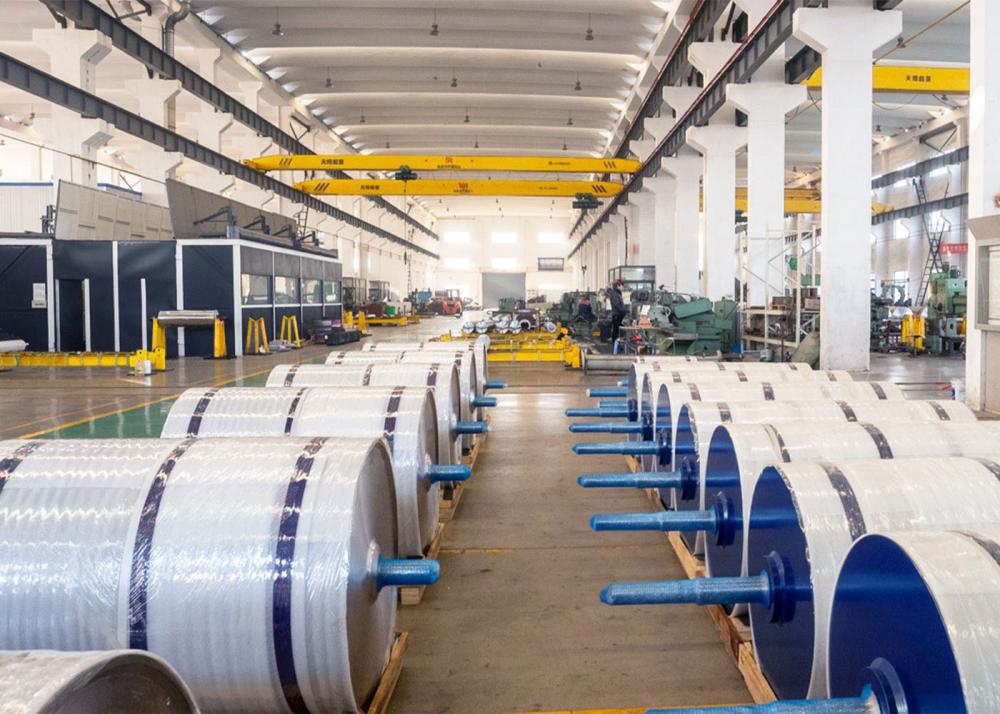
What exactly is EPDM industrial roller material?
EPDM is a typical synthetic rubber composed of ethylene, propylene, and a small amount of a third monomer. Its core characteristics are:
• Physically, it possesses rubber elasticity.
• Chemically, it exhibits the cross-linked structure of rubber.
• In processing, it belongs to the rubber molding system (vulcanization, compounding).
When EPDM is used as a surface coating for industrial rollers, the product is collectively referred to as an EPDM rubber roller.
Whether used in hot or cold pressing, roll traction, steam environments, or polar solvent environments, EPDM exhibits stable and reliable performance.
EPDM is not a thermoplastic material, nor is it an injection-molded reversible plastic. Therefore, based on the material definition,
EPDM industrial rollers belong to the category of rubber rollers, not plastic rollers.
Why can't EPDM rubber rollers be classified as plastics?
Many people confuse whether EPDM is rubber or plastic mainly because of its very strong weather resistance and chemical resistance, with some properties similar to certain engineering plastics. However, fundamentally, EPDM cannot be classified as a plastic for the following reasons:
1. Plastics lack elasticity, while EPDM possesses inherent rubber elasticity
EPDM exhibits the high elasticity and recoverability typical of rubber, while the deformation of engineering plastics is usually irreversible.
2. Plastics rely on melt processing, while EPDM belongs to the vulcanized rubber system
Rubber must undergo vulcanization cross-linking to achieve its shape, while plastics are processed through melt molding; the two processes are completely different.
3. The molecular structure of EPDM belongs to the long-chain elastomer category of rubber
Plastics tend to have a more crystalline structure, while EPDM is primarily an amorphous elastomer.
Therefore, from chemical structure to processing methods to mechanical properties, EPDM rubber rollers are completely different from plastic rollers.
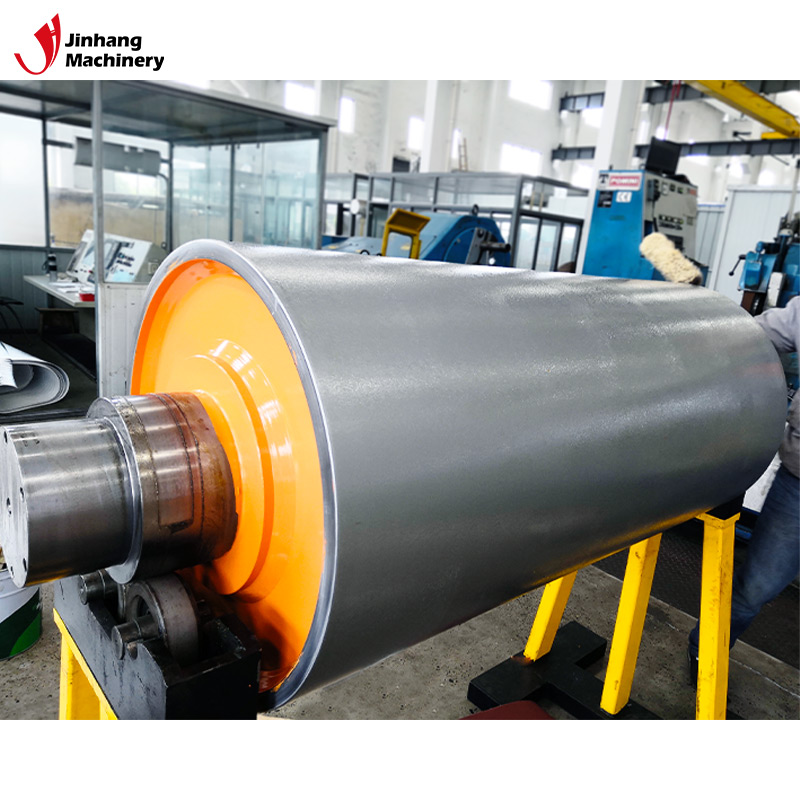
What are the rubber characteristics of the material structure of EPDM rubber rollers?
The reason why EPDM rubber rollers are classified as rubber rollers is reflected both in their physical elasticity and their internal molecular structure.
1. Typical Rubber Molecular Chain Structure
EPDM is composed of saturated ethylene-propylene backbone chains, belonging to the typical elastomer category. It can withstand strain under pressure and return to its original shape.
2. Rubber-Specific Three-Dimensional Crosslinking System
After vulcanization, EPDM forms an elastic rubber network structure, a core characteristic of rubber, which plastics do not possess.
3. Excellent Resilience
EPDM rubber rollers maintain good resilience and a stable surface morphology even under long-term compression.
4. Superior Heat and Steam Resistance and Structural Stability
One of EPDM's greatest advantages is its resistance to steam and high-temperature aging, and its structural stability is far superior to common rubbers.
These characteristics are typical of rubber and do not belong to the plastic system.
Why can the hardness of EPDM rubber rollers range from soft to hard?
Although EPDM is a type of rubber, in the industrial roller field, EPDM rubber rollers have a very wide hardness range, from Shore A 40° to 90°.
Does this mean it has plastic properties?
No.
A wide hardness range simply indicates high formulation adjustability, a common characteristic of rubber materials, not plastics.
Factors affecting the hardness of EPDM rubber rollers include:
• Filler system (e.g., carbon black, silica)
• Vulcanization system (sulfur content, accelerator system)
• Plasticizer ratio in the formulation
• Hardness requirements of the operating conditions
Increasing hardness does not change the "rubber essence" of EPDM; it will always be an elastomer, not a plastic.
Will EPDM rubber rollers change their material properties due to environmental factors?
Although EPDM has extremely strong weather resistance and aging resistance, it is still a rubber material and will undergo some normal aging changes over time and under different operating conditions, such as:
• Long-term exposure to high temperatures leads to a slight increase in cross-linking of rubber chains
• Continuous exposure to chemical media may cause surface hardening
• Long-term mechanical wear reduces the thickness of the rubber layer
These changes do not make EPDM a "plasticized" material, but are simply normal aging characteristics of rubber.
The biggest advantages of EPDM are:
It ages more slowly than most rubbers, has more stable performance, and better steam resistance.
This is why many companies choose EPDM rubber rollers over other rubber roller materials.
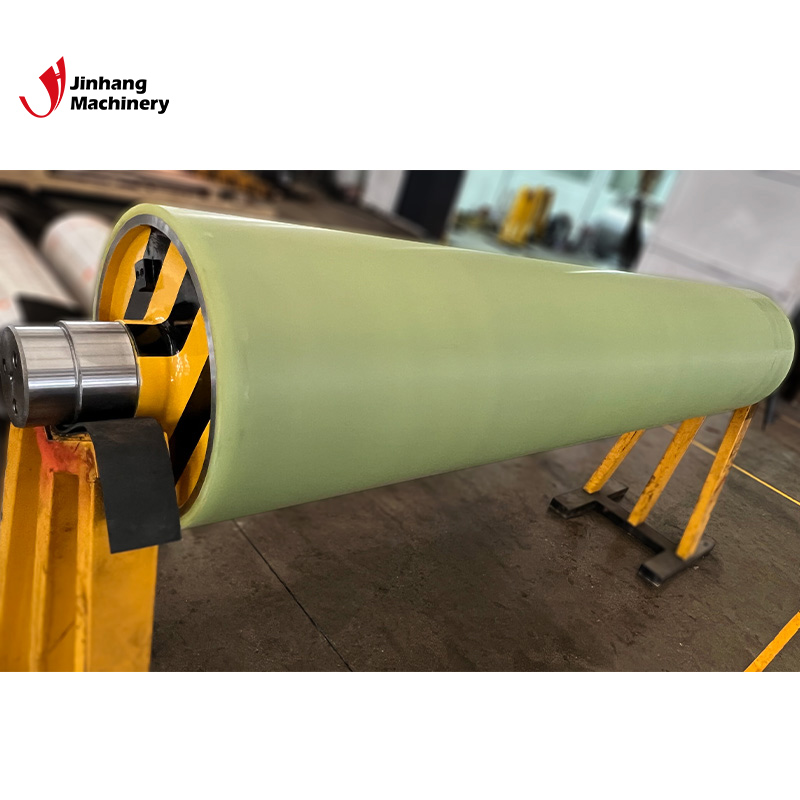
Why are EPDM rubber rollers so widely favored in industry?
EPDM rubber rollers have outstanding advantages, especially in high-temperature, steam, polar media, and outdoor environments where they perform best.
The main reasons include:
1. Excellent water and steam resistance
EPDM hardly absorbs water, swells, or degrades in water and steam environments, making it one of the rubbers with the best steam resistance.
2. High-temperature stability
Even after long-term operation at 150–180°C, its mechanical properties remain stable.
3. Superior ozone resistance and weather resistance
Long-term outdoor use shows almost no cracking, which is one of EPDM's biggest selling points.
4. Excellent elasticity and resilience
Suitable for applications requiring balanced pressure, shock absorption, and stable coating effects. These characteristics align with the properties of rubber materials, which are completely different from those of plastics.
What key parameters should be considered when selecting EPDM rubber rollers?
To ensure that EPDM rubber rollers are suitable for actual working conditions, the following parameters should be given special attention during selection:
1. Hardness (Shore A)
Determined based on pressure, linear speed, and the paper/film feeding characteristics of the material.
2. Surface Roughness
Smooth or textured surfaces depend on material gripping, friction, and traction requirements.
3. Operating Temperature Range
High-temperature steam conditions require formulations with higher upper temperature resistance.
4. Type of Chemical Media
Acids, alkalis, polar solvents, and oxidants all affect the selection of rubber formulations.
5. Linear Speed and Load
High-speed roll-to-roll equipment and heavy-duty equipment have different requirements for rubber strength.
By comprehensively evaluating the above parameters, it can be ensured that EPDM rubber rollers maintain stable performance during long-term use.
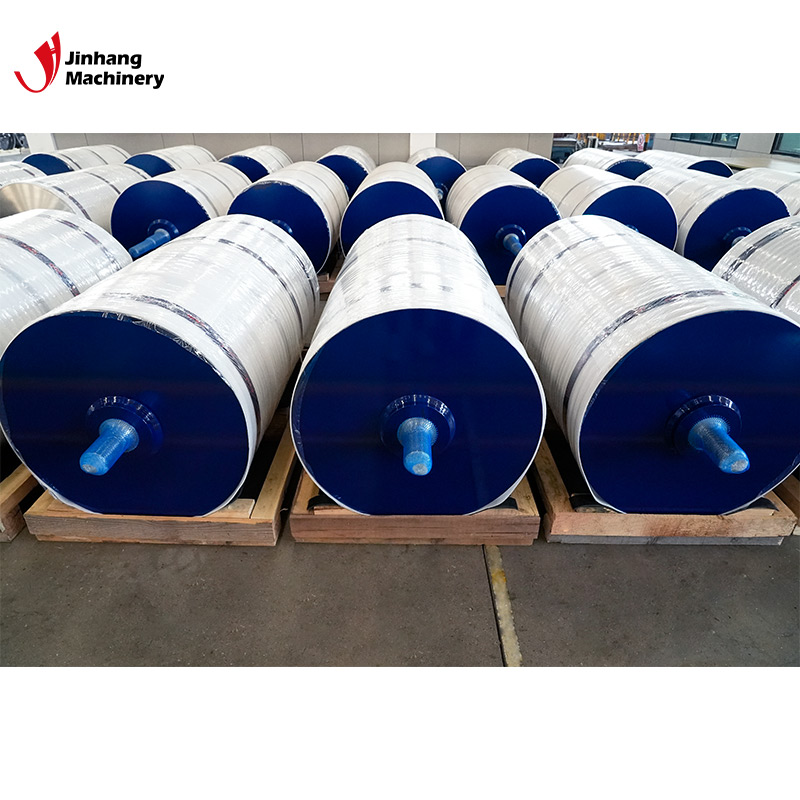
Why are EPDM industrial rollers clearly classified as rubber?
Through analysis of the material's nature, processing methods, mechanical properties, and practical application requirements, the following conclusions can be clearly drawn:
✅ EPDM is a synthetic rubber, not any type of plastic.
✅ EPDM rubber rollers possess the typical elasticity, weather resistance, resilience, and vulcanization-cured structure of rubber.
✅ Its uses, processes, and performance fall entirely within the category of rubber rollers.
✅ Regardless of hardness or how harsh the operating environment, its essence remains rubber.
Therefore, the question "Is EPDM industrial roller a plastic or rubber?" is very clear: EPDM industrial rollers are rubber, and specifically, a rubber roller with extremely stable performance.