What Are the Common Internal Structures of Industrial Heating Rollers?
In numerous industries involving thermal processing, calendering, glazing, coating, laminating, and extrusion, the "heating roller" serves as a critical component for ensuring that materials achieve a stable temperature and uniform heating. While many focus on a heating roller's external quality, surface plating, diameter, and precision, the core factors that truly determine heating quality, temperature control capabilities, thermal efficiency, and stability actually lie hidden within the roller's internal structure.
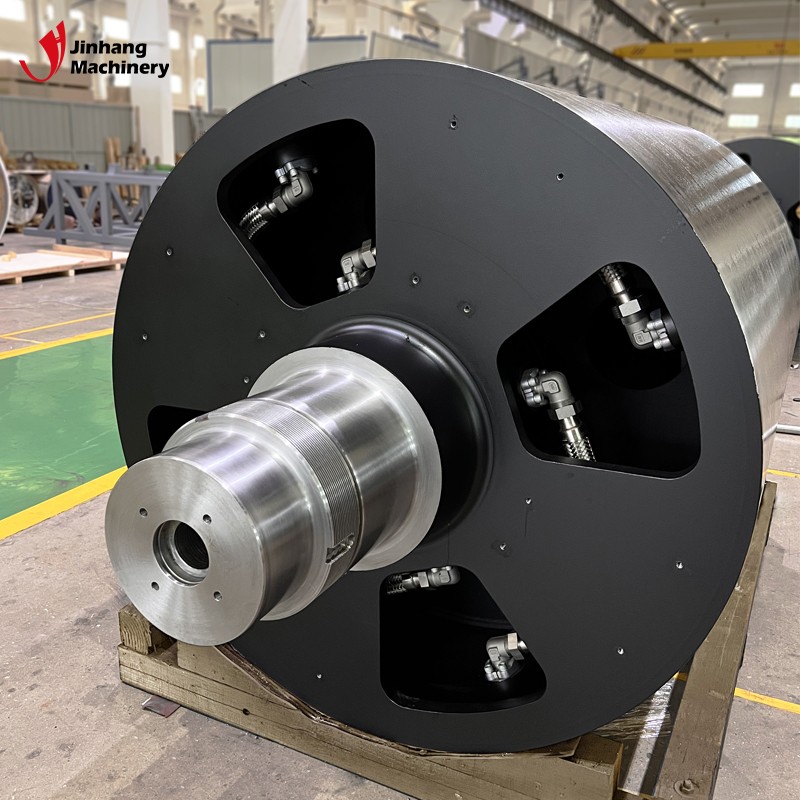
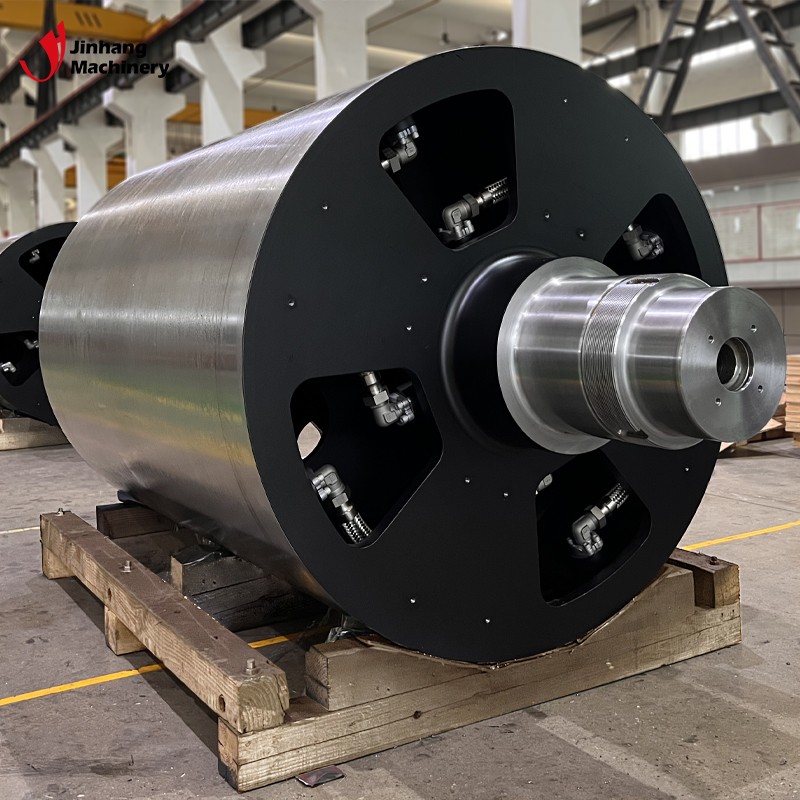
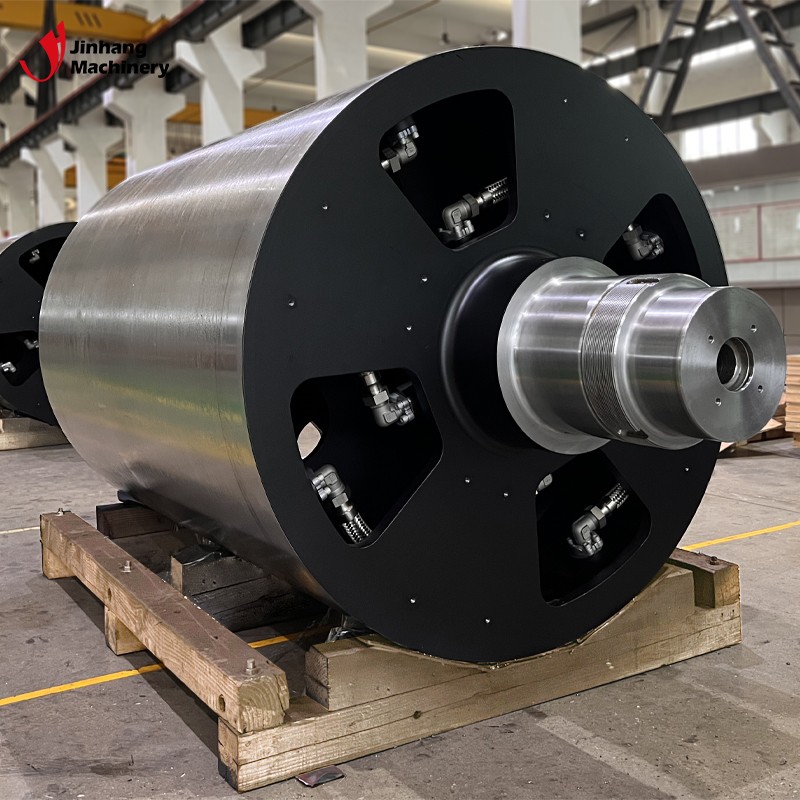
The interior of a heating roller is not merely a simple hollow cylinder; rather, it comprises multiple key components, including heating medium channels, fluid distribution systems, a central cavity, support shafts, and flow-guiding structures. Different industrial scenarios necessitate distinct internal structures to achieve specific requirements regarding temperature uniformity, flow design, pressure ratings, and thermal response speeds.
This blog post addresses the central question—"What are the common internal structures of industrial heating rollers?"—by examining the fundamental functions of heating rollers. It provides a comprehensive analysis of the five major categories of internal structures currently prevalent in the industrial sector, detailing their technical characteristics and the specific application requirements they fulfill.
Why Is It Important to Understand the Internal Structure of a Heating Roller?
The operational objectives of an industrial heating roller include:
•Ensuring uniform roller surface temperature
•Controlling temperature fluctuations
•Enhancing thermal efficiency
•Improving the quality of finished materials
•Reducing energy consumption
•Preventing localized overheating or undercooling
•Accommodating varying rotational speeds and operational loads
Whether or not these objectives are successfully achieved depends entirely on the internal flow channel structure, inlet design, fluid distribution method, flow direction, and thermal flux uniformity.
Therefore, only by understanding the internal structure of a heating roller can one truly grasp the respective advantages and disadvantages of different roller designs, thereby ensuring that the equipment effectively meets specific process requirements.
What Are the Key Internal Components of an Industrial Heating Roller?
Although the internal structures of different heating rollers vary, their basic components generally include the following parts:
•Inlet / Outlet Ports (Single Inlet, Dual Inlet)
•Fluid Circulation Chamber (Central Chamber or Flow Channel Chamber)
•Spiral Flow Channels (Single Spiral / Dual Spiral / Counter-flow Spiral)
•Guide Baffles or Flow Distributors
•Inner Shell or Liner Structure (Specific to certain designs)
•Support Shaft and Rotary Joint Interface
•Pressure Equalization Zone and End Return Structure
The various internal structures found in industrial heating rollers are essentially combinations and optimizations built upon these key components.
What are the common internal structures of industrial heating rollers?
In modern manufacturing, the common internal structures of heating rollers can be broadly categorized into five main types:
1.Single-Inlet, Single-Flow Structure with Spiral Channels
2.Single-Inlet, Dual-Flow Structure with a Tank-style Interior and Spiral Channels
3.Dual-Inlet, Dual-Flow Structure with Internal Spiral Channels (Suitable for low-speed rollers)
4.Dual-Inlet, Dual-Flow Structure with Extended Spiral Circulation (Suitable for long-dimension heating rollers)
5.Counter-flow Internal Spiral Channel Structure (For applications requiring extremely high temperature uniformity)
The following sections provide an in-depth, professional analysis of each of these structures.
What are the characteristics of a single-inlet, single-flow heating roller with spiral channels?
This is one of the most common internal structures found in industrial heating rollers.
1. Structural Characteristics
•Features only one inlet and one outlet.
•The heating medium enters via a *single spiral channel* and flows along its path.
•The fluid path is relatively long, ensuring stable heat transfer.
•Manufacturing costs are relatively low.
•The structure is simple and easy to maintain.
Its internal flow channel resembles a "spiral pipe," ensuring that the heating medium uniformly covers the entire surface area of the roller along its axial length.
2. Heating Performance Characteristics
•Good temperature uniformity.
•Moderate thermal response speed.
•Stable performance under low-to-medium flow rate conditions.
3. Applicable Scenarios
•Medium-temperature processes.
•Heating rollers operating at medium speeds.
•Plastic film preheating rollers, rubber calendering rollers, and standard coating preheating rollers.
This particular internal structure is the most widely used due to its simplicity, reliability, uniformity, and high cost-effectiveness.
Why are heating rollers with a single-inlet, dual-flow structure better suited for processes with stricter temperature uniformity requirements?
This type of structure features an "internal plenum design" and incorporates helical flow channels.
1. Structural Characteristics
•After entering through a single inlet, the internal flow splits into two directions.
•The flow diversion occurs within an internal plenum chamber.
•Two streams of heating medium circulate along distinct internal helical channels.
•Finally, the two streams converge again at the outlet end.
It can be conceptualized as an "internal dual-helical design with flow splitting."
2. Technical Advantages
•Temperature distribution is more uniform compared to single-inlet structures.
•It helps minimize temperature differences between the two ends of the roller surface.
•It contributes to enhanced thermal stability.
3. Applicable Industries
•Precision film coating
•Preheating of cosmetic films and optical films
•Applications where heating roller temperature uniformity requirements are within ±1°C
When the requirements for heating roller temperature uniformity are particularly stringent, this structure is more suitable than a standard single-inlet design.
Why do low-speed heating rollers often utilize a dual-inlet, dual-flow structure?
In low-speed roller applications, insufficient fluid velocity can lead to significant temperature variations across the roller surface.
Consequently, heating rollers with a dual-inlet, dual-flow structure serve to mitigate this issue.
1. Structural Design Features
•Equipped with two inlets and two outlets.
•The heating medium can enter simultaneously from both ends.
•The internal helical structure is designed to minimize the circulation path length.
•The fluid maintains a sufficient flow rate even under low-speed conditions.
2. Design Objectives
•To increase the fluid flow rate under low-speed operating conditions.
•To reduce temperature variations along the axial length of the heating roller.
•To ensure a more uniform distribution of heat across the roller surface.
3. Industrial Applications
•Low-speed calendering processes
•Processing of flexible materials
•Equipment featuring heating rollers with large diameters but very low rotational speeds
During low-speed rotation, the efficiency of fluid-based heat transfer typically declines; the dual-inlet, dual-flow structure serves as an effective solution to address this challenge.
Why do heating rollers with extended roller surfaces require a dual-inlet, dual-flow configuration combined with elongated helical channels?
When the length of the heating roller is exceptionally large, the fluid requires a longer flow path to maintain both adequate flow rate and temperature uniformity.
1. Internal Structure Designed Specifically for Long Rollers
•Dual-inlet, dual-flow design
•Features an extended internal spiral flow channel
•Achieves a more uniform temperature distribution along the longitudinal axis
Such heating rollers are typically used in:
•Wide-format coating machines
•Wide-format calendering machines
•Wide-format heating equipment for composite materials
2. Core Issues Addressed:
•Temperature differentials across the length of the roller
•Thermal attenuation caused by unidirectional flow
•Requirements for high fluid flow rates
This structure effectively mitigates temperature non-uniformity along the length of the roller through a combination of "dual inlets + extended flow channels."
Why do heating rollers with a counter-flow internal spiral channel exhibit superior temperature uniformity?
The counter-flow design is the preferred structural configuration for industrial heating rollers that demand extremely high levels of temperature uniformity.
1. Structural Features
•The heat transfer medium enters and flows in one direction
•Upon reaching the far end, it reverses direction and flows back
•It then returns to the outlet via a separate channel
This creates an internal structure resembling a "round-trip circulation system."
2. Technical Advantages
•Exceptional temperature uniformity
•Allows for controlling temperature differentials across the roller surface within a very narrow range
•Ideal for high-precision thermal processing equipment with stringent requirements
3. Application Industries
•High-end calendering processes
•Processing of ultra-thin materials (e.g., medical films, electronic films)
•Processes where temperature deviation must be kept to an absolute minimum
Due to its ability to maximize temperature uniformity, the counter-flow internal structure is widely adopted in high-standard heating roller systems.
How Do Different Internal Structures Affect Heating Roller Temperature Uniformity?
The core factors influencing the temperature uniformity of a heating roller include:
•Medium flow rate
•Fluid flow direction
•Flow channel design
•Flow distribution method
•Return flow path
•Inlet distribution design
•Roller body length
•Operating temperature range
The following table illustrates the correlation between internal structure and temperature uniformity:
Heating Roller Structure Type | Temperature Uniformity Level | Applicable Scenarios
Single-inlet, Single-flow Channel | Moderate | Standard Processes
Single-inlet, Dual-flow | High | Film and Coating Industries
Dual-inlet, Dual-flow | High | Low-speed, Long-roller Applications
Dual-inlet, Extended Spiral | Higher | Wide-format Production Lines
Counter-flow Spiral Channel | Extremely High | Precision, High-end Processes
How Do You Select the Appropriate Internal Structure for a Heating Roller?
The selection of the internal structure for a heating roller depends on the following factors:
1. Heating Temperature Requirements
The higher the required temperature, the more complex the requirements for the internal flow channels become.
2. Product Requirements for Temperature Uniformity
If temperature uniformity within ±1°C is required, structures such as dual-flow or counter-flow designs must be selected.
3. Length and Diameter of the Heating Roller
Long rollers typically require dual-inlet or counter-flow structures.
4. Type of Heating Medium
Different media—such as thermal oil, steam, or hot water—necessitate distinct internal flow channel designs.
5. Rotational Speed of the Heating Roller
Low-speed rollers require enhanced compensation for flow velocity; dual-flow designs are commonly employed in such cases.