
Why Do Industrial Rollers Require Such High Precision?
In almost all continuous production equipment, industrial rollers serve as one of the most fundamental and critical core components. When people first encounter industrial rollers, they often find themselves asking:
Why does a cylindrical object—which appears to have a relatively simple structure—demand such exacting standards for machining precision?
In reality, the precision requirements for industrial rollers are not merely a case of "manufacturers obsessively pursuing excessively high standards"; rather, they are dictated by the rollers' functional role, operational dynamics, and precision-propagation characteristics within the production line. Should an industrial roller exhibit any deviation in precision, the resulting problems are rarely localized; instead, they tend to be amplified and propagated throughout the entire production line.
This article will address the central question—"Why do industrial rollers require such high precision?"—by conducting a systematic analysis from multiple perspectives, including mechanical engineering, process operations, force transmission, and quality control. Our aim is to help you truly grasp the inherent necessity behind the high precision demanded of industrial rollers.
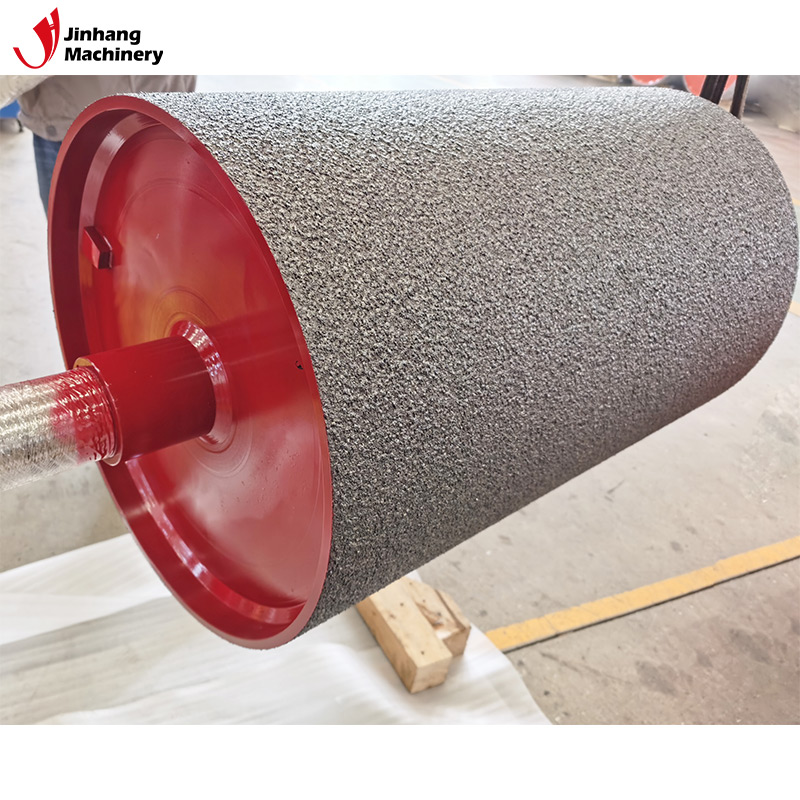
What Exactly Does "Precision" Mean in the Context of Industrial Rollers?
Typically, the precision of an industrial roller encompasses the following key parameters:
•Dimensional accuracy
•Roundness
•Coaxiality
•Straightness
•Surface roughness
•Dynamic balance accuracy
Collectively, these precision metrics determine the operational status of the industrial roller within the equipment system. A deviation in any single metric can compromise the overall operational stability of the roller.
Therefore, when we speak of "high precision requirements" for industrial rollers, we are essentially stating that the roller must simultaneously meet rigorous engineering standards across multiple dimensions.
Why Are Precision Deviations in Industrial Rollers So Frequently Amplified?
The most significant distinction between an industrial roller and an ordinary mechanical part is this:
It is a component that rotates continuously and remains actively engaged throughout the entire production process.
Under these operating conditions, even minute deviations in an industrial roller's precision can trigger three distinct amplification effects:
1. Temporal Amplification:
Industrial rollers operate for extended periods each day; consequently, any existing deviations are repeatedly compounded over time.
2. Length Amplification:
The greater the length of the roller body, the more pronounced the impact of even a minute error becomes across the overall structure.
3. Systemic Amplification:
Industrial rollers typically operate in groups or arrays; thus, a problem with a single roller can adversely affect the performance of multiple other rollers within the system.
It is precisely because of these amplification effects that the precision of industrial rollers must be rigorously controlled during the manufacturing phase, rather than relying on subsequent "adjustments or remedial fixes."
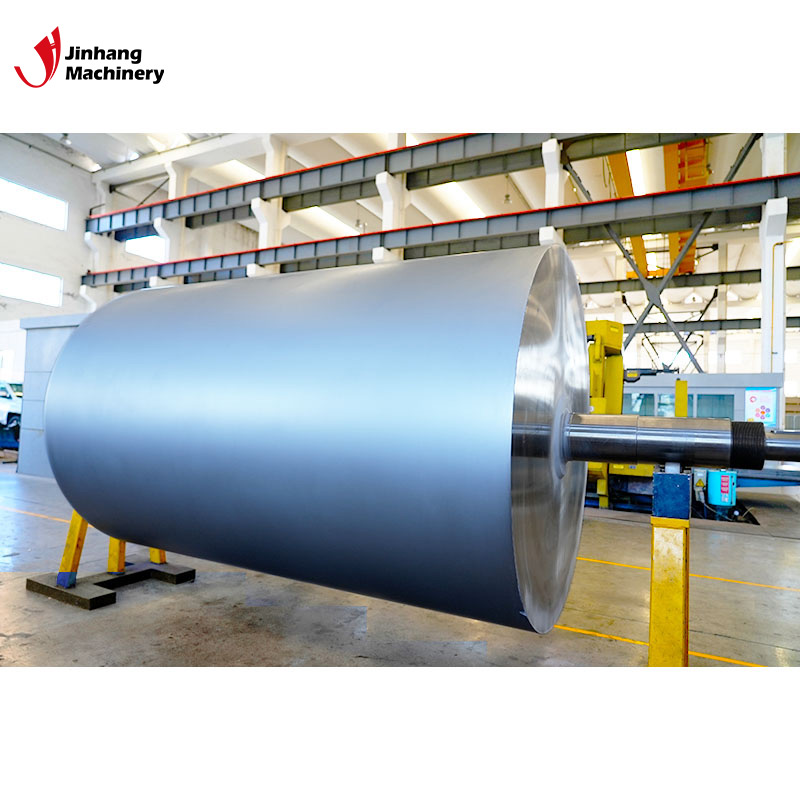
Why Is the Roundness of Industrial Rollers So Critical?
Roundness stands as one of the most fundamental—and indeed, one of the most critical—precision metrics for industrial rollers. If an industrial roller lacks sufficient roundness, it will directly result in:
•Periodic runout during rotation
•Uneven contact pressure
•Unstable material running speeds
For industrial rollers, being "not perfectly round" does not merely affect a single isolated point; rather, it causes problems that recur with every rotation. This issue is particularly critical in continuous production environments.
Therefore, the requirement for roundness in industrial rollers is, fundamentally, a requirement for stability.
How does the coaxiality of an industrial roller affect performance?
Coaxiality refers to whether the central axes of the various sections of an industrial roller remain aligned along a single straight line.
Poor coaxiality leads to:
•Uneven load distribution on bearings
•The generation of additional bending moments within the roller body
•Accelerated localized wear
More importantly, coaxiality issues typically do not manifest immediately as a complete "failure to function," but rather emerge gradually in the form of vibration, noise, and a shortened service life.
Consequently, the stringent requirements for coaxiality in industrial rollers are intended to prevent latent failures, rather than merely to achieve superficial aesthetic effects.
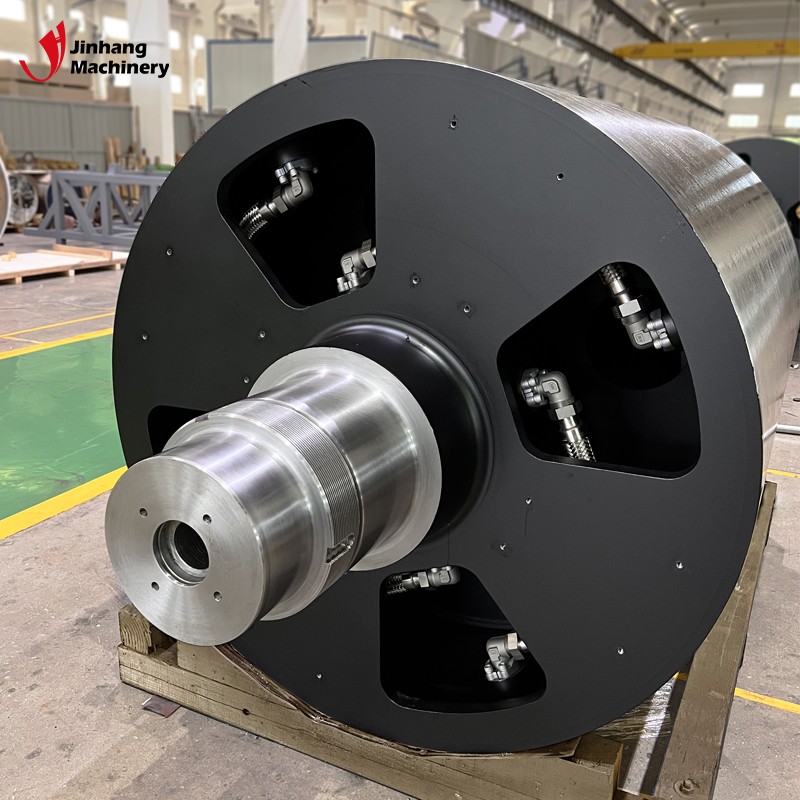
How does the straightness of an industrial roller impact production?
Straightness primarily addresses the axial geometry of an industrial roller.
When an industrial roller lacks sufficient straightness, the following issues arise:
•Material deviation (wandering)
•Inconsistent contact width
•Localized pressure concentrations
In continuous production, materials invariably traverse along the axial length of the industrial roller; thus, any axial deviation in the roller is directly reflected in the trajectory of the moving material. Therefore, the straightness of an industrial roller is directly linked to the controllability of the material's movement.
Why can there be no compromise regarding the dimensional precision of industrial rollers?
Industrial rollers do not function as isolated components; rather, they are integral parts embedded within a complete equipment system.
Insufficient dimensional precision can lead to:
•Installation difficulties
•Abnormal bearing preload
•Imbalanced fit clearances
These issues cannot be fully resolved through simple adjustments; instead, they will have a long-term detrimental effect on the operational status of the equipment. Therefore, the dimensional precision of an industrial roller must be achieved flawlessly during the manufacturing stage.
Why are the surface precision requirements for industrial rollers so rigorous?
The surface of an industrial roller constitutes the active interface that directly engages in the production process.
Insufficient surface precision results in:
•Uneven contact
•Fluctuations in the coefficient of friction
•Inconsistent surface quality of the processed material
Particularly in processes where surface quality is a critical factor, the requirements for the surface precision of an industrial roller are often even more stringent than those for its internal structural precision. This is not a matter of being "overly demanding," but rather an inevitable consequence dictated by the inherent characteristics of the manufacturing process.
What is the relationship between industrial roller precision and operational stability?
Industrial rollers lacking sufficient precision are often accompanied by:
•Vibration
•Noise
•Localized overheating
While these phenomena may appear to be mere "operational issues," their root cause actually lies in deviations in precision. The higher the precision of an industrial roller, the closer its operational state aligns with the intended design conditions, thereby enhancing the overall stability of the equipment.
How does industrial roller precision affect the service life of the entire machine?
Issues regarding industrial roller precision rarely manifest as "immediate failure"; instead, they impact the overall service life of the machine in the following ways:
•Accelerating bearing wear
•Increasing the load on the transmission system
•Inducing structural fatigue
From the perspective of the equipment's entire lifecycle, industrial roller precision is a critical factor influencing both maintenance frequency and operational longevity.
Why must industrial roller precision be maintained over the long term?
The precision requirements for industrial rollers are not satisfied merely by meeting "factory acceptance standards"; rather, they demand sustained stability throughout the entire period of long-term operation.
If an industrial roller suffers from:
•Inappropriate material selection
•Insufficient relief of internal stresses
•Unstable manufacturing processes
Then, even if its initial precision meets the required standards, that precision may still degrade during actual use. Consequently, the demand for high precision in industrial rollers is, in essence, a demand for the inherent stability of the manufacturing process itself.
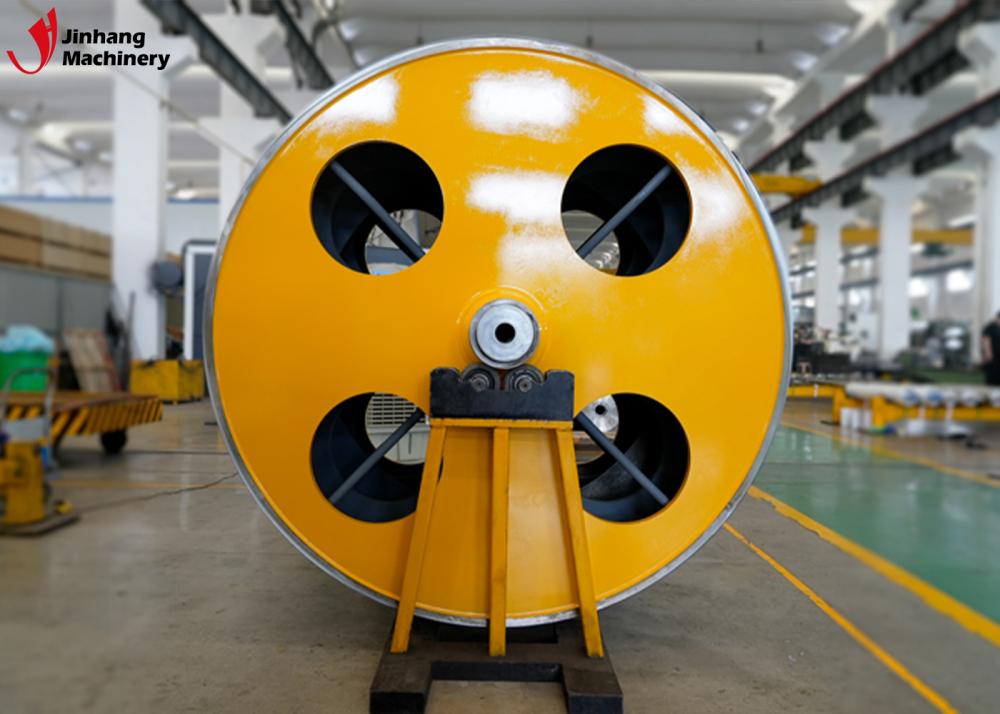
Do the high precision requirements for industrial rollers constitute "over-engineering"?
When viewed from the perspective of a single component, the precision requirements for an industrial roller may indeed appear to be exceptionally high; however, from the standpoint of systems engineering, this does not constitute over-engineering.
The precision of an industrial roller directly impacts:
•Product consistency
•Equipment stability
•Operational costs
Should precision prove insufficient, the cascading problems that subsequently arise will incur costs far exceeding the initial investment required for high-precision manufacturing. Therefore, high precision in industrial rollers represents a necessary design imperative, not a superfluous design redundancy.