
Is a Higher Temperature Always Better for Industrial Mirror-Finish Heating Rollers?
In industrial sectors such as plastic film manufacturing, coating, laminating, calendering, printing, and metal surface treatment, the mirror-finish heating roller serves as a critical core component. It not only fulfills a heating function but also directly impacts material surface quality, thickness uniformity, and process stability.
During the actual selection and operation phases, a question frequently arises:
Is a higher temperature always better for industrial mirror-finish heating rollers?
At first glance, high temperatures might seem to imply faster heating efficiency and superior forming results; however, in real-world industrial applications, the temperature of a mirror-finish heating roller is not a case of "the higher, the better." Rather, it must be "just right."
This article will systematically analyze the core logic behind temperature settings for mirror-finish heating rollers from multiple perspectives, including materials, structural design, heat transfer, surface condition, and equipment compatibility.
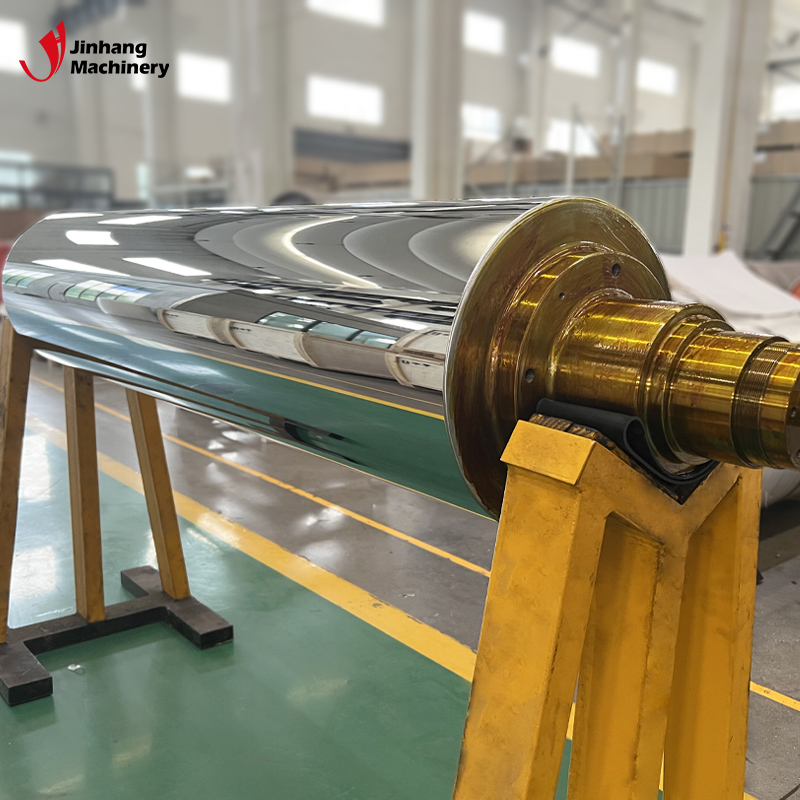
What Is an Industrial Mirror-Finish Heating Roller? What Role Does Temperature Play?
A mirror-finish heating roller is an industrial roller body featuring a surface that has undergone precision grinding and polishing (typically achieving a roughness of Ra 0.01–0.03 μm), and which incorporates internal or surface-mounted heating elements. Its core characteristics include:
•A highly smooth, mirror-finish surface
•Controllable and uniform heating capabilities
•High roundness and minimal runout
•Stable heat transfer performance
During the production process, the temperature of the mirror-finish heating roller primarily serves the following functions:
1.Softening or melting the surface layer of the material
2.Facilitating the leveling of coatings
3.Stabilizing the material's formed state
4.Improving surface finish
5.Controlling thickness and ductility
As is evident, temperature is one of the most critical process parameters for a mirror-finish heating roller; however, it is not a value that can be increased indefinitely.
Does a higher temperature for the mirror-finish heating roller invariably result in better heating performance?
The answer is no. While increasing the temperature of a mirror-finish heating roller can, within a certain range, accelerate the material's heating rate, exceeding this reasonable range actually leads to a series of negative consequences, including:
•Deterioration of the material's surface
•Structural damage to the roller body caused by thermal stress
•Degradation of the mirror-finish surface properties
•Increased difficulty in temperature control
•Significant rise in energy consumption
For a mirror-finish heating roller, a higher temperature is not necessarily better; rather, it must be precisely matched to the specific characteristics of the material and the requirements of the processing application.
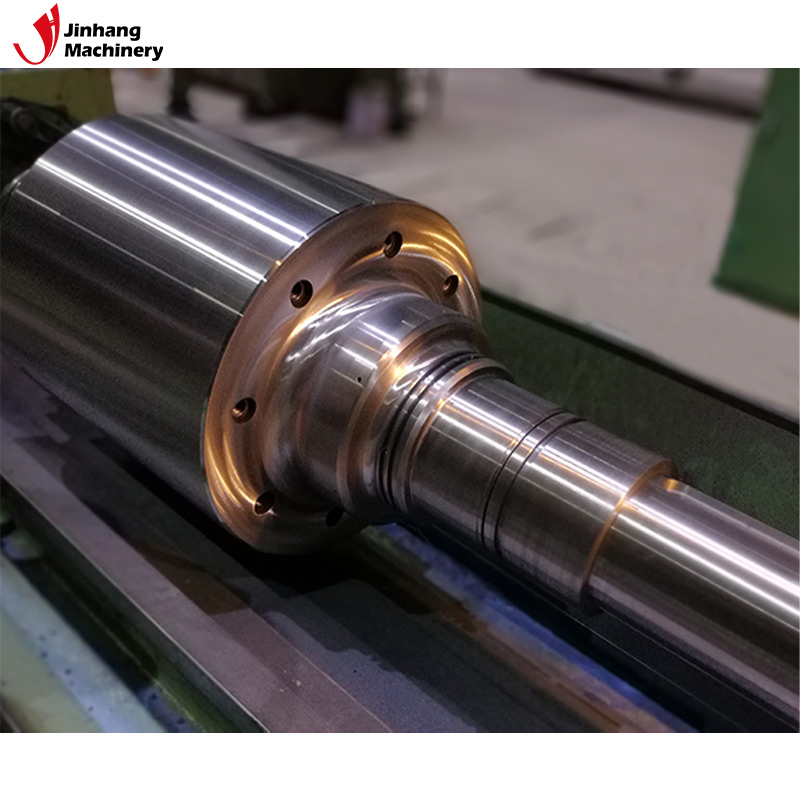
Why does a mirror-finish heating roller have an "Optimal Temperature Range"?
1. The Material's Heating Behavior Determines the Upper Temperature Limit
Different materials exhibit distinct physical and chemical transformation thresholds during the heating process, such as:
•Glass transition temperature
•Softening temperature
•Melting temperature
•Thermal decomposition temperature
When the temperature of the mirror-finish heating roller exceeds the material's thermal tolerance, the following issues may arise:
•Surface scorching or burning
•Formation of bubbles
•Instability in drawing or stretching processes
•Reduction in surface gloss
This implies that no matter how high the temperature of the mirror-finish heating roller is raised, it cannot compensate for the inherent thermal limitations of the material itself.
2. The Mirror-Finish Heating Roller Itself Has Thermal Limitations
Even when constructed from alloy steel, stainless steel, or chrome-plated materials, the internal structure of a mirror-finish heating roller remains subject to the following constraints:
•Thermal expansion of the metal components
•The thermal resistance limits of internal heating elements or thermal oil channels
•The stability of the plating or polished surface layers
When temperatures become excessively high, the following issues may occur:
•Micro-deformation of the roller body
•Degradation of roundness and straightness (linearity)
•Concentration of stress on the mirror-finish surface
•Cracking or peeling of the plated layer
Therefore, from the perspective of structural integrity and safety, a mirror-finish heating roller is not suitable for prolonged operation at ultra-high temperatures.
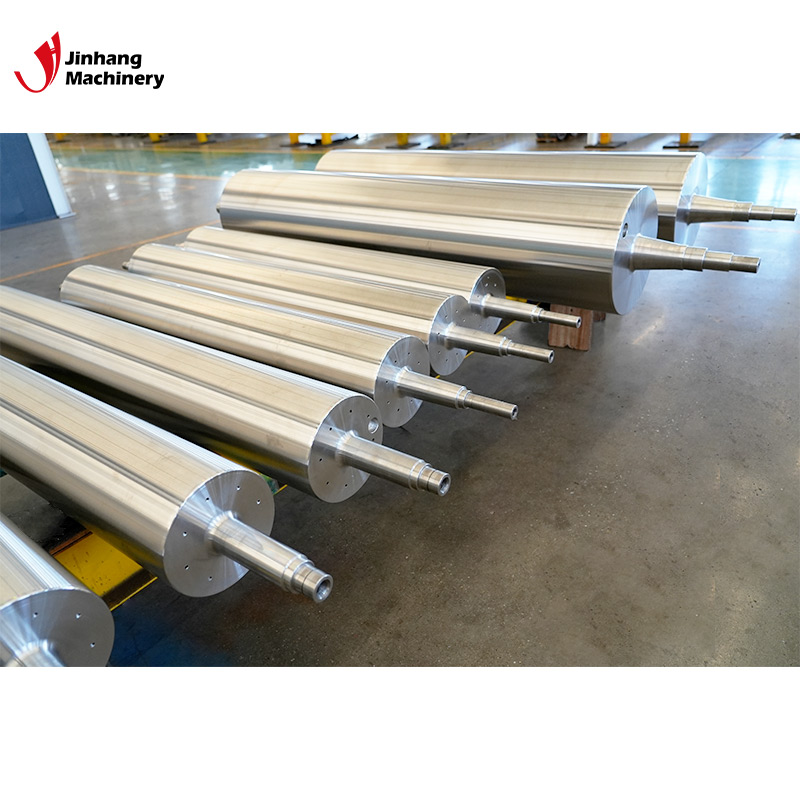
What Specific Problems Arise from Excessive Temperatures in a Mirror-Finish Heating Roller?
1. Degradation of Mirror-Finish Surface Properties
A mirror-finish heating roller relies on an ultra-high surface finish to ensure the flatness and smoothness of the processed material. When temperatures are excessively high:
•The chrome plating or surface coating may develop micro-cracks due to thermal fatigue
•The polished surface layer may lose its original mirror-like effect
•The surface friction coefficient may undergo undesirable changes
Once the integrity of the mirror-finish surface is compromised, the heating roller effectively loses its core functional value.
2. Higher Temperatures Often Make Uniformity More Difficult to Achieve
Increasing the temperature does not automatically equate to achieving temperature stability and uniformity. In reality:
•High temperatures amplify internal temperature differentials within the roller body.
•Uneven heat conduction becomes more pronounced.
•"Hot spots" and "cold spots" emerge on the surface.
This is extremely detrimental to mirror-finish heating rollers, as uneven temperature distribution is the most critical issue to avoid with such rollers.
3. Energy Consumption Increases Significantly, Yet Efficiency Gains Remain Limited
When the temperature exceeds process requirements:
•The excess heat does not improve product quality.
•The load on the heating system increases.
•Energy utilization efficiency declines.
This implies that operating mirror-finish heating rollers at excessively high temperatures is economically unjustifiable.
How Should the Optimal Operating Temperature for Mirror-Finish Heating Rollers Be Determined?
The optimal operating temperature for a mirror-finish heating roller should be determined by a combination of the following factors:
1. Thermal Characteristics of the Material Being Processed
This is the primary factor; one must clearly identify the material's:
•Softening range
•Melting range
•Upper limit for thermal stability
2. Process Objectives
Different objectives correspond to different temperature requirements; for example:
•Enhancing surface gloss
•Controlling thickness
•Leveling coatings
3. Structure and Heating Method of the Mirror-Finish Heating Roller
Common heating methods include:
•Electric heating
•Thermal oil heating
•Steam heating
Different structural designs possess varying capacities to withstand maximum temperatures.
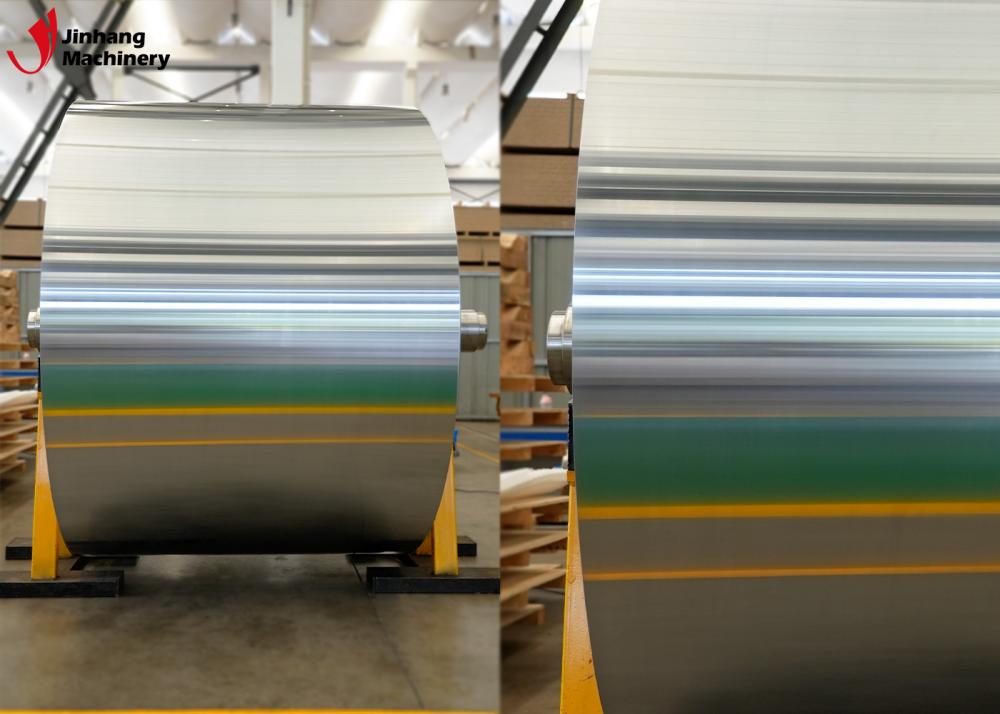
Debunking the "High-Temperature Myths" Surrounding Mirror-Finish Heating Rollers
Myth #1: The Higher the Temperature, the Easier the Material Is to Process
In reality, exceeding the material's optimal temperature range only increases the risk of defects.
Myth #2: High Temperatures Can Compensate for Insufficient Precision in the Mirror-Finish Heating Roller
Temperature cannot serve as a substitute for the roller body's roundness, surface finish quality, or structural design.
Myth #3: A Mirror-Finish Heating Roller Is Adequate as Long as It Can Withstand High Temperatures
This overlooks the critical importance of temperature uniformity, stability, and long-term reliability.
How Should the Temperature of a Mirror-Finish Heating Roller Be Controlled During Operation?
To utilize a mirror-finish heating roller effectively, priority should be placed on:
•A precise temperature control system
•A stable heating medium
•Uniform internal flow channels or heating element layouts
•Real-time temperature monitoring
Stable, controllable, and uniform temperatures are far more important than simply achieving "high temperatures."