What are the functions of industrial rollers?
In modern manufacturing, whether in film, papermaking, printing, textiles, plastics, rubber, metallurgy, or composite material processing, a highly similar yet functionally diverse key component can be found—the industrial roller.
From the outside, an industrial roller is usually just a rotating cylinder, but in actual production, it's far more than just "rotating." They often directly participate in material movement, shape changes, surface treatment, and process control, making them irreplaceable core execution units in the manufacturing system.
Therefore, a seemingly basic yet crucial question is:
What exactly are the functions of industrial rollers?
What role do industrial rollers play in the manufacturing process?
Why do the functions of industrial rollers directly affect product quality and equipment stability?
This article will systematically analyze the main functions and operating methods of industrial rollers from the perspectives of manufacturing logic, structural mechanisms, and process requirements, helping you fully understand the true value of industrial rollers in modern manufacturing systems.
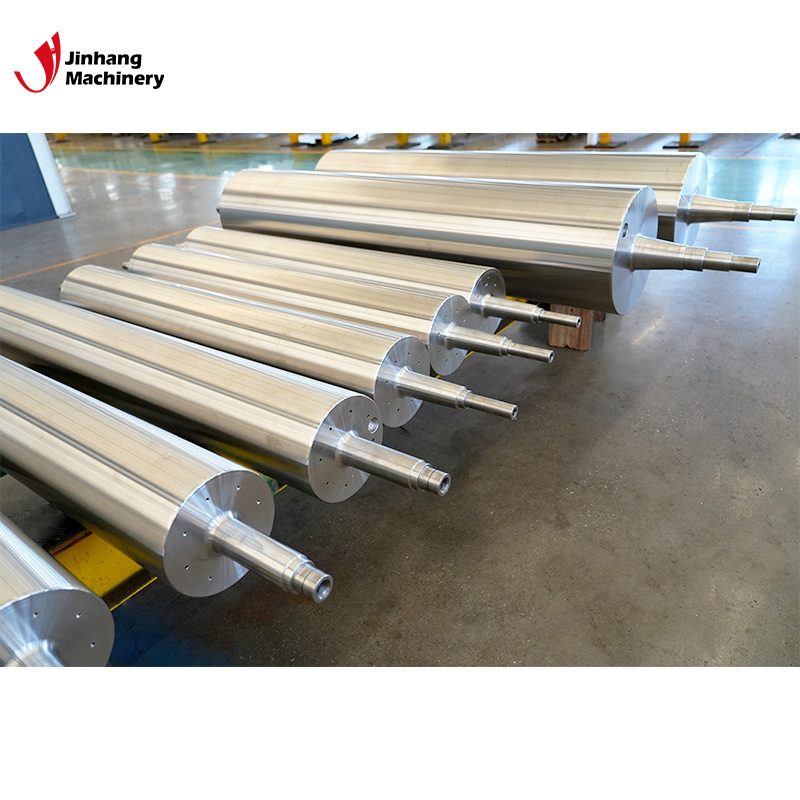
Are industrial rollers only used for conveying materials?
This is the most common, but also the most one-sided, understanding of industrial rollers.
Indeed, conveying material is one of the most fundamental functions of industrial rollers, but viewing them merely as "transfer tools" severely underestimates their role in manufacturing systems.
In actual production, industrial rollers often perform multiple functions simultaneously, such as:
• Controlling material movement
• Adjusting material surface morphology
• Transferring heat or pressure
• Stabilizing tension and direction
• Participating in the material forming process
Therefore, industrial rollers are highly functionally integrated process components.
What are the basic functions of industrial rollers in manufacturing systems?
From a macroscopic perspective, the functions of industrial rollers can be summarized into several fundamental aspects, which are applicable to almost all manufacturing scenarios.
How do industrial rollers achieve material conveying and guiding functions?
1. Continuous Conveying Function
In continuous manufacturing processes, materials need to smoothly transition from one process to the next. Industrial rollers, through rotation, convey the material by:
• Smoothly driving
• Advancing at a set speed
• Preventing slippage or stagnation
The diameter, surface friction characteristics, and arrangement of industrial rollers directly affect the stability of the conveying process.
2. Guiding and Path Control Functions
Industrial rollers also guide the movement path of materials, ensuring that the material:
• moves along a predetermined trajectory
• avoids deviation
• maintains edge alignment
The guiding function of industrial rollers is particularly important in wide-width material processing.
What role do industrial rollers play in tension control?
Tension is a key process parameter in continuous manufacturing, and industrial rollers are crucial for tension establishment and adjustment.
1. Tension Establishment Function
By rationally arranging the position, number, and wrap angle of industrial rollers, stable tension can be formed in the material.
The rotational resistance, surface friction coefficient, and arrangement structure of the industrial rollers all affect the tension magnitude.
2. Tension Stabilization Function
During production, material speed, thickness, and state may change. Industrial rollers, through their structure and system coordination, help buffer tension fluctuations.
3. Uniform Tension Distribution Function
Industrial rollers help achieve a more uniform tension distribution across the material's width, thereby avoiding localized stress concentration.
Can industrial rollers affect the surface quality of materials?
The answer is: not only can they, but their effect is very direct.
1. Surface Contact Determines Final Quality
Industrial rollers often come into direct contact with material surfaces, and their:
• Surface roughness
• Hardness
• Smoothness
• Cleanliness
all leave "marks" on the material surface.
For example, high-precision industrial rollers can help:
• Improve material smoothness
• Improve smoothness
• Eliminate fine wrinkles
2. Surface Consistency Control
The geometric precision and rotational stability of industrial rollers determine whether the material surface is uniform.
If an industrial roller experiences runout or vibration, even a small amplitude, it can create periodic defects on the material surface.
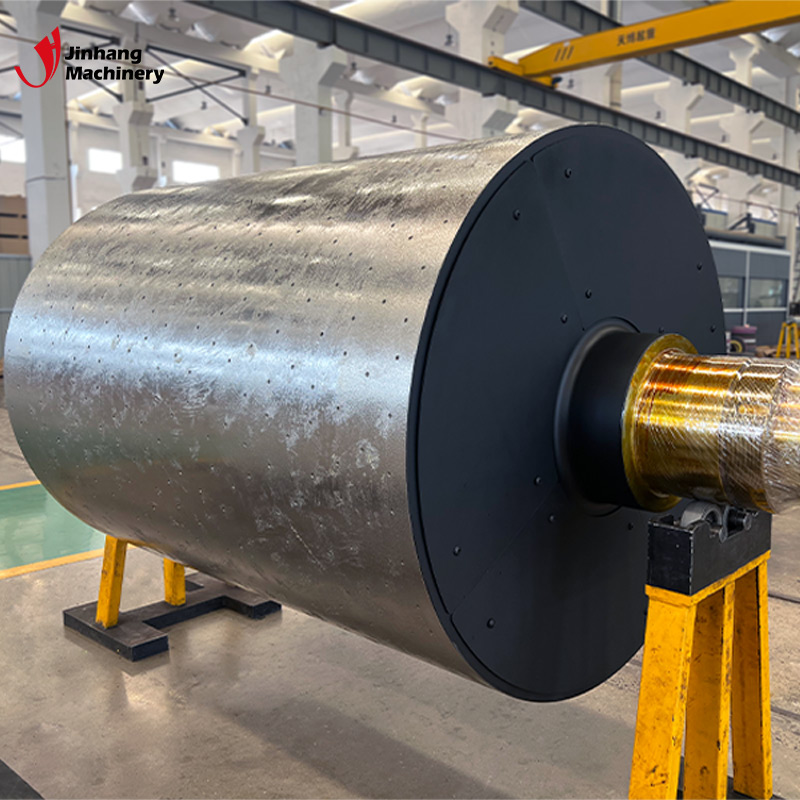
Why can industrial rollers be used for heating or cooling?
Industrial rollers are not limited to "mechanical action"; they can also participate in thermal processes.
1. Heat Transfer Function of Industrial Rollers
By designing flow channels or heating structures inside the industrial roller, it can:
• Transfer heat to the material
• Absorb heat from the material
This makes industrial rollers a highly efficient heat exchange medium.
2. Temperature Uniformity Control
The large contact area of industrial rolls helps achieve:
• Uniform heating
• Uniform cooling
This is crucial for stabilizing material structure and surface condition.
3. Thermal Stabilization Function
During heating or cooling, industrial rolls also need to maintain structural stability to avoid affecting operational accuracy due to thermal deformation.
What are the functions of industrial rolls in calendering and forming?
In many manufacturing processes, industrial rolls not only transport materials but also directly participate in changing their shape.
1. Calendering Function
Through the pressure between two or more industrial rolls, materials can be:
• Thinned
• Stretched
• Densified
Industrial rolls need to possess:
• Sufficient rigidity
• Stable geometric accuracy
2. Forming and Shaping Function
Industrial rolls can help materials under certain conditions:
• Fix their shape
• Stabilize their dimensions
• Reduce internal stress
This typically occurs during heat treatment or cooling processes.
How do industrial rolls participate in the correction, leveling, and stabilization processes?
This is a crucial yet easily overlooked function of industrial rollers.
1. Leveling Function
Through the geometric precision and surface condition of industrial rollers, the following can be achieved:
• Eliminate surface undulations in materials
• Improve overall flatness. High-precision industrial rollers are particularly critical in this function.
2. Alignment and Centering Function
Industrial rollers, through specific structures or arrangements, help materials:
• Maintain a centered position
• Prevent deviation
• Ensure consistent centering
3. Stable Operation Function
By properly configuring industrial rollers, the entire production system operates more smoothly, reducing vibration and fluctuations.
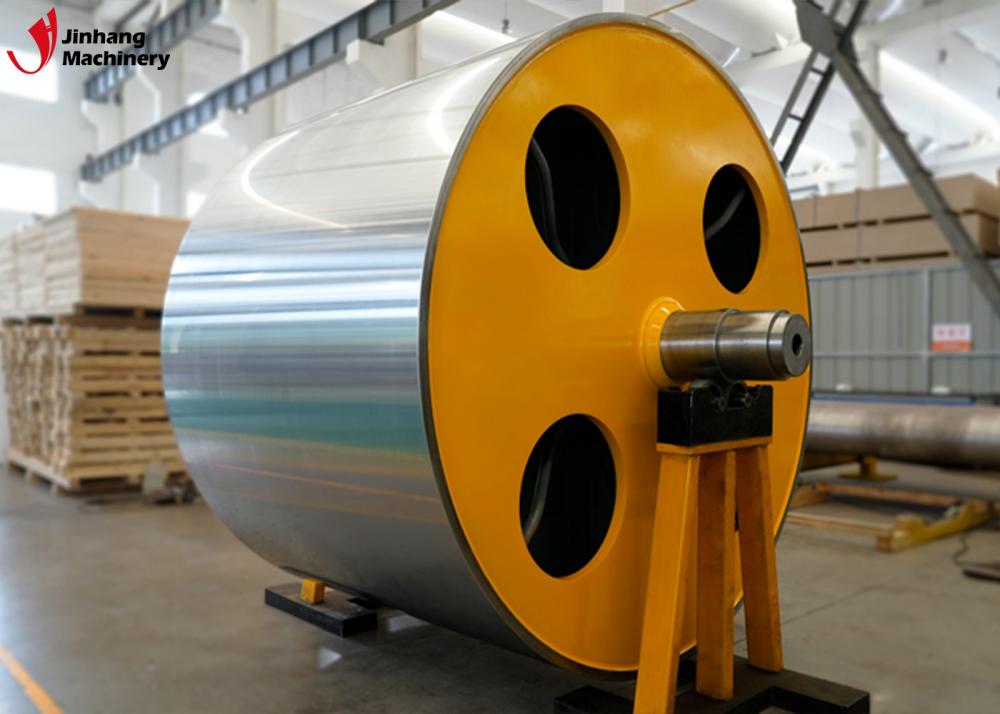
Can different industrial roller functions be combined?
The answer is: Yes, and it's very common in actual manufacturing.
1. The Existence of Multifunctional Industrial Rollers
Many industrial rollers do not perform only a single function, but simultaneously possess:
• Conveying + Tension Control
• Conveying + Heating
• Leveling + Surface Improvement
• Calendering + Cooling
2. Superimposed Functions Place Higher Manufacturing Demands
Superimposed functions mean that industrial rollers need to meet requirements in multiple aspects simultaneously, such as:
• Structural Strength
• Surface Precision
• Thermal Stability
• Dynamic Balance Performance
This places higher demands on the design and manufacturing of industrial rollers.
What do the functions of industrial rollers mean for manufacturing systems?
From a system perspective, the functions of industrial rollers determine the manufacturing system's:
• Continuity
• Stability
• Controllability
• Product Consistency
Industrial rollers are not passive parts, but rather executors of process parameters.
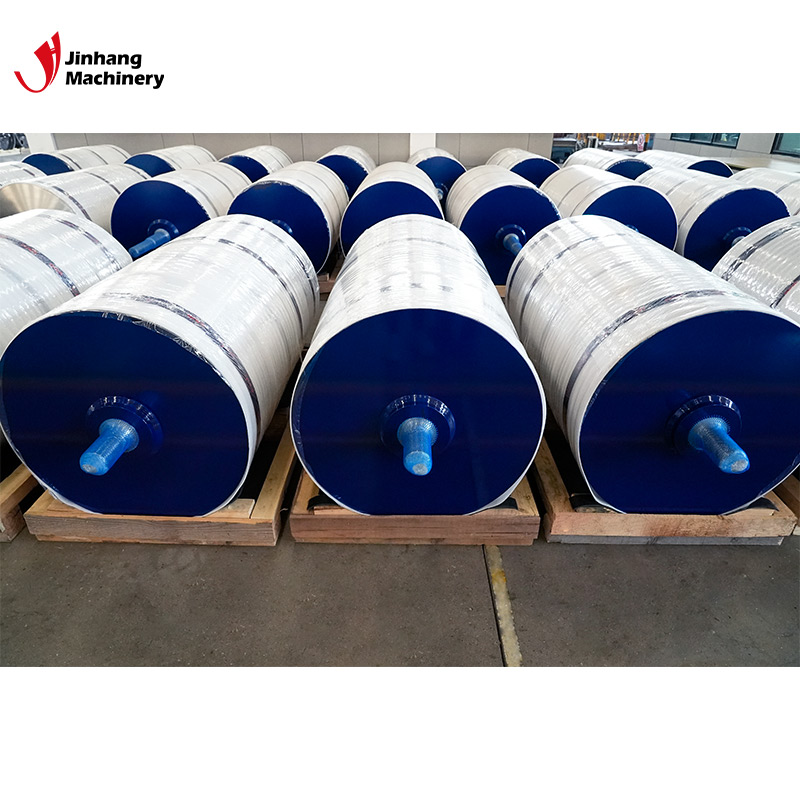
What are the functions of industrial rollers?
They can be summarized as follows:
Industrial rollers in manufacturing undertake multiple core functions, including material conveying, guiding, tension control, surface treatment, heating or cooling, calendering, and correction and stabilization.
The functional characteristics of industrial rollers include:
• Diverse and stackable functions
• Highly coupled with technological processes
• Directly impacts product quality
• Determines equipment operational stability
These functions make industrial rollers an irreplaceable key component in modern manufacturing.
Are your rollers suitable for high-temperature or heating applications?
Yes. As a specialized roller manufacturer, we produce internally heated rollers and temperature-controlled rolls designed for calendering, laminating, and thermal processing industries. These rollers are built with precise internal channels, ensuring uniform temperature distribution and improved processing efficiency. Each heating roll undergoes pressure tests and sealing inspections to ensure long-term reliability.