
What Grit Size is Required for Polishing Industrial Mirror Rollers?
In industrial manufacturing, mirror rollers are core components in thin film production, electronic material processing, coating equipment, calendering equipment, and lithium battery separator production. The surface quality of the mirror roller directly determines the product's optical properties, smoothness, thickness uniformity, and overall stability. Therefore, the polishing process of mirror rollers is a crucial step in their manufacturing.
Throughout the entire mirror roller processing flow, "polishing grit size" is one of the key parameters determining surface roughness and gloss. Using different polishing grit sizes at different stages is essential to achieving a mirror finish of Ra0.01 μm or even higher.
So, what grit size is required for polishing industrial mirror rollers? What are the specific selection criteria? What are the differences in the effects of different grit sizes?
This blog will provide a systematic and professional analysis from multiple perspectives, including the process logic of mirror roller polishing, grit selection at each stage, principles of grit size variation, and their relationship with the mirror finish.
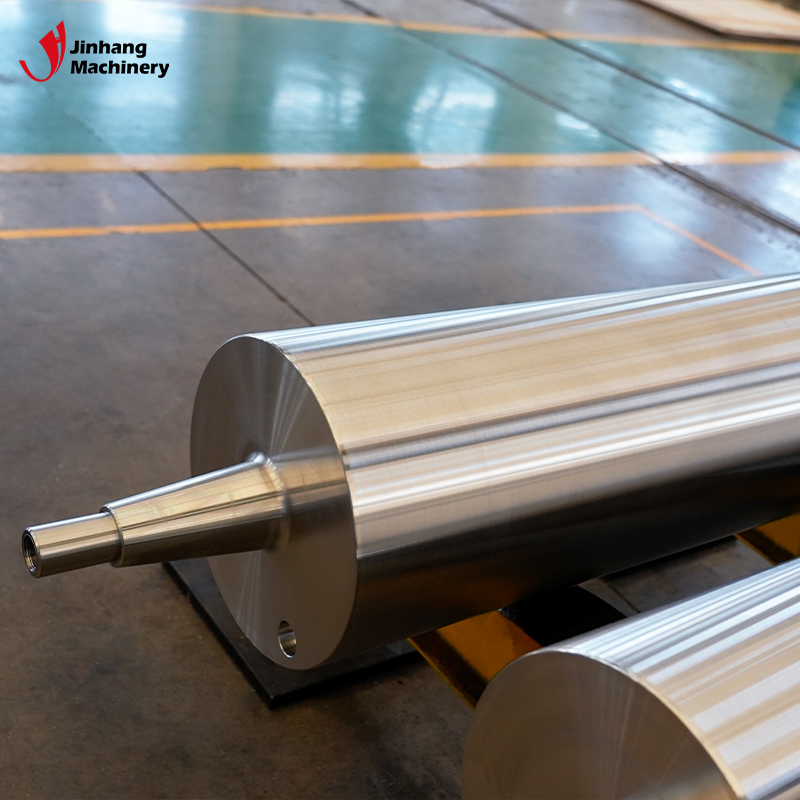
Why is grit size selection so important in mirror roller polishing?
One of the key factors in achieving a "mirror-like" shine on the surface of a mirror roller is the control of grit size during the polishing process. Too coarse a grit will result in unremovable scratches, while too fine a grit will fail to effectively remove residual lines from previous processes. Therefore, a suitable grit selection must meet the following requirements:
1. Maximize the removal of traces from previous processes
For example, if slight tool marks remain after fine grinding, a coarser grit polishing band is needed for initial treatment.
2. Avoid deep scratches
Inappropriate grit selection can create deep scratches that are difficult to remove, making subsequent polishing challenging.
3. Ensure continuous reduction in surface roughness
The final surface roughness of a mirror roller is typically required to reach the Ra 0.02–0.005 μm level; therefore, the grit size must be progressively refined.
4. Achieve a high-reflectivity, high-gloss mirror effect on the mirror roller
The finer the grit, the smaller the microscopic peaks and valleys, resulting in higher final gloss.
Therefore, the polishing grit size for mirror rollers is not chosen arbitrarily, but is scientifically controlled based on the process flow and material properties.
What different grit sizes are needed in the mirror roller polishing process?
Generally, mirror polishing of mirror rollers involves three stages: rough polishing → medium polishing → fine polishing/mirror polishing.
Each stage corresponds to a completely different grit size.
The following is a commonly used grit size reference system in the industry (based on abrasive belts or polishing consumables):
Rough Polishing Stage: What grit size should be used for rough polishing of mirror rollers?
The main tasks of rough polishing are:
• Removing residual tool marks from grinding
• Smoothing the electroplated surface
• Eliminating large particle defects and local unevenness
Therefore, a relatively coarse grit size is needed in the rough polishing stage.
Common Grit Ranges for Coarse Polishing
• P240
• P320
• P400
Characteristics of Coarse Polishing Grits
• High cutting force, quickly removes surface defects
• However, it produces relatively coarse scratches, requiring refinement through intermediate polishing
At this stage, coarse polishing must strictly control the cutting pressure and speed; otherwise, deep scratches will form, affecting the workload of subsequent intermediate polishing.
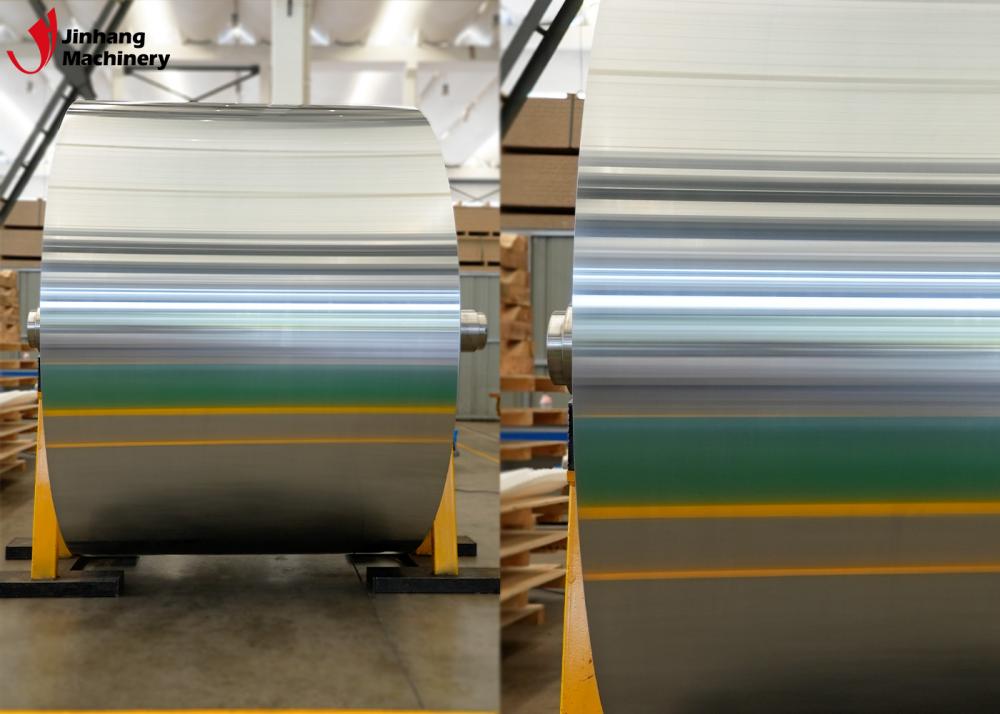
Intermediate Polishing Stage: What is the most suitable grit size for intermediate polishing of mirror rollers?
Intermediate polishing is one of the most critical stages in the entire mirror roller polishing process. Its purpose is:
• To remove the deeper scratches produced in the coarse polishing stage
• To gradually bring the surface closer to a mirror finish
• To lay the foundation for subsequent fine polishing and optical-grade polishing
Common grit ranges for intermediate polishing include:
• P600
• P800
• P1000
• P1200
• P1500
Different factories will combine different grit sizes based on the hardness of the mirror roller, the characteristics of the electroplating layer, and the required roughness. Typically, polishing starts at P600 and progresses upwards, ensuring each stage completely covers scratches from the previous grit.
Key Technical Points for Intermediate Polishing:
• Ensure uniform contact between the abrasive belt and the mirror roller.
• Maintain a consistent polishing trajectory.
• Avoid skipping stages with excessively fine grits, otherwise scratches will be difficult to eliminate.
In general, the grit used in intermediate polishing determines the foundation for the final mirror finish of the mirror roller and is the most time-consuming step in the entire process.
Fine Polishing Stage: How fine a grit is needed for the final mirror polishing of the mirror roller?
The goals of the fine polishing stage are:
• Eliminate micro-scratches remaining from intermediate polishing.
• Achieve a high-gloss, high-reflectivity mirror effect.
• Achieve the final surface roughness standard (typically below Ra 0.02 μm).
The grit used in this stage must be extremely fine.
Commonly used grit sizes for fine polishing include:
• P2000
• P2500
• P3000
• P5000 (used in some high-end mirror rollers)
For mirror rollers requiring extremely high optical-grade mirror finishes, the following are also used:
• Nano-level polishing agent
• Non-woven polishing cloth
• Special mirror polishing oil
After this step, the mirror roller will exhibit a highly bright, non-directional textured "mirror effect."
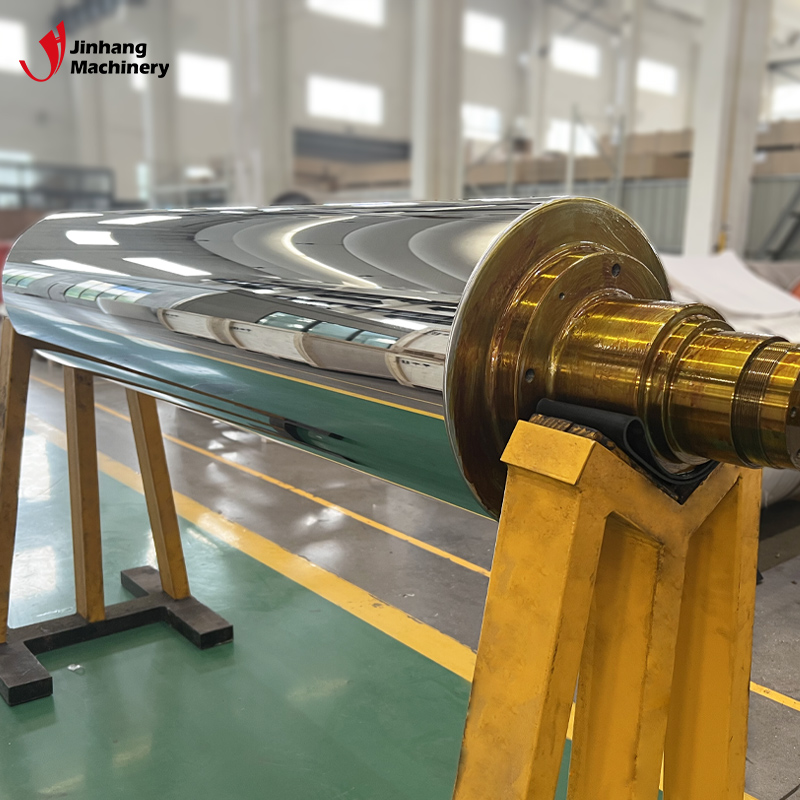
Why can't the finest grit be used in one polishing cycle for mirror rollers?
Many beginners may mistakenly believe that since mirror rollers require a mirror effect, using the finest grit directly will shorten the processing time.
The answer is no.
Mirror roller polishing must follow the principle of "gradual progression" of grit size. The reasons include:
1. Fine grit cannot quickly remove coarse surface defects
For example, P3000 grit abrasive belt has almost no cutting force; it can only fine-tune the gloss and cannot eliminate deep scratches.
2. Incompletely removed scratches will be magnified in the mirror finish
Any coarse-grained residue will be particularly noticeable in the mirror's reflection.
3. Skipping polishing stages will significantly extend processing time
Fine-grained polishing has weak cutting power and cannot replace the function of coarse-grained polishing.
4. It easily causes "ripples," "haze," and "orange peel" textures on the mirror roller surface
This is one of the most common quality issues in mirror roller polishing.
Therefore, mirror roller polishing should never start with the finest grit; instead, it must be refined sequentially, stage by stage.
Are the polishing grits for mirror rollers completely consistent across different materials?
Although the grit range for mirror roller polishing is generally consistent, differences exist between different materials.
1. Chrome-plated mirror roller (most common)
Regular grit settings follow the standard path of coarse polishing → medium polishing → fine polishing.
Due to high hardness, the medium polishing stage requires more steps; skipping grades from P600 to P1500 is generally not recommended.
Fine polishing can use P3000 and above.
2. Nickel-plated mirror roller (optical grade)
Easier to achieve a mirror finish, but also more prone to scratches. Limited grit size range; gradual coverage is necessary. Fine polishing often uses high-end polishing compounds to enhance reflectivity.
3. Stainless steel mirror roller
Lower hardness, making scratches more likely. Medium polishing requires more careful pressure control. The grit size sequence should not be reduced.
4. Aluminum alloy mirror roller
Softer material, more prone to polishing defects. Lighter pressure is required for grit settings. High-precision mirror rollers typically require special polishing materials.
Therefore, although the grit size ranges are similar, specific process details still need to be adjusted based on the mirror roller material.
What is the relationship between mirror roller polishing grit size and final surface roughness?
Surface roughness (Ra value) of mirror rollers is a crucial indicator of polishing quality.
Common roughness standards and their corresponding grit sizes can be referenced below:
Target roughness Ra | Typical Required Final Particle Size | Notes |
| Ra 0.1–0.05 μm | P2000–P2500 | General requirements for mirror rollers |
| Ra 0.02–0.01 μm | P3000 | High-end mirror rollers |
| Ra 0.005 μm and below | P5000 + Nanoscale polishing agent | Optical-grade mirror rollers |
Whether mirror roller polishing can achieve the target roughness depends primarily on the appropriate selection of grit sizes for intermediate and fine polishing.
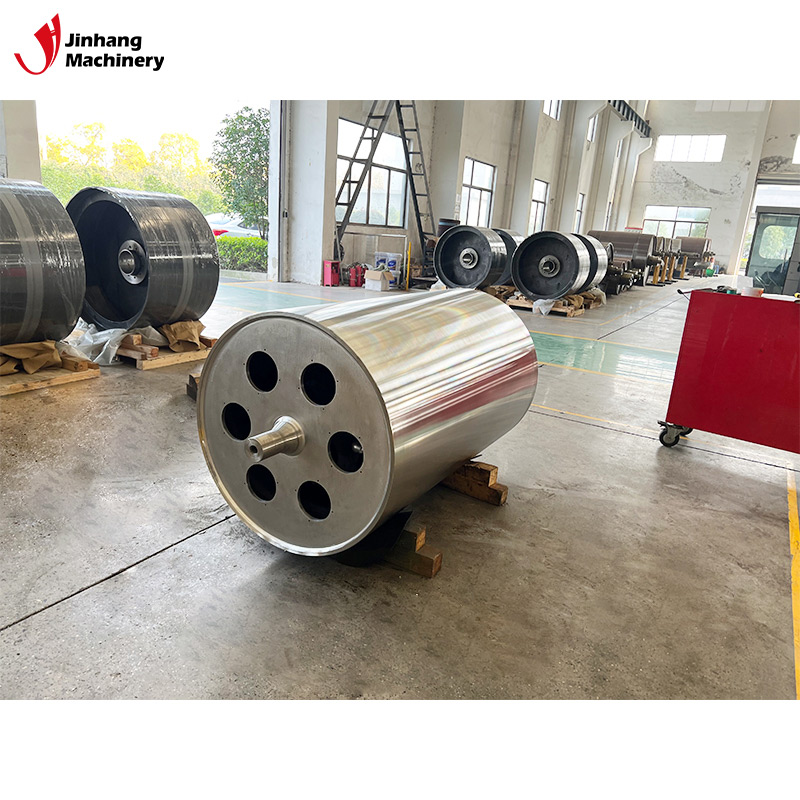
How to determine if grit size needs to be changed during mirror roller polishing?
Determining the appropriateness of grit size conversion is one of the core competencies of polishing technicians.
Judgment criteria include:
1. Whether scratches from the previous grit size have been completely eliminated
If not completely covered, immediately increasing the grit size will lead to defects.
2. Whether the surface is uniform and free of dark lines
If localized deep dark lines appear, it indicates that processing with the current grit size is still necessary.
3. Whether the gloss level meets the standard for the corresponding grit size
For example, after intermediate polishing, a uniform and soft metallic sheen should appear.
4. Whether the abrasive belt has lost its cutting ability
Insufficient cutting force will cause a decrease in polishing efficiency.
Therefore, the change of polishing grit size is not determined by time, but by the surface condition of the mirror roller.
What are some common errors in grit size selection during mirror roller polishing?
Common errors during mirror roller polishing include:
• Skipping too many grit sizes, resulting in deep scratches that cannot be removed.
• Over-coarse polishing, exacerbating surface damage.
• Missing the intermediate polishing step, resulting in an inability to achieve a mirror finish.
• Insufficiently fine grit for fine polishing, leading to uneven reflection.
• Incorrect polishing direction, resulting in optical interference lines.
• Using low-quality polishing consumables, resulting in uneven particle size.
These problems will prevent the mirror roller from achieving a mirror finish and may even require rework.