
What Are the Quality Inspection Processes of Roller Manufacturers?
In the industrial manufacturing field, rollers are not ordinary mechanical parts, but key components that directly participate in the process, affecting product quality and equipment stability. Therefore, for any professional roller manufacturer, "manufacturing capability" is only the foundation; "quality inspection capability" is the core that truly determines its technical level and reliability.
Whether it's mirror rollers, heated rollers, cooled rollers, rubber rollers, corona rollers, or tungsten carbide coated rollers and chrome-plated rollers, once these industrial rollers are put into use, they often need to operate for extended periods under high-speed, high-load, high-temperature, or high-precision conditions.
If quality inspection is inadequate, it can range from affecting product surface quality to causing equipment vibration, bearing damage, or even production line shutdowns.
Therefore, an unavoidable question is:
What exactly are the quality inspection processes of roller manufacturers?
Does quality inspection only occur at the finished product stage?
What key indicators do professional roller manufacturers typically test?
This article will systematically outline the complete and rigorous quality inspection processes of roller manufacturers from a process perspective, testing items, testing logic, and technical necessity, helping you truly understand how "qualified industrial rollers" are verified step by step.
- - Jinhang Machinery specializes in developing and manufacturing rollers of various shapes and sizes for different roll structures. We can design rollers to meet the specific needs of your equipment. We also offer custom machining services based on your drawings.
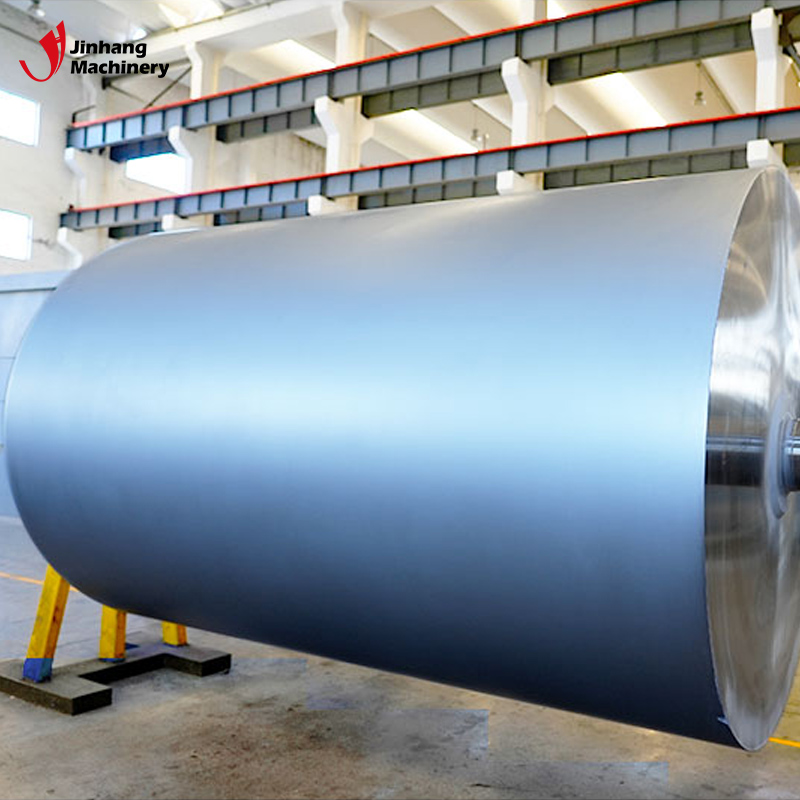
Why must roller manufacturers establish a complete quality inspection process?
Quality inspection is an indispensable part of the manufacturing process for any industrial product, but it is particularly critical for industrial rollers.
1. Industrial rollers are high-risk operating components
Industrial rollers typically have the following characteristics:
• Continuous operation for extended periods
• High rotational speed
• High linear speed
• Direct contact with materials
• High coupling with bearings and transmission systems
This means that if there are problems with the dimensions, coaxiality, or mass distribution of an industrial roller, the consequences are often systemic failures, rather than single-point issues.
2. Defects in industrial rollers are often hidden
Many quality problems are not obvious in a static state, such as:
• Dynamic runout
• Micro-vibration
• Uneven internal stress
• Insufficient coating adhesion
These problems can only be detected through specialized inspection methods, which is the fundamental reason why roller manufacturers have a quality inspection process.
3. The cost of rework and replacement of industrial rollers is extremely high
Industrial rollers are typically large, heavy, and have long processing cycles. Once quality problems are discovered after they are put into the equipment, it often requires:
• Downtime
• Disassembly
• Return to the factory
• Recalibration
Therefore, roller manufacturers must complete the most comprehensive quality inspection possible before shipment.
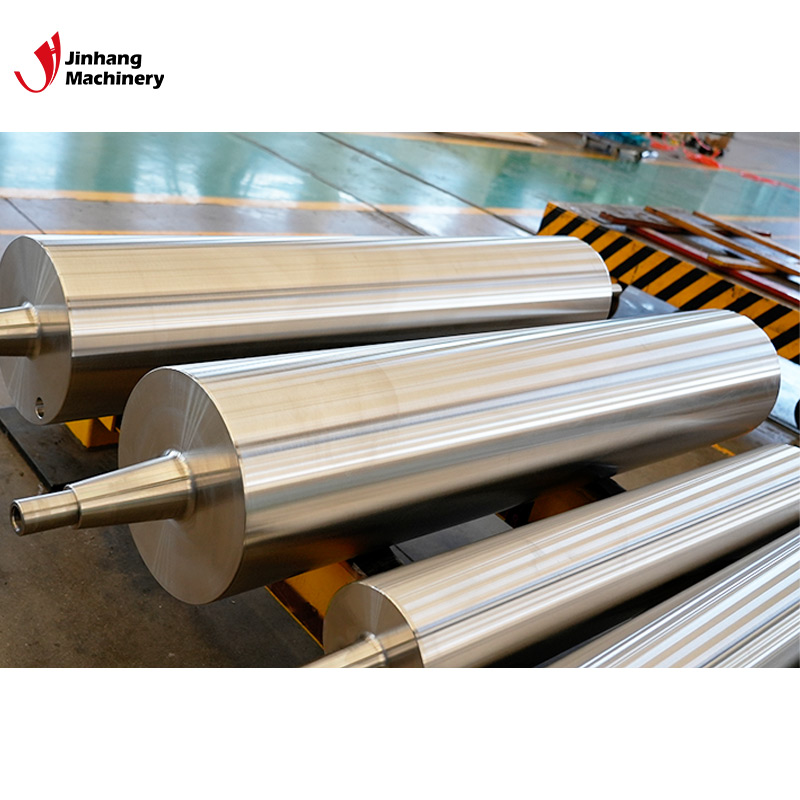
Do roller manufacturers begin quality inspection at the raw material stage?
The answer is: Yes, and this is the first critical line of defense.
1. Raw material quality determines the basic performance of industrial rollers
Common roller materials for roller manufacturers include:
• Carbon steel
• Alloy steel
• Stainless steel
• Special wear-resistant steel
• Aluminum alloy, etc.
If the raw materials have problems, such as unstable composition, internal defects, or insufficient mechanical properties, even the most precise subsequent processing cannot compensate for them.
2. What does raw material inspection typically include?
Professional roller manufacturers typically perform the following checks during the raw material stage:
• Material type confirmation
• Chemical composition verification
• Surface defect inspection
• Dimensional and shape inspection
These checks ensure the material meets design and process requirements, preventing potential problems from entering the manufacturing process at the source.
How do roller manufacturers conduct quality inspections during the rough machining stage?
The rough machining stage does not mean quality can be ignored; on the contrary, it is a crucial stage for controlling deformation and structural stability.
1. Is the dimensional allowance reasonable?
Roll manufacturers will check:
• Whether the outer diameter is within the allowable range for rough machining
• Whether the allowance for machining is uniform
• Whether there is obvious eccentricity or bending
This step directly affects the controllability of subsequent finishing machining.
2. Initial inspection of coaxiality and straightness
After rough machining, roller manufacturers typically perform preliminary checks:
• Straightness inspection
• Coaxiality inspection
The purpose is to confirm that there have been no irreversible deviations in the overall geometry of the roller.
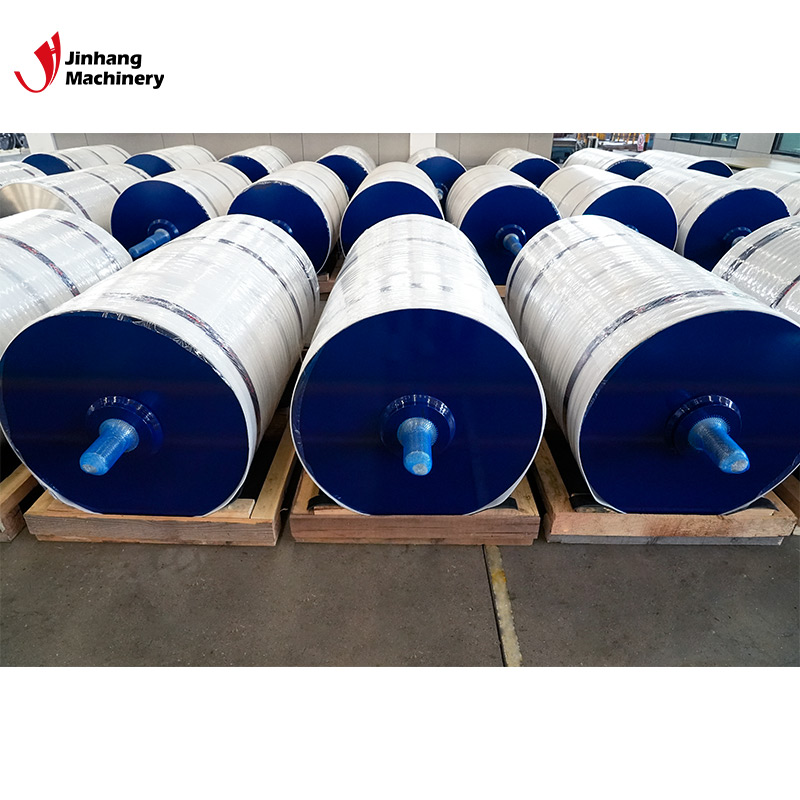
What precision indicators do roller manufacturers focus on checking during the finishing stage?
Precision machining is the core stage of quality control for industrial rollers and the most direct reflection of a roller manufacturer's technical strength.
How do roller manufacturers inspect the dimensional accuracy of industrial rollers?
At this stage, roller manufacturers focus on inspecting:
• Outer diameter tolerance
• Roundness
• Cylindricity
• Shaft end dimensions
• Tolerances of mating parts
These parameters determine whether the industrial roller can:
• Install correctly
• Rotate stably
• Precisely fit with equipment
Why do roller manufacturers repeatedly check coaxiality and runout?
Even if an industrial roller has a perfect appearance, if its coaxiality and runout exceed the limits, it will cause serious problems during operation.
Therefore, roller manufacturers typically inspect:
• Radial runout
• Axial runout
• Total runout
And often not just once, but multiple times across multiple processes.
How do roller manufacturers inspect the surface quality of industrial rollers?
Surface quality is a core performance indicator for many industrial rollers (especially mirror-finish rollers).
How do roller manufacturers inspect surface roughness?
For mirror-finish rolls, chrome-plated rolls, etc., roll manufacturers focus on inspecting:
• Surface roughness (Ra value)
• Surface uniformity
• Presence of micro-scratches or defects
Surface roughness directly affects material contact and final product quality.
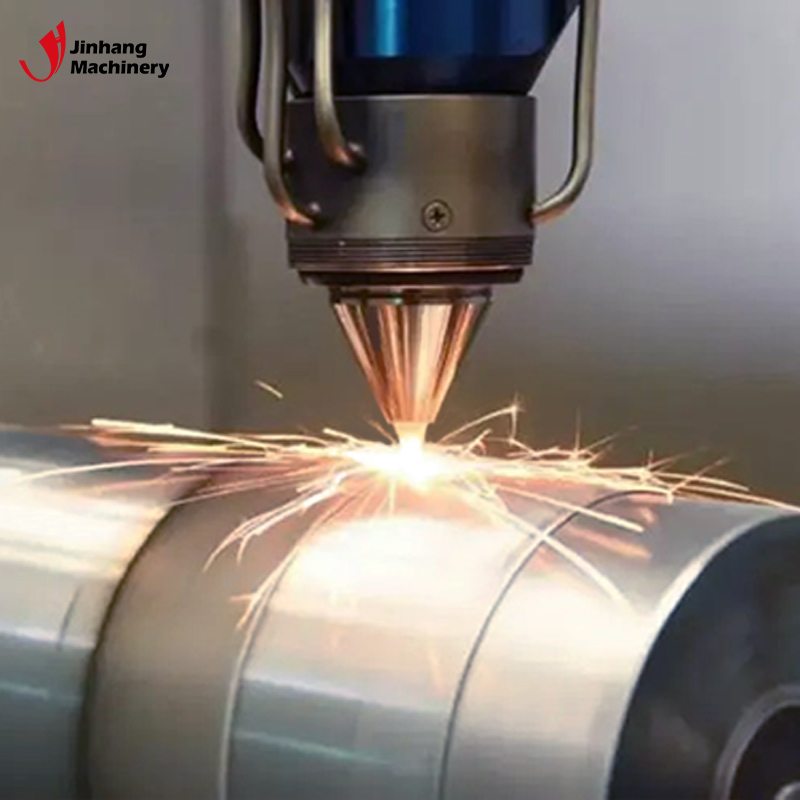
How do roll manufacturers inspect surface defects?
Professional roll manufacturers perform:
• Visual inspection
• Magnified inspection
• Light-assisted inspection
Ensuring the surface is free of:
• Scratches
• Pitting
• Peeling
• Cracks
These defects can rapidly expand during operation.
How important is dynamic balancing in the roll manufacturer's process?
If dimensions and surface finish are "static quality," then dynamic balancing is "dynamic quality."
Why must roll manufacturers perform dynamic balancing?
Industrial rolls are high-speed rotating bodies during operation; even small quality deviations will produce:
• Centrifugal force
• Vibration
• Noise
• Equipment fatigue
Therefore, dynamic balancing is an indispensable step in the roll manufacturer's quality process.
How do roll manufacturers typically perform dynamic balancing?
Roller manufacturers will perform the following tests on specialized equipment:
• Testing at or near the design speed
• Correcting imbalances
• Repeated corrections until compliance is achieved
The dynamic balance grade is typically determined based on the equipment and operating conditions.
How do roller manufacturers conduct specialized testing on special-function rollers?
Different types of industrial rollers have different testing focuses.
What are the key testing focuses for heated rollers?
For heated rollers, manufacturers will focus on:
• Internal flow channel sealing
• Welding quality
• Leakage risk
• Structural integrity
What are the key testing focuses for cooled rollers?
Cooled rollers typically require testing of:
• Internal water channel patency
• Pressure resistance
• Sealing reliability
What are the key testing focuses for coated rollers?
For chrome-plated rollers, tungsten carbide rollers, ceramic rollers, etc., manufacturers will test:
• Coating thickness
• Coating uniformity
• Surface adhesion
Ensuring the coating not only "exists" but is also "reliable".
What final tests do roller manufacturers need to perform at the finished product stage?
After all processing and treatment of industrial rollers are completed, roller manufacturers typically conduct final verification inspections.
1. Dimensional Re-inspection
Ensuring that dimensions still meet requirements after all processing and treatment.
2. Appearance and Marking Inspection
Including:
• Surface integrity
• Protective treatment
• Marking clarity
3. Comprehensive Quality Confirmation
This is the final confirmation of the entire manufacturing and inspection process, ensuring that the industrial rollers meet factory standards.
Why does quality inspection capability determine the true level of a roller manufacturer?
Equipment can be purchased, and processes can be learned, but systematic quality inspection capability is the result of long-term experience and technical accumulation.
Truly professional roller manufacturers:
• Do not rely on a single inspection point
• Emphasize quality control throughout the entire process
• Understand the operational significance behind each inspection
This is also the fundamental reason for the huge differences in the level of roller manufacturers in the market.
What is the quality inspection process of a roller manufacturer?
The answer is: From raw materials to finished products, the quality inspection of roller manufacturers runs through the entire manufacturing cycle; it is a multi-stage, multi-indicator, and logically structured system engineering project.
It includes, but is not limited to:
• Raw material inspection
• Rough machining inspection
• Finishing dimensional inspection
• Surface quality inspection
• Dynamic balancing inspection
• Functional testing
• Finished product re-inspection
These seemingly tedious yet indispensable inspection processes ensure the long-term stable operation of industrial rollers under harsh working conditions.
What roller technologies and processes do you use?
JH Machinery employs both manual craftsmanship and advanced equipment to ensure consistent, reliable roller production. Our plant houses lathes (CW models), imported POMINI universal grinders, large surface grinders, dynamic balancing machines, and polyurethane pouring lines. We manufacture chrome-plated, carbide-coated, and ceramic anilox rolls, plus corona and chill rolls.
As a supplier and factory experienced in mass and custom orders, we provide competitive prices, volume discounts, and tailored production plans.