
What can be plated on the surface of an industrial mirror roller?
Industrial mirror surface rollers are indispensable core equipment in modern precision manufacturing, thin film production, metal processing, rubber calendering, electronic materials manufacturing, and paper coating industries.
Mirror surface rollers not only require extremely high surface smoothness, but also high hardness, high wear resistance, and tolerance to specific chemical environments.
To meet the performance requirements of different production conditions, mirror surface rollers often require specific coating treatments. Different coatings not only affect the service life and wear resistance of the mirror surface roller, but also directly determine the surface quality and consistency of the product.
Many companies ask the following questions when selecting mirror surface rollers: What materials can be plated on the surface of mirror surface rollers? Why are mirror surface rollers coated? What are the differences between different coatings? What environments and applications are chromium plating, tungsten plating, and ceramic plating suitable for?
This article will systematically explain these key questions, helping you understand the selection logic, performance structure, and application reasons for mirror surface roller coatings from a professional perspective.
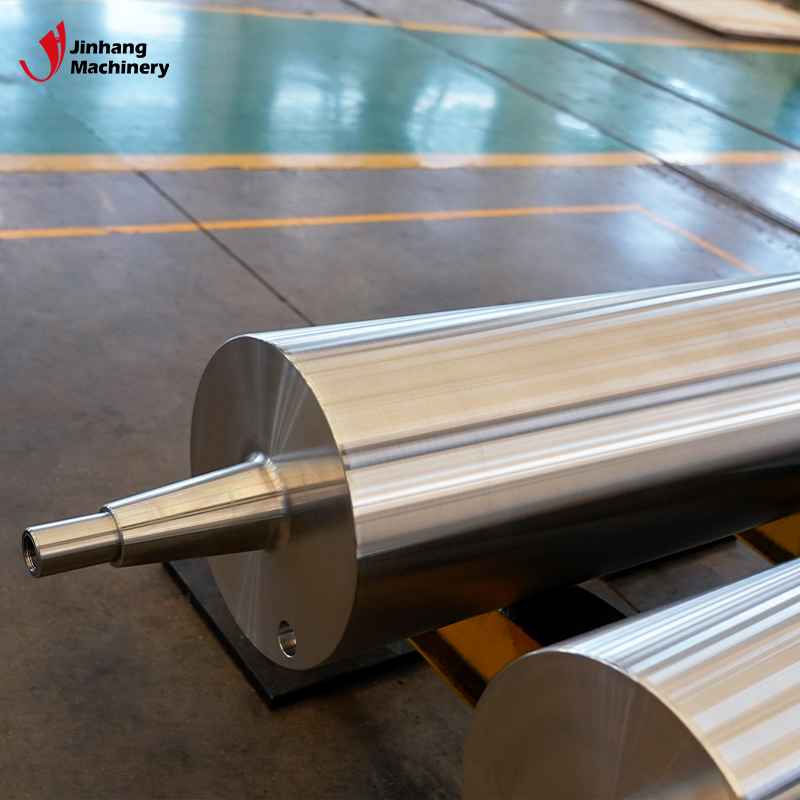
Why do mirror rollers need coating? Can they be used without coating?
While industrial mirror rollers can achieve a basic mirror finish through fine grinding and polishing, uncoated steel roller surfaces typically exhibit the following problems:
• Insufficient hardness, making them prone to wear during rolling.
• Limited corrosion resistance, easily rusting in humid, acidic, or alkaline environments.
• Prone to residue buildup after prolonged material contact.
• Inability to withstand friction and impact during high-speed operation.
• Susceptible to surface damage from high temperatures or chemical solutions.
Therefore, coating is a necessary step to improve the performance of industrial mirror rollers. Coating can provide mirror rollers with:
• Higher surface hardness (HRC 60–70 and above)
• Enhanced wear resistance
• Superior corrosion resistance
• More stable chemical resistance
• Lower roughness and higher gloss
• Longer service life
• Greater adaptability to special operating conditions
In other words, coating is the key processing step that enables mirror rollers to truly achieve industrial-grade performance.
What are the most common coatings for mirror roller surfaces?
Many materials can be plated onto the surface of mirror rollers, but the most common and widely used coatings in the industry include:
• Hard Chrome Plating
• Tungsten Carbide Coating
• Ceramic Coating
• Nickel Plating
• Special Alloy Coatings (such as Ni-P, Ni-Cr, etc.)
• Nitriding Treatment
• PTFE-based Anti-stick Coatings (including Teflon)
Each coating has its unique performance advantages and processing characteristics.
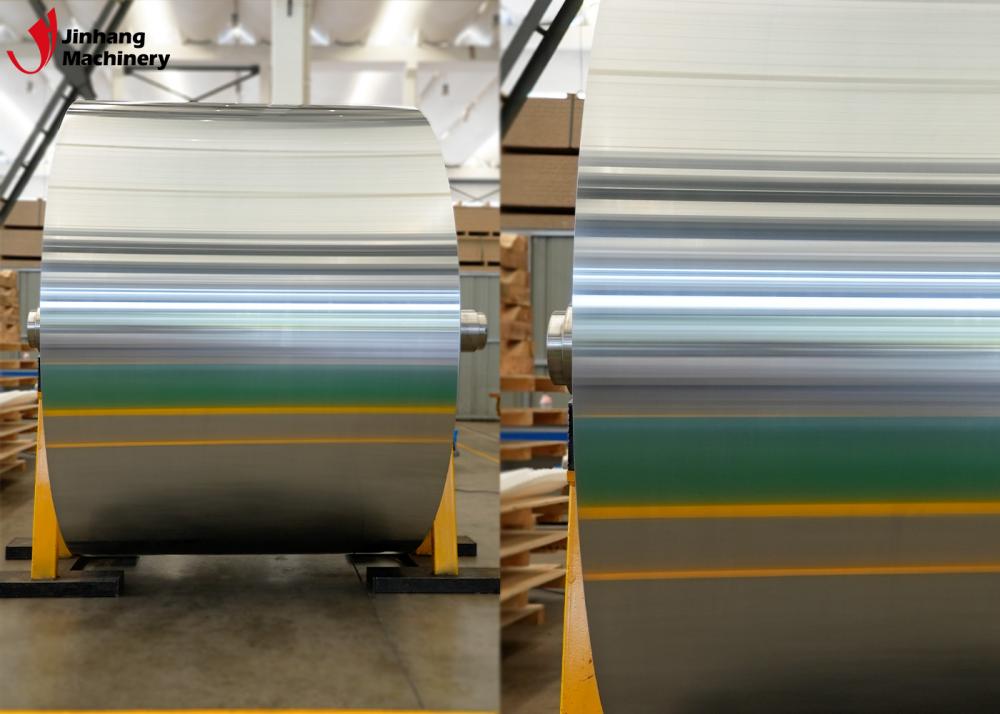
Why is chrome plating the most common coating for mirror rollers?
Hard chrome plating is one of the most widely used coating methods for industrial mirror rollers. The reasons are as follows:
1. Chrome plating offers extremely high gloss
The chrome layer can be polished to an extremely high gloss, enabling the mirror roller to achieve an optical-grade mirror effect with a Ra of 0.005 μm.
2. High Surface Hardness
Hard chrome plating achieves a surface hardness of approximately HRC 65, meeting the rolling and straightening requirements of most materials.
3. Excellent Corrosion Resistance
Chromium itself possesses natural corrosion resistance, protecting mirror rollers from acid, alkali, and moisture corrosion.
4. Adjustable Thickness and Moderate Cost
The plating thickness can be adjusted within the range of 10 μm to 200 μm, resulting in a moderate cost and making it an industry standard.
5. Easy Maintenance and Repeatable Polishing
The chrome layer allows for repeated fine polishing, improving the recyclability of the mirror roller.
Therefore, chrome-plated mirror rollers are the mainstream choice for most industries.
Can mirror rollers be plated with tungsten carbide?
Why do many high-end applications choose tungsten plating?
Tungsten carbide (WC) plating is a commonly used ultra-hard plating for mirror rollers, characterized by:
1. Extremely High Surface Hardness
Tungsten carbide can achieve a hardness of HV 1200–1400, far exceeding that of hard chrome.
2. Extremely high wear resistance
Suitable for high-speed friction environments or processes involving contact with hard materials, such as metal foils.
3. Excellent high-temperature stability
Suitable for high-temperature calendering, thermal bonding, and other similar environments.
4. Excellent corrosion resistance
Tungsten carbide coatings are virtually unaffected by most chemicals.
5. Mirror finish that can be polished to high gloss
Despite its extremely high hardness, tungsten carbide can still achieve a high-quality mirror finish.
When material conditions require extremely high wear resistance, corrosion resistance, and high strength stability, tungsten carbide coatings are often chosen for mirror rollers.
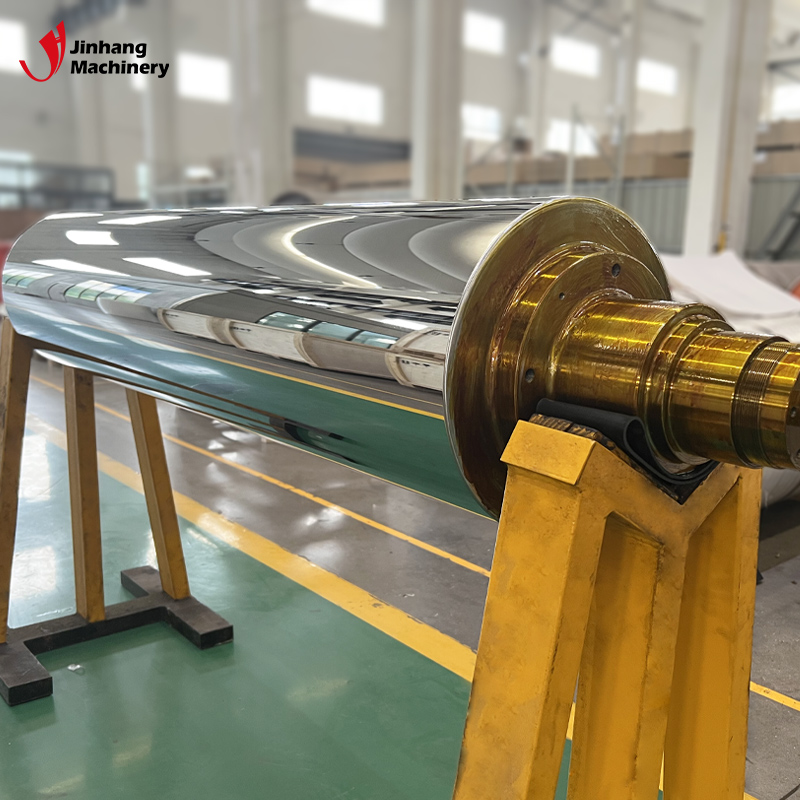
Can mirror rollers be coated with ceramic?
What are the suitable applications for ceramic mirror rollers?
Ceramic coatings (such as alumina, chromium oxide, zirconium oxide, etc.) are a special type of high-hardness coating, often used in extreme conditions.
Characteristics of ceramic coatings include:
1. Extremely high hardness
The hardness of ceramic is even higher than that of tungsten carbide, representing the highest level of hardness among mirror roller coatings.
2. High Corrosion Resistance
Remains stable even in strong acid and alkali environments.
3. Excellent Wear Resistance
Ideal for long-term continuous calendering or high-friction applications.
4. Excellent High-Temperature Resistance
Maintains surface stability without degradation even at high temperatures.
5. Can be Polished to a High-Gloss Mirror Finish
Although the ceramic layer has high hardness, an optical-grade mirror finish can be achieved through fine polishing.
Ceramic-coated mirror rollers are typically suitable for:
• High-corrosion environments
• High-wear production lines
• Ultra-high temperature calendering
• Production of special functional film materials
It is one of the commonly used coatings for high-end mirror rollers.
What are the characteristics of nickel-plated mirror rollers?
Why is a nickel layer necessary in some applications?
There are two main types of nickel plating: electroplated nickel and electroless nickel plating (Ni-P alloy).
Electroless nickel plating is more common in mirror rollers.
Nickel plating characteristics:
1. Excellent corrosion resistance
Especially suitable for high humidity or chemical-containing environments.
2. High nickel layer density
Effectively blocks external corrosives and delays substrate damage.
3. Excellent mirror polishing performance
A high-gloss mirror finish is easily achieved on nickel-plated surfaces.
4. Suitable for heated rollers or temperature-controlled rollers
Nickel has good thermal conductivity.
5. Does not easily adhere to sticky materials
Suitable for coating industries or applications involving contact with sticky materials.
Besides hard chrome, tungsten carbide, and ceramic, what other special plating options are available for mirror rollers?
1. Nitrided Coating
Nitriding treatment increases surface hardness, suitable for medium-duty applications.
2. Teflon (PTFE) Anti-stick Coating
Mostly used in production lines requiring anti-stick and anti-adhesion properties, such as:
• Coating
• Adhesive Film
• Casting of High-Adhesion Materials
3. Polymer Composite Coating
Possesses a balance between anti-stick and wear-resistant properties.
4. Hard Alloy Coating (e.g., Ni-Cr alloy)
Suitable for highly corrosive environments.
Does the coating thickness of the mirror roller affect surface quality?
Yes, coating thickness directly affects the following aspects of a mirror roller:
• Mirror finish
• Structural stability
• Abrasion resistance
• Service life
• Surface roughness
• Polishing difficulty
Generally speaking:
• Coating too thin: prone to wear, short lifespan
• Coating too thick: prone to stress cracking, high polishing difficulty
Therefore, coating thickness needs professional control, generally within the following ranges:
• Chromium layer: 10–100 μm
• Tungsten carbide: 30–80 μm
• Ceramic layer: 20–60 μm
• Nickel layer: 20–50 μm
The specific thickness depends on the intended use.
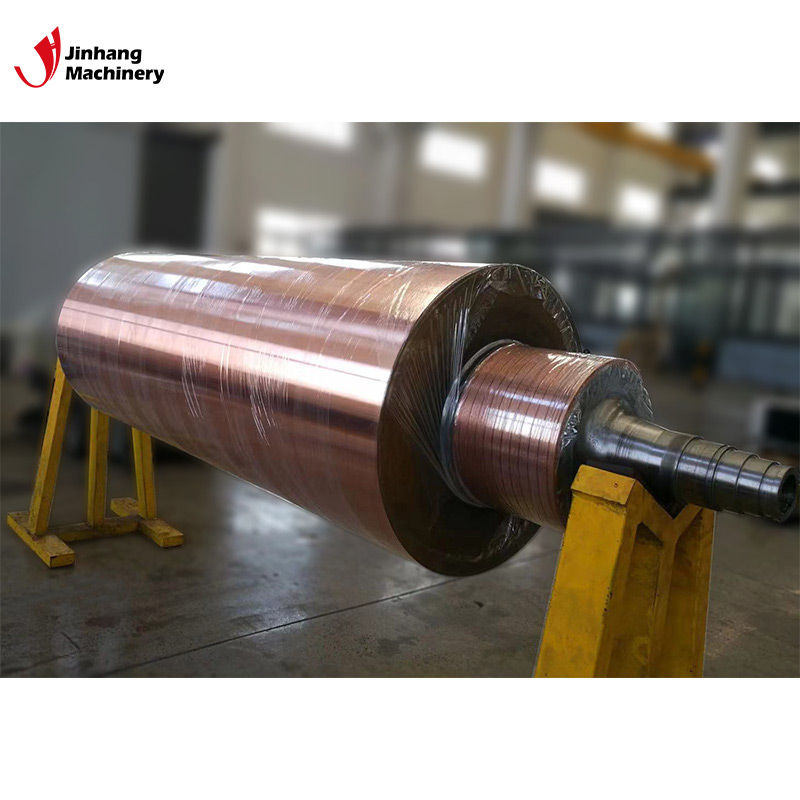
Why do different materials require different coatings?
How to determine which coating to use?
You should select the mirror roller coating based on the following factors:
1. Operating Temperature:
High Temperature → Tungsten carbide, ceramic
Room Temperature → Chromium plating, nickel plating
2. Material Hardness:
Hard materials → Tungsten carbide, ceramic
Soft materials → Chromium, nickel
3. Corrosiveness of the Working Environment:
Strong corrosion → Ceramic, nickel
Light corrosion → Chromium
4. Anti-sticking Required:
Coating, film → PTFE
5. Production Speed:
High speed → High hardness coating (tungsten carbide, ceramic)
6. Mirror Finish Requirements:
Optical grade mirror finish → Chromium, nickel
How does the polishing performance of the mirror roller coating affect the final quality?
Different coatings exhibit significant differences in polishing performance:
• Chromium: Easiest to polish, achieving the highest mirror finish
• Nickel: Excellent polishing performance, producing a delicate luster
• Tungsten carbide: Can be polished but is difficult to polish
• Ceramic: Most difficult to polish, but can achieve extremely high flatness
The final performance of a mirror roller is largely determined by the quality of the coating polishing.