
What is an Industrial Mirror-Surface Water-Cooled Roller?
An industrial mirror-surface water-cooled roller is a high-precision roller device specifically designed for material cooling, shaping, flattening, and surface treatment. In industries such as plastic film, metal coil, paper coating, composite material processing, and optical film production, mirror-surface water-cooled rollers play a crucial role in ensuring the final quality of material forming.
Its core feature is: through a mirror-grade roller surface and an internal high-efficiency water-cooling system, materials achieve rapid cooling, stable shaping, flattening, and optical-grade surface replication upon contact with the roller surface.
Compared to ordinary cooling rollers, industrial mirror-surface water-cooled rollers not only emphasize cooling efficiency but also pursue extremely high mirror precision, surface smoothness, temperature uniformity, and material bonding stability.
It combines the optical replication function of a "mirror roller" with the rapid cooling performance of a "water-cooled roller," thus being widely used in manufacturing industries with extremely high surface quality requirements.
To facilitate user understanding, this article will provide a detailed analysis from a professional perspective of the structure, function, working principle, and important role of mirror-surface water-cooled rollers in industrial processing.
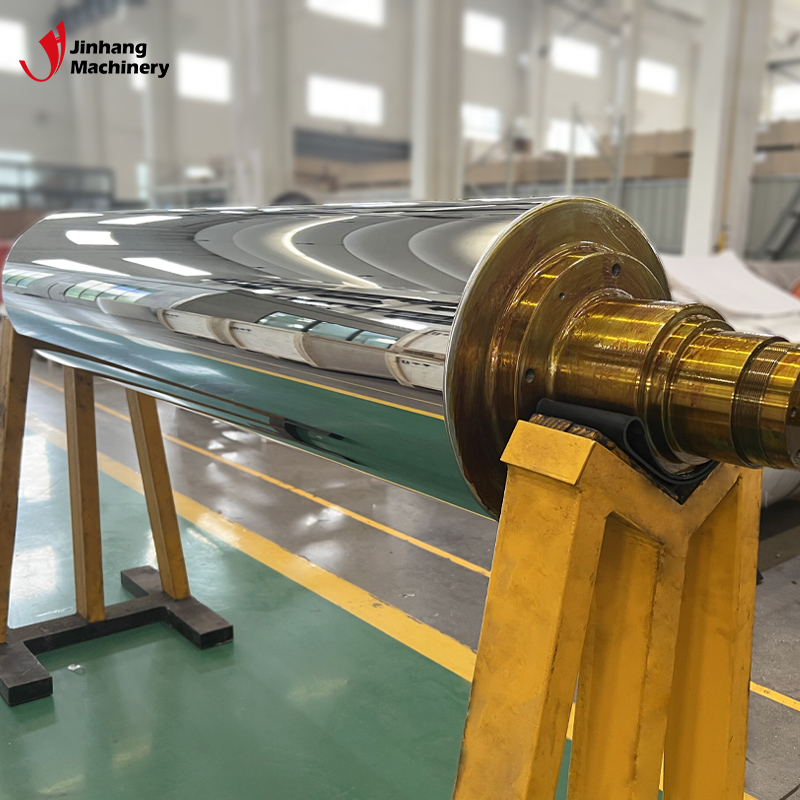
What are the core structural components of a mirror-finish water-cooled roller?
An industrial mirror-finish water-cooled roller is not simply a hollow roller body, but rather composed of multiple precision structures.
The core components include:
• High-strength roller body base material
• Ultra-precision mirror-polished surface layer
• Internal water-cooling circulation channel
• Coolant inlet and outlet system
• Dynamic balance structure
• Surface coating (such as hard chrome, ceramic, tungsten carbide, etc.)
• High-precision shaft head and support structure
These structures collectively constitute the high-performance characteristics of the mirror-finish water-cooled roller, enabling it to maintain stable cooling efficiency and excellent mirror finish in high-temperature, high-speed production environments.
What are the characteristics of the mirror surface layer of the mirror-finish water-cooled roller?
The roller surface of the mirror-finish water-cooled roller undergoes multiple rough polishing, fine polishing, and ultra-precision polishing processes, achieving a surface roughness of Ra0.01μm or even better.
Mirror-finish rollers possess the following characteristics:
• High reflectivity
• Completely free of processing lines
• Extremely high microscopic smoothness
• Less prone to adhesion contamination
• Stable surface gloss
Mirror surfaces can "replicate" their own optical-grade texture onto the processed material, making mirror-finish water-cooled rollers extremely important in film processing, calendering processes, and colored film manufacturing.
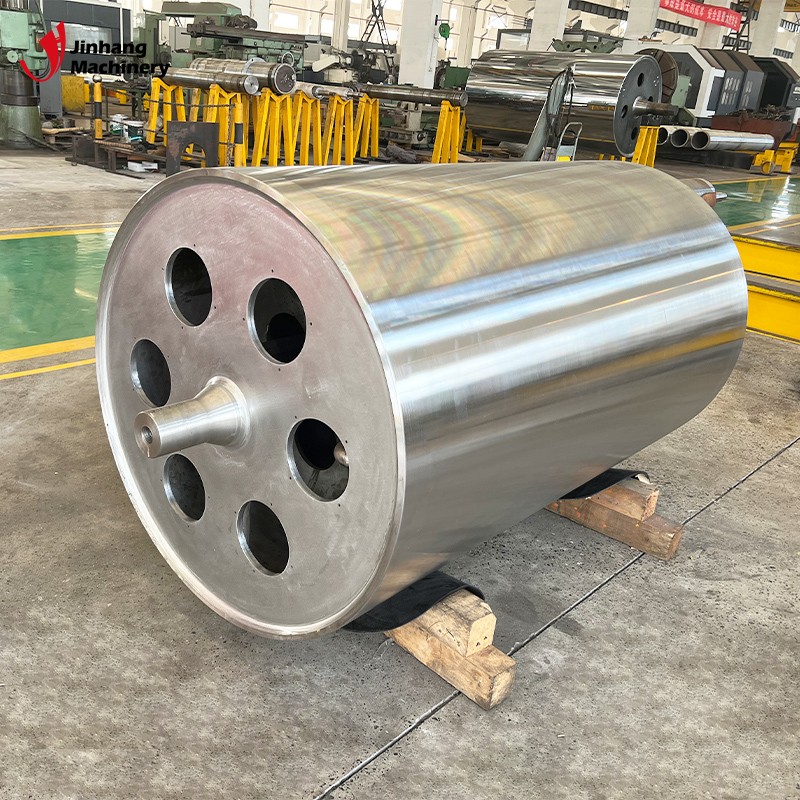
How do the internal water-cooling channels of mirror-finish water-cooled rollers work?
Mirror-finish water-cooled rollers typically employ spiral, helical, or uniform-flow water-cooling channels, allowing cooling water to circulate at high speed within the roller body.
This achieves the following:
• Rapid heat removal
• Uniform roller surface temperature
• Prevention of localized overcooling or overheating
• Maintaining stable temperature control under high-speed operation
• Reducing stress or deformation of the material due to temperature differences
This internal water-cooling structure is one of the core advantages of mirror-finish water-cooled rollers, enabling them to maintain excellent stability in processes such as high-temperature extrusion and nominal cooling and shaping.
What are the industrial characteristics of mirror-finish water-cooled rollers?
Industrial mirror-surface water-cooled rollers combine multiple functions including cooling, shaping, flattening, and stabilization.
Their characteristics include:
• High-speed cooling capability
• Mirror-like replication capability
• Extremely high temperature uniformity
• Excellent material bonding effect
• Excellent dimensional stability
• Strong corrosion resistance and wear resistance
• Suitable for continuous, long-term high-speed operation
These characteristics make mirror-surface water-cooled rollers extremely important equipment in the film and metal processing industries.
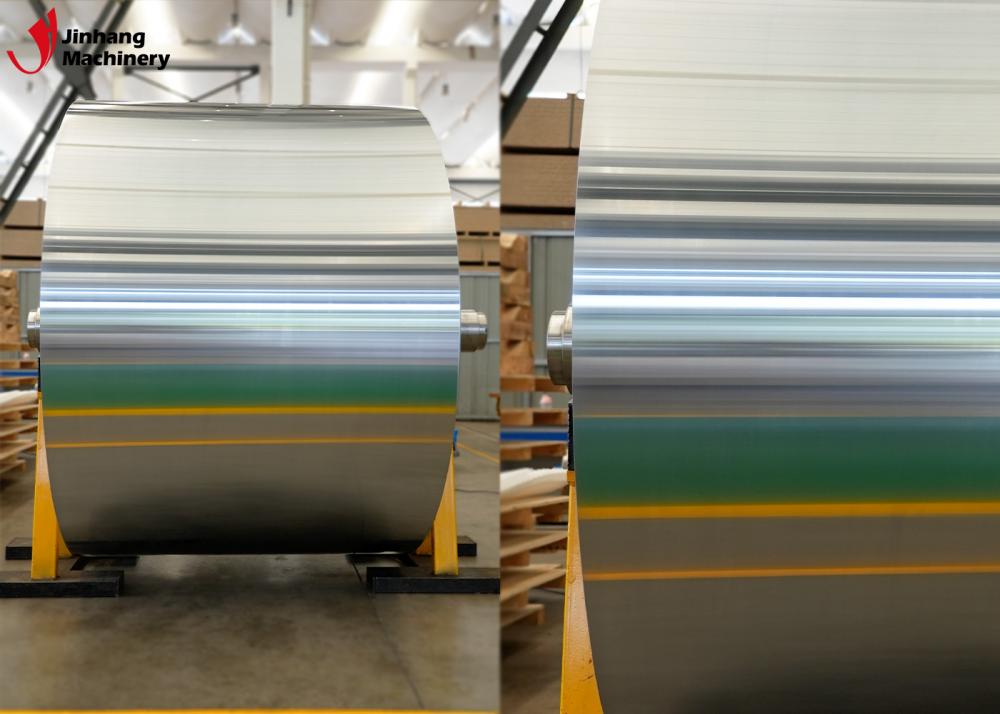
What are the main applications of mirror-surface water-cooled rollers?
The applications are very broad, including but not limited to:
• Plastic film extrusion production
• PET/BOPP/CPP film cooling
• Metal foil shaping and cooling
• Paper coating cooling
• Rubber and composite material cooling and flattening
• Optical functional film shaping
• Colored film and high-gloss film processing
Mirror-surface water-cooled rollers are essential key equipment in almost any scenario where "hot materials need to be quickly shaped and achieve a high-gloss surface after contact."
Why Use a Water-Cooling System for Industrial Mirror-Finish Water-Cooled Rollers?
Let's delve into the core explanation.
Why Don't Mirror-Finish Water-Cooled Rollers Use Air Cooling or Natural Cooling?
Industrial production speeds are increasing rapidly. After high-temperature extrusion, materials need to:
• Cool down
• Solidify and set
• Achieve gloss
• Stabilize thickness
• Improve flatness
Air cooling or natural cooling cannot meet these requirements, while water cooling offers:
• High thermal conductivity
• Fast cooling speed
• High temperature control precision
• Achieve large-area uniform cooling
Therefore, mirror-finish water-cooled rolls must adopt a water-cooling design.
How Does the Water Cooling System of Mirror-Finish Water-Cooled Rollers Maintain Temperature Stability?
Temperature stability is the core technology of mirror-finish water-cooled rolls.
The advantages of a water-cooling system include:
1. Controllable cooling water flow rate
2. Precise adjustment of inlet and outlet water temperatures
3. Internal channel structure ensures uniform fluid distribution
4. Long-term maintenance of a constant temperature difference
Uniform temperature means that the material will not suffer from:
• Uneven thickness
• Bending or warping
• Changes in surface gloss
• Stress concentration
This is also a key factor in the high stability of mirror-finish water-cooled rollers.
What is the relationship between the mirror finish of mirror-finish water-cooled rollers and water cooling?
The mirror finish comes not only from surface polishing, but also from:
• Temperature consistency during material contact
• Material cooling rate
• Stability of the water-cooled roller surface
• Tightness of material adhesion
The more uniform the cooling → the clearer the mirror-finish texture replicated on the material.
The more stable the temperature → the less likely the surface will develop interference patterns.
Therefore, the water-cooling system of mirror-finish water-cooled rollers is crucial for the manufacture of optical-grade thin films.
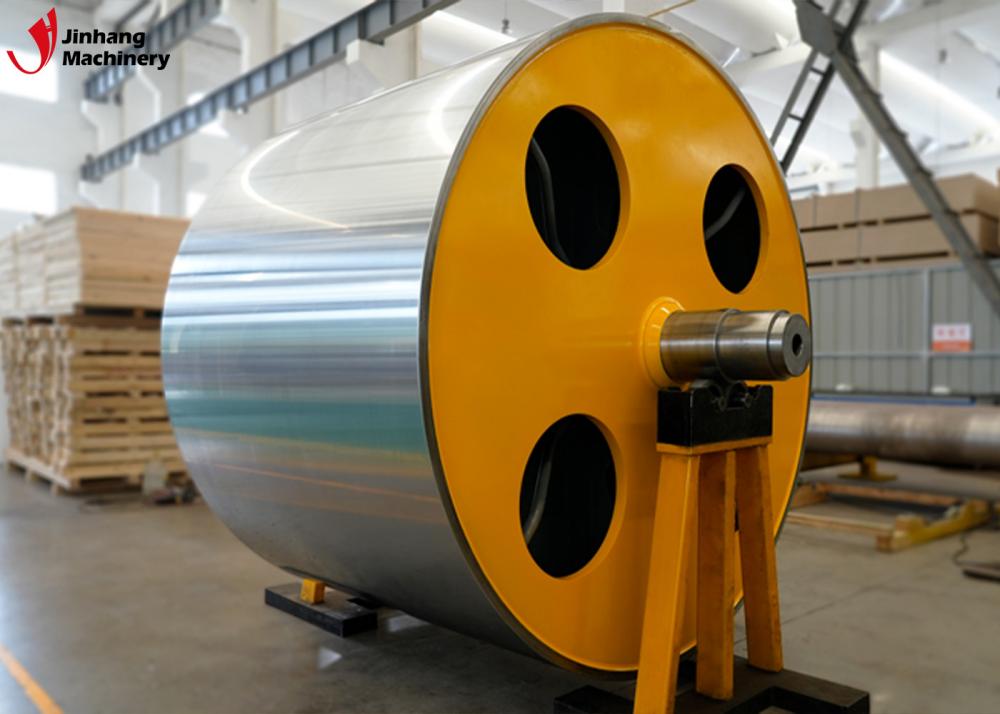
Why can the mirror precision of mirror-finish water-cooled rollers remain stable over a long period?
Many users are concerned about the susceptibility of mirror-finish water-cooled rollers to damage. In fact, mirror-finish water-cooled rollers are designed for high durability.
Reasons include:
• Internal water cooling prevents surface deformation caused by thermal stress.
• Coatings enhance surface abrasion resistance (e.g., hard chrome, tungsten carbide, ceramic, etc.).
• Mirror polishing process creates an extremely dense surface, making it less prone to contamination.
• The cooling system reduces roller surface deviation caused by thermal expansion.
• Dynamic balancing structure ensures stability even at high speeds.
Therefore, mirror-finish water-cooled rollers not only offer superior performance but also maintain mirror-grade quality over a long period.
What are the advantages of mirror-finish water-cooled rollers compared to ordinary mirror rollers?
Mirror rollers don't necessarily have water cooling, but water-cooled mirror rollers are a more advanced form of mirror roller, offering the following advantages:
1. Faster cooling
2. More uniform temperature
3. Higher material setting quality
4. More stable mirror replication effect
5. More suitable for high-speed production
6. More suitable for heat-sensitive materials
7. Better control over surface tension and gloss
Therefore, water-cooled mirror rollers are the mainstay type in modern thin film industry.
How to determine if a piece of equipment needs a water-cooled mirror roller?
The following situations indicate the necessity of using a water-cooled mirror roller:
• Material requires rapid cooling
• Achieving a high-gloss surface through mirror replication
• Extremely high flatness requirements
• High requirements for film thickness uniformity
• Material needs to maintain structural stability
• High processing speed
• Precise surface temperature control required
If any of the above applies, a water-cooled mirror roller is essential.
Does a water-cooled mirror roller affect the thermal deformation of the material?
No, on the contrary, it is a key piece of equipment in preventing thermal deformation.
When materials come into contact with mirror-finish water-cooled rollers, the constant cooling provided by the rollers allows the materials to:
• rapidly freeze their molecular arrangement
• stabilize their thickness structure
• prevent warping caused by temperature differences
• reduce internal stress
Therefore, mirror-finish water-cooled rollers are an important means of preventing film deformation.
Can mirror-finish water-cooled rollers improve production efficiency?
Yes, and significantly. From heat setting to cooling and curing, mirror-finish water-cooled rollers improve efficiency by:
1. Reducing cooling time
2. Reducing material residence time
3. Accelerating material curing
4. Improving product surface quality
5. Reducing scrap rate
6. Maintaining long-term continuous and stable operation
Therefore, mirror-finish water-cooled rollers can significantly improve overall factory productivity and product quality.