
Why are industrial NBR rubber rollers so oil-resistant?
Among various industrial rubber roller materials, NBR rubber rollers (nitrile butadiene rubber rollers) are widely used in printing, metallurgy, plastics processing, conveying systems, coating equipment, and various industrial scenarios involving lubricating oils, hydraulic oils, and mineral oils due to their outstanding oil resistance.
In practical selection, people often ask:
Why are industrial NBR rubber rollers so oil-resistant?
This "strength" is not an empirical conclusion, but rather determined by its molecular structure, polar characteristics, material compatibility, and formulation system.
This article will systematically and deeply explain the fundamental reasons for the oil resistance of NBR rubber rollers from the perspective of materials science and engineering applications.
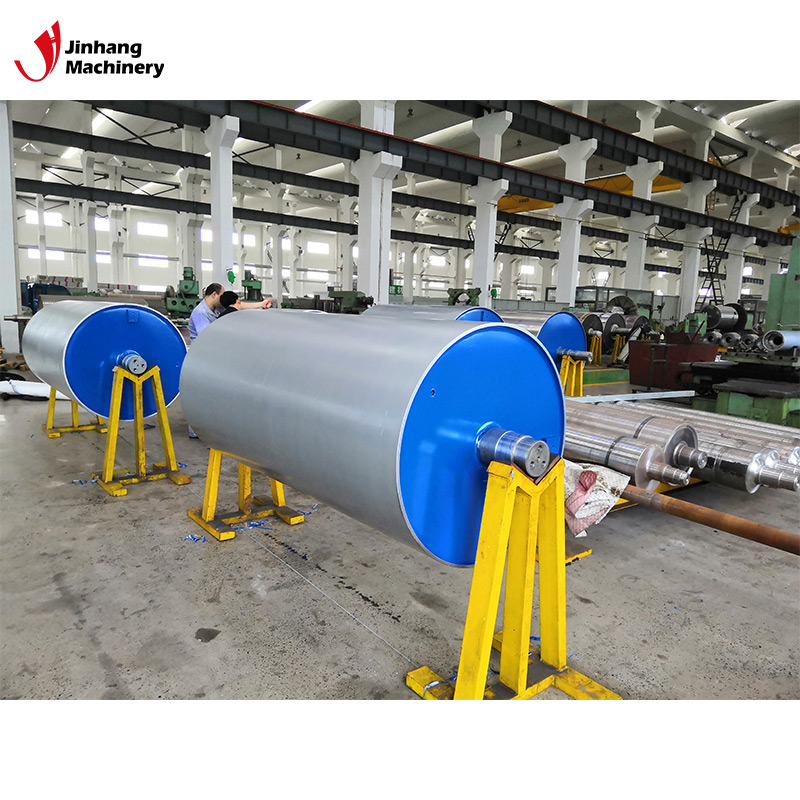
What is NBR rubber? What is the basic material of NBR rubber rollers?
NBR rubber, short for Nitrile Butadiene Rubber, is a copolymerized rubber formed by emulsion polymerization of:
• Butadiene
• Acrylonitrile (ACN)
NBR rubber rollers used in industry are functional industrial rollers made from this synthetic rubber as a base through formulation, vulcanization, and molding processes.
Compared to materials such as natural rubber, EPDM, and silicone rubber, the most significant characteristic of NBR is that its molecular chain contains a large number of polar nitrile (–CN) groups.
This structure is the fundamental reason for the exceptionally strong oil resistance of NBR rubber rollers.
Why are NBR rubber rollers more oil-resistant than ordinary rubber?
Core Answer: Molecular polarity determines material behavior
Whether rubber is oil-resistant depends on a core factor: the compatibility between rubber molecules and oil molecules.
NBR rubber rollers are oil-resistant because:
• NBR molecular chains have significant polarity
• Most industrial oils are non-polar or weakly polar substances
• Polar materials and non-polar oils have poor compatibility
The result is that: oil does not easily penetrate, swell, or damage the molecular structure of NBR rubber rollers.
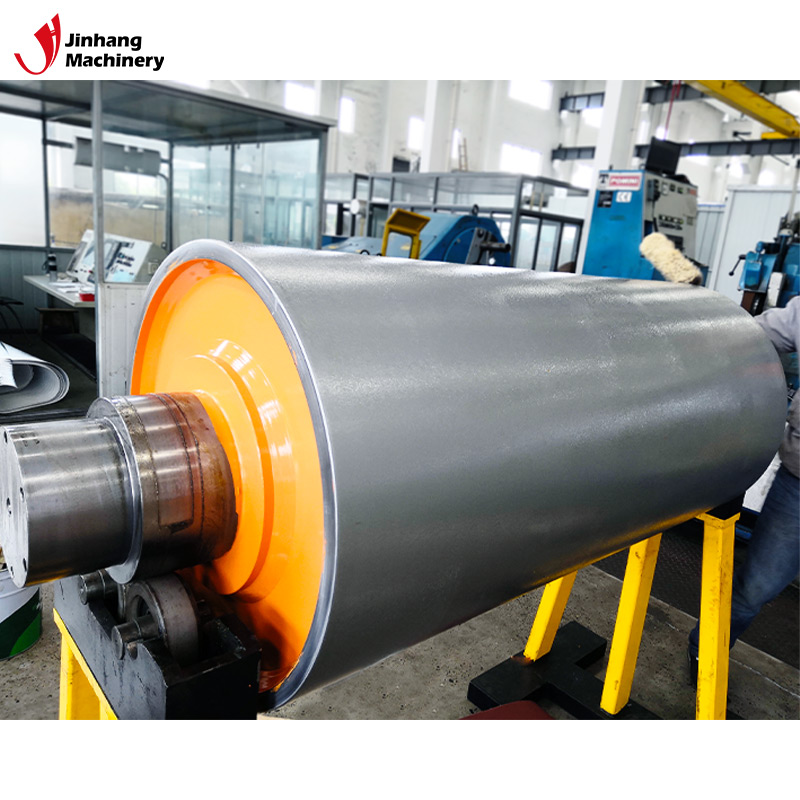
What role does the "nitrile group structure" of NBR rubber rollers play in oil resistance?
1. What is a nitrile group (–CN)?
A nitrile group is a strongly polar functional group with the following characteristics:
• Strong intermolecular forces
• Repulsion against nonpolar substances
• Increases the overall polarity of the rubber.
In NBR rubber rollers, nitrile groups are uniformly distributed along the molecular chain, giving the entire rubber system a distinctly polar characteristic.
2. How do nitrile groups prevent oil penetration?
When oil comes into contact with the surface of an NBR rubber roller:
• Oil molecules attempt to penetrate the rubber interior.
• The polar nitrile groups create a "repulsion effect" on nonpolar oil molecules.
• Intermolecular dissolution is difficult.
The end result is:
• Low oil absorption
• Small volume expansion
• Stable mechanical properties.
This is the key to the long-term operation of NBR rubber rollers in oily environments.
Why is a higher acrylonitrile content associated with greater oil resistance in NBR rubber rollers?
These are the core parameters for judging the oil resistance of NBR rubber rollers.
In NBR, the acrylonitrile (ACN) content is typically between 18% and 50%, and different contents directly affect performance.
Characteristics of high acrylonitrile content:
• Stronger molecular polarity
• Better oil resistance
• Lower gas permeability
• However, elasticity and low-temperature performance decrease.
Characteristics of low acrylonitrile content:
• Better elasticity
• Superior low-temperature performance
• However, oil resistance decreases.
Therefore, industrial NBR rubber rollers typically select an appropriate ACN content formulation based on the oil environment in which they are used to achieve optimal oil resistance.
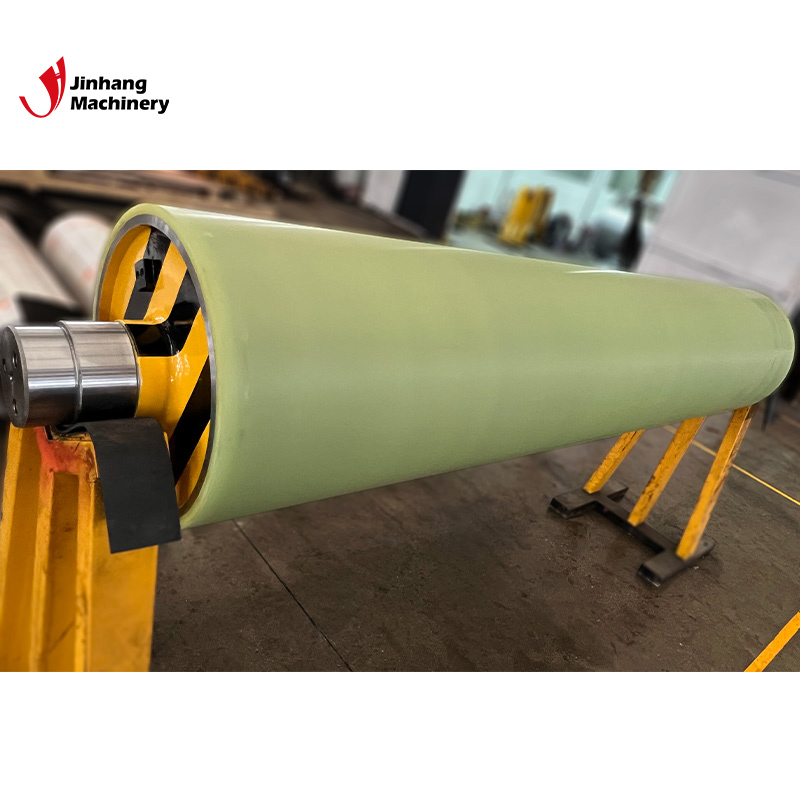
Why do NBR rubber rollers not easily swell in oil?
1. What is the essence of rubber swelling?
Rubber swells in oil, usually because:
• Oil molecules enter the gaps between rubber molecules
• Disrupt intermolecular forces
• Lead to increased volume and decreased strength
2. How can NBR rubber rollers suppress this phenomenon?
The reasons include:
1) Strong intermolecular forces (nitrile groups increase cohesion)
2) Small intermolecular gaps (oil has difficulty penetrating)
3) Poor chemical compatibility (oil has difficulty dissolving rubber)
Therefore, NBR rubber rollers can maintain the following even after long-term immersion in oil or oil mist:
• Dimensional stability
• Minimal change in hardness
• Good surface integrity
Which oils are NBR rubber rollers particularly resistant to?
NBR rubber rollers exhibit excellent oil resistance in the following media:
• Mineral oil
• Hydraulic oil
• Lubricating oil
• Diesel oil
• Gasoline
• Animal and vegetable oils
• Most aliphatic hydrocarbon media
This is why NBR rubber rollers are widely used in hydraulic systems, lubrication conveying equipment, metal processing, and printing machinery.
What does the high oil resistance of NBR rubber rollers mean for industrial applications?
From an engineering perspective, the superior oil resistance of NBR rubber rollers means:
• Longer service life
• Lower maintenance frequency
• More stable dimensions and performance
• Greater controllability in the production process
In industrial environments involving oils, oil resistance is not an added bonus, but a decisive one, and this is precisely the core competitiveness of NBR rubber rollers.
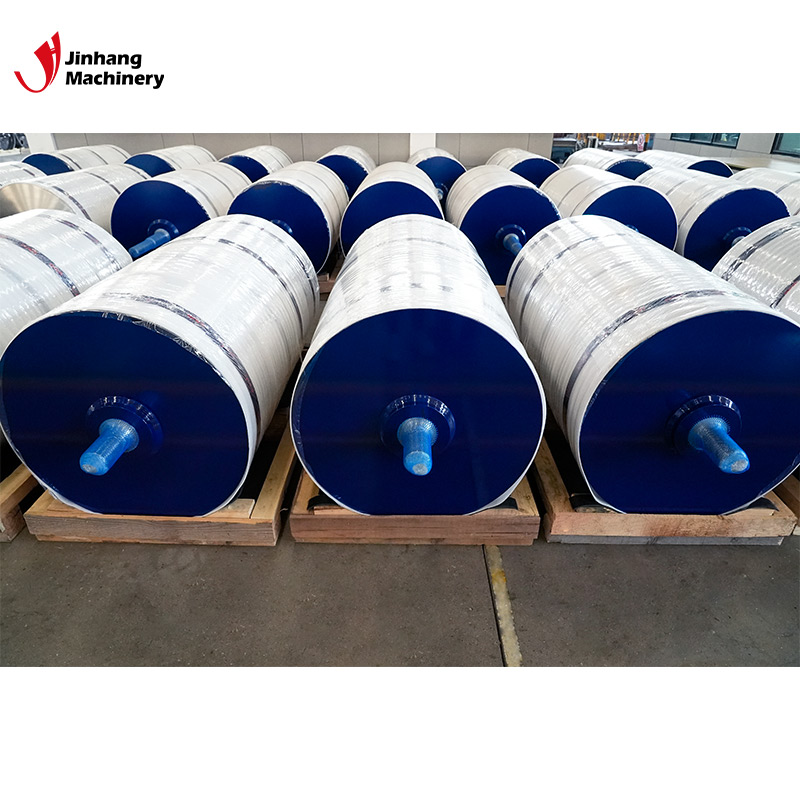
Is the oil resistance of NBR rubber rollers "infinitely strong"?
It's important to be realistic:
• NBR rubber rollers are not resistant to all chemical media
• They have poor resistance to ketones, esters, and highly polar solvents
• Their performance gradually degrades in extremely high-temperature oil environments
However, in most industrial oil-related conditions, NBR rubber rollers remain one of the most balanced and reliable choices.
What benefits do your ceramic-coated rollers provide?
As a professional ceramic roller manufacturer, we supply rollers with extremely hard ceramic coatings that resist abrasion, chemicals, and high temperatures. These rollers are commonly used in printing, lithium battery coating, textile processing, and precision film manufacturing. Our ceramic coatings maintain stable roughness, microtexturing, and long-term durability even under intensive operating conditions.