
How is the surface roughness of industrial mirror rollers tested?
Among the core components of industrial equipment, mirror rollers are among the roller types that best demonstrate processing precision and surface engineering capabilities.
Whether in the fields of plastic films, metal foils, optical materials, lithium battery separators, functional coating materials, or high-gloss surface finishing, the role of mirror rollers is to provide a highly flat, smooth, and flawless roller surface, enabling the processed materials to achieve a uniform, stable surface finish that meets the target smoothness.
To achieve these functions, mirror rollers must possess extremely low surface roughness values. Common requirements are:
• Ra ≤ 0.02 μm
• Ra ≤ 0.01 μm
• Mirror grade Ra ≤ 0.005 μm
• Super mirror grade and even higher requirements
Such high smoothness dictates that mirror rollers must undergo rigorous, precise, and professional surface roughness testing after manufacturing.
This leads to the topic of this article—how exactly is the surface roughness of industrial mirror rollers tested?
To ensure accuracy, repeatability, and traceability, different industries employ varying testing methods, tools, and standards.
This article will systematically analyze the principles, methods, equipment, processes, and factors influencing the surface roughness testing of mirror rollers.
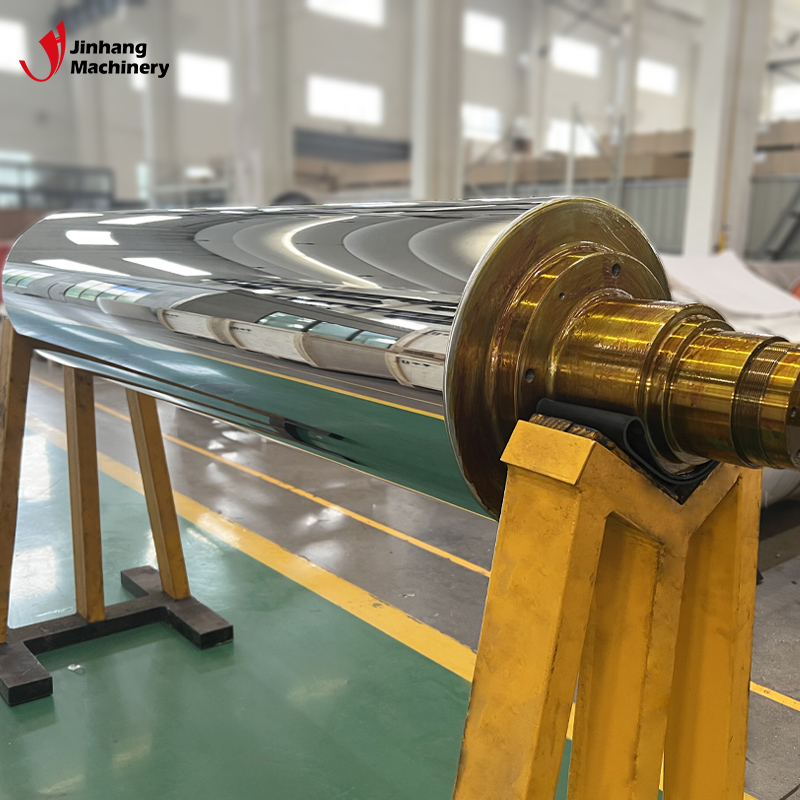
Why must mirror rollers have their surface roughness tested?
The surface of a mirror roller is not simply "glossy," but must meet extremely stringent engineering standards.
The roughness Ra value determines:
• The flatness of the calendered material
• The uniformity of the film surface gloss
• The consistency of the coating thickness
• The calendering quality of metal foils
• The density of lithium battery separators
• The refractive consistency of optical materials
• Whether scratches or defects occur during the production process
Therefore, mirror rollers must undergo roughness testing before delivery, and this testing must be conducted at multiple points, segments, and angles to ensure the overall surface quality meets standards.
Roughness testing is not only a standard for judging processing quality but also the foundation for the stable operation of mirror rollers on high-end production lines.
Is the surface roughness of a mirror roller equivalent to its "gloss"?
Many people mistakenly believe that the gloss or reflectivity of a mirror roller's surface reflects its roughness. However, this is incorrect: Gloss is a visual result, while roughness is a digital measurement result; the two are entirely different.
Roughness reflects:
• The height of surface micro-undulations
• The distribution of micro-peaks and troughs
• The uniformity of nanoscale texture
Therefore, the roughness of a mirror roller must be measured using specialized instruments, not by visual observation.
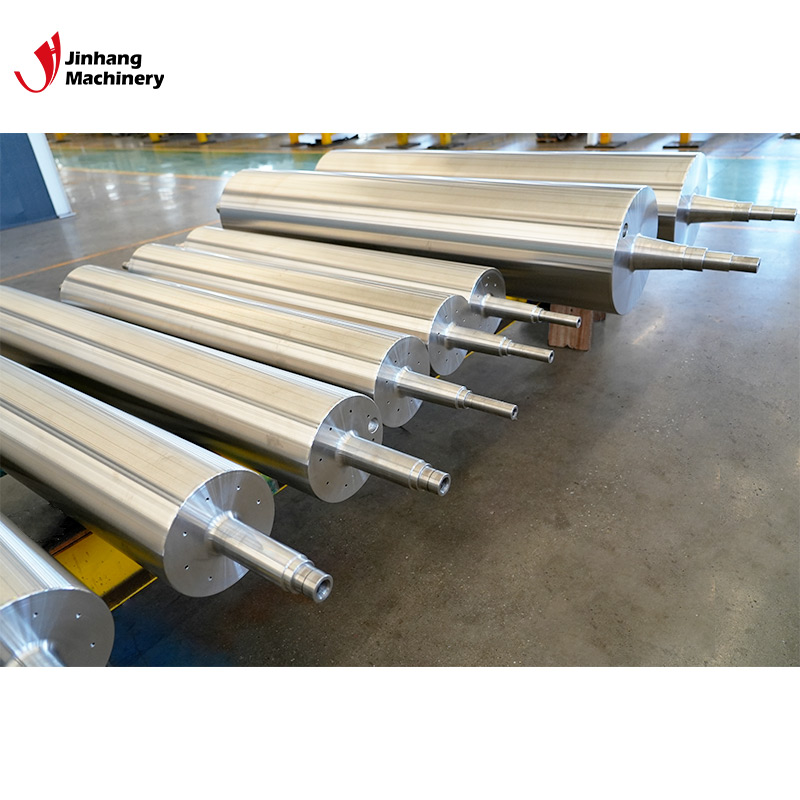
What are some commonly used methods for measuring the roughness of mirror rollers?
Currently, the commonly used roughness measurement methods for industrial mirror rollers mainly include:
1. Contact roughness tester (most commonly used)
2. Non-contact optical roughness test
3. Interferometer test (high-precision mirror-level)
4. Three-dimensional surface topography scanning method
5. White light interferometry for nanoscale roughness detection
6. Profilometer for complex textured mirror rollers
These methods and their applicable scope will be explained in detail below.
Is a contact roughness tester suitable for inspecting mirror rollers?
This is the most common and industrially accepted method for inspecting mirror rollers.
✔ The principle of a contact roughness tester:
A probe with extremely small styluses slides across the surface of the mirror roller, sensing the microscopic texture through its vertical displacement, and then converting the signal into roughness parameters.
Its core measurement indicators include:
• Ra (Arithmetic Mean Roughness): The most commonly used indicator
• Rz (Maximum Height Difference)
• Rq (Root Mean Square Roughness)
• Rt (Total Height Difference)
• Ry (Peak-Valve Average)
For mirror rollers, the most commonly used reference value is Ra.
✔ Why is a contact method suitable for inspecting mirror rollers?
• Capable of accurately measuring very low roughness
• High repeatability
• Commonly used industry standard method
• Can be tested at any position along the entire roll body
• Can measure roughness in different directions (rolling direction and transverse direction)
✔ Advantages of contact testing
• Controllable cost
• Mature and stable instrument
• Achieves mirror-level accuracy
• Fast testing speed
• High industry acceptance (suitable for inspection and quality control)
✔ Limitations of contact testing
• Probes may affect extremely smooth nanoscale surfaces
• Cannot measure surfaces with extremely high reflectivity
• Requires high operational skills
Nevertheless, contact roughness testers remain the main method for roughness testing of mirror rolls.
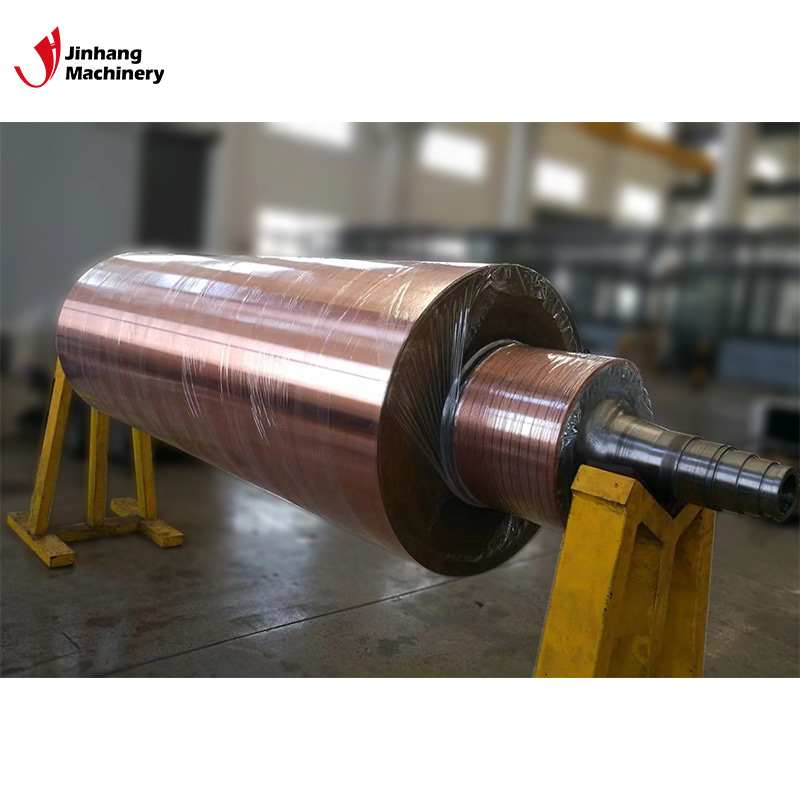
Is non-contact optical roughness testing suitable for mirror rolls?
As a supplement to contact methods, optical testing methods are also commonly used for testing mirror rolls.
✔ Principle of non-contact optical testing
By illuminating the surface of the mirror roll with a beam of light, the microscopic texture features are calculated using the distribution of reflected, refracted, and scattered light.
Advantages:
• No surface damage
• Suitable for ultra-mirror-grade rollers
• Enables rapid multi-point scanning
• Generates 3D images
• Higher precision for high-reflectivity surfaces
Applicable Scenarios:
• High optical-grade mirror rollers
• Nanoscale roughness requirements
• Mirror rollers with special functional coatings
Non-contact inspection is particularly suitable for high-end manufacturing of mirror rollers.
How does a white light interferometer detect the roughness of mirror rollers?
When the surface roughness requirements of mirror rollers are extremely high, such as:
• Ra 0.005 μm
• Ra 0.003 μm
• Ra 0.001 μm
Ordinary roughness meters cannot meet the accuracy requirements.
In this case, the following are needed:
• White light interferometer
• Laser interferometer
• Ultra-high precision optical profilometer
✔ White light interferometry detection principle
By analyzing the changes in interference fringes, surface height differences can be achieved at the nanoscale resolution.
Its features:
• Extremely high precision
• Non-contact
• Measuring extremely smooth surfaces
• Generating 3D surface images
Applications:
• Ultra-mirror rollers
• Precision chrome-plated mirror rollers
• High-optical mirror rollers
• Functional hard-coated rollers
This is one of the most advanced methods for roughness inspection of mirror rollers.
Is 3D surface morphology measurement necessary for mirror rollers?
In some industries (such as optical thin films, electronic materials, and lithium battery electrode processing), it is necessary not only to understand roughness but also to understand:
• Microscopic surface ripples
• Macroscopic morphology
• Surface peak-valley distribution
• Presence of microcracks or particles on the surface
In these cases, the following are used:
• 3D optical surface scanner
• Laser confocal microscopy system
• White light 3D interferometry scanner
These can comprehensively present the surface morphology of mirror rollers.
This 3D inspection is of great value to both mirror roller manufacturers and users because it helps determine:
• Whether polishing uniformity meets standards
• Whether surface processing is stable
• Whether minor defects are present
• Whether the coating is consistent
• Whether surface rework is required
Therefore, 3D topography inspection is becoming increasingly important in the mirror roller industry.
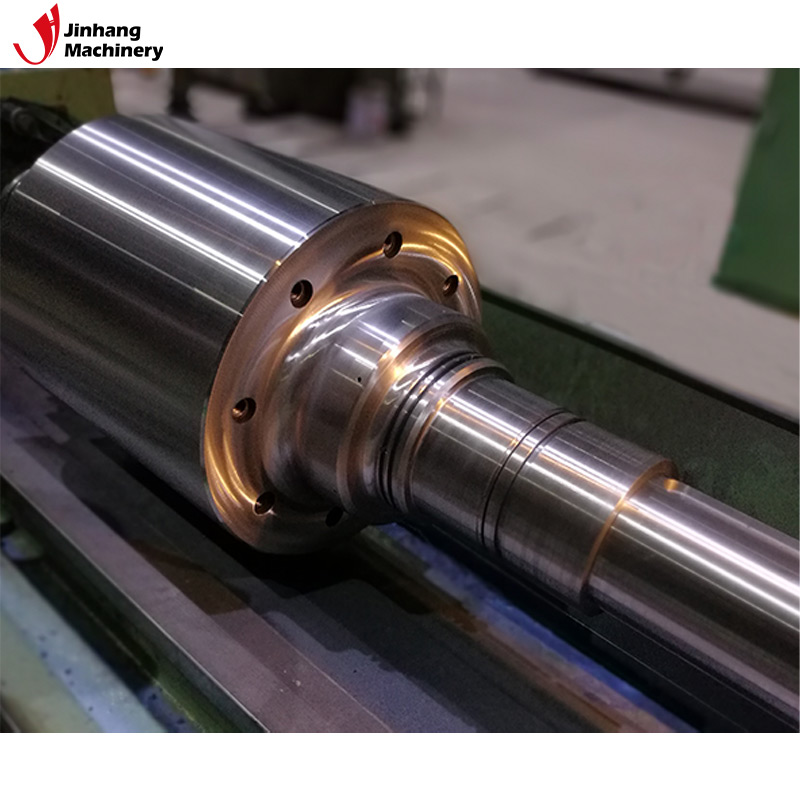
What standards should be followed for mirror roller roughness inspection?
Roughness inspection of industrial mirror rollers typically refers to the following international standards:
• ISO 4287: Surface texture – Terminology and definitions
• ISO 4288: Roughness parameters and measurement conditions
• ISO 16610: Filtering standards
• GB/T 3505: Roughness parameters
• ASME B46.1: Surface texture standards
These standards ensure the consistency and traceability of mirror roller inspection results and are high-precision, industry-recognized specifications.
What is the complete process for mirror roller roughness inspection?
To ensure accurate and reliable surface roughness testing of mirror rollers, a typical procedure is as follows:
1. Clean the surface of the mirror roller
Remove:
• Oil stains
• Polishing residue
• Dust
• Coating particles
• Fingerprints
Otherwise, they will directly affect the roughness measurement results.
2. Select appropriate testing equipment
Based on the roughness range:
• Contact roughness meter (conventional)
• Optical instrument (high precision)
• Interferometer (super-mirror grade)
3. Select measurement locations
Typically include:
• Left end
• Middle
• Right end
• Multiple circumferential points
• Multiple axial segments
Mirror rollers must be tested at at least 3-5 reference locations.
4. Determine the measurement direction
Measurement required:
• Circumferential roughness
• Axial roughness
Because the processing methods in the two directions are different.
5. Calibrate using calibration blocks
Ensure the instrument is operating under standard conditions.
6. Perform Roughness Measurement
Perform according to standards and record parameters:
• Ra
• Rz
• Rt
Report results according to industry requirements.
7. Summarize Test Results
Determine if process specifications are met.
8. Issue Test Report
Includes:
• Roughness curve
• Parameter data
• Measurement location diagram
• Test instructions
This is one of the documents required upon delivery of the mirror roller.
What factors affect the roughness test results of mirror rollers?
The roughness test accuracy of mirror rollers is very high, therefore it may be affected by the following factors:
1. Surface Contamination
Dust and oil film can affect test accuracy.
2. Uncalibrated Instrument
Probe wear or optical system deviation can lead to errors.
3. Improper Operation
Including:
• Incorrect measurement direction
• Non-standard measurement area
• Inconsistent probe pressure
4. Environmental Influence
Temperature, vibration, or light can interfere with high-precision testing.
5. Coating Surface Characteristics
Hard coating surfaces may interfere with optical instruments.
Therefore, the roughness inspection of mirror rollers must be strictly performed according to industry standards.