
Why are tungsten carbide rollers more wear-resistant than chrome-plated rollers?
In industrial production, roller components often operate under high load, high friction, and high-speed continuous operation for extended periods. Their surface wear resistance directly determines equipment stability, maintenance frequency, and service life. Therefore, "wear resistance" is always a core indicator repeatedly discussed in roller surface treatment solutions.
Among various surface treatment methods, chrome-plated rollers and tungsten carbide coated rollers are the two most frequently compared solutions. Many engineers and purchasing personnel ask the question:
Why are tungsten carbide coated rollers generally more wear-resistant than chrome-plated rollers under the same operating conditions?
This article will systematically analyze the fundamental reasons why tungsten carbide coated rollers are more wear-resistant than chrome-plated rollers from an engineering and materials science perspective, helping you establish a clear and rational understanding of the technology.
What is a chrome-plated roller?
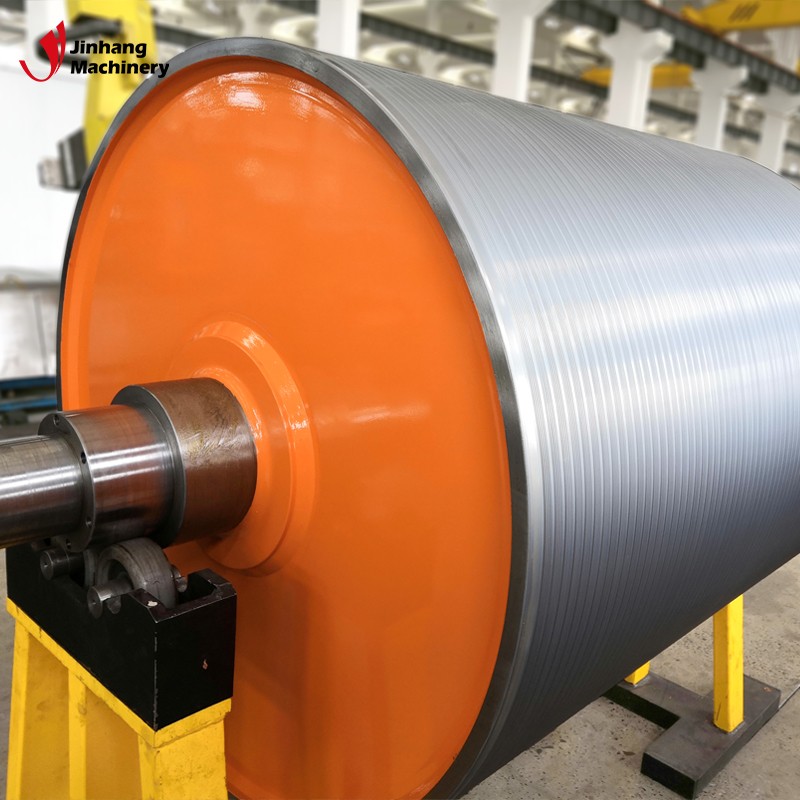
A chrome-plated roller typically refers to an industrial roller with a layer of metallic chromium deposited on its steel roller surface through an electroplating process. Chromium plating possesses the following typical characteristics:
• High surface hardness
• Good surface finish
• Relatively stable coefficient of friction
• Mature technology and wide application
For a long time, chromium-plated rollers were considered the "basic solution" for wear-resistant surface treatment of industrial rollers, widely used in various moderate wear conditions.
However, with the increasing complexity of working conditions and load levels, the limitations of chromium-plated rollers under extreme wear conditions have gradually become apparent.
What is a tungsten carbide coated roller?
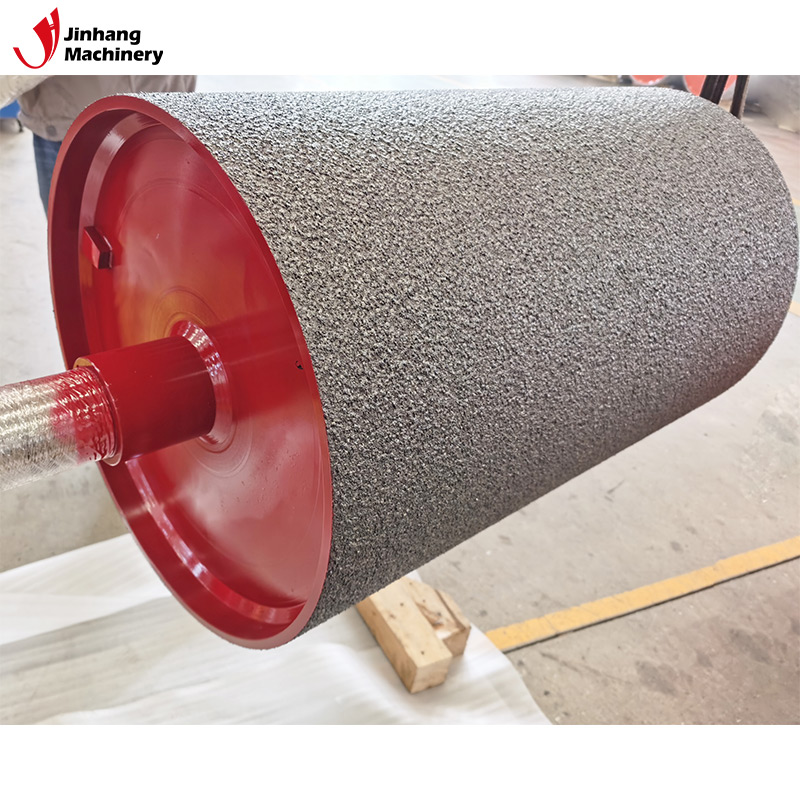
A tungsten carbide coated roller refers to a functional coating with tungsten carbide (WC) as the main component, formed on the roller surface through processes such as thermal spraying.
Unlike chromium-plated rollers, the working surface of a tungsten carbide coated roller is not metallic chromium, but a composite structure composed of high-hardness ceramic phase particles and a bonding phase.
Its core characteristics include:
• Extremely high microhardness
• Excellent resistance to abrasive wear
• Good surface load-bearing capacity
• Stronger resistance to plastic deformation
This is the fundamental premise for why tungsten carbide coated rollers are considered "more wear-resistant."
What is the essence of wear resistance?
In engineering, wear resistance is not simply "not being worn," but rather refers to a material's ability to resist material loss under friction, impact, or contact stress.
Common wear forms of industrial rollers include:
• Abrasive wear
• Adhesive wear
• Micro-cutting wear
• Surface fatigue wear
Whether a roller surface material is truly wear-resistant depends on its overall performance under these wear mechanisms, not just its initial hardness value.
Why does material hardness have such a significant impact on wear resistance?
In most industrial conditions, wear is essentially the erosion or cutting of a softer material by a harder one.
Generally speaking:
• Higher material hardness
• Stronger resistance to plastic deformation
• Lower likelihood of being cut or plowed
Therefore, under the same operating conditions, roller surface materials with higher hardness usually have better wear resistance potential.
Why are tungsten carbide coated rollers harder?
From a material perspective, tungsten carbide is much harder than metallic chromium.
• The working layer of a chrome-plated roller is a metallic structure.
• The main wear-bearing phase of a tungsten carbide-coated roller is hard ceramic particles.
The direct result of this difference is:
• Tungsten carbide-coated rollers are less prone to plastic deformation under high contact stress.
• Chrome-plated rollers are more prone to micro-indentations and surface damage during long-term friction.
Therefore, from the perspective of material hardness, tungsten carbide-coated rollers naturally possess a higher upper limit of wear resistance.
What factors limit the wear resistance of chrome-plated rollers?
Although chrome-plated rollers have a certain degree of wear resistance, their structural characteristics determine their inherent limitations:
• Limited chrome plating thickness
• Microcracks exist in the metallic chrome layer
• Fatigue spalling is prone to occur under high loads.
These factors are not obvious under low-intensity conditions, but they gradually accumulate under long-term, high-load, or high-friction conditions, leading to a decline in the surface performance of the chrome-plated roller.
Why is the structure of the tungsten carbide coating more wear-resistant?
The wear resistance advantage of tungsten carbide-coated rollers comes not only from their "hardness" but also from their structural characteristics.
Typical tungsten carbide coatings exhibit the following characteristics:
• A high proportion of hard phase bears the majority of wear.
• A bonding phase provides overall toughness support.
• Wear is primarily characterized by "point-like consumption."
This structure makes it more difficult for wear to form a continuous failure path, thus significantly reducing the overall wear rate.
How do different wear mechanisms affect roller life?
In chrome-plated rollers, wear often manifests as:
• Uniform surface thinning.
• Localized fatigue spalling.
• Overall coating failure.
In tungsten carbide-coated rollers, wear is more often characterized by:
• Micro-particle-level consumption.
• Slow changes in surface morphology.
This difference in wear mechanism results in tungsten carbide-coated rollers having a longer lifespan and slower performance degradation under the same wear conditions.
Why does the surface microstructure determine long-term wear resistance?
From a microscopic perspective:
• The surface of a chrome-plated roller has a relatively uniform metallic structure.
• The surface of a tungsten carbide-coated roller has a multiphase composite structure.
During long-term friction, the multiphase structure can effectively disperse stress and reduce the probability of single-point failure. This structural advantage allows tungsten carbide coated rollers to maintain more stable wear resistance during long-term operation.
Why does operating condition adaptability determine actual wear resistance performance?
Wear resistance is never discussed in isolation from operating conditions.
The advantages of tungsten carbide coated rollers are particularly evident under the following conditions:
• High contact pressure
• Frictional environments containing hard particles
• High linear speed
• Long-term continuous operation
While chrome-plated rollers still offer reasonable cost-effectiveness under low to medium wear conditions, their wear resistance limits are more easily reached under severe wear conditions.
Are tungsten carbide coated rollers more wear-resistant in all situations?
It is important to emphasize that "more wear-resistant" does not equate to "suitable for all scenarios."
The wear resistance advantage of tungsten carbide coated rollers is based on the following premises:
• The operating condition has a significant wear mechanism
• The surface needs to maintain morphological stability over a long period
• High requirements for lifespan and stability
If the wear intensity of the operating condition itself is low, then chrome-plated rollers can still meet the requirements.
How does your quality system guarantee reliable roller performance?
As a fully certified roller manufacturer, our ISO9001-based quality system tracks each roller through machining, grinding, coating, balancing, and final inspection. Dimensional accuracy, surface roughness, hardness, coating thickness, and vibration performance are recorded and verified.