
Why Is Stainless Steel Used to Manufacture Industrial Heating Rollers?
In modern industrial processing, the heating roller is a critical piece of equipment, found almost ubiquitously across fields such as plastic films, textiles, papermaking, rubber, chemicals, metal foils, and composite materials. Whether for material preheating, drying, setting, baking, calendering, or various heat treatment processes, the stable performance of heating rollers is indispensable.
Among the multitude of manufacturing materials available, stainless steel stands out as one of the most widely adopted and time-tested choices for roller bodies—giving rise to what we commonly refer to as "stainless steel heating rollers."
This raises a fundamental question:
Why is stainless steel particularly well-suited for manufacturing industrial heating rollers?
What specific material advantages and industrial compatibility does it possess?
What enables stainless steel heating rollers to maintain their stability in environments characterized by high temperatures, high pressures, high speeds, and continuous operation?
This article will provide an in-depth analysis—from the perspectives of material properties, structural performance, processing techniques, thermal characteristics, corrosion resistance, and structural integrity—explaining precisely *why* stainless steel is chosen for industrial heating rollers. Our goal is to provide you with a comprehensive understanding of the engineering logic underpinning the design and function of stainless steel heating rollers.
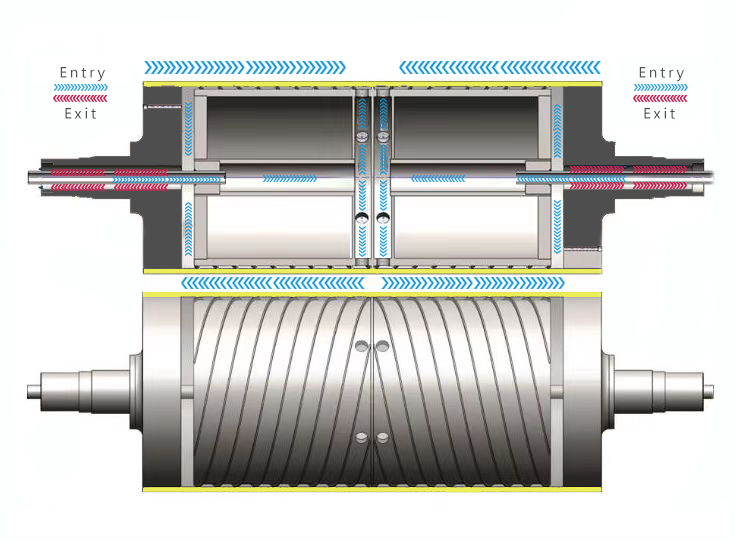
What Type of Industrial Equipment Is a Stainless Steel Heating Roller?
A stainless steel heating roller is a precision roller body—typically hollow or equipped with an internal circulation system—designed to perform the following functions:
•Heating materials (such as films, paper, textiles, metal foils, etc.)
•Maintaining a constant and stable surface temperature
•Controlling thermal shrinkage, setting, or drying processes
•Facilitating hot pressing, hot stretching, and thermal lamination
•Maintaining high-precision roundness and surface smoothness
This structural design mandates that the roller body material must possess the following attributes:
1.Excellent heat resistance
2.Superior corrosion resistance
3.Sufficient mechanical strength
4.Good thermal conductivity
5.A stable coefficient of thermal expansion
6.Resistance to deformation or warping during processing
Stainless steel is precisely the material that fully satisfies these requirements, which is why it is so widely utilized in the manufacturing of industrial heating rollers.
Why Is Stainless Steel the Ideal Material for Heating Rollers?
The following are the key factors that establish stainless steel heating rollers as the industry's mainstream choice:
1. Stainless Steel Possesses Excellent High-Temperature Resistance
This constitutes the most fundamental and critical advantage of stainless steel heating rollers. Different types of stainless steel possess varying temperature resistance capabilities:
•304 Stainless Steel: Can withstand continuous temperatures of approximately 300–350°C.
•316L Stainless Steel: Operates stably at approximately 400°C.
•310S Stainless Steel: Maintains stability at temperatures exceeding 900°C.
•Heat-Resistant Stainless Steels and Alloy Steels: Capable of exceeding 1000°C.
Industrial heating rollers are characterized by the requirement to:
Maintain a constant operating temperature continuously for hours, or even days, on end.
Consequently, it is imperative to select materials that are resistant to softening, oxidation, and deformation.
The superior high-temperature creep resistance and oxidation resistance of stainless steel ensure that the roller walls do not suffer from fatigue, thereby maintaining structural stability. Furthermore, stainless steel does not experience a rapid loss of strength at elevated temperatures—a critical attribute, particularly for rollers operating at high speeds.
Conclusion: Stainless steel is inherently well-suited for prolonged use in high-temperature environments, making it the ideal choice for the manufacture of heating rollers.
2. Stainless Steel Possesses Excellent Corrosion Resistance
Although the primary function of industrial heating rollers is heating, they inevitably come into contact with a variety of substances:
•Steam
•Moisture/Humidity
•Chemical solvents
•Coating materials
•Glues and adhesives
•Additives present in pulp or plastics
•Trace acidic or alkaline substances found in the ambient environment
In such environments, ordinary carbon steel would typically exhibit:
•Rusting
•Pitting corrosion
•Propagation of corrosion layers
•Loss of structural strength
•A shortened service life for the roller body
Stainless steel is capable of meeting these demands because it contains Chromium (Cr), which enables the formation of a dense oxide film, thereby providing inherent corrosion resistance.
This translates to the following benefits:
•The roller body remains undamaged by humid environmental conditions.
•High-temperature steam does not accelerate oxidation.
•Residual chemical substances are unlikely to corrode the roller body.
•The service life is significantly longer than that of ordinary steel materials.
Thus, the material itself serves as a guarantee of the heating roller's long-term, stable operation across a wide range of working conditions.
3. Stainless Steel Heating Rollers Exhibit Stable Thermal Expansion Characteristics
Industrial heating rollers demand extremely high precision, specifically regarding:
•Roundness
•Runout
•Roller surface flatness
•Uniformity of temperature distribution
If the material's thermal expansion is unstable or subject to excessive variation, it can lead to:
•Bending of the roller body
•Asymmetry between the two ends
•Loss of roundness control
•Cracking caused by thermal stress differentials
Although stainless steel does not possess the lowest coefficient of thermal expansion, its thermal expansion behavior is highly predictable and stable—a critical prerequisite for manufacturing high-precision heating rollers.
As temperatures fluctuate, manufacturers can precisely anticipate dimensional changes and compensate for them through design, thereby ensuring that the heating roller maintains its precise structural integrity even under high-temperature conditions.
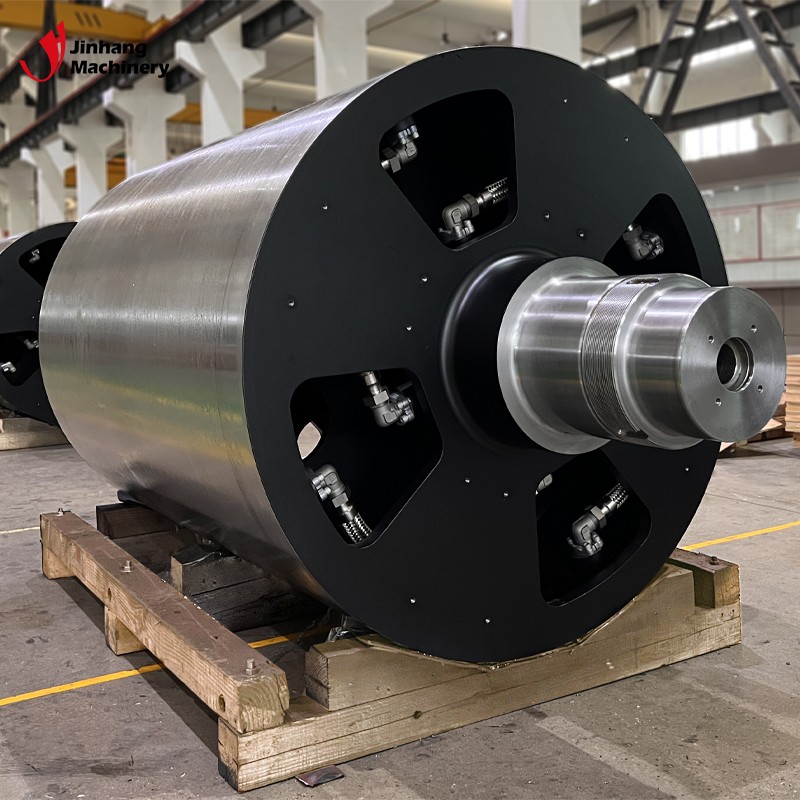
4. Stainless Steel Offers Excellent Thermal Conductivity (Enhanced by Internal Structural Design)
While pure copper or aluminum possess superior intrinsic thermal conductivity, the structure of a stainless steel heating roller typically incorporates:
•A thermal oil circulation system
•A steam jacket layer
•An arrangement of electric heating elements
•Channels for the heat transfer medium
Consequently, the actual thermal efficiency depends not solely on the material's intrinsic thermal conductivity, but rather on the overall thermal efficiency of the integrated structure.
Stainless steel possesses moderate thermal conductivity, which enables the roller body to:
•Heat up at a steady, controlled rate
•Distribute heat more uniformly
•Avoid the sudden formation of "hot spots"
•Facilitate more effective and continuous temperature control
For industrial applications requiring the maintenance of a uniform surface temperature, stainless steel stands as an exceptionally reliable material choice.
5. Stainless Steel Possesses Exceptional Mechanical Strength and Rigidity
Heating rollers must not only withstand high temperatures but also exhibit:
•High tensile strength
•High structural rigidity
•Resistance to bending/deflection
•Resistance to fatigue
Industrial heating rollers are typically large-scale components—often ranging from 300 to 1500 mm in diameter and extending several meters in length—and feature a hollow internal structure.
If the material lacks sufficient strength, the roller body may:
•Experience vibration during operation
•Bend or deform due to thermal softening at high temperatures
•Suffer structural deformation under operational pressure loads
Stainless steel retains a high yield strength even at elevated temperatures; this ensures that the roller body remains highly resistant to deformation—even when subjected to:
•High-speed rotation
•Significant compressive forces
•Continuous heating cycles This is precisely why stainless steel heating rollers are suitable for applications involving high demands, long operational cycles, and precision processing.
6. Stainless steel offers excellent machinability, making it ideal for producing mirror-grade, high-precision roller surfaces
Industrial heating rollers place particular emphasis on the quality of the roller surface, including:
•Surface roughness
•Mirror-like finish
•Roundness precision
•Dynamic balance quality
•Calendering performance
Stainless steel offers the following processing advantages:
•Capable of high-precision turning
•Enables high-gloss grinding
•Can be polished to a mirror finish
•Compatible with surface treatments such as hard chrome plating, ceramic spraying, and nickel plating
•Structurally stable and resistant to deformation during machining
High-precision machining endows stainless steel heating rollers with:
•Stable contact performance
•Uniform surface temperature
•Excellent thermal calendering effects
•Stable and consistent contact with the processed material
This factor constitutes one of the core determinants of whether stainless steel is a viable material for manufacturing high-end heating rollers.
What specific industrial pain points can stainless steel heating rollers resolve?
Stainless steel is widely adopted primarily because it effectively addresses the most common challenges encountered within the industry:
1. Prevention of roller body corrosion
It maintains its structural integrity even when exposed to humid environments, steam, or chemical substances.
2. Structural stability under high temperatures
It remains free from deformation or material failure—which can result from high-temperature softening—even under extreme heat.
3. Provision of superior heating surface precision
This ensures that the material being processed receives consistent and uniform heating.
4. Achievement of precise temperature control
Stainless steel heating rollers integrate seamlessly with internal heating mechanisms to maintain a constant, stable temperature.
5. Reduced maintenance costs and extended equipment lifespan
Stainless steel's inherent resistance to corrosion and fatigue significantly extends the operational lifespan of the heating roller.
Do the performance advantages of stainless steel heating rollers stem from their material structure?
In metallurgy, stainless steel is classified as an alloy steel; its core structure consists of:
•Austenite
•Ferrite
•Martensite (depending on the specific grade)
•A chromium-rich protective layer
•A nickel-stabilized structure
These microstructures endow stainless steel with:
•High toughness
•High corrosion resistance
•Structural integrity even at high temperatures
•Resistance to embrittlement and fatigue
•Excellent resistance to deformation
These material properties ensure that stainless steel heating rollers can withstand:
•High-temperature thermal cycling
•Prolonged periods of continuous operation
•Mechanical stress within constant-temperature environments
•Internal pressure generated by the heating system
•Surface coating processes
This structural composition makes it a material naturally suited for the manufacture of industrial rollers.
Why does stainless steel remain reliable in high-temperature environments?
The reason stainless steel heating rollers can operate stably at high temperatures lies in their exceptional resistance to oxidation.
Under high-temperature conditions, ordinary steel typically undergoes:
•Significant oxidation
•Surface decarburization
•Structural embrittlement
•A decline in mechanical strength
In contrast, the chromium-rich oxide layer (Cr₂O₃) found on stainless steel:
•Forms spontaneously
•Self-repairs
•Automatically protects the underlying metal
Even when the roller body reaches temperatures of several hundred degrees Celsius, the stainless steel surface maintains a stable protective film, preventing oxygen from reacting with the metal beneath.
This is the fundamental reason why stainless steel heating rollers can maintain a smooth surface finish and structural stability over extended periods.
Do stainless steel heating rollers require a specialized structural design to achieve maximum performance?
The answer is: Yes.
Although stainless steel is an excellent material in its own right, the design of a stainless steel heating roller must still take into account:
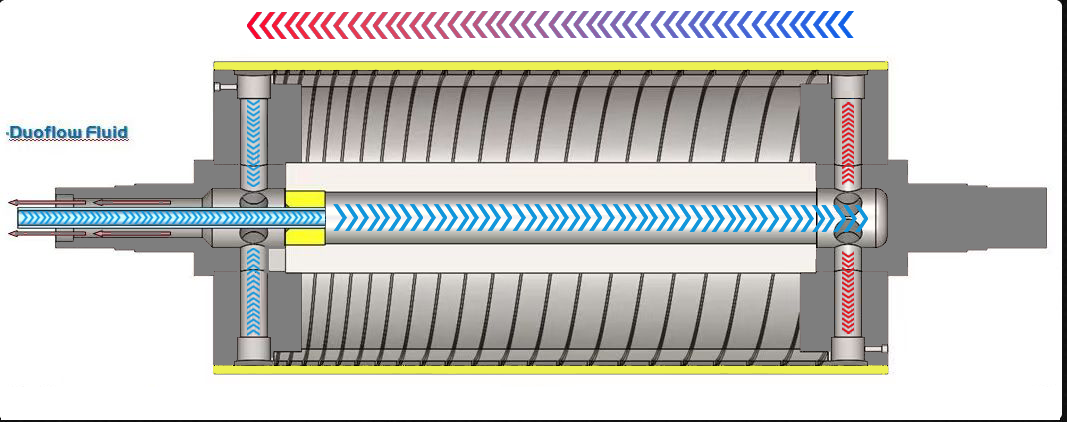
•Internal flow channel distribution
•Selection of heating elements
•Temperature uniformity
•Wall thickness design
•Selection of surface coatings
•Shaft end mounting methods
The performance of a stainless steel heating roller stems not only from the material itself but also from a sound engineering structure. Consequently, high-end manufacturers typically employ:
•Precision welding
•Dynamic balancing control
•High-precision grinding
•Mirror polishing
•High-performance surface coating processes
These techniques ensure that the stainless steel material delivers its utmost efficiency in heating roller applications.