News

  • Industrial Rollers: Which Steels Are Not Suitable for Chrome Plating?
    22
    2025-05
    Types of Steels Not Suitable for Chrome Plating: 1. High Carbon Steel 2. High Sulfur Steel 3. High Phosphorus Steel 4. Low Alloy Steel
  • Why does the automotive manufacturing industry need polyurethane rollers?
    21
    2025-05
    In automobile manufacturing, the forming of metal sheets is one of the most basic and important links. Polyurethane rollers are often used in the conveying, leveling, calendering and forming of metal sheets.
  • What are the benefits of tungsten carbide coated roller?
    20
    2025-05
    Benefits of tungsten carbide coated roller: 1. Excellent wear resistance 2. Superior corrosion resistance 3. High temperature performance 4. Improve production efficiency 5. Extend service life 6. Improve surface finish
  • What is the difference between a heating roller and a cooling roller?
    19
    2025-05
    A heating roller is an industrial roller device that heats the surface to a specific temperature through a built-in or external heat source, and is mainly used in processing techniques that require heat assistance. A cooling roller is an industrial roller device that lowers the surface temperature through a built-in cooling medium (such as water or cooling oil), and is mainly used in processing techniques that require rapid cooling.
  • What is BCM in ceramic anilox roller?
    16
    2025-05
    BCM (Billion Cubic Microns) is a unit of mesh volume per square inch on a ceramic anilox roller. Specifically, it represents the volume of mesh per square inch, and the unit is "billions of cubic microns per square inch". This value is usually used to describe how much liquid the mesh on the surface of the anilox roller can hold, that is, the mesh volume per unit area.
  • What is anilox roller in flexographic printing?
    15
    2025-05
    The anilox roller, also called the metering roller, is a key component on a flexographic printing press. Its main function is to transfer ink from the ink tank to the surface of the printing plate during the printing process. It stores ink through tiny pits or meshes engraved on the surface, and then accurately delivers this ink to the printing plate during the printing process.
  • Will the stainless steel roller rust after chrome plating?
    14
    2025-05
    For chrome-plated stainless steel rollers, although the chrome layer can provide strong protection, the chrome plating is not perfect. Excessive chemical erosion, high temperature and wear of the chrome layer itself may cause the coating to fail, exposing the base material of the stainless steel, causing rust or corrosion.

  • How does the cooling roller perform in high-temperature operations?
    13
    2025-05
    The high-temperature resistance of cooling rollers is the basis for their stable operation in high-temperature operations. In order to maintain a stable working state, cooling rollers need to withstand long-term thermal shock in high-temperature environments, and their materials must be able to maintain a long service life without deformation or thermal fatigue.
  • How to detect the surface quality of industrial water quench rollers?
    12
    2025-05
    Visual inspection is the most direct and common surface quality detection method. By visually observing the surface of the water quench roller, technicians can initially find obvious defects on the surface, such as cracks, peeling, pores, etc. This method is suitable for rapid screening and can detect some large defects.
  • How long can the chrome plating of industrial chrome plated rollers last?
    09
    2025-05
    The thickness of the industrial chrome plating layer is usually between 20 and 100 microns, and the specific thickness depends on the purpose and working environment of the chrome plated roller. The greater the thickness, the stronger the wear resistance and corrosion resi
  • How to choose the right cell type for anilox roller?
    08
    2025-05
    ● Cell shape: anilox roller cells can have different shapes, such as round, diamond, hexagonal, etc. Different shapes are suitable for different liquid transfer requirements. ● Cell depth: The depth of the cell determines how much liquid it can store. Deep cells have a large storage capacity and are suitable for transferring high-viscosity liquids; shallow cells are suitable for transferring low-viscosity liquids.
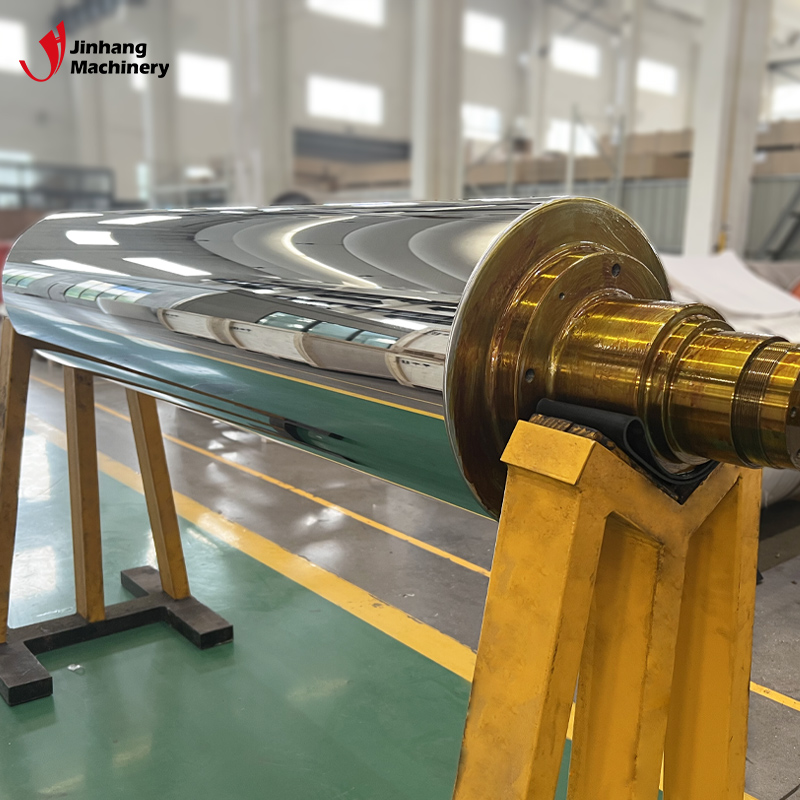
  • What is the difference between chrome plated roller and mirror roller?
    07
    2025-05
    Chrome plated roller is a common industrial surface treatment technology that mainly deposits a layer of metal chromium on the surface of the roller through an electroplating process. Mirror roller is a surface treatment technology that uses mechanical polishing and grinding processes to make the surface of industrial rollers extremely smooth.

40px

80px

80px

80px

Get the latest price? We will reply as soon as possible (within 12 hours)

40px

40px

40px

40px