Industry News

  • How to Determine if a Cast Film Roller Needs Repolishing?
    16
    2026-04
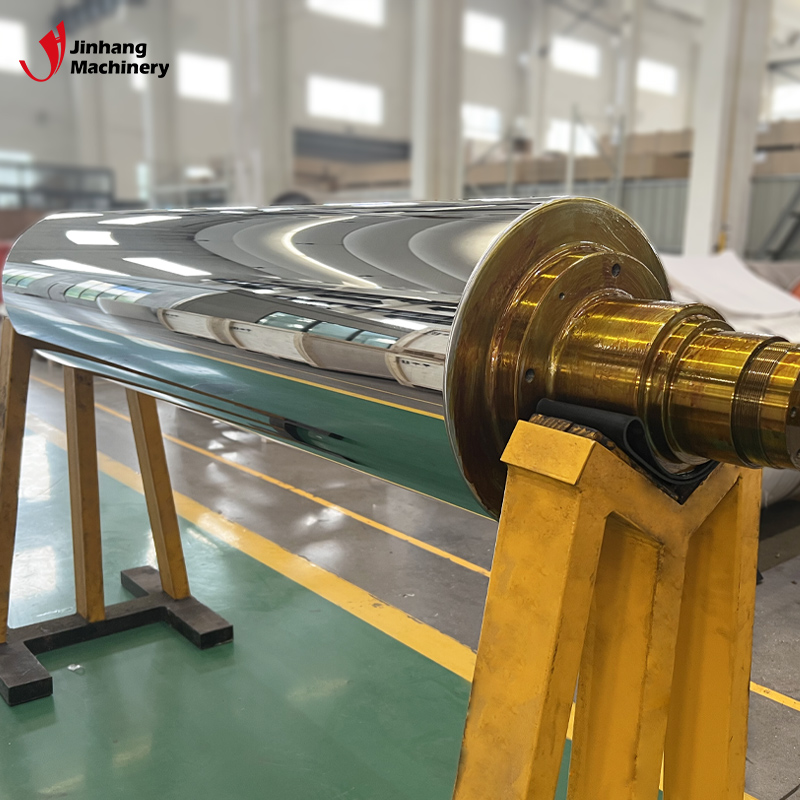
    A well-maintained cast film roller surface should have uniform reflection. If you observe: • Discontinuous light reflection • Localized dark areas or increased scattering This may indicate a change in surface roughness.
  • Is EPDM Rubber Roller Heat-Resistant?
    15
    2026-04
    The stable operating temperature of EPDM in air environments is typically: • Continuous operating temperature: 120°C~150°C • Short-term withstand temperature: 150°C~180°C This means that EPDM rubber rollers are perfectly capable of handling printing, conveying, heat treatment, and drying systems.
  • What Industrial Rollers Are Better Than Chrome-Plated?
    14
    2026-04
    Carbide-coated rollers are among the most common and significantly outperform chrome-plated rollers in high-end industrial applications. Carbide is typically composed of materials such as tungsten carbide (WC), titanium carbide (TiC), and chromium carbide (CrC), and the coating is formed through thermal spraying, HVOF, or plasma spraying processes.

  • What Temperature Range is Suitable for Epoxy-Coated Corona Rollers?
    13
    2026-04
    The applicable temperature range for epoxy-coated corona rollers is typically: 80°C to 120°C (for long-term continuous operation) It can withstand approximately 150°C under short-term peak conditions.
  • Will scratches on a casting film roller affect product quality?
    10
    2026-04
    If scratches exist on the surface of the casting film roller: • The material fills these tiny grooves. • After cooling, corresponding surface defects are formed. This is why scratches on the casting film roller directly affect the appearance quality of the product.
  • Why does film sticking occur on casting film rollers?
    09
    2026-04
    Temperature is one of the most critical factors. When the surface temperature of the cast film roller is too high, the following will occur: • The film separates from the roller before it has cooled sufficiently. • The surface remains viscous. • Adhesion to the roller surface.
  • Do industrial cooling rollers have temperature difference requirements?
    08
    2026-04
    From a thermal perspective, the greater the temperature difference, the more uneven the heat exchange on the cooling roller, and the worse the cooling quality. Therefore, most precision processes require the cooling roller temperature difference to be as small as possible, usually controlled within a very strict range.
  • Does EPDM Rubber Roller Absorb Water?
    07
    2026-04
    EPDM rubber rollers do not absorb water; their inherent properties determine their excellent water and steam resistance. EPDM (ethylene propylene diene monomer rubber) is composed of ethylene, propylene, and a small amount of a third monomer, and its molecular chain has a saturated structure.
  • Under what conditions will the lifespan of EPDM rubber rollers be shortened?
    06
    2026-04
    One of the biggest "no-go zones" for EPDM rubber rollers is oily media environments. This includes: • Mineral oil • Lubricating oil • Hydraulic oil • Animal and vegetable oils • Oil-containing emulsions
  • Can Industrial Heated Thin-Wall Rollers Replace Thick-Wall Rollers?
    03
    2026-04
    From an engineering perspective, heated thin-walled rollers are not simply a replacement for traditional thick-walled heated rollers, but rather a structural choice with significant advantages under specific operating conditions.

40px

80px

80px

80px

Get the latest price? We will reply as soon as possible (within 12 hours)

40px

40px

40px

40px