Industry News

  • Tungsten Carbide Coated Rollers: Why Can't Pure Tungsten Carbide Powder Be Used?
    01
    2026-04
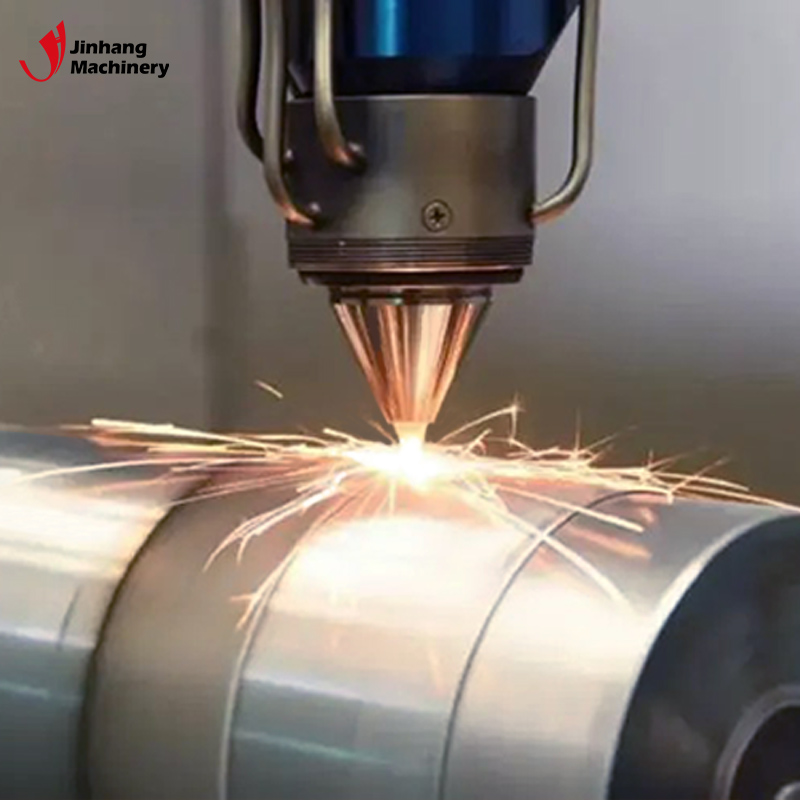
    In industrial production, a metallic binder phase must be added to form a fusible, bondable, and depositable composite powder, which is a crucial foundation for the successful manufacture of tungsten carbide coated rollers.
  • What are the special applications of NBR rubber rollers?
    27
    2026-03
    Ordinary rubber, after prolonged contact with oily media, is prone to: • Swelling • Softening • Changes in viscosity • Surface cracking NBR Rubber Roller, due to the presence of acrylonitrile in its molecular structure, has a natural resistance to oils and can maintain stable dimensional and physical properties in oily environments.
  • Which plastic film materials are suitable for industrial casting film rollers?
    26
    2026-03
    • Cast film rollers are widely applicable to a variety of thermoplastic film materials. • PE and PP are the most typical and suitable material types. • Materials such as PET and PVC place higher demands on cast film rollers, but are still suitable. • Multilayer composite films place even stricter performance requirements on cast film rollers.
  • What are the advantages of an industrial hot oil roller?
    24
    2026-03
    The core advantage of hot oil rollers stems from a substance—thermal oil. Thermal oil, as a heat transfer medium, has the following characteristics: 1. High boiling point, not easily vaporized 2. Large heat capacity, strong heat retention 3. Good fluidity, easy to uniformly transfer heat 4. Low pressure, high system safety

  • Casting Film Roller vs. Cooling Roller: What's the Difference?
    23
    2026-03
    Cast film rollers are the core rollers that directly participate in material forming and determine product quality, while cooling rollers are mainly used to reduce material temperature and assist in stabilizing the process.
  • Why Must Industrial Casting Film Rollers Ensure High Surface Finish?
    19
    2026-03
    • The smoother the roller surface, the smoother the film surface • Microscopic defects on the roller surface will also result in corresponding defects on the film surface Therefore, the surface condition of the cast film roller is not an "indirect influence," but one of the core factors directly determining the surface quality of the film.
  • What rollers are better than tungsten carbide coated rollers?
    18
    2026-03
    There is no roller that is "absolutely better than tungsten carbide coated rollers". There are only rollers that are more suitable for specific operating conditions. Tungsten carbide coated rollers are one of the most widely used, high-performance, and highly adaptable types of rollers in industry.
  • Are Rubber-Coated Industrial Rollers Better Than Plastic Rollers?
    17
    2026-03
    The service life of rubber-coated industrial rollers is affected by factors such as material formulation, processing, and operating environment. Under good maintenance and proper material selection, the service life of rubber rollers is generally significantly longer than that of plastic rollers.
  • Is Thinner Always Better for Industrial Thin-Wall Rollers?
    16
    2026-03
    The idea that "the thinner the wall thickness of a thin-walled roller, the better" is not without basis, but stems from some real engineering advantages: • Reduced wall thickness → Reduced roller weight • Reduced weight → Reduced moment of inertia • Reduced moment of inertia → Faster start-stop response etc.
  • What is the temperature difference of industrial heating rollers?
    13
    2026-03
    In high-end equipment, a temperature difference of ±0.3~0.5℃ for the heating roller is considered excellent quality. Therefore, a temperature difference of approximately 0.5℃ is not only an engineering standard but also a mandatory requirement to ensure product quality.

40px

80px

80px

80px

Get the latest price? We will reply as soon as possible (within 12 hours)

40px

40px

40px

40px