
How Are Industrial Mirror Rollers Manufactured?
In high-end industrial production, mirror surface rollers are an essential component. They are widely used in industries such as optical films, lithium battery separators, electronic functional films, plastic sheets, metal foils, coating equipment, calenders, and paper processing.
Because mirror surface rollers provide an extremely smooth surface, they directly determine the final surface quality, thickness stability, and optical performance of the product. Therefore, the manufacturing process of mirror surface rollers represents a high-precision process in manufacturing.
So, how are industrial mirror surface rollers manufactured? Why can mirror surface rollers achieve such high gloss and smoothness?
The following will systematically explain the entire process of mirror surface roller manufacturing from multiple dimensions, including material selection, machining, electroplating, heat treatment, precision grinding, polishing technology, and quality inspection.
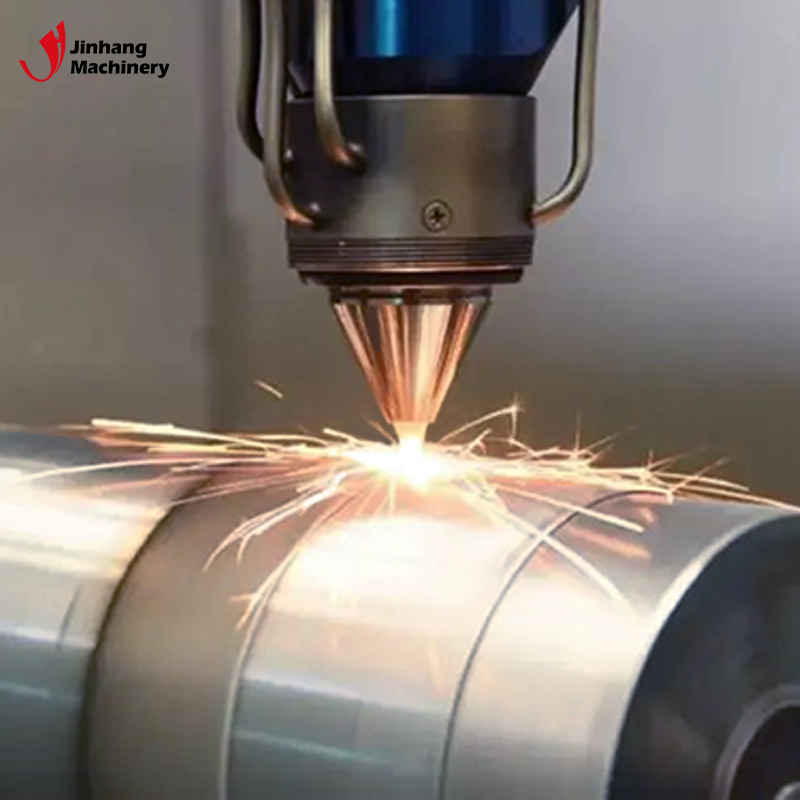
Why is it necessary to select specific roller materials for manufacturing mirror surface rollers?
The manufacturing of mirror surface rollers is inseparable from the strict selection of roller materials. To achieve high gloss, high hardness, low deformation, and excellent wear resistance, common materials for mirror rollers include:
• Structural steels such as 45# steel, 40Cr, and 42CrMo: commonly used in general processing industries;
• High-hardness alloy steel: used in applications requiring high wear resistance and continuous high loads;
• Stainless steel (such as SUS304 and SUS316): used in food and pharmaceutical environments or environments with extremely high corrosion resistance requirements;
• Aluminum alloy roller bodies: suitable for lightweight, high-speed operating equipment;
• Welded steel pipe structure roller bodies: used in mirror roller equipment with large diameters and long spans.
Three key parameters must be considered when selecting materials:
• Thermal stability: Mirror rollers operate in high-temperature environments for extended periods during production; the material must ensure uniform thermal expansion.
• Strength and rigidity: The structure of mirror rollers cannot tolerate significant deformation, otherwise, uneven film thickness will occur.
• Machinability and achievable surface roughness: Some materials more easily achieve surface roughness requirements below Ra 0.01 μm.
After material selection, ultrasonic flaw detection, hardness testing, and chemical composition analysis are performed to ensure its suitability for manufacturing high-precision mirror rollers.
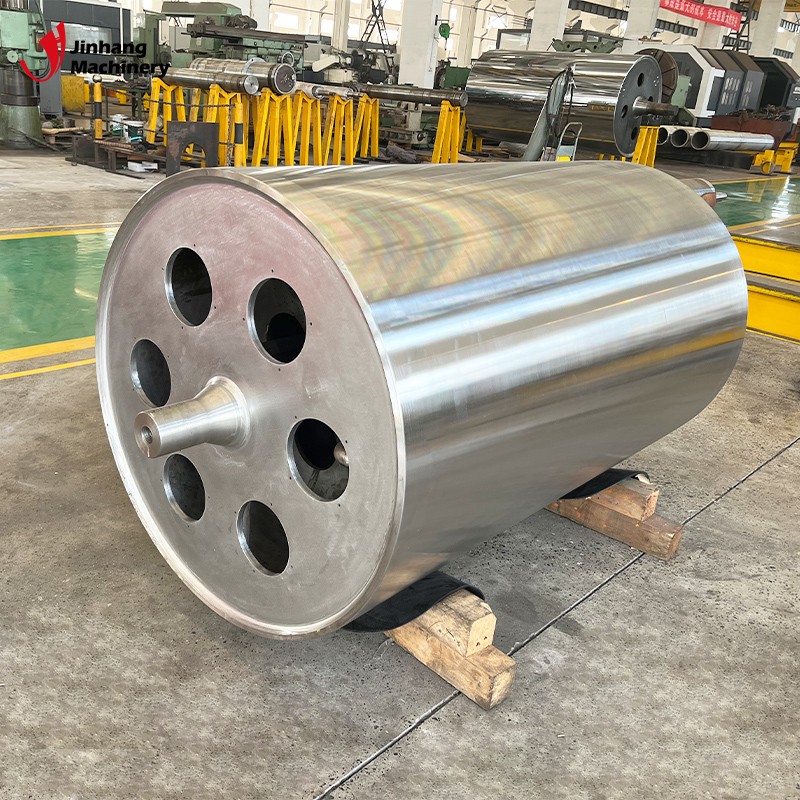
How are mirror roller blanks made and pre-treated?
The first step in mirror roller manufacturing is the forming of the roller blank. Common methods include:
1. Integral Forging
High-temperature forging yields blanks with higher density and more uniform crystal structure, suitable for high-requirement mirror rollers.
2. Stress-Relief Annealing
Before rough machining, the blank undergoes a stress-relief heat treatment to reduce residual stress within the material and minimize the risk of future deformation.
The blank stage determines the basic quality of the entire mirror roller; therefore, strict control of roller roundness, straightness, and density is necessary.
What are the key steps in the machining process of mirror rollers?
Machining is a crucial stage in mirror roller manufacturing, mainly involving rough machining, semi-finishing, and finishing.
1. Rough Machining
The main process involves using a lathe to machine the blank into the approximate shape of a mirror-finish roller:
• Rough diameter adjustment
• Rough end face adjustment
• Machining the journal structure
• Machining the internal spiral water channel (if it's a hot/cold roller)
While rough machining doesn't aim for high precision, it ensures the surface doesn't suffer from burns or excessive stress concentration.
2. Semi-Finishing
This stage primarily focuses on further improving the roller's geometric accuracy:
• Controlling the roller's straightness
• Controlling the roller's concentricity
• Finish turning to the preset dimensions and allowing for electroplating allowance
For high-precision mirror-finish rollers, the permissible error is typically within the range of 0.01–0.03 mm.
3. Finish Machining
The roller undergoes micro-cutting on a precision CNC lathe to achieve the surface precision required before electroplating. This stage places extremely high demands on the cutting tools, speed, and feed rate.
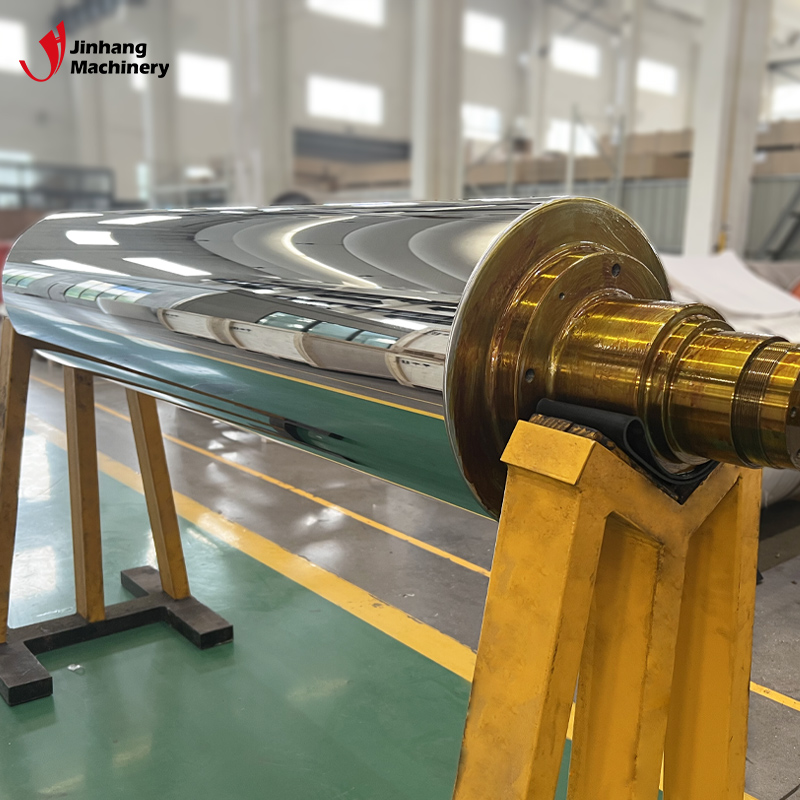
Why do mirror-finish rollers require electroplating? How is electroplating performed?
Mirror rollers require a highly smooth surface, high strength, and excellent wear resistance, which cannot be achieved through direct processing with ordinary metal materials. Therefore, electroplating is necessary to improve their surface properties.
The main forms of electroplating for mirror rollers include:
1. Hard Chrome Plating
Hard chrome plating is the most common surface treatment for mirror rollers, offering:
• Extremely high hardness (HV900–1100)
• Strong wear resistance
• High gloss finish
• Strong corrosion resistance
The plating thickness is typically 0.05–0.2 mm; a brighter surface facilitates subsequent polishing.
2. Nickel Plating (Ni-P)
High-phosphorus nickel plating provides:
• Better smoothness
• Higher mirror-finishability
• Good uniform plating effect
Commonly used in the optical film industry where extremely low roughness is required.
3. Specialty Electroplating (Ceramic Plating, Composite Plating, etc.)
Used in the field of mirror rollers with more stringent requirements for surface hardness, corrosion resistance, and high temperature resistance.
The electroplating process mainly includes:
• Surface cleaning and degreasing
• Acid pickling to remove oxide layer
• Pre-plating treatment
• Main plating deposition
• Post-plating neutralization and cleaning
• Stress relief heat treatment (partial process)
The quality of the electroplated layer directly determines whether the mirror roller can achieve a mirror finish.
How to ensure the stability of mirror rollers during heat treatment?
Mirror rollers are subjected to multiple loads such as high temperature, compressive stress, and tension during operation; therefore, heat treatment is necessary to improve stability.
Heat treatment methods include:
1. Overall tempering: Improves the toughness and hardness of the mirror roller, making the roller body more fatigue-resistant and impact-resistant.
2. Stress-relief annealing: Removes residual stress generated after electroplating, preventing deformation during subsequent processing.
3. Surface Hardening (e.g., Induction Hardening): Increasing surface hardness improves the wear resistance and service life of the mirror roller.
Heat treatment must be completed under strict temperature profile control; otherwise, surface cracks or deformation may occur.
How is ultra-high precision grinding achieved in mirror roller manufacturing?
One of the most critical processes in mirror roller manufacturing is precision grinding.
The purpose of grinding:
• To achieve extremely high flatness on the electroplated surface
• To remove defects in the electroplated layer
• To achieve the surface roughness standard before polishing
Precision grinding techniques include:
• Outer cylindrical grinding: Ensuring the straightness and roundness of the roller body reach micron-level tolerances
• End face grinding: Ensuring the journal and roller body are concentric
• Ultra-precision grinding: Roughness can reach below Ra0.05 μm
The grinding wheel grit size, coolant, and equipment rigidity used in this stage directly affect the final mirror finish of the mirror roller.
How is the mirror polishing of mirror rollers achieved a "mirror-like" shine?
The true highlight of mirror rollers lies in their final "mirror" effect. This is achieved through a series of complex polishing processes.
Mirror Polishing Process:
1. Mechanical Polishing
Using polishing belts of different grit sizes to gradually reduce roughness:
• P400 → P800 → P1200 → P2000 → P3000
• Removing fine scratches in sequence
2. Polishing with Abrasive Paste
Using polishing agents such as chromium oxide and aluminum oxide to further enhance the gloss.
3. Ultra-Precision Mirror Polishing (Optical Grade)
Using specialized polishing cloths and nano-level abrasives to achieve a surface roughness of:
• Ra0.01 μm to Ra0.005 μm
Even clearly reflected object details can be seen.
The polishing process must be uniform and stable; otherwise, defects such as burns, ripples, and orange peel texture can easily occur.
What are the inspection items for mirror rollers?
To ensure that mirror rollers can be used in high-precision production, they must undergo multiple inspections after manufacturing.
1. Dimensional Accuracy Inspection
• Straightness
• Roundness
• Concentricity
• Axial runout
Typically required within the range of 5–20 μm.
2. Surface Roughness Inspection
Measured using a roughness meter or interferometer to ensure mirror-grade finish.
3. Coating Hardness and Thickness Measurement
Ensure uniform coating and meet wear resistance requirements.
4. Balance Inspection
Dynamic balance must be ensured during high-speed operation of the mirror roller; otherwise, vibration, film ripples, noise, and other problems will occur.
5. Pressure and Leakage Testing (for Hot and Cold Rollers)
Ensure no leakage in the internal water channels under high temperature and pressure.
Only rollers that pass inspection can leave the factory.
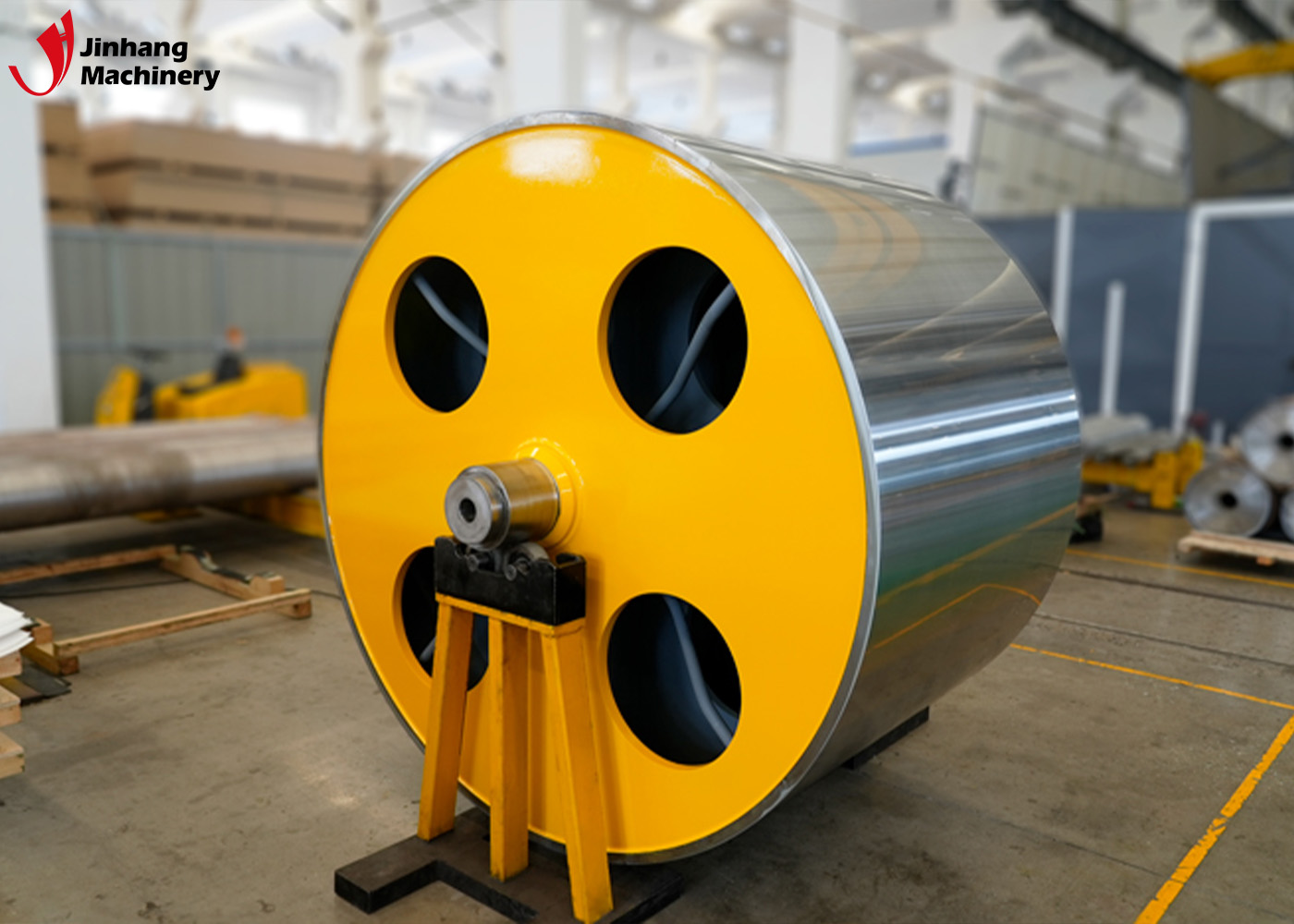
What are the key factors affecting the final result during the manufacturing process of mirror rollers?
Manufacturing mirror-finish rollers is a complex process influenced by multiple factors, the following of which directly determine the final performance:
• Uniformity of the electroplating layer
• Sufficient precision of the grinding process
• Operational errors during the polishing stage
• Stability of the roller material
• Sufficient stress relief during heat treatment
• Precision level of the processing equipment
• Operator skill level
Even the slightest error in any step can prevent the final mirror finish from being achieved.
What types of rollers can Jinhang Machinery produce?
As a comprehensive roller manufacturer, our product range includes rubber rolls, polyurethane rolls, chrome-plated rolls, tungsten-carbide-coated rolls, chill rolls, heated rolls, mirror-polished rolls, and ceramic anilox rolls.
We are also capable of manufacturing complex custom geometries and special-purpose rollers for unique production environments. Every roller is built with precision machining and advanced grinding processes to guarantee accuracy and durability.