What Types of Industrial Rollers Can Roller Manufacturers Customize?
In modern industrial systems, a "roller" is not a single, simple component, but rather a highly specialized core functional component. Whether in film, papermaking, printing, textiles, metallurgy, rubber, composite materials, or new energy and electronic materials industries, industrial rollers are present in almost all continuous production processes.
Therefore, more and more companies are asking a very real and crucial question when purchasing equipment or replacing rollers:
What types of industrial rollers can roller manufacturers customize?
Are all industrial rollers customizable?
What are the functional boundaries between different types of industrial rollers?
This article will systematically analyze the types of industrial rollers that roller manufacturers can customize from a professional perspective, and explain why most industrial rollers are not standard parts, but must be custom-made by roller manufacturers according to requirements.
- - Jinhang Machinery manufactures and processes a wide variety of high-precision rollers, including various rubber rollers, polyurethane rollers, heated rollers, mirror rollers, cooled rollers, corona rollers, chrome-plated rollers, tungsten carbide rollers, and other special roller types.
These rollers are suitable for multiple industries, including metallurgy, mining, packaging, printing, lithium batteries, and automotive testing equipment.

Why must industrial rollers be customized by roller manufacturers?
Before discussing "what types of industrial rollers can roller manufacturers customize," a fundamental fact must be clarified:
The vast majority of industrial rollers are not standard parts, but custom-made parts.
This is determined by the characteristics of industrial rollers themselves.
1. Industrial Rolls Directly Participate in Processing
Industrial rollers are not simply support components; rather, they:
• Directly contact the material
• Participate in heat transfer, pressure transfer, and power transmission
• Determine the surface quality of the material
• Affect thickness, tension, and flatness
Therefore, their dimensions, structure, and surface properties must be highly matched to the equipment and processes.
2. Different Industries Have Completely Different Requirements for Industrial Rolls
Even rollers with similar appearances can have completely different requirements in different processes:
• Material
• Hardness
• Surface roughness
• Internal structure
• Allowable temperature
• Speed
• Dynamic balance level
This necessitates customization by specialized roller manufacturers.
3. Industrial Rolls Highly Depend on Processing and Manufacturing Capabilities
Industrial rollers often involve:
• Large-size precision machining
• High coaxiality and low runout
• Multi-layer coating structures
• Internal flow channels or heating structures
These are not capabilities that ordinary machining plants can accomplish.
What types of industrial roller structures can roller manufacturers customize?
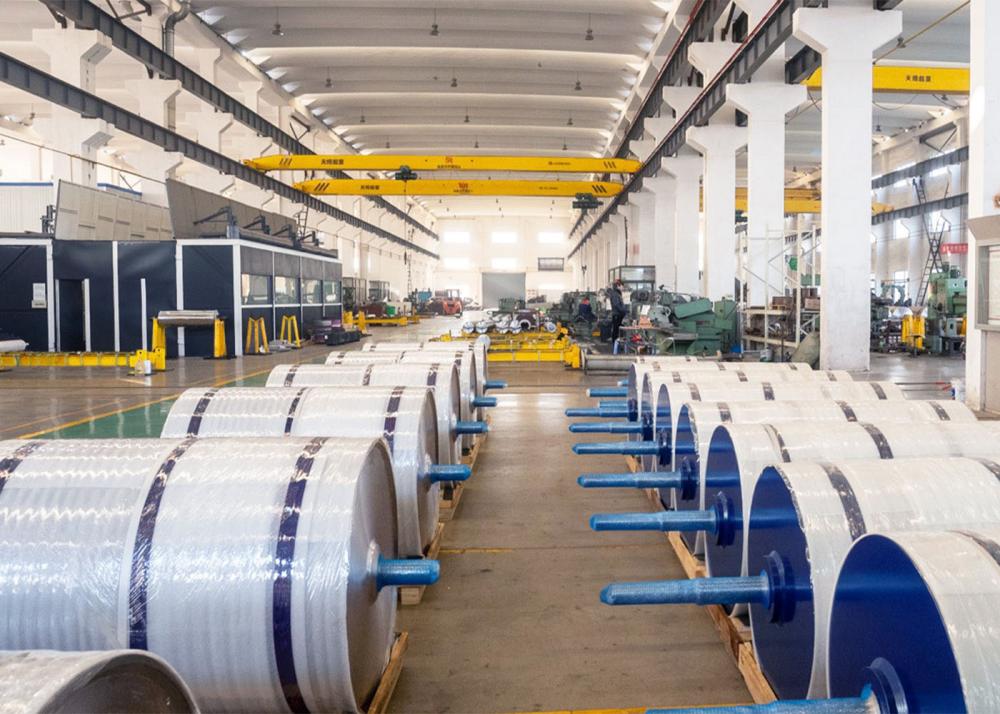
From a structural perspective, the industrial rollers that roller manufacturers can customize mainly fall into the following categories:
Can roller manufacturers customize solid industrial rollers?
Yes, and it's very common.
Characteristics of solid industrial rollers:
• Simple structure
• High rigidity
• Strong bending resistance
• Good processing stability
Common applications:
• Pressure rollers
• Support rollers
• Correction rollers
• Medium and low speed guide rollers
Roller manufacturers can customize the following according to requirements:
• Outer diameter
• Overall length
• Shaft end type
• Surface treatment
• Dynamic balance grade
Can roller manufacturers customize hollow industrial rollers?
Not only can they, but it's extremely common in modern industry.
Advantages of Hollow Industrial Rollers:
• Lighter weight
• Lower rotational inertia
• Better suited for high-speed operation
• Customizable internal structures
Common Forms:
• Standard hollow roller
• Reinforced hollow roller
• Internal flow channel roller
The hollow structure places extremely high demands on the roller manufacturer's welding, coaxiality control, and dynamic balancing capabilities.
What functional applications can roller manufacturers customize for industrial rollers?
From a functional perspective, roller manufacturers can customize a wide variety of industrial rollers.
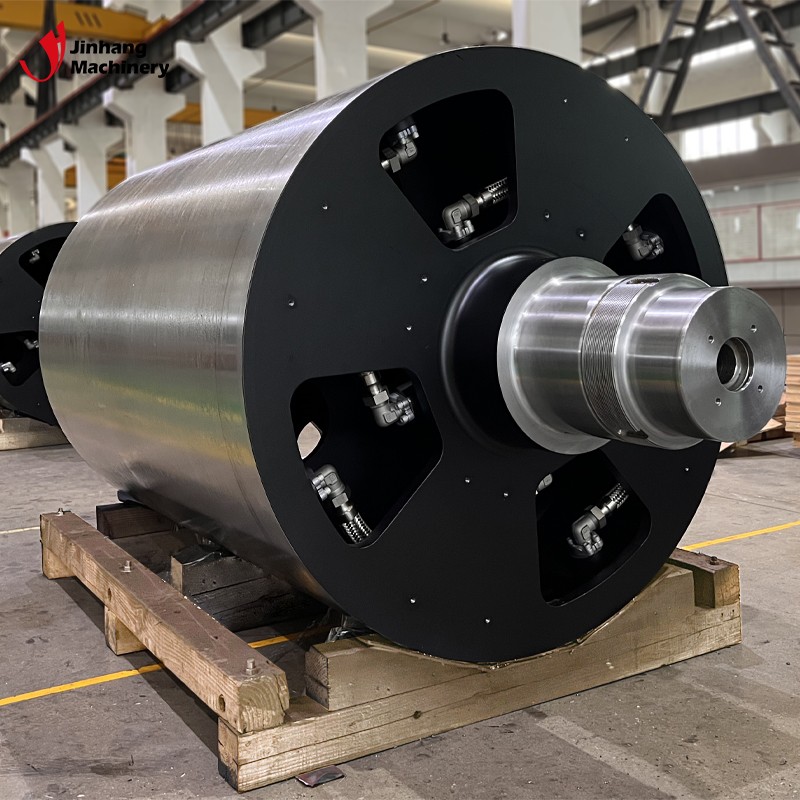
Can roller manufacturers customize industrial heating rollers?
Yes, this is one of the important products for roller manufacturers.
Core functions of industrial heating rollers:
• Provide a stable heat source
• Control material temperature
• Participate in pressing, shaping, and coating
Common types include:
• Thermal oil heating roller
• Water heating roller
• Electric heating roller
Roller manufacturers need to possess:
• Internal flow channel design capabilities
• Sealing and welding capabilities
• Thermal deformation control capabilities
Can roller manufacturers customize industrial cooling rollers?
Yes, it's possible, but the technical requirements are extremely high.
The functions of industrial cooling rollers:
• Rapidly reduce material temperature
• Stabilize dimensions and morphology
• Control crystallization and surface condition
Cooling rollers are typically:
• Water-cooled rollers
• Internal spiral flow channel structure
These types of industrial rollers place extremely stringent requirements on the internal structure processing and sealing reliability of roller manufacturers.
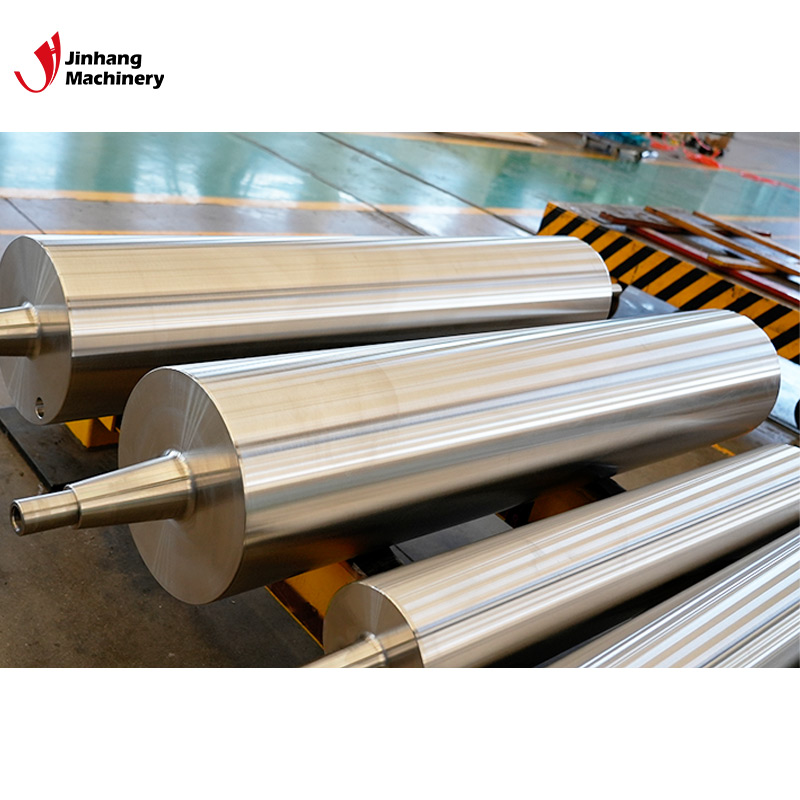
Can roller manufacturers customize industrial mirror rollers?
Industrial mirror rollers are one of the most representative high-precision products of roller manufacturers.
Characteristics of industrial mirror rollers:
• Ultra-low surface roughness
• High roundness and coaxiality
• High dynamic balance level
Common applications:
• Surface correction
• Gloss control
• Calendering and leveling
Industrial mirror rollers place extremely high demands on roller manufacturers:
• Fine grinding capabilities
• Coating control
• Polishing technology
What surface treatments and coatings can roller manufacturers customize?
Surface properties often determine the functional boundaries of industrial rollers.
Can roller manufacturers customize chrome-plated rollers? Yes, and it's a very mature technology.
Advantages of chrome-plated rollers:
• High surface hardness
• Wear resistance
• Corrosion resistance
• Easy cleaning
Roller manufacturers can customize:
• Chrome plating thickness
• Plating hardness
• Mirror or matte finish
Can roller manufacturers customize tungsten carbide coated rollers?
Yes, but requires the roller manufacturer to have professional spraying capabilities.
Characteristics of tungsten carbide coated rollers:
• Extremely high wear resistance
• High hardness
• Strong scratch resistance
These industrial rollers are commonly used in:
• High-wear conditions
• High-load contact
Can roller manufacturers customize ceramic-coated rollers?
Yes.
Advantages of ceramic-coated rollers:
• High temperature resistance
• Corrosion resistance
• Good electrical insulation
Roller manufacturers need to control the coating adhesion strength and thickness consistency.
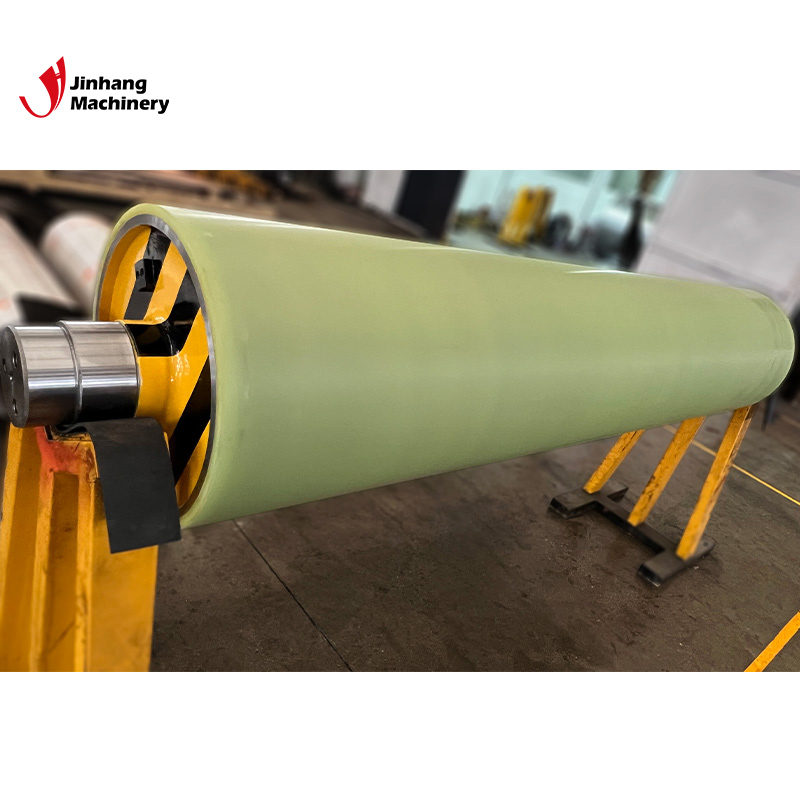
Can roller manufacturers customize rubber rollers?
This is one of the most basic and common products for roller manufacturers.
Customizable features for rubber rollers include:
• Rubber material (natural rubber, silicone, polyurethane, etc.)
• Hardness
• Surface texture
• Thickness
Rubber rollers are widely used in transmission, pressing, and conveying applications.
What special structural industrial rollers can roller manufacturers customize?
Besides standard roller types, professional roller manufacturers can also customize a variety of special structural industrial rollers.
Can roller manufacturers customize corona rollers?
Yes.
Corona rollers typically include:
• Metal substrate
• Insulation layer
• Special surface coating
High requirements are placed on the roller manufacturer's insulation treatment and surface consistency.
Can roller manufacturers customize alignment rollers and tension rollers?
Yes, and it highly depends on structural design capabilities.
These types of industrial rollers are typically used for:
• Tension control
• Material alignment
• Preventing misalignment
Roller manufacturers need to customize the shaft head, angle, and surface morphology according to the equipment structure.
How do roller manufacturers customize different industrial rollers to meet industry needs?
When customizing industrial rollers, roller manufacturers typically consider the following factors:
• Industry type
• Material properties
• Temperature range
• Contact pressure
• Linear speed
• Surface quality requirements
and match the design to the following aspects:
• Substrate selection
• Surface treatment scheme
• Structural form
• Dynamic balance level
This is the core difference between a "true roller manufacturer" and an ordinary processing plant.
Why can't all manufacturers become true roller manufacturers?
The reason is simple:
• Huge investment in industrial roller processing equipment
• Complex process chain
• Extremely high requirements for precision and experience
A true roller manufacturer must possess:
• Large precision machine tools
• Surface treatment capabilities
• Dynamic balancing testing capabilities
• Structural design capabilities
None can be lacking.
The Customization Capabilities of a Roller Manufacturer Determine the Boundaries of Industrial Rollers
—What types of industrial rollers can a roller manufacturer customize?
Almost all roller components used in continuous industrial production can and must be customized by a professional roller manufacturer.
Including but not limited to:
• Heating rollers
• Cooling rollers
• Mirror rollers
• Rubber rollers
• Chrome-plated rollers
• Tungsten carbide rollers
• Ceramic rollers
• Corona-treated rollers
• Correction rollers
• Tension rollers
The diversity of industrial rollers necessitates that roller manufacturers possess comprehensive customization capabilities;
The technical depth of the roller manufacturer ultimately determines the stability of industrial equipment and product quality.
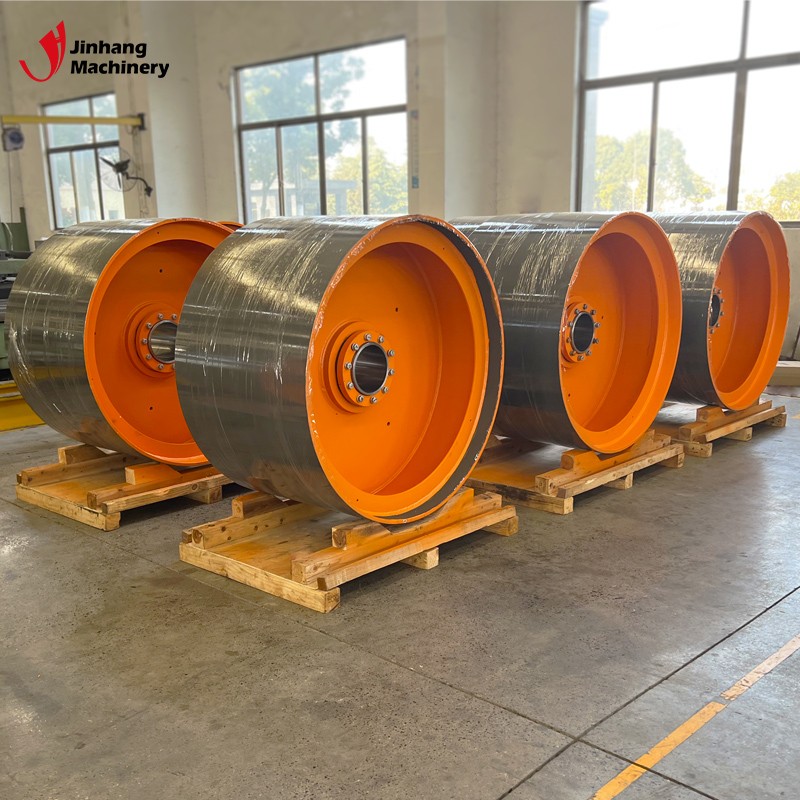
How does Jinhang Machinery handle large, heavy, or complex rollers?
Our workshop is equipped with heavy-duty lathes and high-precision boring machines capable of processing oversized roller bodies. As a professional roller manufacturer, we specialize in handling large-diameter or long rollers that require strict dimensional accuracy. These rollers are commonly used in steel mills, calendering systems, printing plants, and industrial processing lines.