
Which Industrial Rollers Can Be Chrome-Plated? Types of Rollers and Their Suitability
In modern industrial manufacturing, industrial rollers are indispensable components across numerous production lines. Whether in papermaking, printing, packaging, and textiles, or in steel processing, new energy battery manufacturing, lithium-ion electrode coating, and film production, industrial rollers perform critical functions such as conveying, calendering, shaping, guiding, tension control, and surface treatment. To a significant extent, the operational stability, processing precision, and product yield of a production line are closely linked to the performance of its industrial rollers.
As manufacturing evolves toward higher speeds, greater precision, and increased automation, standard industrial rollers often struggle to meet the demands of complex, long-term operations. In practice, these rollers must withstand multiple challenges, including high-speed frictional wear, high-pressure contact, exposure to corrosive liquids, and thermal cycling. If the roller surface lacks sufficient hardness, it is prone to issues such as wear, scratching, material adhesion, corrosion, rusting, and even loss of roundness (deformation). Such problems not only shorten the roller's service life but also directly lead to quality defects in the finished product, such as surface indentations, scratch marks, and uneven thickness.
Consequently, an increasing number of enterprises are prioritizing surface strengthening processes for industrial rollers. Chrome plating stands out as one of the most common and mature solutions. Chrome-plated rollers typically exhibit superior hardness, wear resistance, and corrosion resistance, making them ideal for a wide range of demanding applications.
However, a common question arises in the industry: are all industrial rollers suitable for chrome plating? The answer is not a simple "yes." Suitability depends on factors such as the roller's material, structural design, operating environment, and precision requirements. This article provides an in-depth analysis of which industrial rollers can be chrome-plated, systematically outlining the types of rollers suitable for the process, their scope of application, and the underlying industry logic.
Why Chrome-Plate Industrial Rollers?
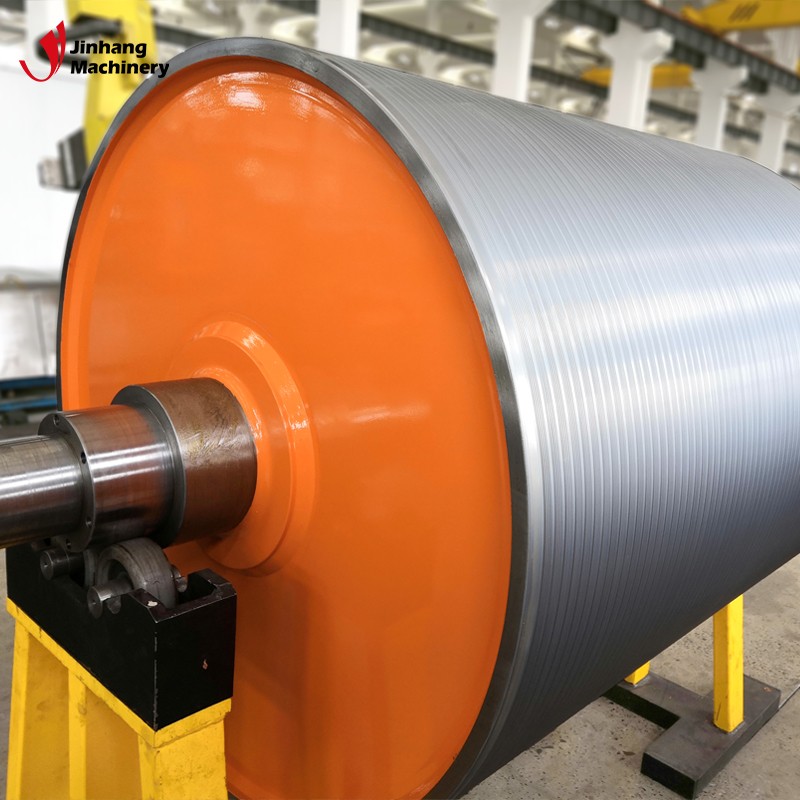
Chrome plating for industrial rollers is essentially a form of electroplating; it involves the electrochemical deposition of a dense layer of metallic chromium onto the roller's surface. In an industrial context, "chrome plating" typically refers to hard chrome plating rather than decorative chrome plating. Hard chrome plating typically ranges from 0.02 mm to 0.3 mm in thickness, with some heavy-duty industrial rollers reaching thicknesses exceeding 0.5 mm.
Chrome plating is favored in the industrial roller sector primarily because it significantly enhances surface performance. First is the increase in hardness. While the surface hardness of standard carbon steel rollers typically falls between HB 180 and 250, a hard chrome layer can achieve a hardness of HV 850 to 1100. In terms of performance, this translates to a wear resistance improvement of three to eight times—a crucial advantage for industrial rollers operating at high speeds over long periods.
Second is the improvement in frictional properties. Chrome-plated surfaces are smoother and exhibit a lower coefficient of friction, which helps minimize material adhesion and frictional heat generation. For instance, with mirror-finish rollers used in film production, substandard surface roughness can easily lead to film scratching or uneven adhesion.
A third key advantage is enhanced corrosion resistance. Many industrial rollers operate in harsh environments; substances such as hot, wet pulp in papermaking, solvents in printing, and acidic or alkaline liquids in the chemical industry can all corrode the roller body. Chrome plating effectively isolates the metal substrate from these external corrosive agents, thereby extending the roll's service life.
Industry statistics indicate that hard chrome-treated industrial rollers typically have a service life 200% to 500% longer than untreated rollers. For large-scale continuous production enterprises, this translates to reduced downtime for maintenance and lower overall costs.
Which industrial rollers are suitable for chrome plating?
While not every industrial roller is suitable for chrome plating, the vast majority of metal rollers are compatible with the process. Suitability is determined primarily by two factors: the roller material and the specific operating requirements.
Steel Industrial Rollers: The Most Common Candidates for Chrome Plating
Steel rolls are the most common type of industrial roller and are ideally suited for chrome plating.
Commonly used steels include 45 steel, 40Cr, 42CrMo, stainless steel, and alloy tool steel. These rollers generally possess excellent mechanical strength and machinability, allowing them to withstand the precision turning, grinding, and polishing processes required prior to plating. Steel industrial rollers are well-suited for chrome plating due to the strong bonding strength at their surface. A stable bond forms between the chrome layer and the steel substrate, minimizing the risk of delamination or peeling. Chrome-plated steel rollers perform exceptionally well, particularly in high-load and high-speed operating environments.
Examples include:
•Printing impression rollers
•Papermaking calender rollers
•Mirror-finish film rollers
•Metal calendering rollers
•Lithium-ion battery coating rollers
Chrome plating is widely used for almost all of these types of industrial rollers.
Stainless Steel Industrial Rollers: Suitable for High-Cleanliness Environments
Many people mistakenly believe that stainless steel rollers do not require chrome plating because the material is inherently corrosion-resistant. However, in high-precision applications, stainless steel rollers frequently undergo chrome plating.
The reason is simple: while stainless steel resists rust, its surface hardness is relatively low.
Take 304 stainless steel, for instance; its hardness is typically only around HB180. In high-speed, high-friction environments, it remains susceptible to wear.
Chrome plating can further enhance:
•Surface hardness
•Surface finish
•Scratch resistance
•Dimensional stability
Consequently, chrome plating high-precision stainless steel rollers is common practice in the food, pharmaceutical, and electronic materials industries.
Cast Iron Industrial Rollers: Selectively Suitable for Chrome Plating
Whether a cast iron roller can be chrome-plated requires case-by-case analysis.
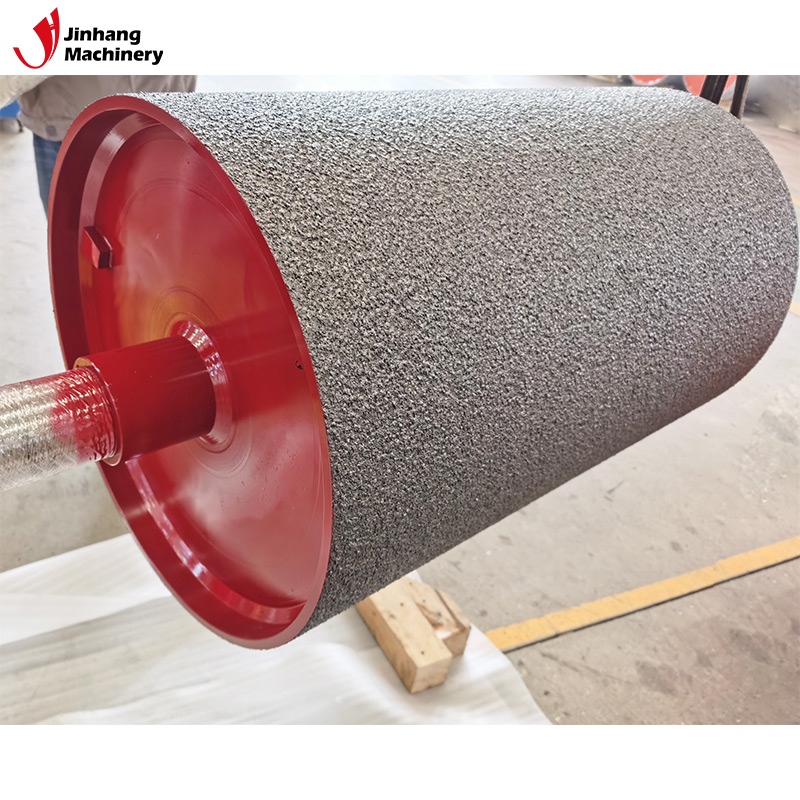
Standard gray cast iron is generally unsuitable due to its internal graphite structure and insufficient surface density, which result in poor chrome adhesion. However, ductile iron or specially treated high-strength cast iron rollers can be chrome-plated, provided they meet specific surface finishing requirements.
Such rollers are commonly found in:
•Heavy-duty calendering equipment
•Metallurgical machinery
•Steel plate processing equipment
However, the proportion of chrome-plated cast iron rollers is lower compared to that of steel rollers.
Which Industrial Rollers Are Unsuitable for Chrome Plating?
Having identified rollers suitable for chrome plating, it is also important to understand which types are not.
1. Rubber Industrial Rollers
Rubber rollers rely primarily on elasticity for their function—examples include:
•Rubber rollers
•Paper-pressing rollers
•Water-squeezing rollers
As rubber is a non-conductive material, it cannot be directly electroplated; therefore, chrome plating is generally not an option.
2. Polyurethane Industrial Rollers
Polyurethane rollers offer excellent cushioning properties and are frequently used in conveyor lines. Like rubber rollers, they are unsuitable for traditional chrome plating processes.
3. Carbon Fiber Industrial Rollers
Carbon fiber industrial rollers are lightweight and possess low rotational inertia, making them ideal for high-speed production lines. However, due to the unique surface structure of the composite material, achieving stable adhesion with conventional chrome plating is difficult.
Alternatives to chrome plating often used for these rollers include:
•Ceramic spraying
•Teflon coating
•Tungsten carbide coating
Main Types of Industrial Rollers Suitable for Chrome Plating
1. Calendering Industrial Rollers
Calendering rollers typically operate under high-pressure conditions and require exceptional surface hardness.
In plastic sheet production, for instance, the roller must withstand material pressure while ensuring uniform product thickness. Wear exceeding 10 microns on the roller body can result in uneven thickness in the finished product.
Chrome plating significantly enhances the wear resistance of calendering rollers, making it a common choice in industries such as:
•PVC sheets
•PET films
•Lithium-ion battery separators
•Copper foil calendering
Industry data indicates that high-quality chrome-plated calendering rollers can extend service life by approximately fourfold.
2. Mirror-Finish Industrial Rollers
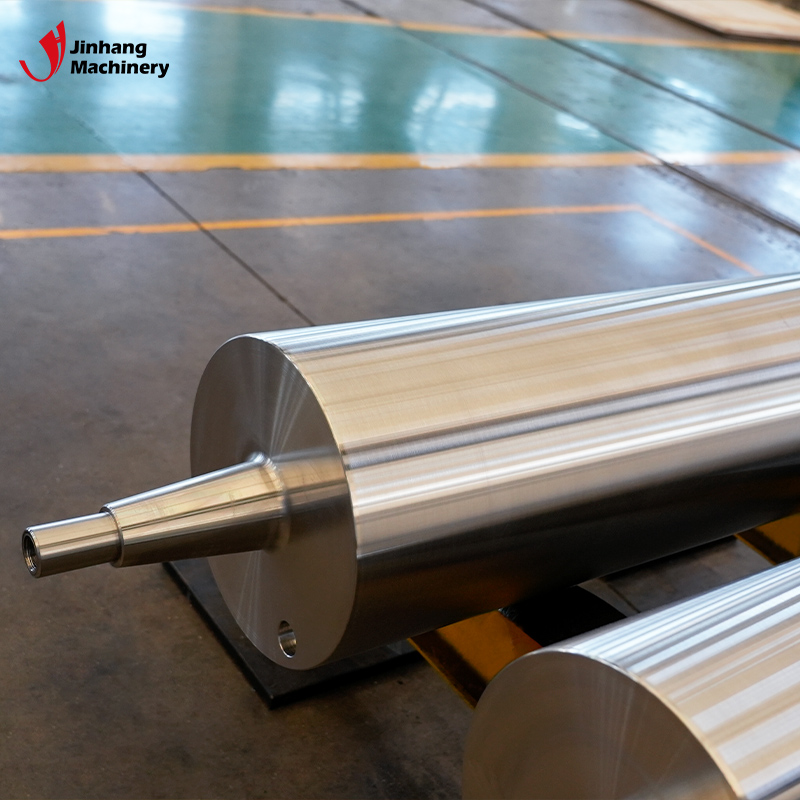
Mirror-finish rollers are among the rollers with the most stringent surface requirements.
These rollers typically require:
•Ra ≤ 0.02 μm
•Mirror-like reflectivity
•An extremely low rate of surface defects
Chrome plating followed by ultra-precision polishing achieves an exceptionally smooth finish, making them widely used for:
•Optical films
•Polarizers
•Electronic films
•High-end packaging films
3. Guide Industrial Rollers
Guide rollers are responsible for controlling the path of the material.
While they may not always bear the heaviest loads, their surfaces must remain stable due to continuous contact with the material to prevent scratching the product. Chrome plating reduces friction and adhesion, making it crucial for high-speed production lines.
4. Industrial Coating Rollers
The coating industry is a key application area for chrome-plated industrial rollers.
In lithium-ion battery manufacturing, the uniformity of slurry coating directly determines the performance of the battery cell. Micron-level defects on the roller surface can compromise the consistency of the coating thickness.
Consequently, high-end industrial coating rollers typically undergo:
•Precision grinding
•Hard chrome plating
•Mirror polishing
Some high-precision rollers even maintain a radial runout of less than 2 microns.
Applications of Chrome-Plated Industrial Rollers Across Industries
1. Paper Industry
Paper manufacturing equipment utilizes a vast number of industrial rollers, including:
•Press rollers
•Calender rollers
•Guide rollers
•Drying cylinder rollers
Due to constant exposure to high-humidity environments, these rollers are prone to corrosion. Chrome plating significantly enhances oxidation resistance.
2. Printing Industry
The printing industry demands exceptional surface precision for industrial rollers.
Even minor scratches can lead to:
•Printing streaks
•Uneven ink layers
•Color variations
Therefore, chrome plating is widely adopted for industrial rollers in the printing sector.
3. New Energy Industry
In recent years, the new energy sector has emerged as one of the fastest-growing markets for industrial rollers.
In lithium-ion battery manufacturing specifically, industrial rollers are widely used for:
•Electrode coating
•Roller pressing (calendering)
•Slitting
•Lamination
Industry data indicates that the global market for lithium-ion battery equipment is projected to exceed 180 billion RMB by 2025, with a steadily rising demand for high-precision industrial rollers.
High-end industrial rollers for the new energy sector generally require:
•High hardness
•Low surface roughness
•High cylindricity
•Long service life
Chrome plating has become virtually standard practice.
What parameters must be considered for chrome-plated industrial rollers?
The process does not end simply with the application of chrome; the specific parameters of the plating layer determine the roller's ultimate performance.
1. Plating Thickness
Common thickness ranges:
•Standard industrial rollers: 20–50 μm
•Wear-resistant industrial rollers: 50–150 μm
•Heavy-duty industrial rollers: 150–300 μm
Insufficient thickness results in poor wear resistance, while excessive thickness can lead to cracking.
2. Surface Roughness
Requirements vary by roller type:
•Standard guide rollers: Ra 0.2–0.4
•Coating rollers: Ra 0.05–0.1
•Mirror-finish rollers: Ra 0.01–0.03
3. Concentricity and Radial Runout
High-end industrial rollers have very strict requirements.
For example, in the lithium-ion battery industry:
•Radial runout is typically less than 5 μm.
•Some applications require less than 2 μm.
This factor determines coating stability.
FAQ
Q1: Can all steel industrial rollers be chrome-plated?
Most can, provided the roller surface is dense, machining precision meets standards, and there are no significant pores or cracks.
Q2: How much does chrome plating extend the service life of industrial rollers?
Typically, the lifespan increases by 2 to 5 times; the improvement is even more pronounced under heavy-duty operating conditions.
Q3: Will the chrome plating on industrial rollers delaminate?
Delamination can occur if pre-treatment is inadequate or the plating quality is poor. However, with proper processing, adhesion is very strong.
Q4: Is a thicker chrome plating layer better?
No. Excessive thickness can lead to stress cracks; the optimal thickness should be determined based on operating conditions.
Q5: Which is better: chrome plating or ceramic spraying?
It depends on the application. Generally, chrome plating is more cost-effective, whereas ceramic coating is better suited for environments with extreme wear.