
In the field of industrial roller manufacturing, the performance of rubber rollers often determines the operational efficiency, product quality, and maintenance costs of the entire production line. Whether in papermaking, printing, textiles, steel processing, film coating, or food processing and packaging, rubber rollers perform critical tasks such as transport, pressing, tension control, surface treatment, and coating application. Among the various rubber materials available, EPDM rubber rollers have become a popular choice for many industrial applications due to their excellent weather resistance, ozone resistance, thermal stability, and chemical resistance.
However, equipment purchasers, maintenance engineers, and production managers often face a very practical question during use: Do EPDM rubber roller coatings degrade? If so, what is their typical service life? While the question appears simple, the answer involves multiple facets, including material science, environmental factors, mechanical wear, chemical aging, and specific production conditions. When purchasing EPDM rubber rollers, many companies focus solely on initial performance parameters—such as hardness, temperature resistance range, and surface roughness—while overlooking long-term factors that affect the roller's lifespan. Consequently, even when high-specification EPDM rollers are selected, issues such as surface cracking, loss of elasticity, hardening, chalking, or even delamination can still occur.
This article provides an in-depth analysis of the topic "Do EPDM rubber roller coatings degrade? What is their service life?" by examining material structure, degradation mechanisms, factors influencing lifespan, industry data, and maintenance recommendations, thereby helping enterprises gain a comprehensive understanding of the actual performance of EPDM rubber rollers.
What is an EPDM rubber roller? Why is it widely used in industry?
EPDM stands for Ethylene Propylene Diene Monomer. This synthetic rubber is polymerized from ethylene, propylene, and a small amount of non-conjugated diene monomer. Its molecular backbone features a high degree of saturation, giving it superior aging resistance compared to natural rubber, nitrile rubber (NBR), or chloroprene rubber (CR). The widespread use of EPDM rubber rollers stems primarily from their well-balanced material properties. First, EPDM offers exceptional resistance to ozone and ultraviolet (UV) radiation, preventing rapid cracking in outdoor or high-oxygen environments. Second, it boasts excellent heat resistance; long-term operating temperatures typically range from 120°C to 150°C, with the ability to withstand even higher temperatures for short periods. Furthermore, EPDM rubber rollers demonstrate good stability when exposed to water vapor, hot water, weak acids, weak alkalis, and certain polar chemical media.
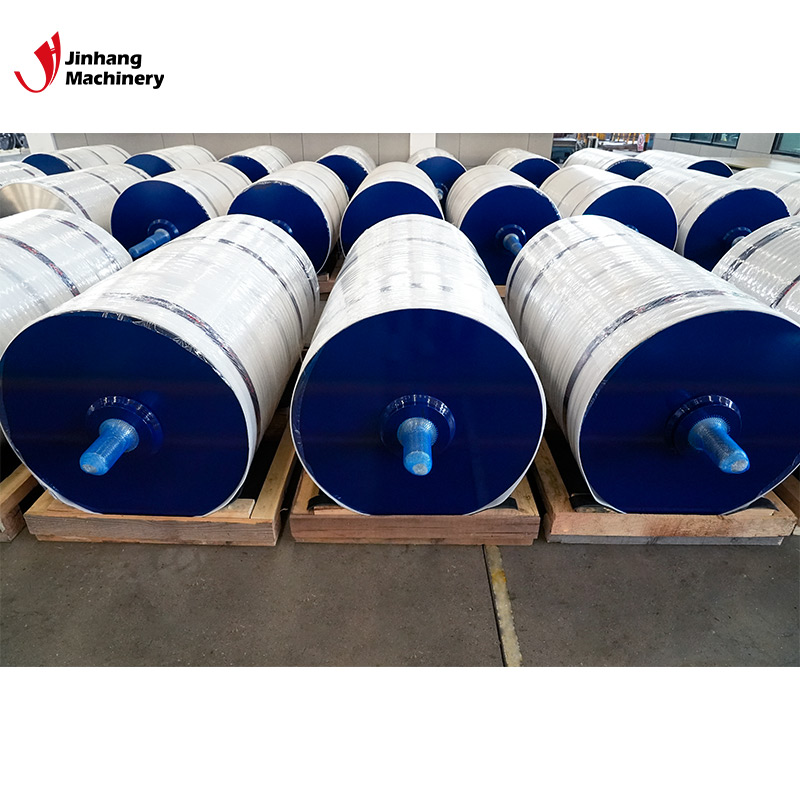
Thanks to these advantages, EPDM rubber rollers are extensively used in applications such as paper mill press rolls, textile fabric-guiding rolls, film transport rolls, packaging nip rolls, guide rolls for steel plate cleaning lines, and certain food-contact equipment. Many enterprises choose EPDM rubber rollers precisely because they combine elasticity with durability.
However, it is important to note that despite its excellent performance, EPDM is a polymer material, and all polymers undergo performance degradation over time. Therefore, the answer is clear: the coating on EPDM rubber rollers will degrade—inevitably so—though the rate of degradation varies depending on operating conditions.
Do EPDM rubber roller coatings degrade?
The answer is yes.
From a materials science perspective, the degradation of EPDM rubber roller coatings is an inevitable natural process. "Degradation" essentially refers to the breaking of rubber molecular chains, cross-linking changes, or alterations in chemical structure caused by external factors, ultimately leading to a decline in material performance.
Degradation of an EPDM rubber roller does not necessarily mean immediate failure. Often, degradation is a slow, cumulative process that may manifest gradually over months or even years. In the initial stages, the roller might only exhibit slight changes in hardness or a reduction in elasticity; as degradation intensifies, issues such as surface cracking, tackiness, powdering, embrittlement, peeling, or even the detachment of the entire rubber layer may occur.
Industrial field experience shows that over 80% of EPDM rubber roller failures are not sudden events but the result of long-term aging and cumulative wear. Therefore, rather than simply asking "will it degrade?", the more important question is: what factors accelerate the degradation of EPDM rubber rollers?
What are the primary causes of degradation in EPDM rubber roller coatings?
The degradation of EPDM rubber rollers is typically not caused by a single factor but is the result of the combined effects of heat, oxygen, mechanical stress, chemical corrosion, and environmental pollution.
1. Thermal aging is the most common cause of degradation in EPDM rubber rollers
Temperature is the primary variable affecting the service life of EPDM rubber rollers. Although EPDM possesses good heat resistance, this does not mean it can withstand high temperatures indefinitely.
According to rubber aging theory, for every 10°C rise in temperature, the aging rate of many polymer materials can increase by approximately 1.5 to 2 times. For EPDM rubber rollers, when the operating temperature consistently exceeds the design limit, molecular chain movement intensifies and the internal cross-linked structure begins to alter, causing the material to gradually harden.
For instance, if an EPDM rubber roller rated for 120°C operates continuously at temperatures above 140°C, its service life may be reduced by 30% to 60%. Prolonged thermal aging typically manifests as increased hardness, greater compression set, and reduced resilience, ultimately affecting the roller's pressure distribution and processing precision.
2. Mechanical wear continuously degrades the surface layer of EPDM rubber rollers
Mechanical wear is another major factor in industrial environments. While EPDM rubber rollers offer a certain level of wear resistance, it is generally inferior to that of polyurethane or certain high-hardness rubber materials.
In high-speed operating environments, the surface of an EPDM rubber roller is subjected to continuous friction, shear forces, and cyclic compression. Wear is significantly accelerated under conditions such as high linear speeds, high tension, high pressure, and frequent start-stop cycles.
Industry data indicates that in continuous production environments with linear speeds exceeding 300 meters per minute, the surface wear rate of EPDM rubber rollers is typically more than 40% higher than in low-speed operations. As wear accumulates, the roller surface roughness changes and the coating thickness gradually decreases, potentially leading to the exposure of the base layer.
3. Chemical media accelerate coating failure on EPDM rubber rollers
Although EPDM rubber rollers offer good resistance to water, steam, and certain acids and alkalis, they are not universally resistant to all chemicals.
A key weakness of EPDM is its poor resistance to mineral oils, lubricants, petroleum-based solvents, and certain organic hydrocarbon media. Prolonged contact with these substances can cause the rubber to swell, soften, or even suffer structural degradation.
For instance, on certain coating lines, if cleaning agents contain aromatic hydrocarbon solvents, EPDM rollers may exhibit significant softening within 6 to 18 months. Once the surface coating swells, its mechanical strength drops rapidly, and the rate of subsequent wear increases exponentially.
4. Ozone and oxidation also cause gradual damage
While EPDM is renowned for its ozone resistance, this does not mean it is completely immune. Prolonged exposure to high ozone concentrations, strongly oxidizing atmospheres, or high-voltage corona environments can still lead to oxidative aging.
This type of degradation typically begins at the surface, forming micro-cracks. While these initial cracks may be difficult to detect with the naked eye, they expand over time, eventually leading to severe cracking and surface spalling.
What is the typical service life of EPDM rubber rollers?
This is a primary concern for users, yet there is no single answer, as the lifespan of EPDM rollers depends heavily on operating conditions.
Service life can generally be categorized based on the operating environment:
In light-duty environments—such as low-speed conveying, standard guiding, and low-pressure nip processes—EPDM rollers typically last 5 to 8 years. These environments feature lower temperatures, minimal chemical corrosion, and limited mechanical wear, allowing the rollers to maintain stable performance over the long term.
In medium-duty environments—such as standard printing, textile heat-setting, or packaging lamination lines—the lifespan is usually 3 to 5 years. This represents the typical scenario for most industrial users.
In heavy-duty environments—such as high-temperature calendering, high-speed coating, or highly corrosive cleaning lines—the lifespan may be only 1 to 3 years. Under extreme operating conditions—where temperature extremes, chemical corrosion, and mechanical impact coexist—the service life may even fall below 12 months.
Statistically, the average service life of most industrial EPDM rubber rollers ranges from approximately 2.5 to 6 years.
How can you tell if an EPDM rubber roller is nearing the end of its service life?
Many companies wait until the roller is completely damaged before replacing it, but this is not an ideal maintenance strategy. A better approach is to identify signs of aging early on.
Typical signs that an EPDM rubber roller is nearing failure:
First is a change in hardness. If the hardness deviates by more than ±5 Shore A from the initial value, it usually indicates a significant shift in material properties. Second is an increase in surface cracking; fine cracks appearing along the direction of applied force often signal accelerated aging. Third is a loss of elasticity; if the roller surface is slow to rebound or retains indentations, it indicates changes in the internal cross-linked structure. Fourth is abnormal changes in surface roughness, which may manifest as a glossy or tacky surface, or the shedding of powder. Fifth is a decline in processing quality, such as uneven impressions, tension fluctuations, or increased streaking during coating.
These phenomena indicate that the EPDM rubber roller may be nearing the end of its service life.
How can the service life of EPDM rubber rollers be extended?
Although EPDM rubber rollers inevitably degrade, proper management can significantly extend their lifespan.
First, control the operating temperature and avoid prolonged operation above recommended limits; unstable temperature control is the root cause of premature failure for many EPDM rollers. Second, minimize contact with incompatible chemicals, particularly mineral oils and organic solvents. Third, clean the roller surface regularly to prevent localized wear caused by particulate contaminants. Fourth, avoid prolonged static pressure during downtime, as continuous compression can lead to permanent deformation. Fifth, establish a periodic inspection routine—such as checking hardness, radial runout, and surface condition every 3 to 6 months.
With proper maintenance, it is not uncommon to extend the service life of EPDM rubber rollers by 20% to 50%.
Are EPDM rubber rollers a good choice?
Overall, EPDM rubber rollers remain a highly competitive material solution in the industrial sector. It exhibits excellent resistance to heat, ozone, water vapor, and weathering, making it superior to natural rubber and certain traditional materials in many operating conditions.
However, EPDM rubber rollers are not suitable for every environment. If the application involves significant exposure to oily media, strong organic solvents, or conditions causing extreme wear, alternatives such as polyurethane, silicone, or fluoroelastomer rollers should be considered.
When selecting rollers, businesses should not simply assume that EPDM's "long service life" makes it suitable for every scenario; instead, they should make a comprehensive assessment based on factors such as temperature, speed, pressure, chemical environment, and maintenance capabilities.
FAQ
Q1: Do EPDM rubber rollers age naturally?
Yes. Even when not in use, EPDM rubber rollers gradually age due to oxidation, ozone exposure, and ambient temperature.
Q2: Are EPDM rubber rollers sensitive to oil?
Yes. EPDM rubber rollers have poor resistance to mineral oils, lubricating oils, and most petroleum-based solvents.
Q3: How often should EPDM rubber rollers be inspected?
A comprehensive inspection—covering hardness, surface cracks, and radial runout—is recommended every 3 to 6 months.
Q4: Do EPDM rubber rollers have a longer service life than PU (polyurethane) rollers?
Not necessarily. PU rollers generally perform better in high-wear applications, whereas EPDM rollers often hold the advantage in environments involving hot steam.