
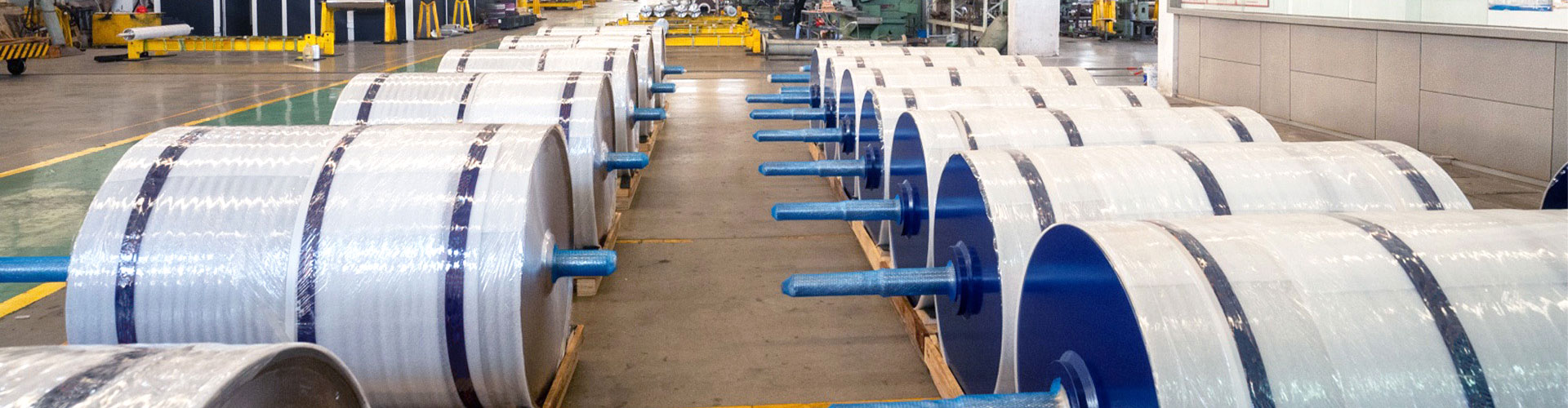
What are the advantages of industrial EPDM rubber rollers? Industrial EPDM Rubber Rollers vs. Other Rubber Rollers
In modern industrial production, industrial rollers not only undertake important tasks such as conveying, pressing, calendering, coating, traction, guiding, laminating, and cleaning, but the properties of their surface materials also directly affect product quality, equipment stability, and production efficiency. For many production processes requiring elastic contact, wear-resistant operation, or resistance to chemical media, rubber rollers have become an irreplaceable and essential component. Among numerous rubber materials, industrial EPDM rubber rollers, with their excellent weather resistance, ozone resistance, heat resistance, and good chemical stability, have been increasingly adopted by companies in recent years in industries such as plastic film, papermaking, textiles, printing, packaging, steel, new energy, food processing, and environmental protection equipment.
However, during equipment selection, many purchasing and technical personnel still have questions: What are the advantages of EPDM industrial rubber rollers? How do they differ from industrial natural rubber rollers, industrial nitrile rubber rollers (NBR), industrial silicone rollers, industrial polyurethane rollers (PU), and industrial neoprene rollers? Are industrial EPDM rubber rollers suitable for all operating conditions? How to Select the Right Rubber Roller Material Based on Actual Processes?
In fact, different rubber materials have completely different molecular structures and performance characteristics, and no single rubber is suitable for all industrial environments. While industrial EPDM rubber rollers excel in aging resistance, high-temperature resistance, and chemical media resistance, their oil resistance, mechanical strength, and performance under certain special operating conditions require careful selection based on specific needs.
This article will provide a comprehensive analysis of the material characteristics, performance advantages, typical applications, detailed comparisons with other rubber rollers, and selection recommendations for industrial EPDM rubber rollers, helping companies to more scientifically select industrial rubber roller products suitable for their production needs.
Why are more and more industries choosing industrial EPDM rubber rollers?
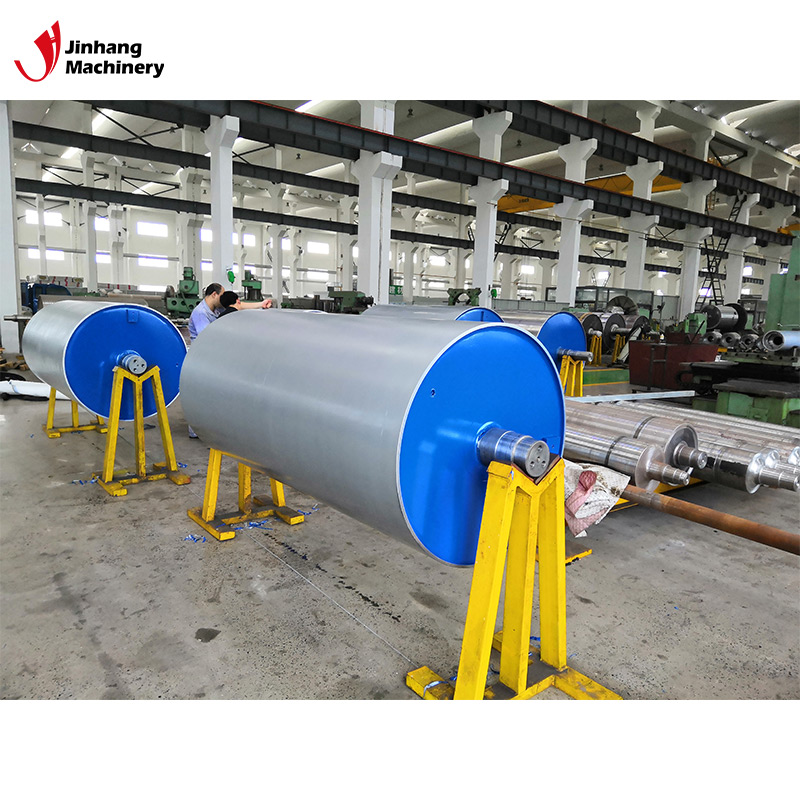
Industrial EPDM rubber rollers are industrial rollers manufactured using ethylene propylene diene monomer (EPDM) rubber as the main coating material. EPDM is a synthetic rubber formed by the copolymerization of ethylene, propylene, and a small amount of a third monomer. It features stable molecular structure, high saturation, and strong resistance to environmental aging, thus finding wide application in the industrial field.
Compared to ordinary rubber materials, the biggest advantage of EPDM industrial rubber rollers lies in their ability to withstand the effects of complex environments over long periods, such as high temperatures, ozone, ultraviolet radiation, water vapor, and various acidic and alkaline media, without rapidly aging, cracking, or losing elasticity like some traditional rubbers. Therefore, industrial EPDM rubber rollers are particularly suitable for production equipment operating continuously for extended periods.
Modern industrial EPDM rubber rollers typically use high-quality steel rollers as the base material, manufactured through sandblasting, a specialized bonding system, and precision overmolding and vulcanization processes. Depending on the application requirements, their surface hardness can usually be controlled between Shore A 40° and 90° to meet the requirements of different pressure, friction, and conveying conditions.
In recent years, with the continuous increase in the speed of automated production lines, more and more companies have begun to focus on equipment stability and service life. Industrial EPDM rubber rollers, due to their long service life and low maintenance costs, have gradually become an important choice for many industries.
What are the core advantages of industrial EPDM rubber rollers?
The important position of industrial EPDM rubber rollers among many rubber materials is not due to outstanding single performance characteristics, but rather to their well-balanced overall performance, exhibiting excellent performance in multiple key indicators.
First, industrial EPDM rubber rollers possess excellent weather resistance. The high saturation of the EPDM molecular backbone makes them less susceptible to the effects of ultraviolet radiation, ozone, and atmospheric oxidation. Therefore, even with prolonged exposure to outdoor or high-ozone environments, they maintain good elasticity and mechanical properties. Compared to some ordinary rubber materials, EPDM industrial rubber rollers exhibit several times greater resistance to aging, making them particularly suitable for equipment operating continuously for extended periods.
Second, industrial EPDM rubber rollers have good heat resistance. Generally, they can operate stably at temperatures between 120°C and 150°C for extended periods. Some specially formulated products can even withstand higher temperatures for short periods without significant hardening, cracking, or performance degradation. This makes industrial EPDM rubber rollers widely used in hot pressing, calendering, drying, and laminating processes.
Third, industrial EPDM rubber rollers have excellent ozone resistance. Ozone is generated in many industrial environments, such as corona treatment equipment, high-voltage electrical equipment, and some chemical production lines. Ordinary rubber is prone to cracking under ozone exposure, while industrial EPDM rubber rollers possess natural ozone resistance, significantly extending their service life.
Furthermore, industrial EPDM rubber rollers possess superior resistance to water, steam, and various acid and alkali solutions, giving them a significant advantage in industries such as papermaking, wastewater treatment, environmental protection equipment, and food packaging.
According to industry experience, in suitable applications, the service life of EPDM industrial rubber rollers is typically 30% to 100% longer than that of ordinary natural rubber rollers, with a significantly reduced maintenance frequency, making them more economical from a total life-cycle cost perspective.
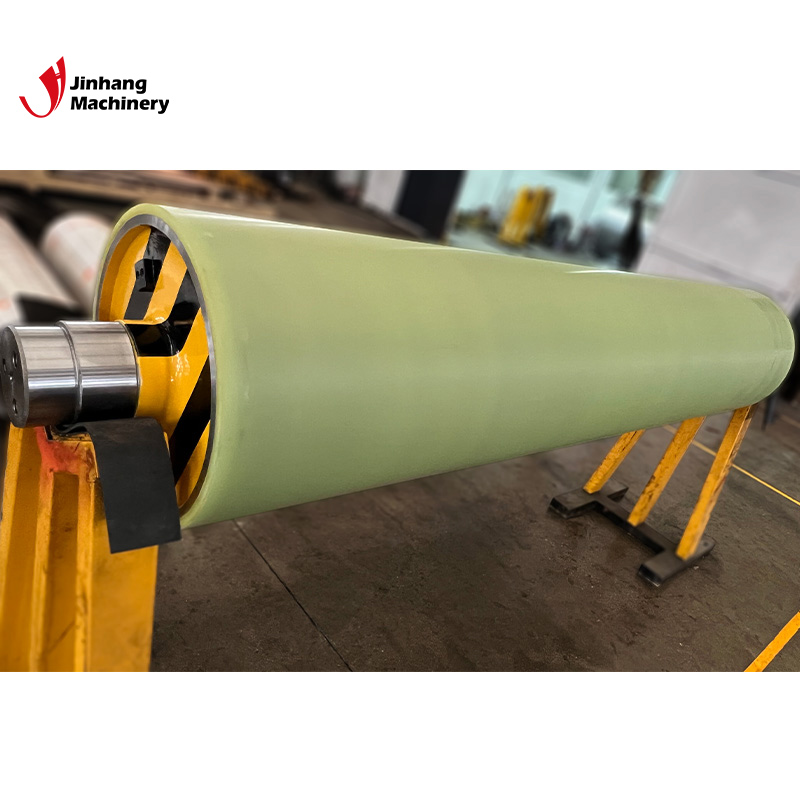
Industrial EPDM Rubber Rollers vs. Other Rubber Rollers – Everything You Need to Know
Industrial EPDM Rubber Rollers vs. Industrial Natural Rubber Rollers
Natural rubber rollers have long been widely used in traditional industrial equipment due to their advantages, including good elasticity, fast rebound speed, excellent fatigue resistance, and relatively low cost. However, natural rubber is susceptible to the effects of ozone, ultraviolet radiation, high temperatures, and oxidizing environments, leading to aging, hardening, and even cracking over long-term use.
In contrast, industrial EPDM rubber rollers offer a significant advantage in aging resistance. For equipment exposed to outdoor, high-temperature, or high-ozone environments for extended periods, industrial EPDM rubber rollers maintain more stable physical properties, reducing dimensional changes and coating failure caused by rubber aging.
However, if the equipment primarily withstands high-frequency mechanical impacts and the working environment is relatively mild, natural rubber rollers still have certain advantages due to their excellent dynamic fatigue performance. Therefore, the choice between the two should be based on actual working conditions, rather than a simple substitution relationship.
Industrial EPDM Rubber Rollers vs. Industrial Nitrile Rubber Rollers (NBR)
The biggest characteristic of industrial nitrile rubber rollers is their outstanding oil resistance, making them widely used in printing, machinery manufacturing, hydraulic equipment, and production environments involving contact with lubricating oils and fuels.
In contrast, the biggest drawback of industrial EPDM rubber rollers is their weaker oil resistance. EPDM materials are prone to volume expansion and performance degradation after contact with mineral oils, greases, and some organic solvents, making them unsuitable for long-term contact with oily media.
However, industrial EPDM rubber rollers are significantly superior to industrial nitrile rubber rollers in terms of heat resistance, ozone resistance, water vapor resistance, and acid and alkali resistance. Therefore, if the equipment operating environment primarily involves water, steam, and chemical media, rather than oily media, industrial EPDM rubber rollers are usually the more ideal choice.
Industrial EPDM Rubber Rollers vs. Industrial Silicone Rollers
Industrial silicone rollers have an extremely wide temperature range, capable of operating continuously at temperatures from -50°C to 200°C or even higher, while also exhibiting excellent food-grade safety properties. Therefore, they are widely used in the food processing, pharmaceutical, and electronics industries.
Compared to industrial silicone rollers, industrial EPDM rubber rollers, although having slightly lower high-temperature resistance, offer higher mechanical strength, better tear resistance, and relatively lower manufacturing costs. In industrial production lines requiring high abrasion resistance and load-bearing capacity, EPDM industrial rubber rollers typically offer better cost-effectiveness.
Furthermore, industrial EPDM rubber rollers also perform excellently in terms of resistance to water vapor and ozone, thus they can replace some silicone roller applications in many industrial environments.
Industrial EPDM Rubber Rollers vs. Industrial Polyurethane (PU) Rollers
Industrial polyurethane rollers are widely used in the steel, logistics conveying, woodworking machinery, and heavy-duty equipment industries due to their high abrasion resistance, high load-bearing capacity, and excellent mechanical strength.
Compared to industrial polyurethane rollers, EPDM industrial rubber rollers, while slightly less abrasion-resistant, offer significant advantages in weather resistance, ozone resistance, and steam resistance. Furthermore, EPDM industrial rubber rollers have a more flexible elasticity, performing better in processes requiring surface protection against indentations or scratches.
Therefore, for production equipment requiring flexible contact, resistance to environmental aging, and long-term continuous operation, industrial EPDM rubber rollers are often more suitable.
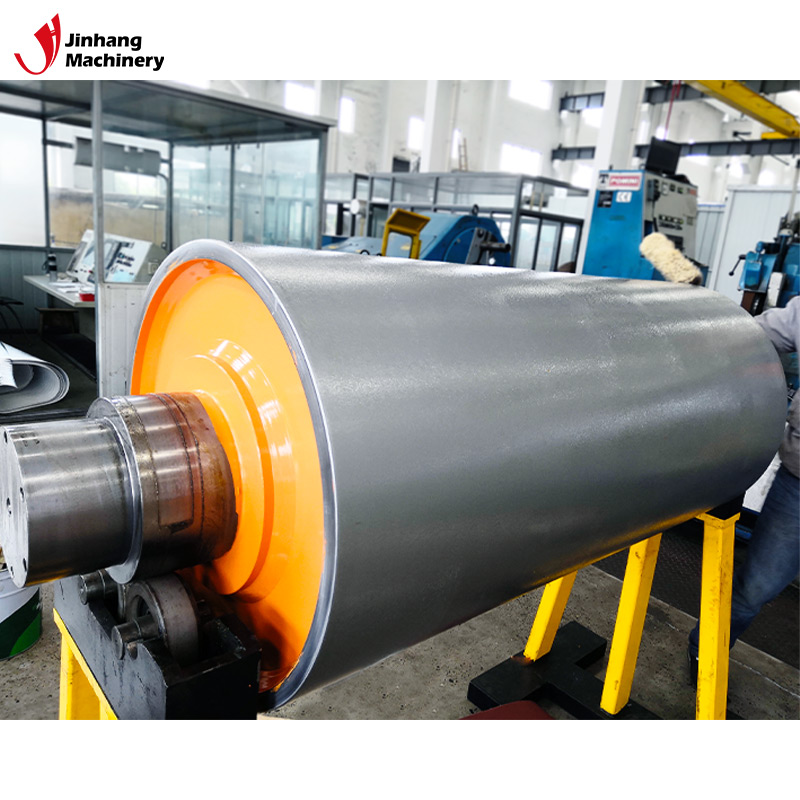
Which industries primarily use industrial EPDM rubber rollers?
With their balanced overall performance, industrial EPDM rubber rollers are widely used in multiple industries.
In the paper industry, industrial EPDM rubber rollers are used in paper guiding, pressing, and coating processes; their water and chemical resistance allows them to withstand humid production environments.
In the plastic film and packaging industry, industrial EPDM rubber rollers are widely used in traction, pressing, and conveying processes, effectively reducing surface damage to materials.
In the textile industry, industrial EPDM rubber rollers are suitable for dyeing, finishing, and conveying equipment; their heat and steam resistance contributes to improved equipment stability.
In addition, industrial EPDM rubber rollers play an important role in environmental protection equipment, water treatment equipment, new energy material production, and some food packaging equipment.
How to Correctly Select Industrial EPDM Rubber Rollers?
When purchasing industrial EPDM rubber rollers, companies should not only focus on price but also comprehensively consider production processes and operating environments.
First, the working medium needs to be identified. If there is long-term contact with mineral oil, hydraulic oil, or organic solvents, industrial nitrile rubber rollers or other oil-resistant materials should be prioritized over industrial EPDM rubber rollers.
Second, the formulation should be selected based on the operating temperature. Different formulations of EPDM industrial rubber rollers have different heat resistance properties; it is recommended to select appropriate materials based on actual working conditions.
Furthermore, the hardness, coating thickness, and surface treatment method should be determined based on pressure, operating speed, material characteristics, and surface requirements to fully leverage the performance advantages of industrial EPDM rubber rollers.
Future Development Trends of Industrial EPDM Rubber Rollers
With the continuous upgrading of high-end manufacturing, industrial EPDM rubber rollers are developing towards high-performance formulations, intelligent manufacturing, and green environmental protection.
On the one hand, new EPDM composite materials, through the addition of nanofillers, wear-resistant reinforcing agents, and functional additives, can further improve wear resistance, tear resistance, and fatigue resistance, enabling EPDM industrial rubber rollers to adapt to more complex industrial environments.
On the other hand, advanced automated overmolding, precision vulcanization, and CNC grinding technologies continuously improve the dimensional accuracy, concentricity, and surface quality of industrial EPDM rubber rollers, providing more stable operating performance for high-speed production lines.
In the future, EPDM industrial rubber rollers combined with online monitoring technology will also achieve real-time monitoring of temperature, pressure, wear status, and operating vibration, helping companies to conduct predictive maintenance and further improve equipment reliability and production efficiency.
FAQ: Frequently Asked Questions about Industrial EPDM Rubber Rollers
1. What are the biggest advantages of industrial EPDM rubber rollers?
The biggest advantages of industrial EPDM rubber rollers lie in their outstanding weather resistance, ozone resistance, heat resistance, water resistance, and resistance to various chemical media, making them ideal for long-term continuous operation and complex industrial environments.
2. Are industrial EPDM rubber rollers oil-resistant?
Industrial EPDM rubber rollers are not suitable for long-term contact with mineral oil, lubricating oil, and most petroleum-based media. If the equipment requires oil resistance, industrial nitrile rubber rollers or other oil-resistant rubber materials should be given priority.
3. Can industrial EPDM rubber rollers be used in high-temperature environments?
Yes. Ordinary EPDM industrial rubber rollers can typically operate stably for extended periods in environments ranging from 120℃ to 150℃. Specific temperature resistance needs to be determined based on the rubber formulation and actual operating conditions.
4. Which industries are suitable for industrial EPDM rubber rollers?
Industrial EPDM rubber rollers are widely used in papermaking, plastic film, textiles, printing and packaging, environmental protection equipment, water treatment, new energy materials, and some food packaging industries.
5. How should one choose between industrial EPDM rubber rollers and industrial silicone rollers?
If the operating conditions require a higher temperature resistance range or food-grade certification, industrial silicone rollers are more advantageous; if weather resistance, ozone resistance, mechanical strength, and overall cost are more important, EPDM industrial rubber rollers are generally a more economical and stable choice.