
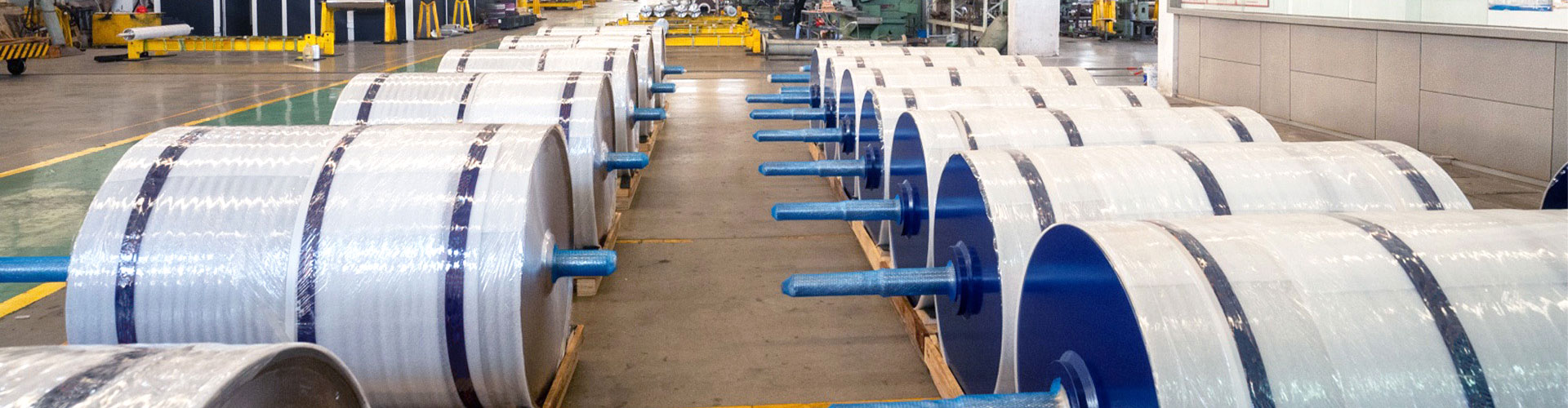
As modern industrial manufacturing continues to evolve towards higher speeds, automation, and precision, more and more production equipment is operating under high-speed, high-tension, and high-continuity conditions. Whether it's plastic film production lines, lithium battery separator equipment, papermaking machinery, printing and packaging equipment, or the textile, electronic materials, and new energy industries, all are placing higher demands on the dynamic performance of rollers. Against this backdrop, industrial thin-wall rollers, with their lightweight, low inertia, and fast response speed, are gradually becoming an important component of many high-speed production lines. However, many companies still have questions when selecting equipment: Are industrial thin-wall rollers truly suitable for high-speed operations? Will the thin-walled structure affect strength and stability? Are they prone to vibration, deformation, or even failure under high-speed operation?
In fact, industrial thin-wall rollers are not simply "thinner-walled" rollers, but rather high-performance industrial roller products that comprehensively consider material properties, structural design, processing accuracy, dynamic balance control, and operating conditions. Whether industrial thin-walled rollers are suitable for high-speed operation cannot be determined solely by wall thickness. A comprehensive analysis is needed, considering critical speed, deflection control, material stiffness, rotational inertia, and manufacturing processes. This article will provide a comprehensive analysis of the design principles, structural characteristics, high-speed operation advantages, applicable scenarios, and selection considerations for industrial thin-walled rollers, helping companies gain a deeper understanding of their application value in modern high-speed manufacturing.
Why are more and more high-speed equipment adopting industrial thin-walled rollers?
Industrial thin-walled rollers typically refer to industrial rollers manufactured by optimizing wall thickness design, reducing roller weight, and improving dynamic response capabilities while meeting overall strength and stiffness requirements. Compared to traditional thick-walled rollers, the biggest characteristic of industrial thin-walled rollers is not the pursuit of extreme thinning, but rather achieving higher overall performance within a limited weight.
Traditional industrial rollers often employ a large wall thickness design to ensure strength. While this structure has high static load-bearing capacity, it also brings problems such as heavy weight, high starting inertia, increased energy consumption, and intensified vibration during high-speed operation. As equipment speeds continue to increase, these problems are gradually becoming significant factors limiting production efficiency.
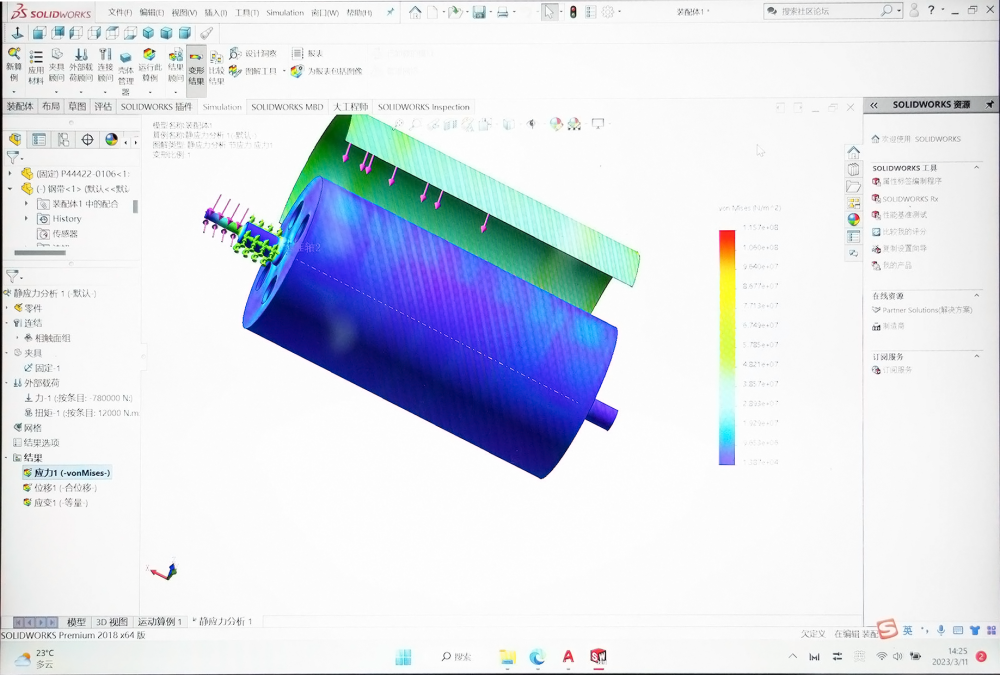
Industrial thin-walled rollers utilize finite element analysis (FEA), topology optimization, and high-strength material design to reduce wall thickness while ensuring sufficient bending stiffness and fatigue resistance. This results in an overall weight reduction of 15% to 40%, with some large industrial thin-walled rollers achieving weight reductions of up to 50%. This weight reduction not only lowers the load on the drive system but also improves equipment start-up and shutdown response speed, increasing the overall efficiency of the production line.
For example, a 3000 mm long, 300 mm diameter industrial roller, using a traditional thick-walled structure, could weigh over 700 kg. However, with a properly designed industrial thin-walled roller, the total weight can be reduced to approximately 450 to 550 kg, significantly reducing rotational inertia while maintaining strength.
Why are industrial thin-walled rollers suitable for high-speed applications?
Many people, upon seeing the term "thin-walled," immediately associate it with insufficient strength. However, in reality, factors affecting the stable operation of equipment at high speeds go far beyond static strength; dynamic performance is often more crucial, and industrial thin-walled rollers offer significant advantages in this regard.
Firstly, industrial thin-walled rollers effectively reduce rotational inertia. According to the principles of mechanical dynamics, the rotational inertia of a roller is closely related to its mass and mass distribution. By reducing the weight of the surrounding material, industrial thin-walled rollers make motor starting and braking easier, significantly shortening the equipment's acceleration and deceleration time. This advantage is particularly pronounced in high-speed film production lines. When the production line requires frequent starts and stops or specification changes, industrial thin-walled rollers reduce the load on the drive system, improve equipment response speed, and reduce energy consumption.
Secondly, industrial thin-walled rollers help improve dynamic balance performance. At high speeds, even minute mass deviations are amplified, generating centrifugal force and causing vibration. If the roller weight is too large, the inertial load generated by vibration also increases. Due to their reduced overall mass, industrial thin-walled rollers generate less centrifugal load at the same dynamic balance level, thus making it easier to achieve stable high-speed operation. Furthermore, industrial thin-walled rollers can reduce bearing load. The lighter the roller, the smaller the radial load on the bearing, which not only helps extend bearing life but also reduces frictional losses and heat generation during equipment operation. For high-speed production lines operating continuously for extended periods, this advantage can significantly reduce maintenance costs.
Are there risks associated with high-speed operation of industrial thin-walled rollers?
While industrial thin-walled rollers offer many advantages, this does not mean that all industrial thin-walled rollers are suitable for unlimited speed increases. If poorly designed, industrial thin-walled rollers can still experience vibration, deformation, or even instability. Therefore, high-speed applications must be based on sound design principles.
Critical Speed Is a Key Design Indicator for Industrial Thin-Walled Rollers
Whether an industrial thin-walled roller is suitable for high-speed operation depends first and foremost on its critical speed. The critical speed refers to the rotational speed at which the roller's rotational frequency approaches its natural frequency. When the operating speed approaches the critical speed, the roller will resonate, leading to a sharp increase in vibration, which may even damage the equipment in severe cases.
Therefore, high-quality industrial thin-walled rollers undergo modal analysis and dynamic simulation during the design phase to ensure that the normal operating speed is significantly lower than the first critical speed. The industry generally recommends controlling the actual operating speed below 70% of the first critical speed to guarantee sufficient safety margin.
Deflection Control Determines the Stability of Industrial Thin-Wall Rollers
Reducing the wall thickness may affect the roller's stiffness; therefore, deflection must be properly controlled. Modern industrial thin-walled rollers typically use high-strength alloy steel, stainless steel, or special composite materials, combined with optimized internal structure and reinforcing rib design, to maintain sufficient bending resistance while reducing weight.
For example, in the film industry, the maximum deflection of an industrial thin-walled roller with a length of 2500 mm or more typically needs to be controlled within the range of 0.02 to 0.05 mm to ensure uniform film tension and stable product thickness.
Dynamic Balance Grade Directly Affects the High-Speed Performance of Industrial Thin-Wall Rollers
The ability of an Industrial Thin-Wall Roller to operate at high speeds also depends on the accuracy of its dynamic balance. International standard ISO 21940 specifies the dynamic balance grades for different equipment, with high-speed industrial equipment typically requiring a grade of G2.5 or even G1. High-quality Industrial Thin-Wall Rollers undergo professional dynamic balancing before leaving the factory to reduce centrifugal vibrations generated during high-speed rotation.
In which high-speed industries are Industrial Thin-Wall Rollers primarily used?
With the development of high-speed manufacturing technology, Industrial Thin-Wall Rollers have been widely applied in multiple industries.
In the plastic film production field, Industrial Thin-Wall Rollers are extensively used in casting production lines, BOPP production lines, BOPET production lines, and CPP production lines. Some high-speed casting equipment operates at speeds of 400 to 800 meters per minute, and Industrial Thin-Wall Rollers can reduce the overall inertia of the machine and improve equipment stability.
In the lithium battery separator industry, where separator thickness is typically only a few micrometers to tens of micrometers, the requirements for tension control are extremely high. Therefore, industrial thin-walled rollers are widely used to reduce operating vibration and improve product consistency.
The printing and packaging industry also widely uses industrial thin-walled rollers. With the increasing operating speeds of high-speed flexographic printing presses, gravure printing presses, and laminating equipment, industrial thin-walled rollers can reduce equipment inertia, improve registration accuracy, and reduce drive energy consumption.
Furthermore, industrial thin-walled rollers are also widely used in papermaking machinery, textile equipment, electronic material production lines, optical film equipment, and new energy material manufacturing, and their lightweight advantages are continuously expanding.
How does an industrial thin-walled roller achieve both lightweight and high strength?
Modern industrial thin-walled rollers do not simply reduce material; rather, they rely on advanced manufacturing technologies to achieve comprehensive performance improvements.
First, there is material upgrading. The application of high-strength alloy steel, duplex stainless steel, and some carbon fiber composite materials allows industrial thin-walled rollers to maintain excellent mechanical properties even with relatively thin wall thicknesses.
Second, there is finite element optimization design. By simulating actual stress conditions using finite element analysis software, low-stress areas can be accurately identified and material reduction can be implemented, while high-stress areas can be locally reinforced to achieve an optimal balance between weight and strength.
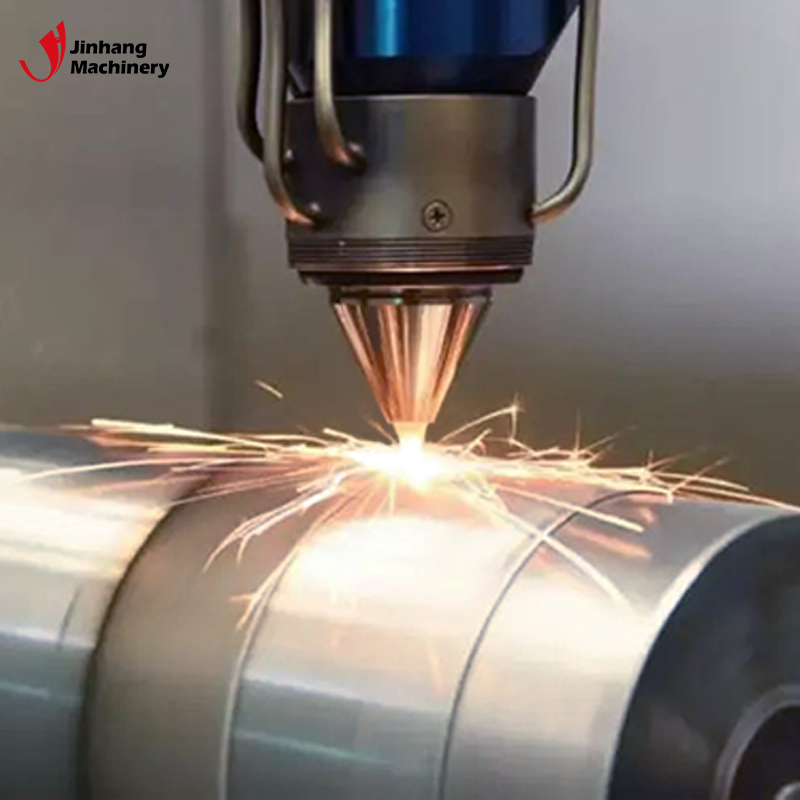
Secondly, high-precision machining processes are crucial. Industrial thin-walled rollers typically employ advanced processes such as CNC turning, precision grinding, dynamic balancing, and online inspection to achieve extremely high levels of roundness, cylindricity, and coaxiality, ensuring high-speed operation.
Finally, surface strengthening technology is essential. Industrial thin-walled rollers often utilize processes such as hard chrome plating, ceramic spraying, Teflon coating, or plasma spraying to improve wear resistance and corrosion resistance, thereby extending their service life.
What technical parameters should companies consider when selecting industrial thin-walled rollers?
Companies purchasing industrial thin-walled rollers should not only focus on wall thickness but should comprehensively consider multiple technical indicators.
First, it is necessary to confirm whether the maximum operating speed exceeds the equipment requirements and understand the critical speed design margin of the industrial thin-walled roller. Secondly, the dynamic balance grade should be considered; for high-speed equipment, G2.5 or higher grade products are recommended. It's also essential to understand the roller material, surface treatment, maximum deflection, machining accuracy, and bearing configuration.
Furthermore, companies should select industrial thin-walled rollers suitable for their specific operating conditions based on production line tension, material width, product thickness, and continuous operating time, rather than simply pursuing the lightest or thinnest product.
FAQ: Frequently Asked Questions about Industrial Thin-Wall Rollers
1. Are industrial thin-walled rollers always more suitable for high-speed operation than ordinary industrial rollers?
Not all industrial thin-walled rollers are suitable for high-speed operation. Only industrial thin-walled rollers that have undergone reasonable structural design, finite element analysis, and high-precision dynamic balancing can truly leverage the advantages of high-speed operation.
2. Are industrial thin-walled rollers more prone to deformation?
High-quality industrial thin-walled rollers are not easily deformed due to their thinner wall thickness. Modern products typically use high-strength materials and optimized structural designs, ensuring sufficient rigidity and bending resistance while reducing weight.
3. Can industrial thin-wall rollers be used in high-speed film production lines?
Absolutely. Currently, industrial thin-wall rollers are widely used in high-speed production lines for cast films, BOPP, BOPET, lithium battery separators, and optical films, and are an important component of modern high-speed equipment.
4. How are the high-speed operating stability of industrial thin-wall rollers ensured?
This is mainly achieved through high-precision machining, rigorous dynamic balancing, a reasonable critical speed design, a high-quality bearing system, and optimized internal cavity structure.
5. What are the most important indicators when selecting industrial thin-wall rollers?
It is recommended to focus on the operating speed, critical speed, dynamic balance grade, deflection control, material properties, machining accuracy, and the manufacturer's design capabilities, rather than just focusing on wall thickness or price.