
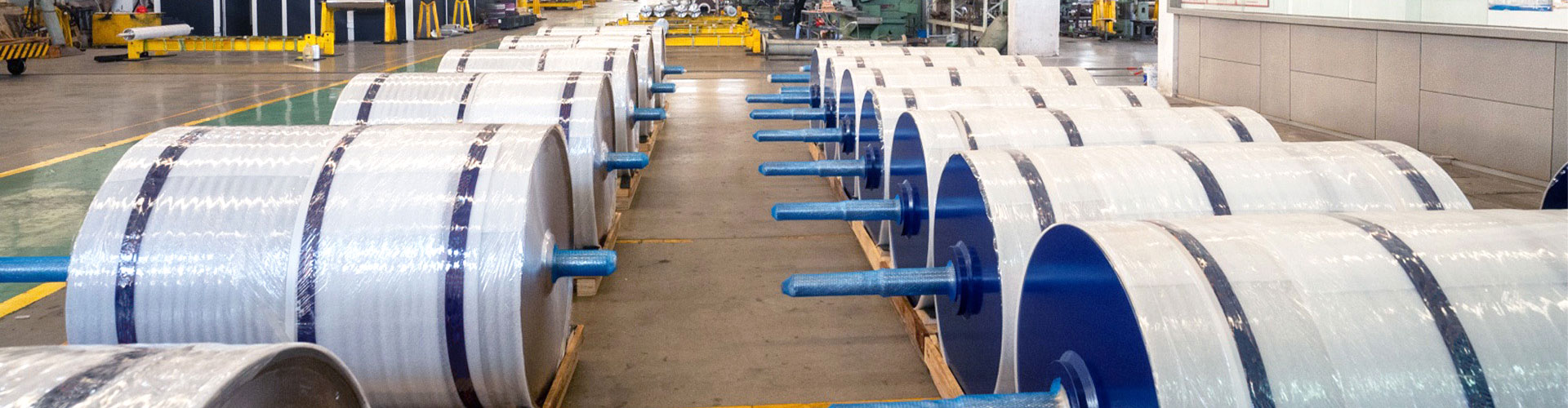
Industrial Tungsten Carbide Coated Rollers vs. Chrome-Plated Rollers: How to Choose? — A Must-Read Guide to Industrial Roller Coatings
Roller equipment is ubiquitous in modern industrial manufacturing. From the calendering of lithium-ion battery electrodes, plastic film processing, and metal foil rolling to printing, papermaking, textiles, composite coating, and steel processing, industrial rollers not only handle transport, guidance, and compression tasks but also largely determine product surface quality, production efficiency, and equipment stability. However, as industrial operating conditions become increasingly complex, companies no longer focus solely on roller dimensions, materials, and structural design; engineers are increasingly turning their attention to surface treatment processes. This is because, under many extreme operating conditions, the factor that truly determines a roller's lifespan and performance is not the internal steel core, but the outermost coating.
Among surface strengthening solutions for industrial rollers, chrome-plated rollers and tungsten carbide coated rollers are undoubtedly the two most widely discussed types. Procurement managers often face similar questions during the selection process: What exactly are the differences between tungsten carbide coated rollers and chrome-plated rollers? Which offers superior wear resistance? Which provides better corrosion resistance? Why do some industries prefer chrome-plated rollers, while high-end production lines favor tungsten carbide coated rollers? A more practical concern is cost: tungsten carbide coated rollers are typically much more expensive than chrome-plated rollers—is this price difference truly justified?
While these questions may appear to be merely about the choice of coating material, they actually involve multiple dimensions, including materials science, tribology, thermodynamics, and long-term operation and maintenance costs. Companies that focus solely on the initial purchase price risk making the wrong decision: in some operating conditions, chrome-plated rollers are perfectly adequate, making the choice of tungsten carbide coated rollers a waste of resources; conversely, in environments subject to extreme wear, opting for chrome-plated rollers to save on the budget can lead to subsequent maintenance and downtime costs that far exceed the initial savings. Therefore, the truly scientific approach to selection is to understand the fundamental differences between tungsten carbide coated rollers and chrome-plated rollers and to make a decision based on the specific operating conditions.
This article explores the topic "How to Choose Between Industrial Tungsten Carbide Coated Rollers and Chrome-Plated Rollers?" by providing a detailed analysis across various dimensions—including material structure, performance parameters, wear resistance, corrosion resistance, service life, cost analysis, and application scenarios—to help you establish a comprehensive framework for selecting industrial roller coatings.
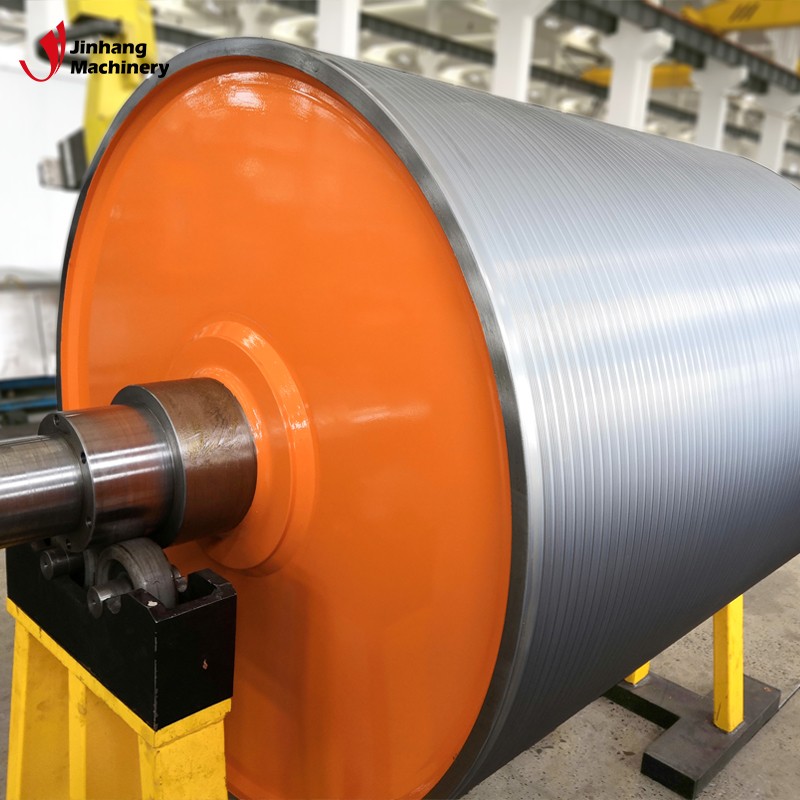
What are chrome-plated rollers? What are tungsten carbide coated rollers?
Chrome-plated rollers feature a layer of hard chrome deposited onto the roller body via an electroplating process. In industrial settings, these rollers typically utilize a steel base, with a chrome layer ranging from tens to hundreds of microns thick applied to the surface. The primary function of the hard chrome coating is to enhance the roller's surface hardness, wear resistance, corrosion resistance, and surface finish. Thanks to their mature manufacturing process, moderate cost, and excellent mirror-like finish, chrome-plated rollers have long been a mainstream product in the industrial roller market.
Tungsten carbide coated rollers represent a higher-performance surface strengthening solution. Tungsten carbide is an ultra-hard material with a Vickers hardness typically ranging from HV 1000 to 1800—far exceeding that of ordinary metals. These rollers are usually produced using High-Velocity Oxy-Fuel (HVOF) spraying, plasma spraying, or other thermal spray processes, which deposit tungsten carbide particles onto the roller body at high speeds to form a dense, high-hardness composite coating. Due to their exceptional wear and impact resistance, tungsten carbide coated rollers excel in heavy-load, high-abrasion, and high-speed operating conditions.
In short, while chrome-plated rollers represent a traditional, mature solution, tungsten carbide coated rollers are a high-end strengthening option. Both significantly enhance industrial roller performance, yet they serve different market segments.
The key difference between tungsten carbide coated rollers and chrome-plated rollers: a significant gap in hardness
If one were to compare a single core metric, hardness would undoubtedly be the most distinct difference between tungsten carbide coated rollers and chrome-plated rollers. Standard industrial hard chrome plating typically has a hardness of HRC 60–68, which converts to approximately HV 800–1000 on the Vickers scale. This level of hardness is significantly higher than that of ordinary steel, enabling chrome-plated rollers to meet the requirements of the vast majority of conventional industrial applications.
However, tungsten carbide coated rollers offer even greater hardness. High-quality tungsten carbide coatings typically range from HV 1100 to 1800, with some specialized formulations reaching even higher values. This means that the surface resistance to plastic deformation in tungsten carbide coated rollers far exceeds that of chrome-plated rollers.
This difference in hardness directly impacts scratch and wear resistance. For instance, in environments involving abrasive hard particles, tungsten carbide coated rollers can withstand higher contact stresses, whereas the surfaces of chrome-plated rollers are more prone to scratching, scoring, or localized wear.
Theoretically, wear rates accelerate significantly when the hardness of the contacting medium approaches or exceeds that of the coating. Consequently, tungsten carbide coated rollers often demonstrate a distinct advantage in highly abrasive operating conditions.
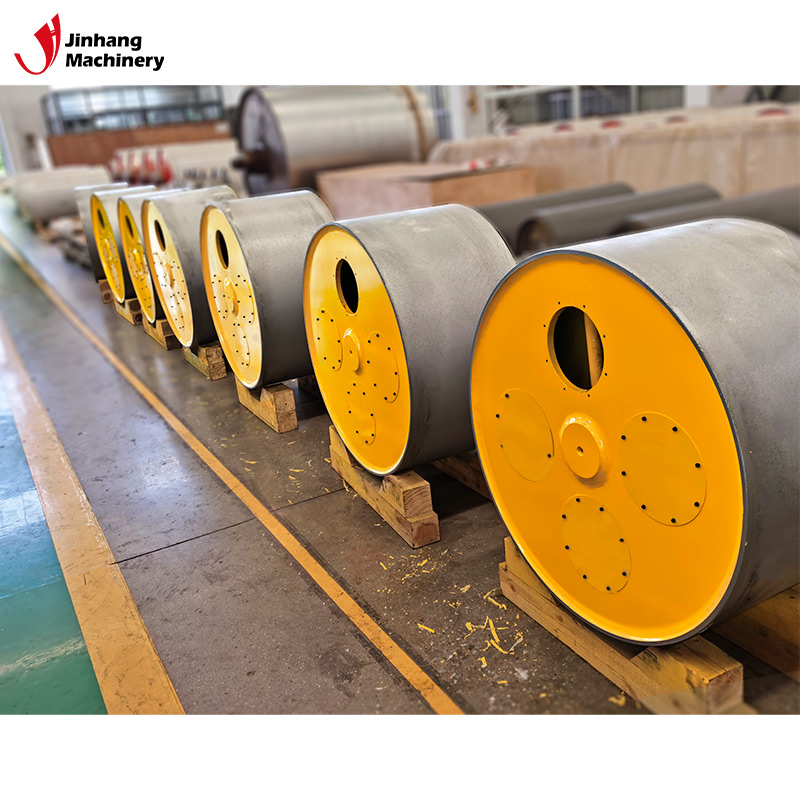
Wear Resistance: Why do many heavy industries prefer tungsten carbide coated rollers?
Wear is one of the most common failure modes for industrial rollers during operation; therefore, wear resistance is a key factor for companies when selecting equipment.
While chrome-plated rollers offer excellent wear resistance, they are better suited for environments with moderate wear. In industries such as printing, packaging, standard coating, and papermaking, chrome-plated rollers typically provide a sufficiently long service life.
However, the advantages of tungsten carbide coated rollers become rapidly apparent in environments characterized by heavy loads, high friction, or significant abrasive particle exposure.
Examples include:
•Lithium-ion battery calendering
•Metal foil calendering
•Steel strip processing
•Production of highly filled composite materials
•Sand-milling related equipment
In these scenarios, the roller surfaces are subjected to prolonged contact with hard particles or high contact pressures.
Industry test data indicates that in typical abrasive wear tests, the wear rate of tungsten carbide coated rollers is generally only 20% to 40% that of chrome-plated rollers. In other words, under certain operating conditions, the wear life of tungsten carbide-coated rollers can be two to five times that of chrome-plated rollers.
This is why an increasing number of high-end production lines are upgrading from chrome-plated rollers to tungsten carbide-coated rollers.
Comparison of corrosion resistance: Tungsten carbide-coated rollers vs. chrome-plated rollers
Many people assume that because chrome-plated rollers feature a chromium layer, they are inherently highly corrosion-resistant. This view is only partially correct.
The chromium layer on chrome-plated rollers does offer good oxidation resistance and performs well in ordinary humid environments and when exposed to certain chemical media. However, chrome plating typically contains micro-cracks—an inherent characteristic of the electroplating process itself. While these micro-cracks may not cause immediate issues, they can serve as pathways for corrosion in highly corrosive environments.
In particular, once corrosive media penetrate the plating, the underlying steel substrate may suffer from pitting or delamination.
In contrast, the corrosion resistance of tungsten carbide-coated rollers depends on the binder phase material. Modern, highly dense tungsten carbide coatings—such as the WC-CoCr system—offer excellent corrosion resistance in addition to wear resistance. High-quality HVOF-sprayed tungsten carbide coatings typically exhibit a porosity of less than 1%, significantly reducing the risk of media penetration.
Consequently, tungsten carbide-coated rollers generally offer greater stability than standard chrome-plated rollers in highly corrosive environments.
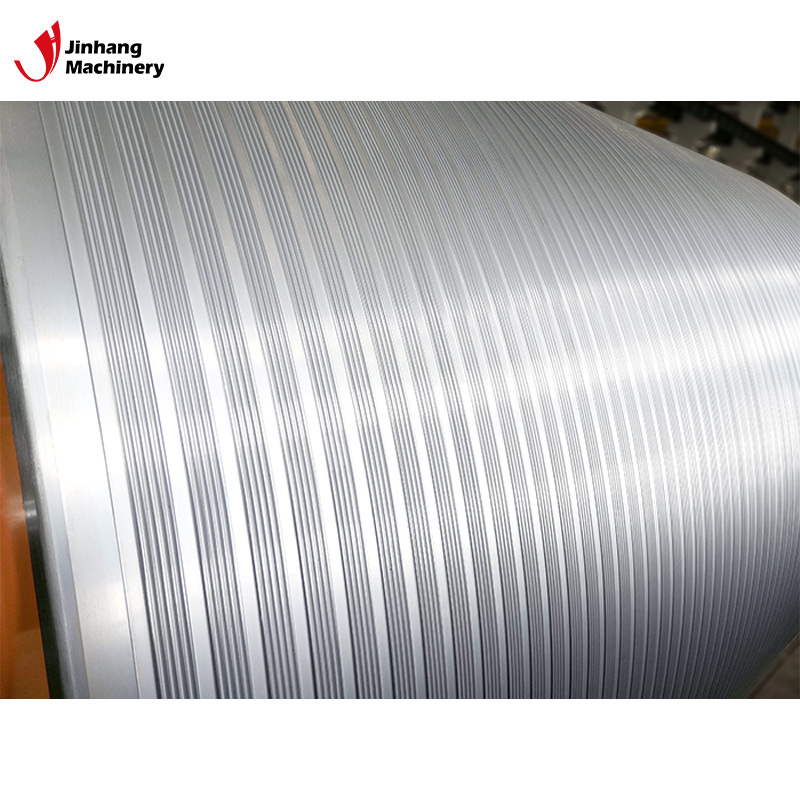
Surface finish: Do chrome-plated rollers still hold a distinct advantage?
If your application relies heavily on a mirror-like finish, then surface quality is a critical factor.
A major advantage of chrome-plated rollers is the ease with which an exceptionally high-quality surface finish can be achieved. Through precision grinding and polishing, high-quality chrome-plated rollers can achieve extremely low surface roughness, typically in the range of:
•Ra 0.01–0.05 μm
This makes chrome-plated rollers particularly popular in industries such as:
•Optical films
•High-end printing
•Mirror-finish calendering
•Decorative material production
While tungsten carbide-coated rollers can also be polished, the processing is significantly more difficult. Due to the extreme hardness of tungsten carbide, the cost of super-finishing is much higher than that of chrome plating.
Therefore, if an ultimate mirror finish is desired and operating conditions do not involve extreme wear, chrome-plated rollers retain a competitive advantage.
Industrial Tungsten Carbide Coated Rollers vs. Chrome-Plated Rollers: Thermal Stability and Thermal Fatigue Resistance
Coating stability is equally important under high-temperature operating conditions.
Chrome-plated rollers perform well in moderate-to-high temperature environments, but prolonged thermal cycling can lead to the propagation of micro-cracks in the plating. This risk is particularly pronounced in equipment subject to frequent heating and cooling cycles.
Tungsten carbide-coated rollers generally offer superior thermal stability and resistance to thermal fatigue. Their hardness degrades less at high temperatures, making them more durable in applications such as high-temperature calendering and thermal lamination.
For instance, in continuous operation at temperatures above 150°C, the service life advantage of tungsten carbide-coated rollers is usually much more significant.
Service Life: How much longer do tungsten carbide-coated rollers last compared to chrome-plated rollers?
This is one of the primary concerns for purchasers.
Under standard operating conditions:
•Chrome-plated roller lifespan: Approx. 2–5 years
•Tungsten carbide-coated roller lifespan: Approx. 4–8 years
The gap widens significantly under high-wear conditions:
•Chrome-plated roller: Potentially 6–18 months
•Tungsten carbide-coated roller: Potentially 3–6 years
Of course, service life is heavily influenced by operating conditions. While one cannot simply assume that a tungsten carbide-coated roller will always last several times longer than a chrome-plated one, this is a very common scenario in environments where wear is the primary factor. More importantly, service life affects not only the cost of spare parts but also the cost of downtime.
If an hour of production line downtime results in losses amounting to tens of thousands of yuan, then tungsten carbide coated rollers—which offer a longer service life—can often generate greater value.
Cost Comparison: Why are tungsten carbide coated rollers so much more expensive?
Price is a factor businesses cannot ignore.
Generally, for industrial rollers of the same specifications:
•Chrome-plated rollers: Baseline cost (1x)
•Tungsten carbide coated rollers: Approximately 2x to 6x the cost
There are three main reasons for this price difference:
First, the raw material (tungsten carbide) is expensive.
Second, the spraying equipment is costly.
Third, the subsequent precision grinding and polishing processes are difficult.
Consequently, the initial investment for tungsten carbide coated rollers is significantly higher.
However, businesses should look beyond the purchase price and consider the Total Cost of Ownership (TCO). If tungsten carbide coated rollers can reduce downtime, lower maintenance frequency, and improve production line stability, they may actually save money in the long run.
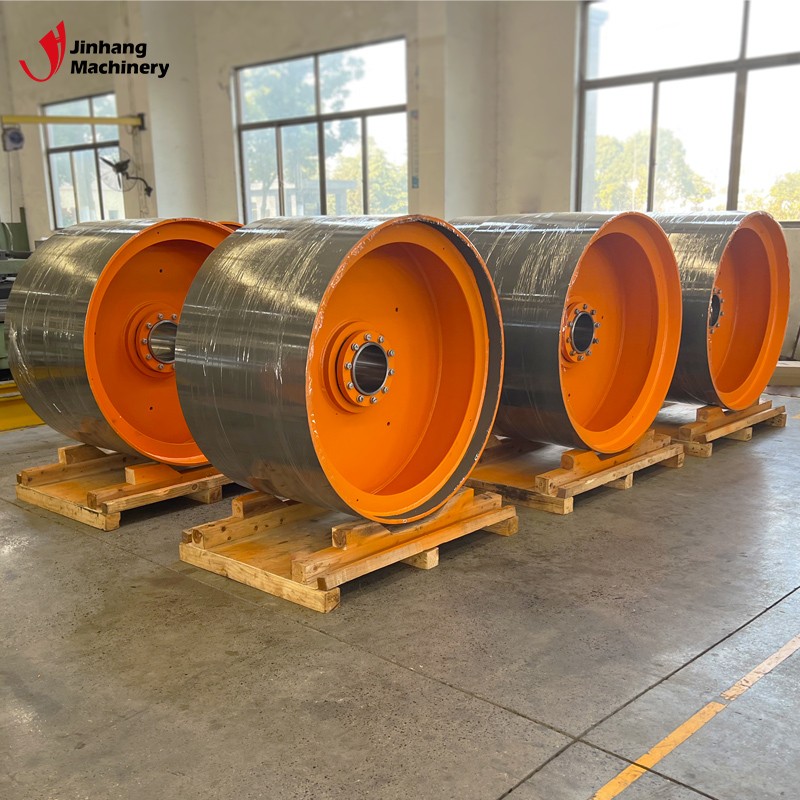
How to Choose: Are tungsten carbide coated rollers or chrome-plated rollers better suited to your operating conditions?
If your operating conditions feature the following:
•Low to moderate wear
•Requirement for a high-quality mirror finish
•Limited budget
•Standard industrial environment
Then chrome-plated rollers are usually sufficient.
If your operating conditions feature the following:
•High wear
•High linear pressure
•Presence of particulate matter
•High-temperature operation
•High cost of downtime
Then tungsten carbide coated rollers are usually a more worthwhile investment.
A Simple Decision-Making Logic
Ask yourself four questions:
1.Is the wear severe?
2.Do you frequently experience downtime due to roller wear?
3.Is the operating temperature high?
4.Are the losses from downtime significant?
If the answer to three or more of these questions is "Yes," tungsten carbide coated rollers are usually the better choice.
FAQ
Q1: Are tungsten carbide coated rollers always better than chrome-plated rollers?
Not necessarily. For standard operating conditions, chrome-plated rollers may be sufficient and more cost-effective.
Q2: Why are tungsten carbide coated rollers so expensive?
Primarily due to the high cost of materials, the complex spraying process, and high manufacturing costs.
Q3: Are chrome-plated rollers suitable for high-precision mirror finishing?
Yes, they are. Chrome-plated rollers typically deliver excellent mirror-like surface finishes.
Q4: When should one upgrade to tungsten carbide coated rollers?
Upgrading is usually more cost-effective when facing severe wear, frequent downtime, or harsh operating conditions.