
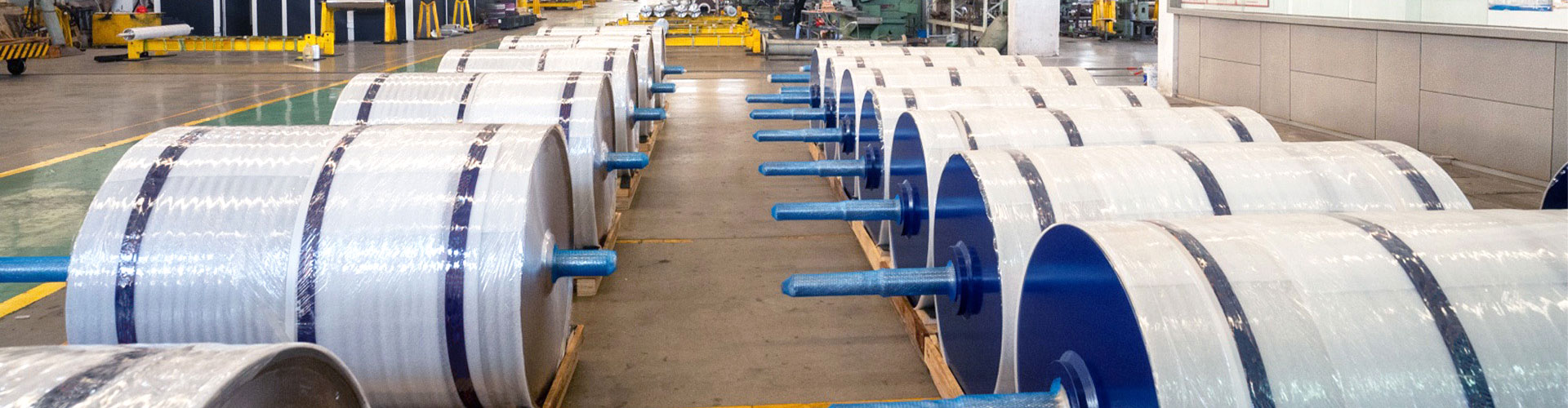
Why Do Industrial Mirror-Finish Rollers Develop Scratches, and How Can They Be Prevented? — A Comprehensive Technical Analysis
In modern high-end manufacturing, surface quality has become a key indicator of process excellence. This is particularly true in sectors such as optical films, lithium-ion battery electrodes, electronic materials, plastic calendering, metal foil processing, precision coating, and high-end packaging materials, where the smoothness, flatness, and consistency of the material surface directly impact the final product's performance and market value. In these high-precision processing environments, industrial mirror-finish rollers serve as critical equipment, performing essential tasks such as calendering, hot pressing, shaping, coating support, and surface finishing. These rollers not only determine whether a mirror-like surface finish can be achieved but also profoundly influence product yield, production stability, and the enterprise's overall manufacturing capabilities.
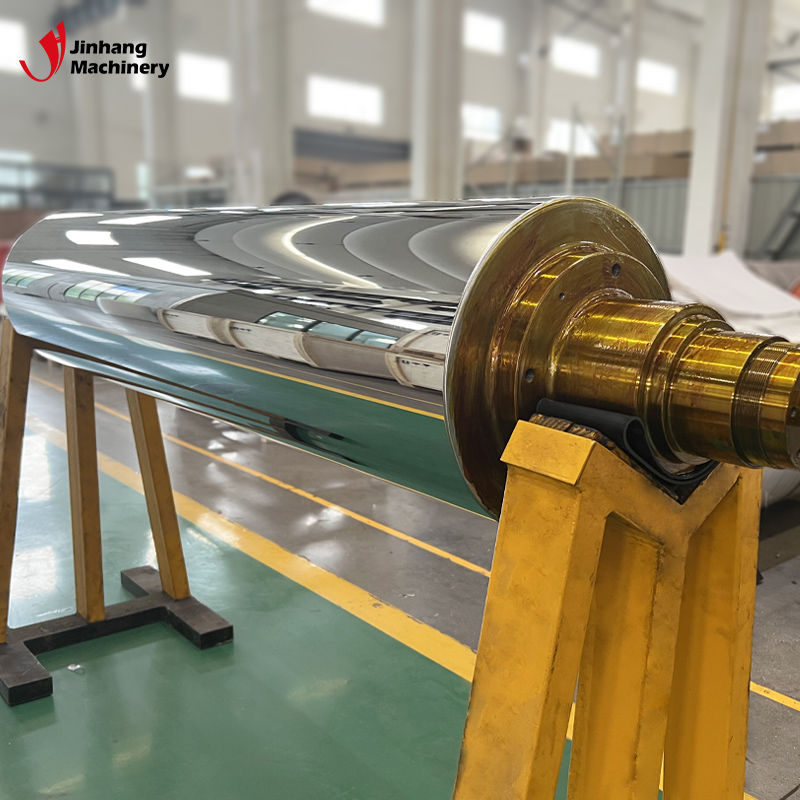
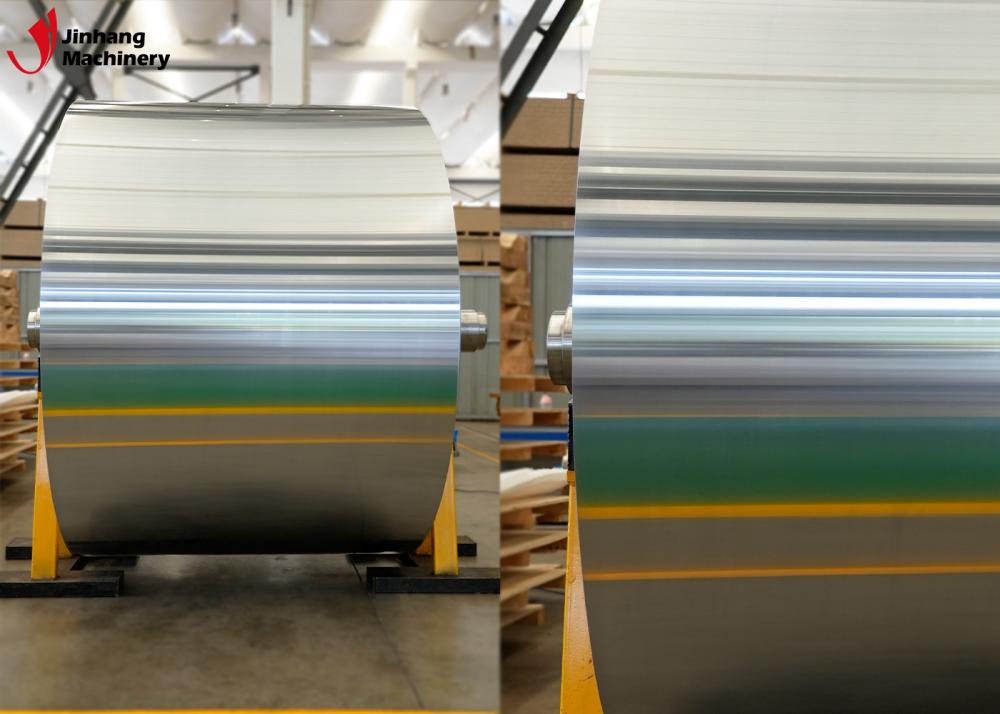
Industrial mirror-finish rollers are defined as industrial rollers that have undergone ultra-precision machining, fine grinding, and mirror polishing to achieve an extremely low surface roughness. High-quality rollers typically achieve a surface roughness (Ra) of 0.01–0.05 μm, while optical-grade rollers can reach levels below Ra 0.005 μm. This level of precision means the roller surface is virtually free of visible texture and exhibits reflectivity comparable to a mirror. However, this extreme precision makes them far more susceptible to external damage than standard industrial rollers. In real-world production, many enterprises face a common issue: a roller surface that is flawless upon installation begins to show fine scratches, annular wear marks, streaks, or even localized scoring after weeks or months of operation. These seemingly minor surface defects can be directly transferred to the product, resulting in indentations, gloss irregularities, streaking, or even product scrapping.
Consequently, understanding the causes of scratches on industrial mirror-finish rollers and learning how to systematically prevent them has become a critical technical challenge for many manufacturing enterprises. This article provides a comprehensive analysis of why industrial mirror-finish rollers develop scratches and how to prevent them, examining the issue from multiple perspectives—including materials science, mechanical engineering, surface treatment, and production management—to help enterprises establish a systematic approach to roller protection.
What is an industrial mirror-finish roller, and why is it so susceptible to scratching?
Standard industrial rollers typically serve functions such as conveying, guiding, or basic pressing; consequently, a certain degree of machining texture or surface roughness is acceptable, provided it does not impair functionality. Industrial mirror-finish rollers, however, are different; their core value lies in their ability to transfer an ultra-precise, mirror-like finish onto the processed material.
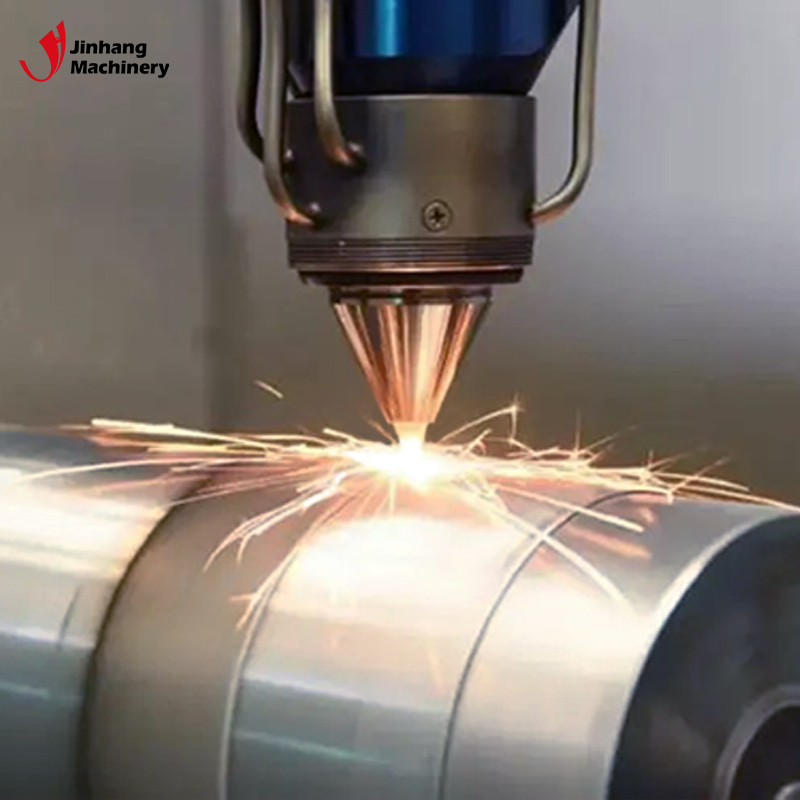
These rollers are typically manufactured using high-strength alloy steel, stainless steel, or specialty steel as the base material. They undergo a multi-stage processing sequence, including rough turning, semi-finish turning, heat treatment, rough grinding, finish grinding, super-finishing, and mirror polishing. Some high-end rollers undergo additional treatments—such as hard chrome plating, tungsten carbide spraying, ceramic coating, or laser cladding—to enhance surface hardness and wear resistance. Because these rollers demand exceptional surface flatness, their tolerance for even the slightest damage is extremely low.
From an engineering standpoint, a scratch just 1–3 microns deep might be inconsequential for standard machinery, yet for an industrial mirror-finish roller, it is enough to compromise the surface quality of the final product. In industries such as optical film or electronic materials manufacturing, surface irregularities as small as 0.5 microns can cause abnormal light scattering or localized streaking. Thus, the perception that industrial mirror-finish rollers are "delicate" stems not from a lack of structural robustness, but from the extreme precision required for their operation, where any minor damage is significantly magnified.
Primary cause of scratches on industrial mirror-finish rollers: Foreign particles entering the contact zone
In actual industrial settings, the leading cause of scratches on mirror-finish rollers is rarely a defect in the roller's manufacturing quality; rather, it is the intrusion of foreign particles into the contact zone between the roller surface and the material. This factor accounts for the vast majority of scratch-related incidents involving industrial mirror-finish rollers. Foreign particles can originate from a wide range of sources, including airborne dust, metal debris from equipment wear, edge-trimming scraps, hard powders, adhesive clumps, crystalline particles, and even tiny contaminants left on workers' gloves. Many underestimate the destructive potential of these particles, assuming that dust—being so small—cannot scratch a metal surface; however, the issue lies in the fact that industrial mirror-finish rollers typically operate under high-pressure conditions. When a particle enters the nip point between the roller and the material, it creates a point of extreme localized pressure.
For instance, the nip pressure on a precision coating line can reach 20–50 kN/m. Under such pressure, the localized stress at the contact point of a hard particle measuring only a few tens of microns in diameter can instantaneously exceed several hundred megapascals. In other words, these particles do not merely "graze" the roller surface; they act like miniature engraving tools, cutting directly into the mirror-finish layer. Many scratches on industrial mirror-finish rollers occur instantaneously during millisecond-level contact, and once a scratch appears, subsequent production processes often exacerbate the defect's impact.
Industry statistics indicate that approximately 40% to 60% of scratching issues on industrial mirror-finish rollers are directly linked to contamination by foreign particles. This demonstrates that, for these rollers, contamination control is often more critical than simply increasing the material hardness of the roller itself.
Why does material contamination cause ongoing damage to industrial mirror-finish rollers?
In addition to external environmental particles, contaminants carried by the material itself are a major source of scratches on industrial mirror-finish rollers. When investigating the causes of scratches, many companies focus primarily on the roller itself while overlooking quality control of the incoming material.
In sectors such as lithium-ion battery electrode manufacturing, plastic film production, metal foil processing, and composite coating, the materials themselves may contain various hard impurities—such as metal powders, undispersed fillers, ceramic particles, carbon black agglomerates, or dried slurry clumps. When these impurities enter the contact zone of the industrial mirror-finish roller, they cause continuous wear on the mirror-finish layer.
In the lithium-ion battery industry, for example, uneven slurry dispersion can lead to the formation of localized agglomerates. Although a single agglomerate may measure only a few tens of microns, its hardness can be significantly higher than that of a standard metal surface. During high-speed roller processing, such particles repeatedly rub against industrial mirror-finish rollers, creating elongated scratches. Even more problematic is that these scratches often appear as continuous streaks; their presence usually indicates persistent raw material contamination.
Industry data shows that in high-precision coating and calendering operations, approximately 35% to 50% of surface damage to industrial mirror-finish rollers is linked to raw material contamination. Consequently, if a company focuses solely on roller maintenance without improving raw material cleanliness, the root cause of the problem often remains unresolved.
Improper cleaning is a silent killer of industrial mirror-finish rollers
Much of the damage to industrial mirror-finish rollers occurs not during production, but during maintenance. In other words, these rollers are sometimes damaged not by the manufacturing process itself, but by the very act of cleaning.
Common improper practices observed on-site include scrubbing with steel wool, using coarse-fiber cloths, dry-wiping the roller surface, using abrasive cleaners, or applying excessive pressure during wiping. While these actions may appear to clean the roller, they actually cause ongoing damage to the mirror-finish layer.
This is particularly true for chrome-plated rollers; although their surface hardness often exceeds HRC 60, the mirror-finish layer is highly sensitive to localized friction. Rough cleaning tools may not always leave deep, visible gouges, but they frequently create a multitude of micro-scratches on the roller surface. While these micro-scratches might have a negligible impact initially, continued operation causes the fine lines to expand, eventually evolving into significant surface defects.
Insufficient surface hardness also increases the risk of scratching
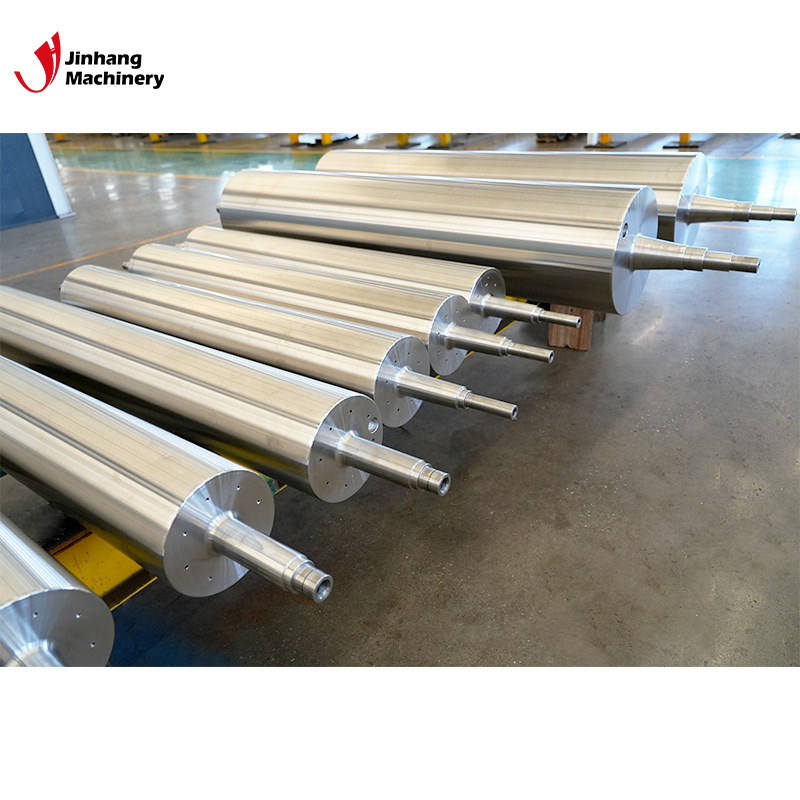
A roller's scratch resistance is closely linked to its surface hardness. Theoretically, a harder surface offers greater wear resistance and better protection against scratches caused by particles. Typical hardness levels for treated industrial mirror-finish rollers are as follows: standard steel rollers range from HRC 25–35; chrome-plated rollers typically range from HRC 60–68; tungsten carbide coatings can exceed HV 900; and ceramic coatings may even surpass HV 1200.
However, high hardness does not guarantee immunity to scratching. If there are flaws in the surface treatment process of industrial mirror-finish rollers—such as insufficient plating thickness, uneven heat treatment, micro-cracks in the surface layer, or poor coating adhesion—their scratch resistance will be significantly compromised. For instance, if the hard chrome layer thickness drops from 80 microns to 30 microns, the roller's wear life may decrease by more than 40%. This explains the high manufacturing cost of premium industrial mirror-finish rollers: the surface strengthening process directly determines their long-term stability.
How do mechanical installation errors and high-temperature operating conditions exacerbate scratching on industrial mirror-finish rollers?
While many assume that scratches on industrial mirror-finish rollers are caused by particulate matter, mechanical installation errors can cause similar damage. Issues such as coaxiality deviations, parallelism errors, improper bearing housing installation, or localized off-center loading can subject specific areas of the roller surface to abnormal pressure.
This abnormal pressure may not immediately create typical scratches, but it accelerates localized wear, eventually manifesting as annular wear marks, streaking/scoring, or localized surface delamination. This problem is particularly pronounced in wide-format equipment. For example, with rollers exceeding 2 meters in length, an installation error of more than 0.03 mm can cause pressure at the edges to be significantly higher than at the center, leading to abnormal localized wear.
High-temperature operating conditions also heighten the risk of scratching. In equipment used for processes like hot pressing, thermal lamination, and calendering, industrial mirror-finish rollers often operate in environments ranging from 100°C to 300°C. High temperatures introduce three issues: first, materials soften more easily and adhere to the roller surface, causing material buildup; second, the coefficient of friction may increase; and third, thermal expansion of the roller body alters the contact pressure distribution.
For instance, when a roller heats up from ambient temperature to 200°C, thermal expansion of the steel causes measurable changes in its dimensions. If the equipment structure does not adequately compensate for this expansion, localized pressure anomalies can easily arise, accelerating surface damage.
How can scratching on industrial mirror-finish rollers be systematically prevented?
The key to preventing scratches on industrial mirror-finish rollers lies in establishing a systematic prevention mechanism rather than relying on repairs after problems occur. First, enterprises should establish a rigorous cleanliness control system, incorporating measures such as dust removal in production areas, raw material filtration, in-line foreign object detection, dust covers, and air purification systems. In the high-end optical film industry, many companies maintain the working areas for industrial mirror-finish rollers at standards approaching those of cleanrooms to minimize particulate contamination. Data indicates that improving cleanliness levels can typically reduce the failure rate caused by roller scratches by more than 50%.
Second, the cleaning process for industrial mirror-finish rollers must be standardized. The use of cleanroom wipes, microfiber cloths, and non-abrasive cleaning solutions is recommended, while hard tools must be avoided. Before cleaning, it is essential to verify that there are no hard particles on the roller surface; otherwise, the act of wiping itself could cause scratches.
Third, for high-wear operating conditions, upgrading the surface treatment of the industrial mirror-finish roller—such as thickening the chrome plating, applying tungsten carbide spraying or ceramic coatings, or using laser cladding reinforcement—should be considered. Although the initial investment is higher, it often proves more cost-effective when considering long-term maintenance expenses.
Finally, enterprises should implement a regular inspection system for industrial mirror-finish rollers to monitor surface roughness, radial runout, coating wear, and the development of micro-cracks. Industries requiring high precision may even use microscopes or laser inspection equipment to monitor the roller's surface condition. Detecting issues early often prevents severe damage.
Can industrial mirror-finish rollers be repaired after being scratched?
Whether an industrial mirror-finish roller can be repaired depends primarily on the depth and extent of the scratches. If the scratches are shallow—for instance, less than 2–5 microns deep—they can usually be remedied through re-polishing, restoring the roller to a high-quality surface finish. If the scratches have penetrated the plating, the process typically requires removing the old coating, re-plating, precision grinding, and re-polishing.
For rollers with severe scratches, localized peeling, or deep structural damage, repair costs may approach the price of a new roller; in such cases, replacement is usually the recommended course of action. Therefore, from an economic perspective, preventing scratches is always more important than repairing them.
FAQ
Q1: Do minor scratches on industrial mirror-finish rollers affect the product?
Yes, they do. In high-precision industries such as optical films and electronic materials, even micron-scale scratches can result in visible defects.
Q2: What is the most common cause of scratches on industrial mirror-finish rollers?
The most common cause is the entry of foreign particles into the contact zone between the industrial mirror-finish roller and the material.
Q3: How often should industrial mirror-finish rollers be inspected?
For high-precision industries, a weekly inspection is recommended; in general industrial environments, a comprehensive inspection should be performed at least once a month.
Q4: Must an industrial mirror-finish roller be replaced if it gets scratched?
Not necessarily. Shallow scratches can often be repaired through re-polishing, whereas deep damage may require re-plating or replacement.