
How Do I Determine the Right Size for an Industrial Heating Roller? — A Professional Guide to Mastering Size Selection
In industrial manufacturing, equipment selection often determines production efficiency, product quality, and long-term operating costs. For industries such as coating, laminating, calendering, textiles, printing, lithium-ion battery manufacturing, papermaking, and plastic film processing, industrial heating rollers serve as core heat-treatment components within the production line. Beyond merely providing a stable heat source, these rollers utilize precise temperature control and mechanical contact to facilitate critical processes—including heating, shaping, drying, pressing, and surface treatment. Consequently, selecting an industrial heating roller involves far more than simply purchasing a "roller that heats up."
During procurement, a common question from engineers and purchasing managers is: "What size industrial heating roller should I choose?" While this may appear to be a simple inquiry about diameter or length, it actually encompasses multiple technical dimensions, including heat transfer, mechanical strength, contact time, line speed, product width, material properties, and spatial constraints. An undersized roller may result in insufficient heating, inadequate production capacity, or uneven temperatures; conversely, an oversized roller can lead to excessive investment costs, higher energy consumption, slower response times, and equipment redundancy.
In practice, many companies harbor misconceptions regarding roller sizing. Some simply replicate the dimensions of existing equipment; others operate under the assumption that "bigger is more stable"; and some prioritize the cheapest option based solely on budget. Such approaches can lead to downstream issues like low efficiency, excessive energy consumption, or reduced product yield. This article addresses the core question—"How do I determine the right size for an industrial heating roller?"—by systematically analyzing parameter definitions, key influencing factors, calculation logic, industry case studies, and common pitfalls, thereby helping you fully grasp the professional rationale behind size selection.
What Exactly Does "Size" Mean for an Industrial Heating Roller?
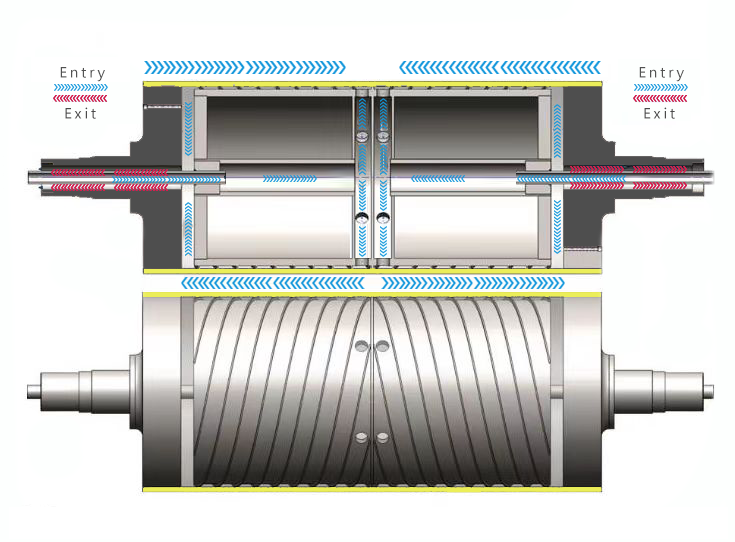
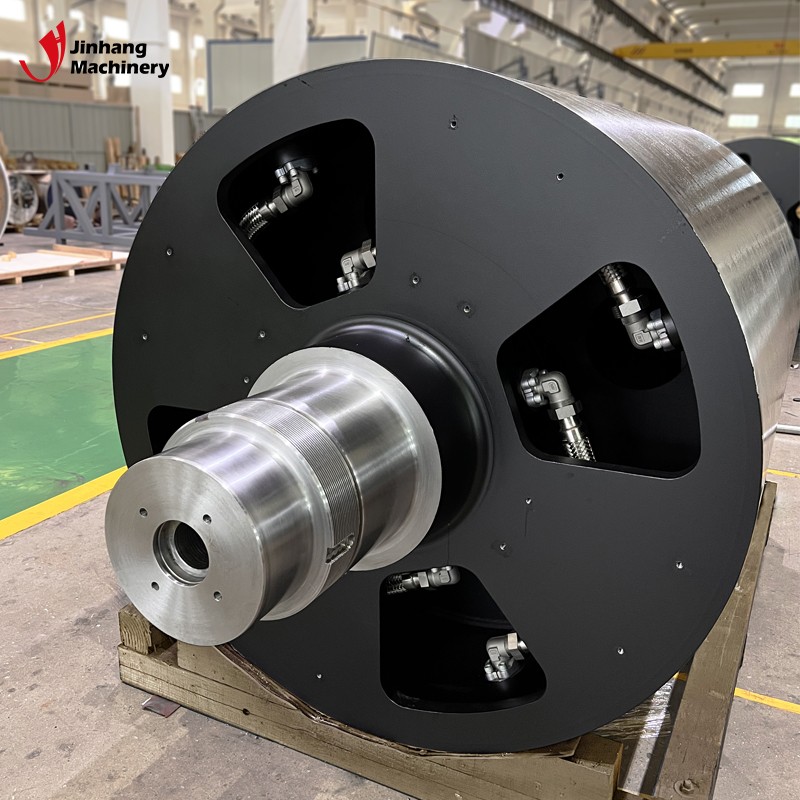
In the industry, when engineers discuss the size of an industrial heating roller, they typically refer to several key parameters: roller body diameter, roller face length, shaft diameter, wall thickness, and overall structural dimensions. Among these, the two most critical parameters are diameter and face length.
The diameter of an industrial heating roller determines several core performance characteristics, including heat capacity, contact arc length, mechanical rigidity, and temperature stability. Typical diameters for industrial heating rollers range from approximately 50 mm to 1,000 mm. Small-scale laboratory equipment might utilize rolls with diameters between 50 mm and 120 mm, whereas large-scale calendering or lamination machinery may employ rollers exceeding 500 mm in diameter.
Face length is primarily determined by the width of the product. For instance, if you are producing an 800 mm wide film, the roller would not simply be made to an 800 mm length; instead, a process allowance—typically an additional 50 to 200 mm—is included to ensure uniform edge temperatures and sufficient space for mechanical installation. Consequently, a roller intended for 800 mm wide material might be designed with a face length of 900 to 1,100 mm.
In other words, selecting the dimensions for an industrial heating roller is essentially a matter of balancing multiple variables rather than simply choosing a single size.
Why are the dimensions of industrial heating rollers so important?
Many people underestimate the importance of roller dimensions, assuming that achieving the required temperature is the only factor that matters. In reality, however, dimensions directly influence both the thermal and mechanical performance of the roller.
First, dimensions affect thermal stability. A roller with a larger diameter possesses greater heat capacity, which generally results in smaller temperature fluctuations. During continuous production, for example, the roller body constantly loses heat as cold material comes into contact with its surface. If the roller's heat capacity is insufficient, localized temperature drops can occur, compromising product consistency. Large-diameter rollers, with their superior heat storage capacity, are better able to maintain a stable surface temperature.
Second, dimensions influence contact time. When material passes over an industrial heating roller, the actual duration of heating is determined by both the contact arc length and the line speed. Increasing the roller diameter extends the contact length corresponding to the material's wrap angle, thereby increasing the time available for heat transfer. For example, with a wrap angle of 90°:
•For an industrial heating roller with a 100 mm diameter, the contact arc length is approximately 78.5 mm.
•For an industrial heating roller with a 300 mm diameter, the contact arc length is approximately 235.6 mm.
This means that at the same linear speed, the latter provides roughly three times the heating time of the former.
Furthermore, the dimensions of the industrial hot oil roller affect mechanical rigidity. Longer rollers are more prone to deflection, while smaller diameters result in weaker bending resistance. This is particularly critical for wide-web production lines.
Six Key Factors to Consider When Selecting Industrial Heating Roller Dimensions
Selecting the dimensions for an industrial heating roller typically requires a comprehensive analysis of multiple process parameters, rather than relying solely on empirical judgment.
1. Material width determines the length of the industrial heating roller
This is a fundamental principle. The effective length of the industrial heating roller must exceed the material width; otherwise, it cannot fully cover the product.
A common rule of thumb in the industry is:
Industrial heating roller length = Material width + 100–300 mm allowance
For example:
•Material width of 500 mm → Recommended roller length of 600–750 mm
•Material width of 1500 mm → Recommended roller length of 1650–1800 mm
This allowance is necessary because heat loss typically occurs at the ends of the industrial heating roller. If the roller length is too close to the material width, the temperature difference at the edges becomes more pronounced.
2. Production speed determines the diameter of the industrial hot oil roller
Linear speed is a key variable influencing the dimensions of the industrial hot oil roller.
Higher speeds result in shorter contact times between the material and the roller surface. To compensate for this, the diameter of the industrial hot oil roller usually needs to be increased.
Assuming a material wrap angle of 90° and linear speeds of:
•5 m/min
•20 m/min
•80 m/min
At high speeds, a small-diameter industrial heating roller may simply lack the time required to complete the heat transfer process. General guidelines are as follows:
•Low-speed equipment (<10 m/min): 100–200 mm
•Medium-speed equipment (10–50 m/min): 200–400 mm
•High-speed equipment (>50 m/min): Over 400 mm
Therefore, the size of industrial heating rollers is highly correlated with operating speed.
3. Target temperature determines heat capacity requirements
If the process only requires heating to 60°C, the size requirements for the industrial heating roller differ significantly from those of a system requiring 250°C.
High-temperature industrial heating rollers require:
•Greater heat capacity
•Stronger internal heating capabilities
•Thicker roller walls
•Higher levels of thermal insulation
For instance, in applications exceeding 200°C, many industrial hot oil rollers are designed with a diameter of at least 250 mm to ensure thermal stability.
4. Material thickness affects heat transfer requirements
Thick materials are more difficult to heat than thin ones.
Examples:
•25 μm film
•3 mm rubber sheet
The thermal energy required for these two differs vastly.
The thicker the material, the more it requires:
•Longer contact time
or
•Higher roller temperature
This usually implies the need for a larger industrial hot oil roller.
In the rubber calendering industry, industrial hot oil roller diameters often reach 400–800 mm precisely because of the high heat transfer demands of thick materials.
5. Roller deflection affects dimensional design
Long, slender industrial heating rollers are prone to bending.
Deflection can lead to:
•Insufficient pressure in the middle
•Excessive pressure at the ends
•Uneven thermal contact
For wide equipment—such as production lines exceeding 2 meters—deflection can become a serious issue if the industrial heating roller diameter is too small.
As a rule of thumb:
•Lengths under 1 meter: Small diameters are acceptable
•Lengths over 2 meters: Increasing the diameter or using a special structural design is recommended
This is why large industrial heating rollers tend to be both long and thick.
6. Heating method affects the structural dimensions of the industrial heating roller
Different heating methods impose different requirements on the dimensions of industrial heating rollers.
Common types include:
•Electrically heated industrial heating rollers
•Thermal oil-heated industrial heating rolls
•Steam-heated industrial heating rollers
•Water-heated industrial heating rollers
For instance, electrically heated rollers must accommodate internal heating elements and thermocouples, necessitating a certain minimum diameter; internal layout becomes difficult if the diameter is less than 80 mm.
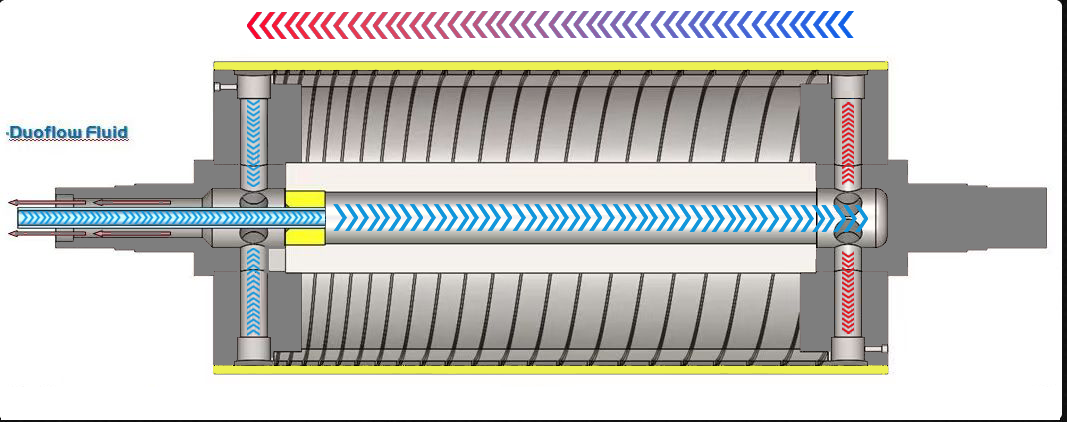
Thermal oil-heated rollers also typically require larger diameters to accommodate the necessary internal flow channels.
What happens if an industrial heating roller is undersized?
Undersizing is a common issue.
An undersized industrial heating roller can lead to:
First, rapid temperature drops.
Second, insufficient heating.
Third, significant surface temperature variations.
Fourth, limited production capacity.
Fifth, an increased risk of roller deformation.
For example, a lithium-ion battery coating line originally used 180 mm heating rollers but experienced insufficient drying after increasing the line speed. After upgrading to 320 mm rollers, temperature fluctuations decreased by approximately 40%, and product stability improved significantly.
This demonstrates that inadequate roller size directly impacts production.
What happens if an industrial heating roller is oversized?
Many believe that "bigger is always better," but this is not necessarily the case.
Oversized industrial heating rollers can result in:
•Increased costs
•Increased weight
•Slow startup times
•Higher energy consumption
•Slower temperature control response
For example, doubling the diameter can theoretically increase the volume by more than fourfold (depending on the structure), significantly increasing the roller's thermal inertia.
In scenarios requiring frequent process changes, oversized rollers may actually slow down the production pace.
How can you quickly estimate the right size for your industrial heating roller?
If complex simulation is not available, you can use an empirical approach.
Simplified Selection Guide for Industrial Heating Rollers
For general industrial applications:
Small industrial heating rollers (100–200 mm) are suitable for:
•Narrow web widths
•Low speeds
•Low temperatures
•Thin materials
Medium industrial heating rollers (200–400 mm) are suitable for:
•Medium-speed production
•Standard lamination
•Coating equipment
•Packaging machinery
Large industrial heating rollers (over 400 mm) are suitable for:
•High-speed production lines
•High-temperature processes
•Thick material processing
•Heavy-duty calendering
These represent common empirical ranges for selecting industrial heating rollers.
Industry Case Studies: Selecting Roller Sizes Based on Application
Examples from typical industries:
Lithium-ion battery coating lines:
•Diameter: 300–500 mm
•Length: 1000–1800 mm
Plastic film lamination:
•Diameter: 150–350 mm
•Length: 800–2500 mm
Paper calendering:
•Diameter: 400–1000 mm
•Length: 2000–8000 mm
Textile heat setting:
•Diameter: 200–500 mm
•Length: 1500–3500 mm
These figures demonstrate significant variation in roller size requirements across different industries.
FAQ
Q1: Is bigger always better for industrial hot oil rollers?
No. While larger rollers offer stability, they also entail higher costs, increased energy consumption, and longer response times.
Q2: How do I choose the diameter of an industrial hot oil roller?
Selection depends primarily on line speed, temperature requirements, and material thickness.
Q3: Do wide-web machines necessarily require large-diameter hot oil rollers?
Generally, yes, because it is necessary to control deflection and temperature differentials.
Q4: What applications are suitable for small-sized industrial hot oil rollers?
They are suitable for low-speed, narrow-width, low-temperature, and light-load operating conditions.