
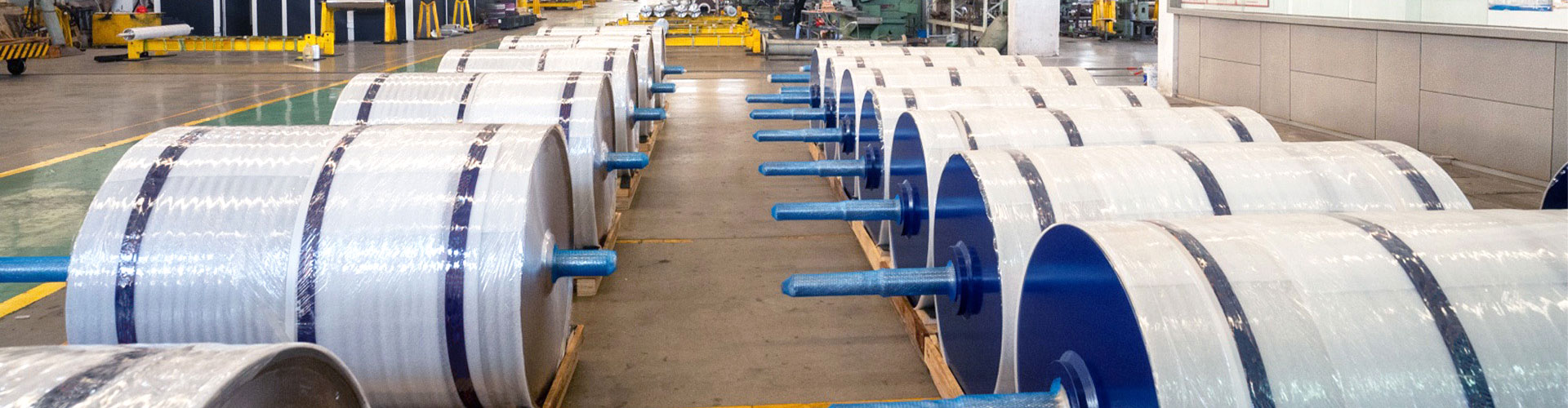
In the realm of industrial rubber rollers, the choice of material often directly determines equipment operational stability, service life, and maintenance costs. For industries such as printing, coating, steel processing, papermaking, packaging, chemicals, and new energy manufacturing, rubber rollers are far more than simple drive components; they perform critical tasks including transport, pressing, tension control, corrosion-resistant contact, and surface treatment. Consequently, when selecting rubber rollers, enterprises typically pay close attention to the physical and chemical properties of the rubber materials themselves.
Among the many industrial rubber materials available, nitrile rubber rollers and fluoroelastomer rollers are frequently compared. Procurement engineers often ask: What exactly distinguishes nitrile rubber rollers from fluoroelastomer rollers? Which offers better oil resistance? Which withstands higher temperatures? Which has a longer service life? Which material offers better overall cost-performance? While these questions may appear to focus merely on material specifications, they actually involve multiple dimensions, including temperature resistance, chemical corrosion resistance, mechanical strength, wear resistance, and cost structure.
In terms of market application, nitrile rubber rollers—characterized by moderate pricing and good oil resistance—represent the standard choice for general-purpose industrial rubber rollers. Conversely, fluoroelastomer rollers, distinguished by exceptional high-temperature and chemical corrosion resistance, are regarded as a key solution for demanding, high-end operating conditions. Both types offer distinct advantages, yet their suitable applications differ significantly. This article explores the topic "Nitrile Rubber Rollers vs. Fluoroelastomer Rollers: What Are the Differences?" by providing a detailed analysis covering material composition, performance parameters, service life, cost analysis, and industry applications, thereby helping enterprises make informed selection decisions.
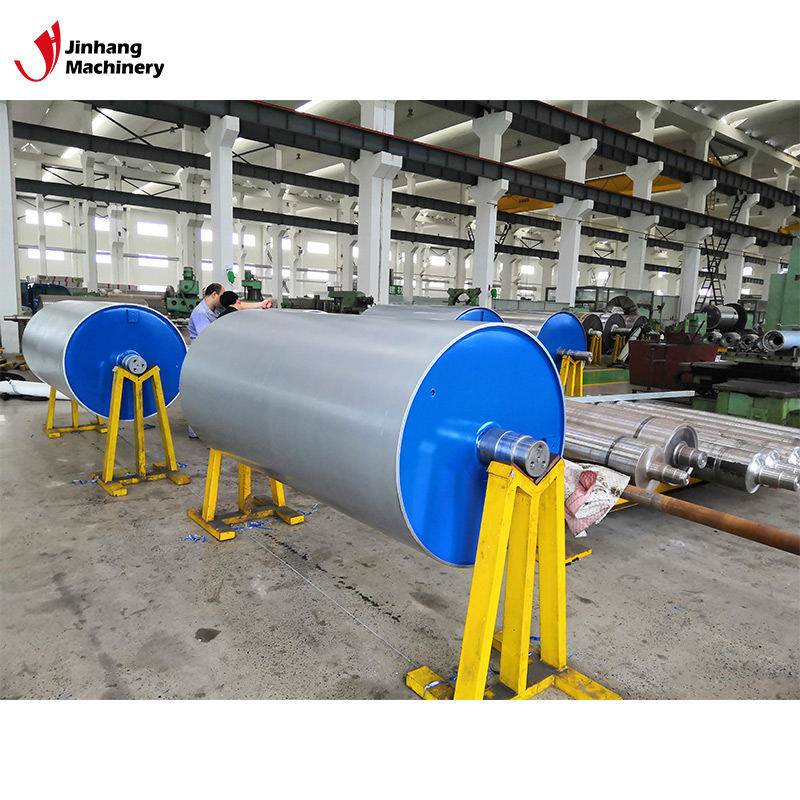
What Are Nitrile Rubber Rollers? What Are Fluoroelastomer Rollers?
The core material used in nitrile rubber rollers is nitrile rubber (NBR, or Nitrile Butadiene Rubber). It is a synthetic rubber produced through the copolymerization of acrylonitrile and butadiene. Due to the presence of highly polar cyano groups in its molecular structure, nitrile rubber exhibits excellent resistance to oil-based media; consequently, nitrile rubber rollers have long been widely used in industrial environments involving contact with lubricating oils, hydraulic fluids, fuel oils, and certain organic media.
Fluoroelastomer rollers utilize fluoroelastomer (FKM) as their primary material. The molecular structure of fluoroelastomer (FKM) contains a large number of carbon-fluorine (C-F) bonds. As one of the most stable bonds in organic chemistry—with bond energies often reaching approximately 485 kJ/mol—the C-F bond imparts exceptional chemical stability and heat resistance to fluoroelastomer rollers, allowing them to perform outstandingly in environments characterized by high temperatures, strong corrosives, and aggressive solvents.
In short, while both fall under the category of industrial rubber rollers, they serve different market segments: nitrile rubber (NBR) rollers are cost-effective, oil-resistant components, whereas fluoroelastomer rollers are high-performance materials designed for extreme environments.
The Key Difference Between Nitrile Rubber Rollers and Fluoroelastomer Rollers: Temperature Resistance
Temperature resistance is undoubtedly the most critical factor distinguishing nitrile rubber rollers from fluoroelastomer rollers.
Nitrile rubber rollers typically operate within a temperature range of -20°C to 100°C. While some modified formulations can withstand temperatures around 120°C for short periods, prolonged exposure to high heat leads to thermal aging. This process causes the material to harden and crack, reduces elasticity, and increases permanent compression set.
In contrast, fluoroelastomer rollers offer a decisive advantage in high-temperature resistance. Standard fluoroelastomer rollers can typically operate continuously at temperatures between 200°C and 250°C, with some high-end formulations capable of withstanding temperatures exceeding 300°C for short durations. Consequently, fluoroelastomer rollers demonstrate far superior stability compared to nitrile rubber rollers in applications involving high-temperature drying, calendering, or chemical reactions.
Regarding service life, the aging rate of standard rubber materials can increase by 1.5 to 2 times for every 10°C rise in temperature. If a nitrile rubber roller operates continuously above 120°C, its lifespan may be reduced by more than 50%; at the same temperature, however, a fluoroelastomer roller would likely maintain relatively stable performance.
Therefore, fluoroelastomer rollers are generally the more reliable choice for high-temperature processes.
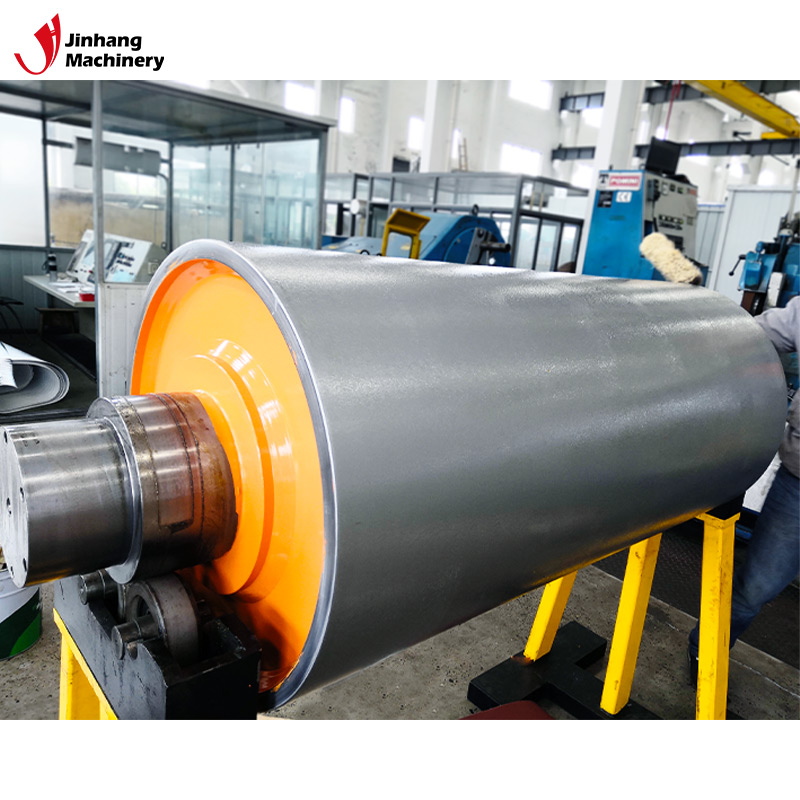
Differences in Oil Resistance: Nitrile Rubber Rollers vs. Fluoroelastomer Rollers
Many people assume that because nitrile rubber is classified as "oil-resistant," it must be more oil-resistant than fluoroelastomer. In reality, this view is incomplete. Nitrile rubber rollers indeed possess excellent oil resistance, performing particularly well with the following media:
•Mineral oils
•Hydraulic fluids
•Diesel fuel
•Gasoline
•Animal and vegetable fats/oils
This is one of the primary advantages of nitrile rubber rollers. Consequently, they are widely used in machinery manufacturing, ink transfer systems, and lubrication equipment.
However, when comparing the limits of oil resistance, fluoroelastomer rollers actually outperform them. Fluoroelastomer rollers not only withstand standard mineral oils but also resist a wider range of aggressive solvents and high-temperature oil media, such as:
•Aromatic hydrocarbons
•Halogenated hydrocarbons
•High-temperature lubricants
•Fuel additives
•Certain chemical solvents
Data shows that in an oil environment at 150°C, the volume swell rate of nitrile rubber rollers can reach 15% to 30%, whereas that of fluoroelastomer rollers is typically kept within 5%.
This means that in high-temperature oil or complex chemical environments, the chemical resistance of fluoroelastomer rollers is far superior to that of nitrile rubber rollers.
There is a significant difference in chemical corrosion resistance between nitrile rubber rollers and fluoroelastomer rollers
Chemical corrosion resistance is another key distinction between the two.
While nitrile rubber rollers are oil-resistant, they do not offer universal chemical resistance. They are generally sensitive to the following media:
•Ketones
•Esters
•Strong oxidizing agents
•Aromatic hydrocarbon solvents
•Certain strong acids
In these environments, nitrile rubber rollers are prone to softening, swelling, or performance degradation.
In contrast, fluoroelastomer rollers exhibit excellent resistance to most chemicals due to the exceptional stability of their carbon-fluorine bonds. They are frequently used in contact with corrosive media, particularly in the chemical processing, semiconductor, and specialty coating industries.
In terms of chemical compatibility, a rough quantification of their compatibility with common industrial media reveals:
•Nitrile rubber rollers: Compatible with approximately 60%–70% of common media
•Fluoroelastomer rollers: Compatible with approximately 85%–95% of common media
This disparity gives fluoroelastomer rollers a distinct advantage in high-end industrial applications.
Differences in Mechanical Properties Between Nitrile Rubber Rollers and Fluoroelastomer Rollers
Although fluoroelastomer rollers excel in temperature and corrosion resistance, this does not mean they outperform nitrile rubber rollers in every mechanical aspect.
Nitrile rubber rollers typically offer superior mechanical strength and wear resistance; they strike a particularly good balance between tear strength and dynamic fatigue performance, especially within the medium-hardness range. Many continuous conveying systems utilize nitrile rubber rollers precisely because they offer an optimal balance between wear resistance and cost.
While fluoroelastomer rollers possess excellent chemical resistance, they do not necessarily hold the advantage in mechanical properties. Fluoroelastomers generally have higher density and material costs; furthermore, depending on the specific formulation, their elasticity and tear resistance may be slightly lower than those of high-performance nitrile rubber.
For instance, in high-friction and high-impact applications where ambient temperatures remain moderate, nitrile rubber rollers can sometimes prove more durable.
Therefore, one cannot simply judge which is "superior" without considering the specific operating conditions.
1. Comparison of Hardness and Elasticity
In industrial applications, the hardness of nitrile rubber rollers typically ranges from 50 to 90 Shore A, whereas fluoroelastomer rollers usually range from 60 to 90 Shore A. While there is an overlap in hardness ranges, their elastic performance differs.
Generally, nitrile rubber rollers offer slightly better low-temperature flexibility compared to standard fluoroelastomer rollers, whereas fluoroelastomer rollers retain their elasticity better at high temperatures. This implies that nitrile rubber rollers may exhibit superior deformation recovery under dynamic conditions at ambient or moderate temperatures, while fluoroelastomer rollers remain more stable in high-temperature environments.
2. Comparison of Service Life
Service life is a critical factor in procurement decisions.
In standard industrial environments, the average service life of nitrile rubber rollers is typically 2 to 5 years. Under milder operating conditions—such as ambient temperatures, moderate pressure, and low-corrosion environments—their lifespan can exceed 5 years.
In similar environments, the service life of fluoroelastomer rollers typically ranges from 4 to 8 years. Their advantage in longevity becomes particularly pronounced in high-temperature and highly corrosive environments.
For example, in an oil-rich environment at a high temperature of 150°C:
•The service life of a nitrile rubber roller might be only 8–18 months.
•The service life of a fluoroelastomer roller could reach 3–6 years.
This is a significant difference.
However, it is worth noting that if operating conditions are not extreme, the longer lifespan of a fluoroelastomer roller may not necessarily offset its higher cost.
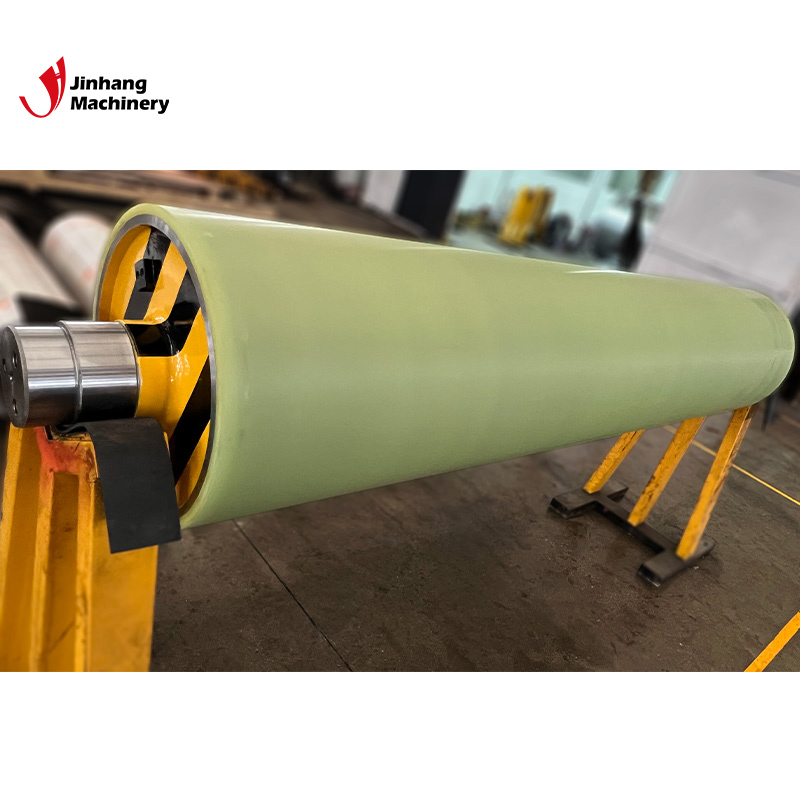
Cost difference between nitrile rubber rollers and fluoroelastomer rollers
Cost is often the most practical consideration for businesses.
The manufacturing cost of nitrile rubber rollers is significantly lower than that of fluoroelastomer rollers. Typically, the price of raw fluoroelastomer material is about 3 to 8 times that of nitrile rubber, and even higher for special formulations.
This is directly reflected in the price of the finished product.
For industrial rubber rollers of the same specifications:
•Nitrile rubber roller price: Baseline (1x)
•Fluoroelastomer roller price: Approximately 2.5 to 6 times the baseline
For budget-conscious SMEs, nitrile rubber rollers are often more economical if the operating conditions do not require extreme temperature resistance or strong corrosion resistance.
Which industries are suitable for nitrile rubber rollers? Which are suitable for fluoroelastomer rollers?
Nitrile rubber rollers are better suited for the following industries:
•Standard printing equipment
•Packaging machinery
•Mechanical manufacturing
•Lubricant-related equipment
•Ambient-temperature conveyor lines
These industries generally do not involve extreme heat or strong corrosives, so nitrile rubber rollers are sufficient.
Fluoroelastomer rollers are better suited for the following industries:
•Chemical processing equipment
•Semiconductor manufacturing
•High-temperature coating processes
•Lithium battery production
•Aerospace industry
•High-temperature oil processing equipment
In these fields, the performance advantages of fluoroelastomer rollers are fully realized.
FAQ
Q1: Which is more oil-resistant: nitrile rubber rollers or fluoroelastomer rollers?
Both perform well in standard oil environments, but fluoroelastomer rollers excel in high-temperature, complex oil media.
Q2: Can nitrile rubber rollers withstand high temperatures?
They can withstand moderate temperatures, but long-term operation above 100°C–120°C is generally not recommended.
Q3: Why are fluoroelastomer rollers so expensive?
Mainly due to high raw material costs, processing difficulties, and their positioning as a high-end product.
Q4: Are fluoroelastomer rollers always better than nitrile rubber rollers?
Not necessarily. If the operating conditions are standard, nitrile rubber rollers usually offer better cost-effectiveness.