
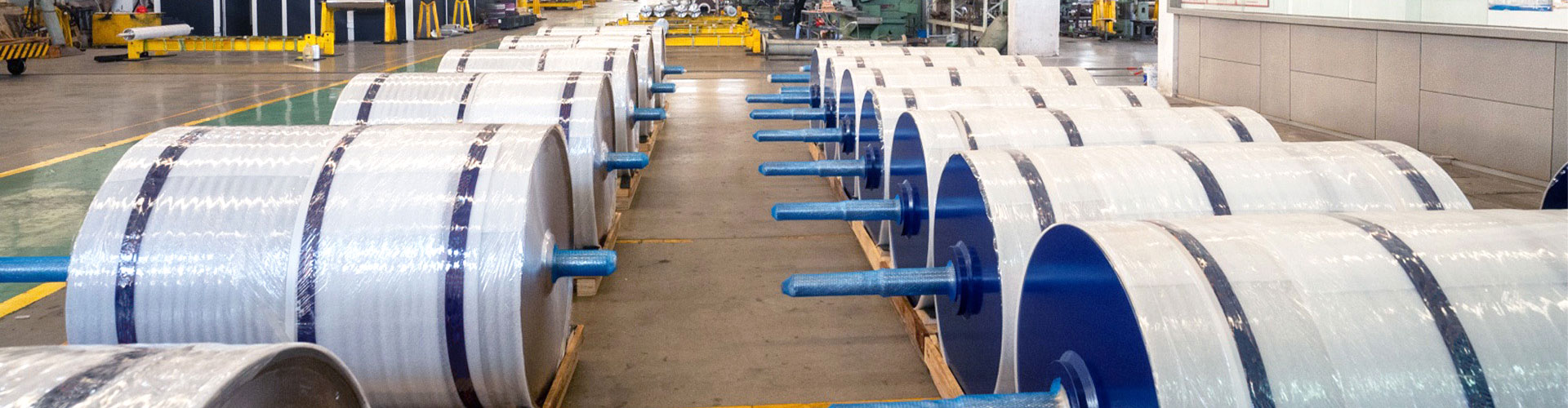
Industrial manufacturing is moving in the direction of higher speeds, automation, and accuracy, with various industrial rollers now becoming more and more important in a number of industries like plastic film production, papermaking, printing and packaging, textiles, steel manufacturing, lithium battery industry, new energy sector, electronic materials industry, and rubber processing. As critical elements in production lines responsible for conveying, calendering, roller leveling, guiding, laminating, coating, and unwinding, industrial rollers play a determining role in machine efficiency and the quality of the products produced, as well as in the stability of production, and even the operational costs of the enterprise.
Among the numerous kinds of industrial rollers, industrial chrome-plated rollers used to be very popular because of the hardness of the surface, good wear resistance, high surface finish, and a manufacturing process that was very well developed. Whether it was for the production of plastics or the manufacturing of high-quality films, whether it was printing machines or paper making machines, industrial chrome-plated rollers were everywhere to be found in the machinery of the manufacturing plants.
The reason behind the gradual loss of confidence to industrial Chrome-plated rollers by some industries is the appearance of other coating techniques that offer better results than Chrome, such as tungsten carbide coating, ceramic coating, Teflon coating, and several high-performance composite coatings.
With this article, the goal will be to give an overview of the function of, performance, major advantages, limits and selection guidelines for industrial Chrome-plated rollers.
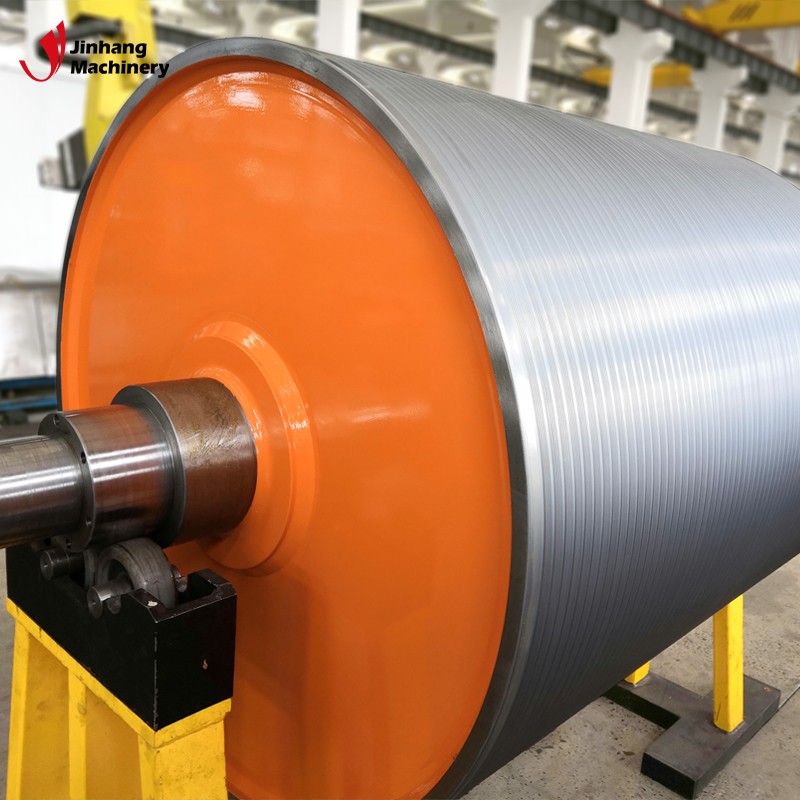
Why is it that industrial chrome-plated rollers are so prevalent in industrial machinery?
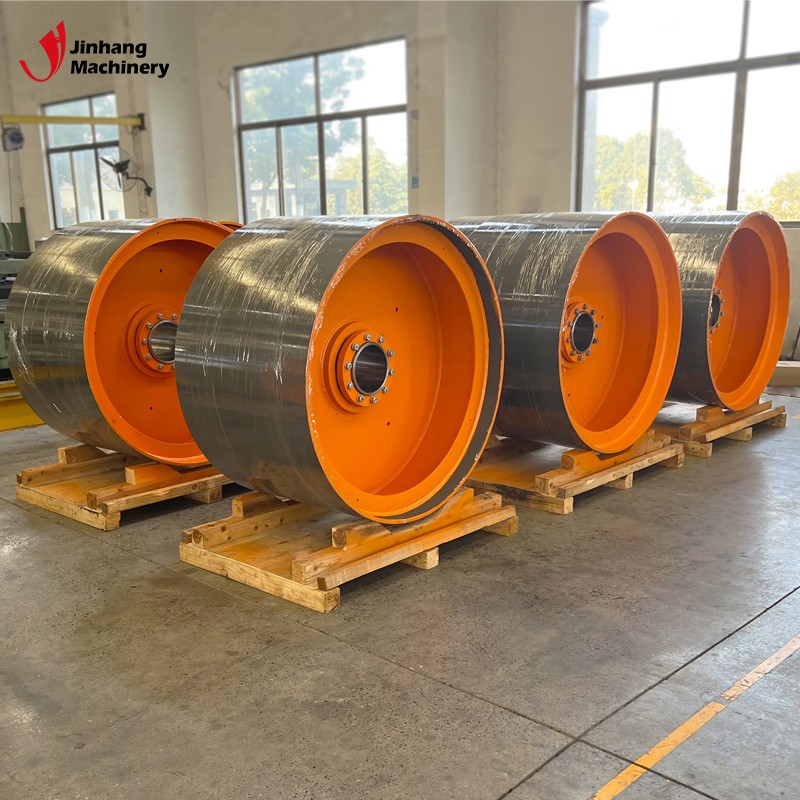
In a simple description, industrial chrome-plated rollers are made by electroplating a layer of hard chrome on a high-quality steel or stainless steel roller.
Depending on the working conditions, the thickness of the plating of industrial chrome-plated rollers usually ranges from 0.02 mm to 0.16 mm, the wear-resistant plating, when required, may be even thicker.
There is a certain reason why chrome plating has become the most popular finish for industrial roller parts that are frequently involved in abrasive processes. The reason is primarily based on the extremely high hardness (HV 900-1000) and therefore very high wear resistance of this coating. The plugging effect and surface hardness of chrome plating are both very high. Chrome-plated materials are among the most abrasive ones used for industrial roller parts, besides giving high hardness, and very little wear, chrome plating is the least of them, as it doesn’t even wear much during normal running conditions without a surface finish of 600 microhardness which is quite low. That's why they are used so widely in industry.
To make industrial chrome-plated rollers suitable for the most stringent specifications that the industry demands from rollers in production and manufacturing lines, nowadays they integrate high-precision techniques such as high-precision CNC turning, precision cylindrical grinding, ultra-precision mirror polishing, and dynamic balancing to fulfill the highest requirements in roundness, coaxiality, cylindricity, and surface roughness, among others. The surface roughness of high-quality industrial chrome-plated rollers can normally be controlled between Ra 0.02 and 0.05 μm, while mirror-grade products may even achieve ultra-precision level beyond that, thereby satisfying the production demands of optical films, lithium battery separators, and high-end packaging materials, etc., with the highest surface requirements.
The dominance of industrial Chrome-plated rollers even in the plastics industry, which is among the heaviest industrial sectors, printing, papermaking industry, has already proved their excellent performances and technology, and hence, the high market applicability.
How about the main benefits of industrial Chrome-plated rollers?
Industrial Chrome-plated rollers having dominated the market for a long time is not because of a particular strong performance, but rather because of an optimal balance between wear resistance, processing accuracy, economy and applicability.
High Surface Hardness and Good Wear Resistance are the first two points on the list of the major advantages of these rollers. A major advantage of industrial Chrome-plated rollers is their hard and wear-resistant surface. After electroplating, the roller is subjected to a hard Chrome coating which makes it very resistant to abrasion. This is why industrial chromatic-plates are so resistant to being worn out by friction, making them capable of serving the purposes of normal operation for a long time. One thing is certain, they will still be functional long after other types of rollers get replaced due to wear in the running conditions.
In those areas where wear is moderate or very light such as paper industries, film production, and textiles, etc., the industrial Chrome-plated roller with a hard Chrome coating can be an excellent option. In comparison, if the industrial rollers are made of untreated metals without a hard Chrome layer, then, even the very modest amount of friction could be enough to degrade the surfaces over their service life and wear them out quickly.
Another outstanding feature is the Surface Finish. The final surface finish achieved by industrial chromatic-plated rollers after precision grinding and mirror polishing is the smoothest. For the production of items such as plastic films, PET, calendered PVC, and optical films, even the slightest imperfection of the roller surface may be transmitted, and affect the quality of the end product. The roller surface should be as fine and smooth as possible for that reason. Therefore, the roller surface of a good industrial Chrome-plated roller will produce the least number of scratches and indentations. That ensures a smooth and glossy surface. On the other hand, it is very easy for the roller to be made of metal without a surface protection layer to become rough and develop a very low-quality surface after some time of being operated.
In this sense, the roller with a good surface can lead the way to the production of high-quality goods. It reduces the resistance of the product when it is going to be conveyed through the machine which, if this resistance is minimized, can result in an improvement in product finish as well as in machine speed and production stability.
Industrial Chrome-plated rollers have good resistance to corrosion as well. The hard Chrome layer on the surface has good chemical stability, and thus can be corroded to a very limited extent by corrosion of air, moisture, or even some weak acids and bases. In general industrial use environments, it is quite safe for the rollers to be exposed to a certain degree of corrosion and still remain stable in performance.
It is important to remember, however, that industrial Chrome-plated rollers are not the right option for highly corrosive environments. A very strong or highly concentrated acid, a strongalkalinmedia with high chloride content, etc., may result in chemical corrosion at such an extent that an ordinary industrial Chrome-plated roller would not last at all.
The last major benefit that we shall deal with is the very good machining precision.Industrial Chrome-plated rollers are one of the most commonly used types of industrial rollers.
These two features are extremely important for high-speed production operations. The rollers must be good at aligning and staying together to avoid any possible misalignment or imbalance while in operation, which could lead to vibration and reduce the quality of the products. Therefore, a production line that uses high-speed operation is likely to benefit most from industrial Chrome-plated rollers which are good at concentricity, cylindricity, and roundness.
It has become very clear that dynamic balancing is a very important step and that the roller can not be used for high-speed operations without it. The balanced roller will perform stably on the machine and at the same time, the level of noise during operation and the wear of the parts of the machine will be less.
Low manufacturing cost and the availability of good maintenance techniques are the fifth and the last point that I would like to cover here. The roller with a Chrome-plated surface is much less expensive than its counterparts with advanced coating such as ceramic-coated or tungsten carbide-coated ones. In most cases, a Chrome-plated roller can be re-chrome-plated when worn, without needing to change the base, and this allows the roller to be put to use again.
Considering that it has a fairly long functional service life and that the maintenance costs for Chrome-plated products are relatively low, a Chrome-plated industrial roller, in general, is likely to be much cheaper compared to other products and at the same time provide good service for many years.
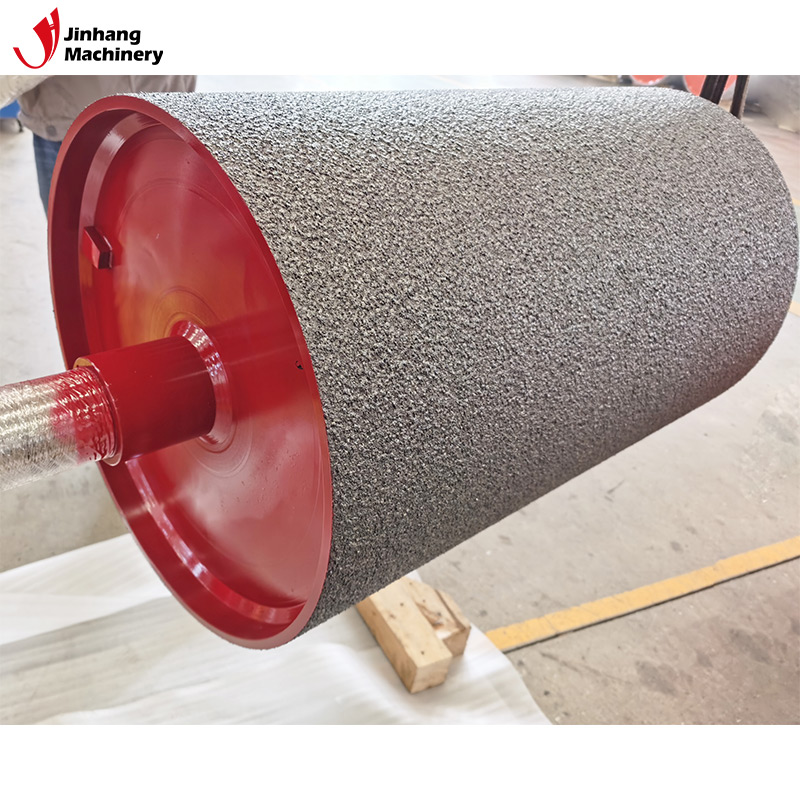
What is the disadvantage of industrial Chrome-plated rollers?
However good their Chrome-plating is, industrial Chrome-plated rollers still have several weaknesses that make them a bad choice for some situations. In environments where the wear is very heavy, the corrosion is severe, or when the situation is very extreme,Chrome plating can be the cause for failure of the roller itself.
Absolutely no Wear Resistance of the Roller Surface
Even though the roller is Chrome-plated and therefore quite hard, the wear resistance is still not as high and efficient as the case of an industrial tungsten carbide-coated roller. When the machine contacts a high-hardness material over a long time, such as glass fiber, mineral particles, and metal powders, the surface layer that wears the fastest will be an industrial Chrome-plated roller with a much longer wear rate. It should be kept in mind that based on our many years experience in industry, the lifetime period of one unit working under such a highly-abrading condition will be on the average 5 to 6 times higher in the case of an industrial tungsten carbide-coated roller as compared to that of an industrial chrome-plate one. Hence, when extreme resistance to abrasion is required, abrasion-resistant coatings of a more superior grade should be selected.
Another shortcoming of industrial Chrome-plated rollers is that they can potentially crack after long exposure to extreme working conditions due to electroplating.
Plating can become micro-cracked due to the electroplating process. Although such cracking will not affect the general performance, prolonged exposure to heavy impact loads, thermal cycling, or corrosive media may lead to gradual expansion which, in effect, may reduce or even nullify the overall performance of an industrial Chrome-plated roller.
That being said, it would be advisable for industries operating under long-term drastic conditions of temperature changes or heavy load impact to make up their minds after an assessment of the suitability of industrial Chrome-plated rollers.
Industrial Chrome-plated Rolled Rollers Should NotBe Contacted for aLong Time with Highly Corrosive Substances
Industrial Chrome-plated rollers can tolerate a certain level of corrosion, but in circumstances involving long-duration contact with acid (especially strongly acidic substances), alkali(base), salt spray or substances of high content of halides such as Cl-, the plating could be corroded, and, in a serious case, the base of the material would as a consequence be affected
Generally speaking, chemical, electrolytic-plating, or special chemical processing enterprises would prefer ceramic coating rollers or high-corrosion-resistant special stainless steel coating rollers rather than ordinary IndustrialChrome-plated rollers.
Limited Application in High-Temperature Environment:Industrial Chrome-plated rollers are suitable for industrial work at ordinary temperatures, while their properties are likely to be gradually deteriorated in long-term high-temperature operation. Especially in a thermal shock environment or one with continuously high temperatures that are not stable, it is recommended to select appropriate coating surface treatments based on the specified temperature range and process requirements.
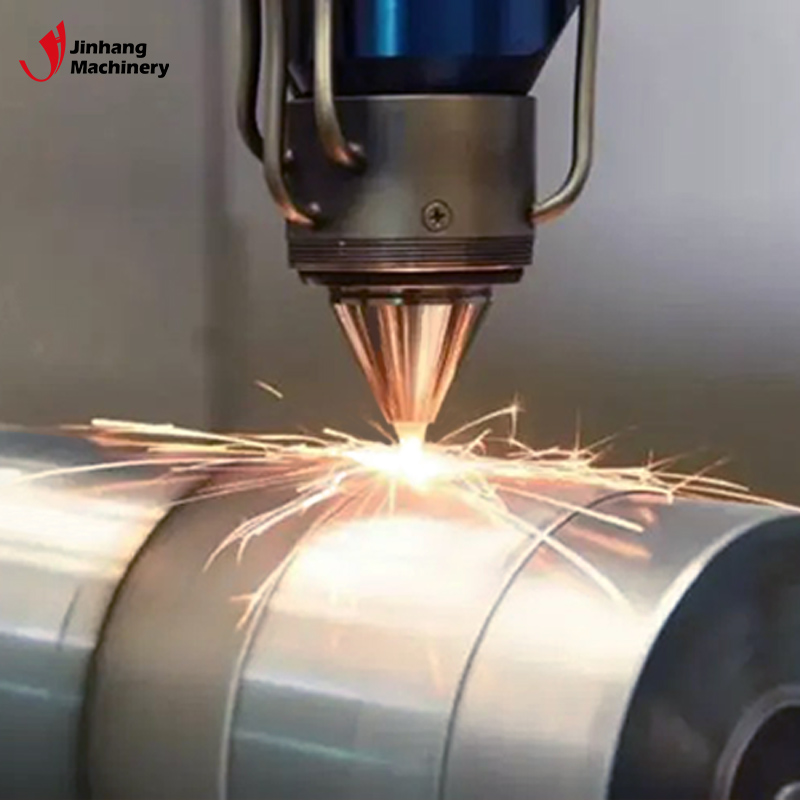
Which industries can use industrial chrOme-plated rollers?
Besides being the best among the surface coatings available, another great reason why industrial Chrome-plated rollers deserve their name is because they work very well across multiple industries.
In the plastic film industry they are used as a component in a number of steps such as casting, rolling, pulling, and even winding where their purpose includes getting help from the surface quality of the materials and the smooth running of the operations.
Industrial Chromium-plated Roller is an extremely versatile product, as its use in different industry segments has been quite extensive ranging from Printing Packaging, Paper etc. as far as their use in the paper industry for various processing stages such as guiding, calendering and finishing they are still able to work effectively at these speeds and high temperatures.
Beyond the above, industrial chrOme-plated rollers were also used very widely in the textile, new energy, rubber, electronics, and non-wovens industries, and also the food & packaging equipment, which are the heart of modern industrial production lines.
How to Choose a Suitable Industrial Chrome-Plated Roller?
In order to choose an industrial chrome-plated roller, companies should do this based on actual equipment working conditions, instead of price competition only.
To begin, companies should get the environmental parameters for which the equipment is going to be operated including temperature, humidity, corrosive media, production speed, etc. For ordinary industrial applications, industrial Chrome-plated rollers can be a long-term solution.
Second, the surface accuracy of a roller such as shape, roundness, coaxiality, and surface roughness should be given a closer look at, as these factors directly affect the quality of the product. The dynamic balance is also an important criterion since it directly influences the equipment’s vibration level as well as noise.
Moreover, the right choices should be made for plating thickness, surface gloss, and other surface processing according to the needs of the products, to ensure that the industrial Chrome-plated rollers match closely with the production process.
FQA
Q. What are the biggest advantages of industrial chrome-plated rollers?
A. It is a fact that Industrial Chrome-plated Roller’s main advantage is high surface hardness, very good wear resistance, high gloss, high precision, and excellent economic viability. In many standard industrial production lines, such performance is sufficient to cover the main concerns of most manufacturers. It means that an industrial roller with a Chrome plating, in the case of moderate wear, is quite a good choice in cost-effective terms, i.e. the total life-cycle cost. In short, in most situations, such a product offers a good cost/benefit ratio.
Q. Is it possible to use industrial Chrome-plated Rollers in high-speed production lines?
A. Of course, if it is industrious roller with precision finish and has been dynamically balanced one may find quite adequate for high-speed running besides helping to raise the level of stability of equipment and the quality of product produced as result.
Q. What is the main difference between industrial Chrome-plated Rollers and industrial tungsten carbide coating Rollers?
A. While industrial Chrome-plated Rollers generally present the lowest price/performance ratio for a moderate wear level, the industrial Tungsten Carbide-coated Rollers are much preferred to high-wear conditions and, in fact, the most difficult wear conditions such as high pressure, wear, load, high load conditions, as well as very heavy impact conditions etc. In spite of the higher industrial level of these products and their more difficult manufacturing process and, thus, higher cost, the fact that their lifetime is significantly longer justifies the higher investment. They are mainly used in such industries as mining, cement production, heavy-duty engineering, and metal working where the wear conditions are quite demanding.
Q. After Chrome plating has occurred on an industrial Chrome-plated Roller, is the roller still useable?
A. Usually industrial Chrome-plated rollers can be chrome-plated, ground and polished again after their surface is worn, but the decision to go this way should depend on the state of the substrate as well as the extent of the remaining film and the production requirements.
Q. Which industries benefit most from using industrial Chrome-plated rollers?
A. In many industries, such as the plastic film industry, printing & packaging industry, paper industry, textile industry, new energy industry, rubber industry and electronic materials industry, industrial Chrome-plated rollers are also widely used.