
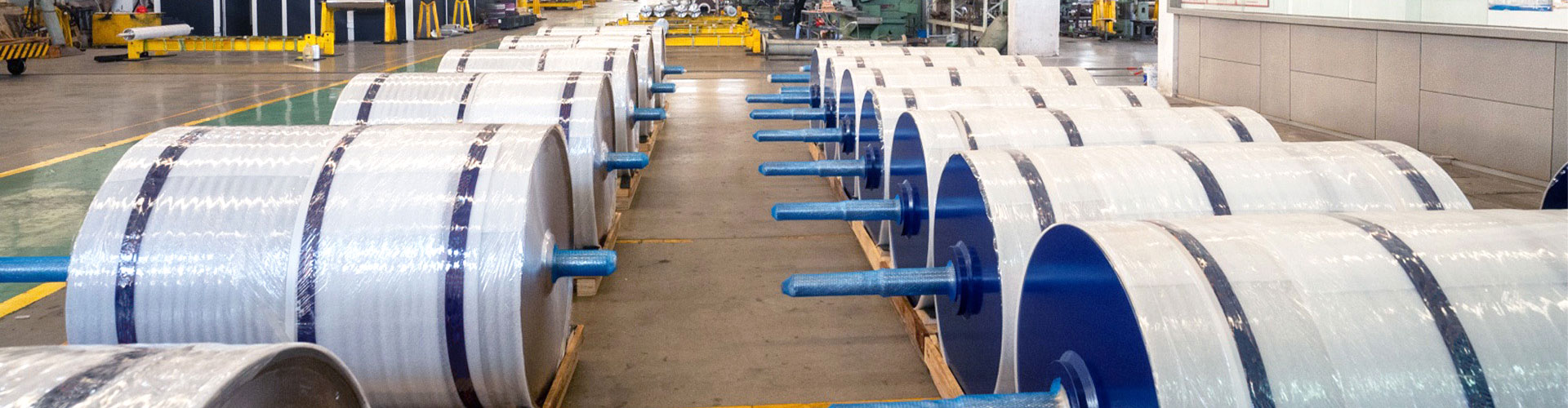
How Long Does the Tungsten Carbide Coating on Industrial Rollers Last? Lifespan of Industrial Tungsten Carbide Coated Rollers
In modern industrial manufacturing, as production equipment continues to evolve towards higher speeds, higher precision, and higher loads, industrial rollers not only undertake crucial tasks such as conveying, traction, calendering, calendering, coating, laminating, and shaping, but also need to withstand long-term wear, friction, corrosion, high temperatures, impacts, and various complex operating conditions. While traditional chrome-plated and stainless steel rollers can meet some production needs, their wear resistance and service life often fall short of the requirements of modern manufacturing under extreme conditions. Therefore, in recent years, more and more companies have begun to adopt industrial tungsten carbide coated rollers to improve equipment reliability, reduce maintenance costs, and extend the continuous operation time of production lines.
However, a frequently asked question during actual procurement is: "How long can industrial tungsten carbide coated rollers actually be used? Do they last for several years after installation without needing replacement? Why do some companies maintain good performance for eight or nine years, while others experience wear and even failure in a short period?"
In fact, there is no fixed, uniform lifespan for industrial tungsten carbide coating rollers. Their lifespan is influenced by a variety of factors, including materials, coating processes, operating environment, load, surface treatment quality, maintenance methods, and production processes. High-quality industrial tungsten carbide coating rollers, under proper use and maintenance, often have a lifespan several times, even ten times, longer than ordinary chrome-plated rollers. However, if the selection is inappropriate or the operating conditions exceed the design range, their performance advantages may not be fully realized.
This article will systematically analyze the wear resistance principles, lifespan influencing factors, service cycles under different operating conditions, maintenance methods, and future technological development trends of industrial tungsten carbide coated rollers, helping companies to more scientifically understand the true value of industrial tungsten carbide rollers.
Why are industrial tungsten carbide rollers more wear-resistant than ordinary industrial rollers?
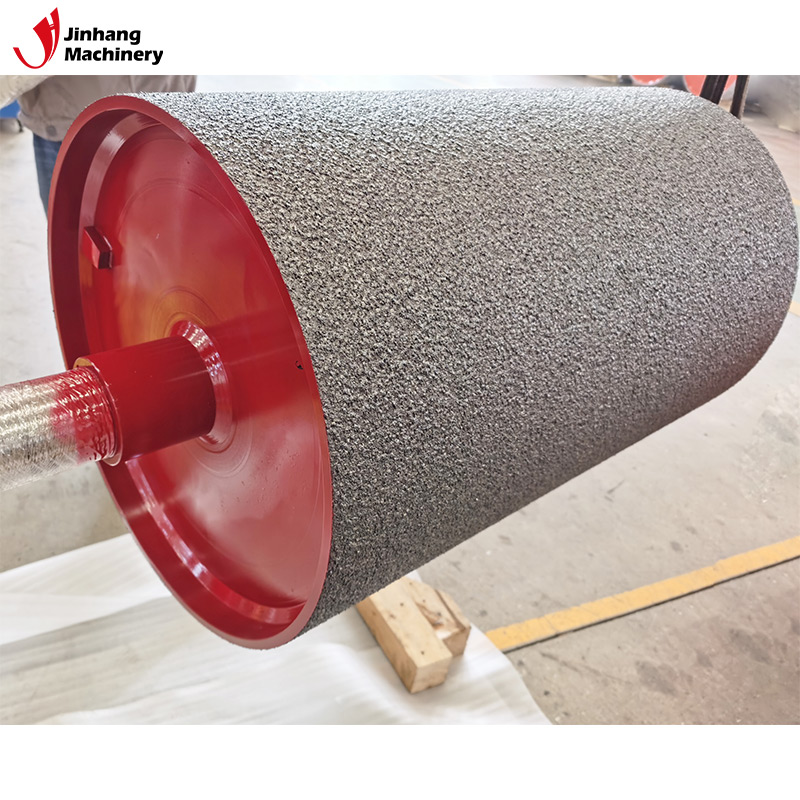
Industrial tungsten carbide coated rollers refer to industrial rollers on which a high-hardness tungsten carbide composite coating is formed on the surface of high-strength steel rollers, stainless steel rollers, or special alloy rollers through advanced thermal spraying processes such as high-speed flame spraying (HVOF), high-velocity flamingo spraying (HVAF), or plasma spraying.
Tungsten carbide (WC) is a hard compound with a microhardness typically reaching HV1000–1400 or higher, and some high-performance formulations even higher. In comparison, the hardness of ordinary industrial chromium plating is generally around HV800–1000, and the hardness of stainless steel substrates is typically only around HV200. Therefore, from the perspective of the material itself, industrial tungsten carbide coated rollers have a significant advantage in wear resistance.
More importantly, the spraying processes used in modern industrial tungsten carbide coated rollers can form a dense and highly bonded composite coating, with porosity typically controlled below 1%, and some high-quality products even reaching around 0.5%. This means that industrial tungsten carbide coated rollers are not only wear-resistant but also possess excellent impact resistance, corrosion resistance, and fatigue resistance, making them ideal for long-term continuous industrial environments.
Currently, industrial tungsten carbide coated rollers are widely used in industries such as lithium batteries, steel, papermaking, plastic film, printing and packaging, textiles, new energy, electronic materials, and rubber processing.
How long can industrial tungsten carbide coated rollers typically be used?
Strictly speaking, there is no fixed service life for industrial tungsten carbide coated rollers because there are significant differences between different production conditions. Based on current industry experience, under normal operating conditions and proper maintenance, industrial tungsten carbide coated rollers can typically be used continuously for 5 to 10 years or more. On some production lines with less wear and better maintenance, their actual service life can even reach 12 to 15 years.
Comparing industrial tungsten carbide coated rollers with traditional chrome-plated rollers reveals a significant lifespan advantage. For example, ordinary industrial chrome-plated rollers may only operate stably for 1 to 3 years in high-wear environments, while industrial tungsten carbide coated rollers can often last 5 to 8 years or more under the same conditions, significantly reducing downtime for maintenance and replacement. Of course, for high-load, high-speed operation, or conditions containing a large number of abrasive particles, even industrial tungsten carbide coated rollers will have their lifespan affected. Therefore, rather than focusing on "how many years it can be used," it's more important to understand the key factors that determine the lifespan of industrial tungsten carbide coated rollers.
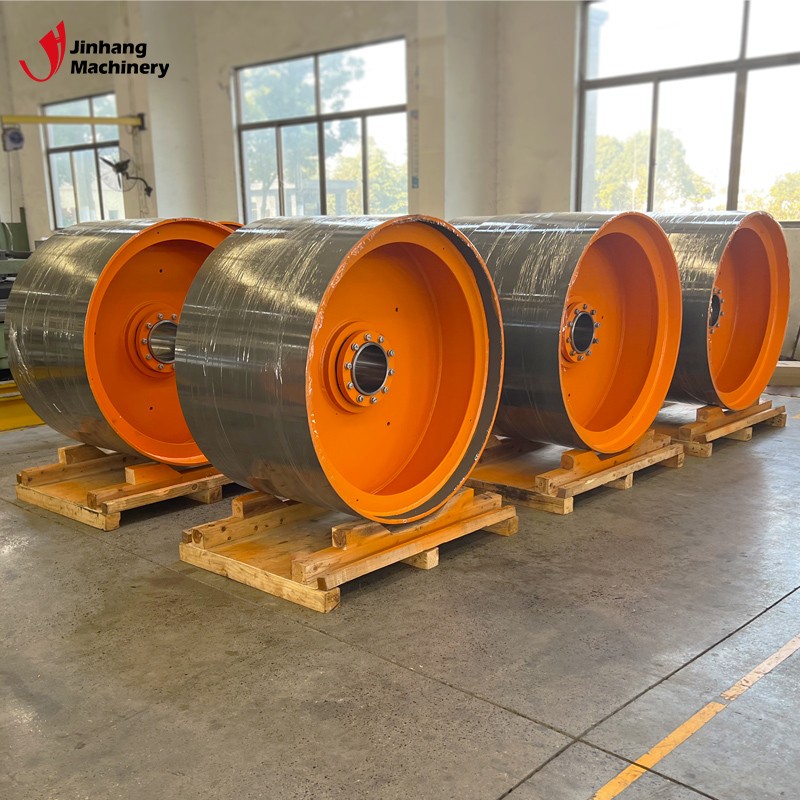
What factors determine the lifespan of industrial tungsten carbide rollers?
The lifespan of industrial tungsten carbide coated rollers is not determined by a single factor, but rather by the combined effect of multiple technical aspects.
1. Spraying process determines coating quality
The primary factor affecting the lifespan of industrial tungsten carbide coated rollers is the spraying process. Currently, the market mainly uses technologies such as high-velocity oxygen fuel (HVOF), high-speed air fuel spraying (HVAF), and plasma spraying. Among these, HVOF and HVAF, due to their high spraying speed and denser particle bonding, typically achieve lower porosity and higher bonding strength, resulting in industrial tungsten carbide coated rollers with superior wear resistance.
If the temperature is not properly controlled, the particles are not melted enough, or the substrate is not properly pretreated during the spraying process, the coating adhesion may decrease, resulting in peeling or cracking during long-term operation, thus shortening the service life.
2. Coating Thickness Affects Long-Term Wear Resistance
Industrial tungsten carbide rollers are not necessarily better the thicker the coating, nor are they necessarily more economical the thinner one. They require rational design based on actual working conditions.
Typically, the coating thickness of industrial tungsten carbide coated rollers is approximately 0.1 mm to 0.5 mm, and in some heavily abrasive industries, it can reach around 0.8 mm. Insufficient thickness limits wear resistance reserves; excessive thickness may increase internal stress and raise the risk of cracking. Therefore, a reasonable thickness design is crucial for extending the life of industrial tungsten carbide coated rollers.
3. Working Environment Has a Significant Impact on Lifespan
Although industrial tungsten carbide coated rollers possess excellent wear resistance, different working environments still have a significant impact on their lifespan.
For example, in ordinary plastic film production lines, industrial tungsten carbide coated rollers mainly experience light friction, and their lifespan is typically long. In industries such as steelmaking, paper pressing, and mineral material conveying, the wear rate increases significantly due to the presence of numerous hard particles and high contact pressure.
Furthermore, corrosive media, high-temperature environments, and frequent thermal cycling also affect the long-term stability of industrial tungsten carbide coating rollers.
4. Operating Speed and Contact Pressure
High-speed operation means an increased number of friction cycles per unit time, while prolonged high loads mean higher contact pressure per unit area. Both factors combined accelerate the wear of industrial tungsten carbide coating rollers.
However, due to their high hardness and low coefficient of friction, industrial tungsten carbide coating rollers maintain a lower wear rate even under high-speed conditions compared to ordinary rollers.
5. Routine Maintenance Level
Many companies believe that industrial tungsten carbide coated rollers require no maintenance after installation, but this view is inaccurate.
If the roller surface is continuously contaminated with adhesives, dust, or hard particles, these contaminants will form secondary abrasives, accelerating coating wear. Simultaneously, insufficient bearing lubrication, excessive equipment vibration, and abnormal tension control will also indirectly affect the lifespan of industrial tungsten carbide coated rollers.
Therefore, proper maintenance can significantly extend the actual service life of industrial tungsten carbide coating rollers.
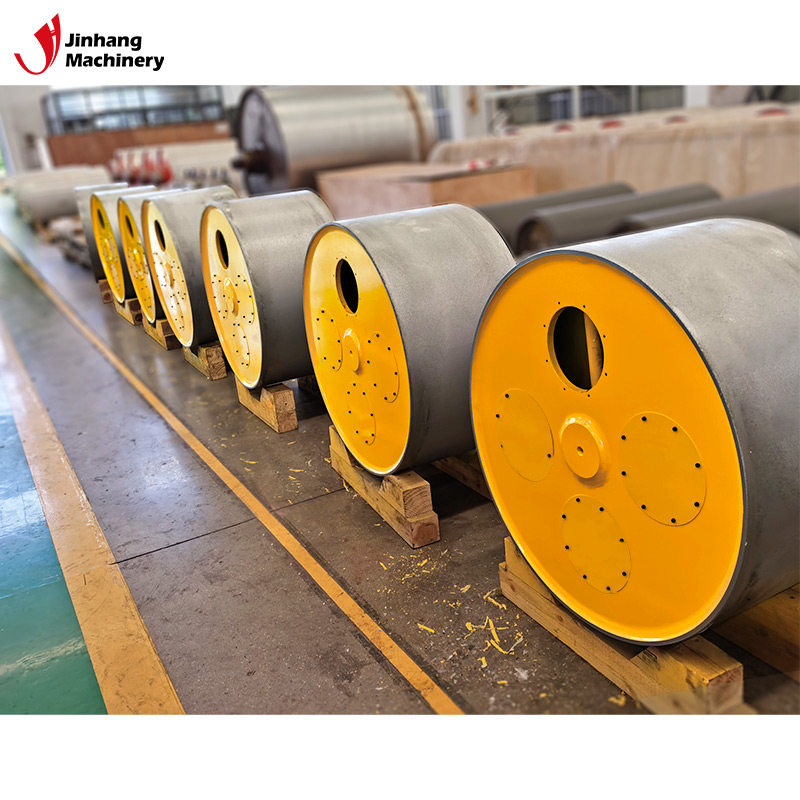
Why do industrial tungsten carbide coating rollers have a longer lifespan than ordinary chrome-plated rollers?
The long-term stable performance of industrial tungsten carbide coating rollers is mainly due to the excellent properties of the material itself.
First, tungsten carbide has extremely high hardness, giving it a natural advantage against abrasive wear. When equipment is in prolonged contact with high-hardness materials, ordinary chrome plating layers wear away easily, while industrial tungsten carbide coating rollers maintain a lower wear rate.
Second, industrial tungsten carbide coating rollers have stronger resistance to microcrack propagation. The composite structure formed by modern spraying processes can disperse stress concentration and reduce the risk of fatigue damage.
Furthermore, industrial tungsten carbide coating rollers typically have better corrosion resistance. The addition of cobalt, nickel, and other binding phases to some formulations not only improves bonding strength but also enhances resistance to chemical corrosion, enabling them to withstand humid, high-salt-spray, and weakly acidic/alkaline environments.
According to industry experience, in many continuously operating equipment, the overall lifespan of industrial tungsten carbide coating rollers can typically be 3 to 8 times that of ordinary chrome-plated rollers, with the specific increase depending on the actual operating conditions.
How to further extend the service life of industrial tungsten carbide rollers?
Even though industrial tungsten carbide rollers themselves have high wear resistance, proper use is necessary to fully realize their advantages.
First, avoid allowing hard foreign objects to enter the production system. For example, metal shavings, sand particles, and welding slag can all cause localized impacts to the industrial tungsten carbide coated rollers.
Second, maintain stable equipment tension. Abnormal tension will lead to increased localized contact pressure, accelerating wear.
Simultaneously, the surface condition of the industrial tungsten carbide rollers should be inspected regularly. If localized scratches, abnormal wear marks, or minor cracks are found, the cause should be analyzed and corrective measures taken promptly, rather than waiting until serious damage occurs before repair.
In addition, maintaining good bearing lubrication, reducing equipment vibration, properly controlling operating temperature, and regularly cleaning the roller surface can all effectively extend the service life of industrial tungsten carbide rollers.
FAQ: Frequently Asked Questions about Industrial Tungsten Carbide Coated Rollers
1. How many years can industrial tungsten carbide rollers typically be used?
Under normal operating conditions, industrial tungsten carbide rollers typically last 5 to 10 years or more; in environments with less wear and proper maintenance, the actual service life of some products can reach 12 to 15 years.
2. Are industrial tungsten carbide rollers always more wear-resistant than chrome-plated rollers?
In most cases, yes. Industrial tungsten carbide rollers have higher hardness and stronger wear resistance, and their lifespan in high-wear environments is usually significantly longer than that of ordinary chrome-plated rollers.
3. Can industrial tungsten carbide rollers be repaired after wear?
Most industrial tungsten carbide rollers can be refurbished and repaired by removing the old coating, recoating, and precision grinding. However, whether repair is suitable depends on a comprehensive assessment of the substrate condition and the degree of wear.
4. Which industries are best suited for using industrial tungsten carbide rollers?
Industries such as steel, lithium batteries, plastic film, papermaking, rubber, printing and packaging, new energy materials, electronic materials, and high-wear conveyor equipment are all important application areas for industrial tungsten carbide rollers.
5. How to determine if an industrial tungsten carbide roller needs replacement?
When industrial tungsten carbide coating rollers show obvious wear, localized peeling, crack expansion, decreased surface precision, or fail to meet product quality requirements, they should be inspected in a timely manner to assess whether repair or replacement is necessary, rather than simply judging based on the service life.