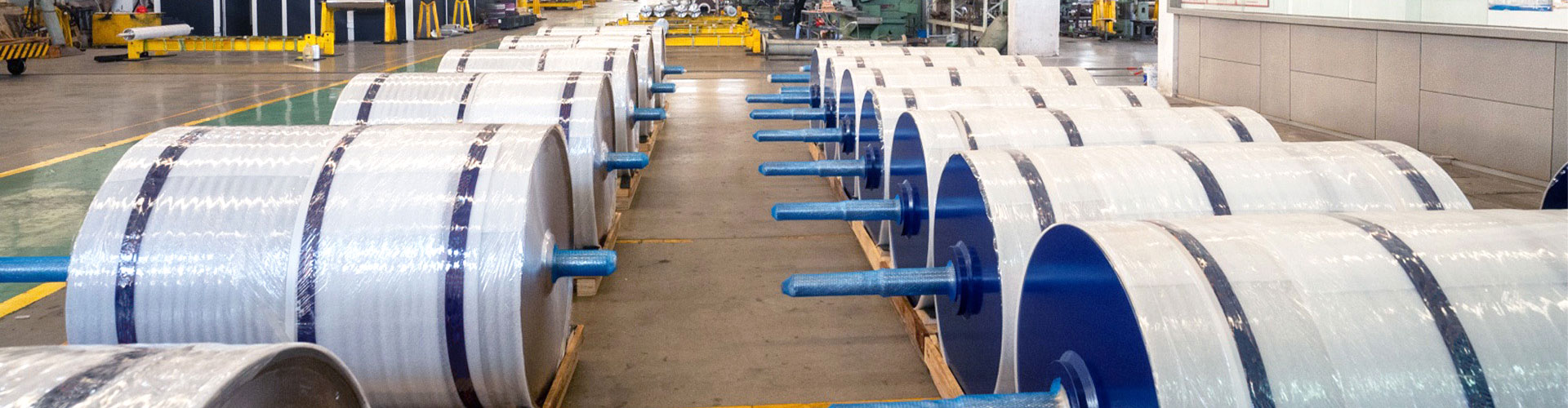
In modern industrial manufacturing, whether it's processing plastic films, optical films, lithium battery separators, PVC sheets, PET sheets, non-woven fabrics, rubber products, composite materials, or some high-end metal foils, a crucial process step is indispensable—material shaping. For many polymer materials, they are still in a high-temperature molten or semi-molten state immediately after extrusion, casting, calendering, or lamination. If they cannot be uniformly cooled and stabilized in a very short time, it will not only affect dimensional accuracy but may also lead to problems such as uneven thickness, warping, edge curling, increased crystal points, decreased transparency, and poor surface quality.
To achieve rapid, uniform, and controllable cooling, modern production lines commonly use water-cooled industrial mirror rollers as the core cooling and shaping equipment. It can be said that in many continuous production processes, water-cooled industrial mirror rollers not only perform the function of cooling but also directly determine the flatness, thickness uniformity, gloss, dimensional stability, and subsequent processing performance of the material. Especially in high-speed production environments, the importance of industrial water-cooled mirror rollers is becoming increasingly prominent, making them an irreplaceable piece of equipment in the manufacturing of high-quality materials.
So, how exactly do industrial water-cooled mirror rollers help materials achieve their desired shape? What is their working principle? Why are more and more high-end production lines choosing industrial water-cooled mirror rollers? This article will systematically analyze the structural design, cooling mechanism, shaping principle, industry applications, and future development trends of industrial water-cooled mirror rollers, helping companies fully understand their core value in modern manufacturing.
What is an Industrial Water-Cooled Mirror Roller? An Important Component of Modern Production Lines
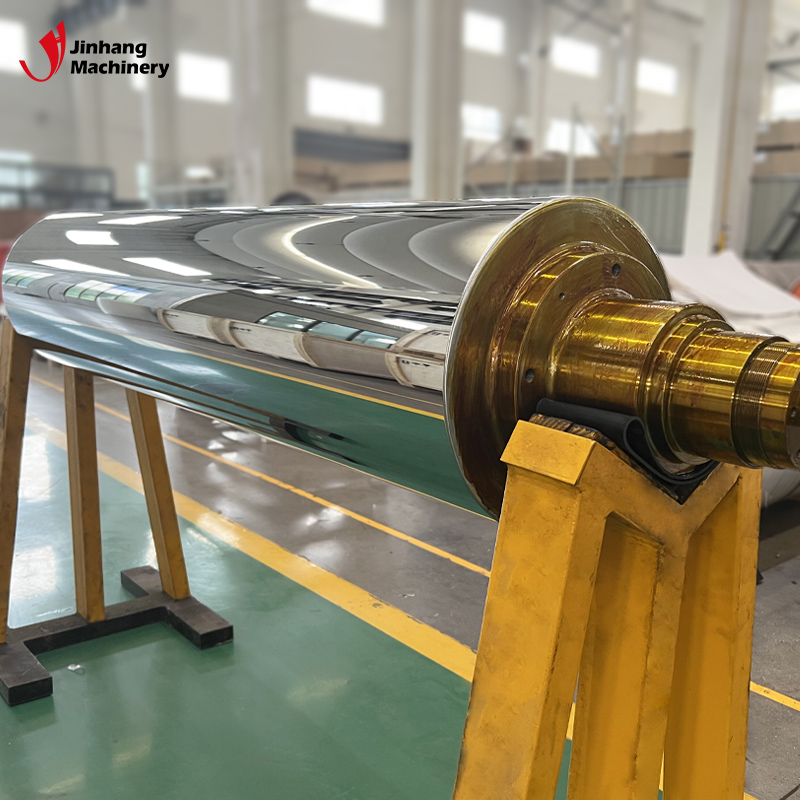
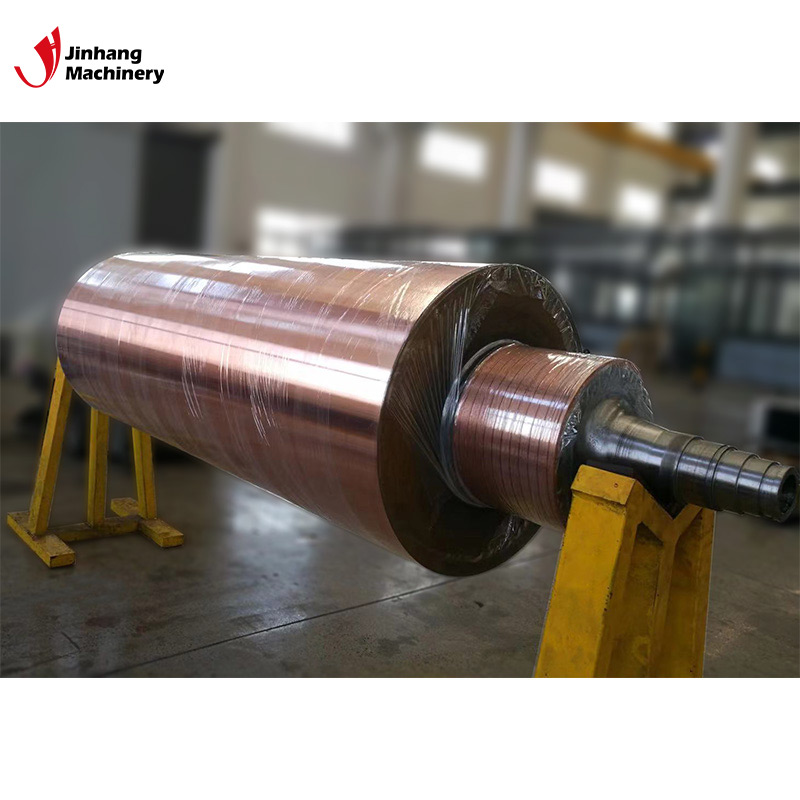
An industrial water-cooled mirror roller is an industrial roller with an internal circulating cooling water channel and a high-precision mirror-finished outer surface. It is typically installed after casting, calendering, or extrusion processes. Circulating cooling water continuously removes heat from the roller body, and the high thermal conductivity metal roller surface ensures full contact with the high-temperature material, achieving rapid cooling and stable shaping.
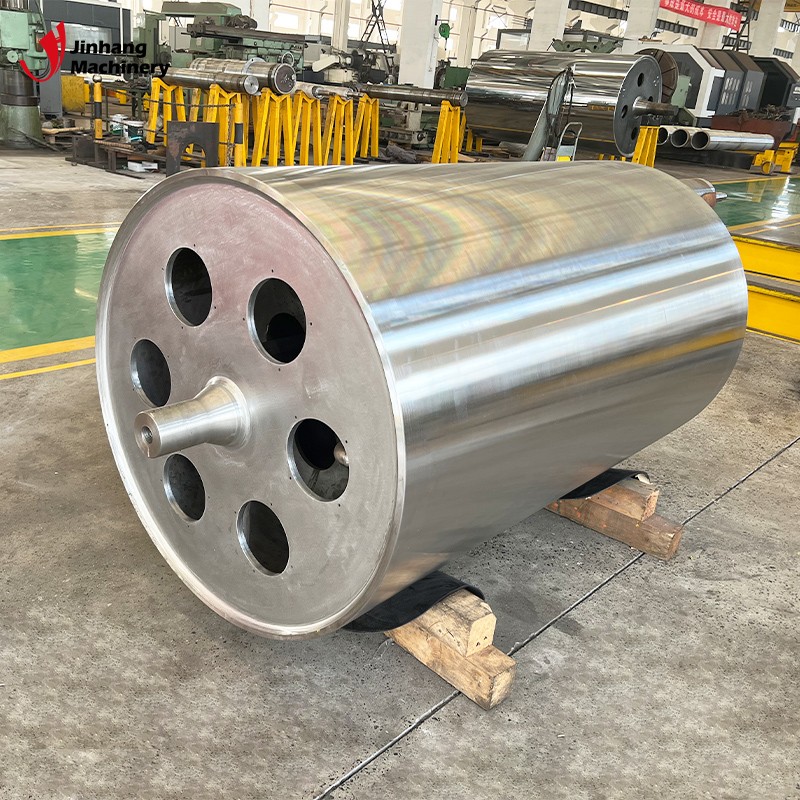
An industrial water-cooled mirror roller mainly consists of a roller body, internal flow channels, shaft head, rotary joint, circulating water system, bearing assembly, and mirror treatment layer. The internal flow channels handle the circulation of the cooling medium, the mirror-finish roller surface handles heat exchange and surface shaping, and the rotary joint ensures a continuous and stable flow of cooling water during roller rotation.
Compared to ordinary guide rollers, the biggest advantage of water-cooled industrial mirror rollers is their combined functions of guiding, cooling, calendering, and shaping. They not only support continuous material handling but also rapidly reduce material temperature using efficient heat exchange capabilities. Simultaneously, the high gloss of the mirror-finish roller surface improves material surface quality, leading to their widespread application in industries such as plastics, packaging, new energy, electronic materials, and high-performance composite materials.
Currently, high-end industrial water-cooled mirror rollers typically use high-quality alloy steel or stainless steel as the base material and employ precision grinding and mirror polishing processes to achieve a surface roughness of Ra 0.01–0.03 μm. Some optical-grade products can even achieve higher precision, meeting the production requirements of high-transparency films and optical materials.
How do industrial water-cooled mirror rollers help shape materials?
Many people believe that industrial water-cooled mirror rollers only reduce temperature, but this is only one of their functions. From a materials science perspective, industrial water-cooled mirror rollers truly achieve shaping through the combined effects of four processes: heat exchange, structural stabilization, dimensional control, and surface replication.
When the high-temperature molten material leaves the die, it still retains high fluidity, with its molecular chains in a randomly arranged state. If left to cool naturally at this point, the inconsistent rate of heat release can easily lead to localized shrinkage differences, resulting in thickness fluctuations and dimensional changes.
Industrial water-cooled mirror rollers, through high-speed rotation, allow the material to adhere to the low-temperature mirror roller surface in a very short time. Due to the continuous circulation of cooling water inside the roller, the roller surface maintains a stable temperature. Heat is rapidly transferred from the material to the roller and then carried away by the circulating water, achieving continuous and efficient heat exchange.
As the temperature rapidly decreases, the movement of the polymer chains gradually weakens, and the material transforms from a molten state to a solid or semi-solid state. Its internal structure tends to stabilize, thus completing the initial shaping. During this process, the water-cooled industrial mirror roller not only controls the cooling rate but also ensures simultaneous cooling across the entire width of the material through uniform contact pressure, avoiding localized stress concentration.
For many highly transparent materials, this rapid and uniform cooling method can also suppress abnormal grain growth, reduce crystal point formation, and improve transparency and optical properties. Therefore, industrial water-cooled mirror rollers are actually both cooling equipment and crucial process equipment determining the material's microstructure.
What is the working principle of industrial water-cooled mirror rollers?
The stable operation of industrial water-cooled mirror rollers mainly relies on three basic physical processes: heat conduction, convection heat transfer, and material shaping.
First stage: Heat transfer through material contact with the mirror roller
When molten material leaves the die, its temperature is typically between 180℃ and 320℃, while the temperature of the circulating cooling water inside the industrial water-cooled mirror roller is generally controlled at around 10℃ to 30℃. When the two come into contact, the heat in the material is rapidly transferred to the cooler surface of the industrial water-cooled mirror roller; this process mainly follows the principle of heat conduction.
Because industrial water-cooled mirror rollers are usually made of steel with excellent thermal conductivity, their thermal conductivity is much higher than that of air, thus significantly improving the cooling rate.
Stage Two: Cooling Water Circulation Removes Heat
Industrial water-cooled mirror rollers feature internal spiral, multi-channel, or double-spiral circulation structures, with cooling water continuously flowing under the drive of a circulation pump. When the roller absorbs heat from the material, the internal cooling water immediately removes the heat and returns to the cooling system to further cool, thus maintaining a stable surface temperature throughout the water-cooled industrial mirror roller.
Modern industrial water-cooled mirror rollers are typically equipped with a constant temperature control system, which can control the roller surface temperature difference within ±1℃, and high-end equipment can even achieve ±0.5℃, significantly improving product consistency.
Stage Three: Material Achieves Dimensional Stabilization
As the temperature decreases, the activity of the polymer chains gradually ceases, and the material begins to maintain a fixed size and shape. During this process, the industrial water-cooled mirror roller also performs a calendering function, ensuring that the material surface fully replicates the smoothness of the mirror roller, ultimately resulting in a flat, smooth, and dimensionally stable product.
Why do industrial water-cooled mirror rollers improve product quality?
The reason industrial water-cooled mirror rollers have become important equipment in modern high-end production lines is not only because of their rapid cooling speed, but more importantly, because they comprehensively improve product quality.
First, water-cooled industrial mirror rollers improve thickness uniformity. Due to the uniform temperature distribution across the entire roller surface, the material cools at a consistent rate, reducing lateral thickness fluctuations. For cast films, thickness deviations can even be controlled within a few micrometers.
Second, industrial water-cooled mirror rollers improve transparency. Rapid and uniform cooling helps suppress grain coarsening, allowing semi-crystalline materials such as PET and PP to maintain better optical properties.
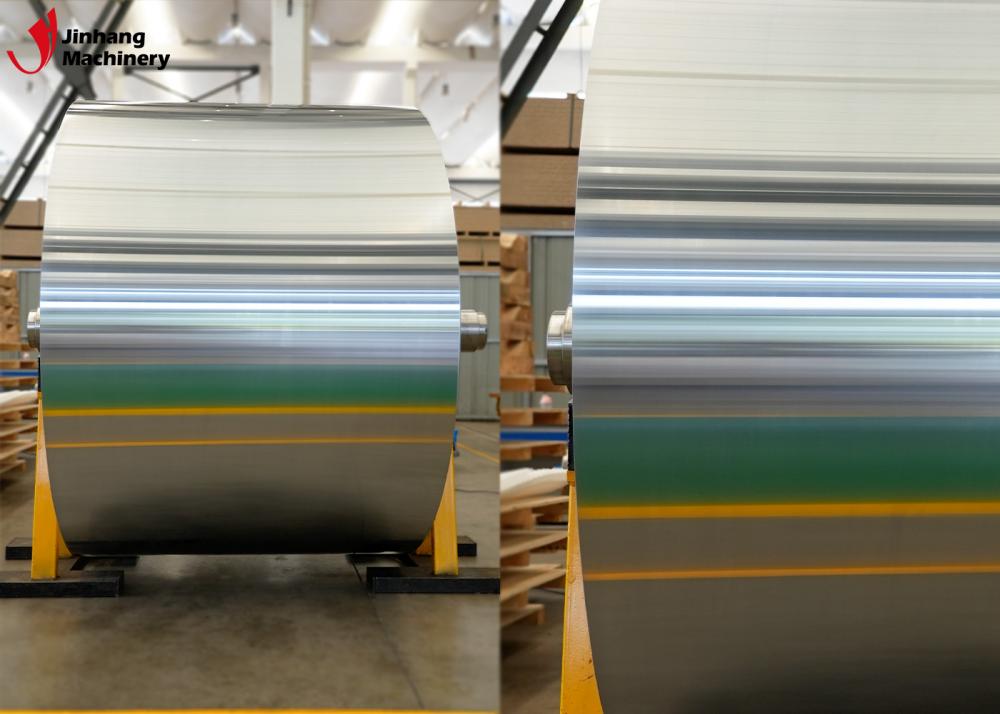
Third, industrial water-cooled mirror rollers improve surface gloss. The mirror roller surface undergoes high-precision polishing, and the material replicates its surface state during the shaping process, resulting in high-gloss, high-smoothness products.
Furthermore, industrial water-cooled mirror rollers reduce internal stress. Due to more uniform cooling, internal material shrinkage is more consistent, significantly reducing the probability of curling, warping, and dimensional changes during subsequent use.
According to industry experience, on high-speed casting production lines, using high-quality industrial water-cooled mirror rollers can typically improve product yield by 3% to 10%, with even more significant improvements in thickness consistency and optical performance for some high-value-added products.
What industries primarily use industrial water-cooled mirror rollers?
With the continuous development of high-end manufacturing, industrial water-cooled mirror rollers have been widely applied in multiple industries.
In the plastic film industry, industrial water-cooled mirror rollers are an important component of production lines for cast films, CPP films, PE films, PET films, and EVA films, responsible for rapid cooling and initial shaping.
In the new energy industry, the production of lithium battery separators and photovoltaic encapsulation films requires extremely high thickness uniformity, thus high-precision industrial water-cooled mirror rollers are commonly used.
In the field of optical film manufacturing, water-cooled industrial mirror rollers directly affect product transparency, haze, and surface quality, making them key equipment in display material production.
In addition, industrial water-cooled mirror rollers are also widely used in PVC calendering, PET sheet production, rubber calendering, non-woven fabric processing, medical materials, and electronic functional film manufacturing.
How to ensure the long-term stable performance of industrial water-cooled mirror rollers?
To fully utilize the performance of industrial water-cooled mirror rollers, daily maintenance is also crucial.
First, ensure the circulating cooling water is clean to prevent scale buildup from clogging the internal flow channels. Long-term use of hard water can reduce heat exchange efficiency, therefore many companies use softened water or industrial circulating pure water.
Secondly, the surface accuracy of water-cooled industrial mirror rollers should be checked regularly. Scratches or wear on the mirror layer not only affect product surface quality but may also reduce cooling uniformity.
In addition, rotary joints, bearings, and sealing systems should be inspected regularly to ensure stable cooling water circulation and prevent leaks from affecting equipment operation.
For high-speed production lines, regular dynamic balancing is also recommended to ensure that water-cooled industrial mirror rollers maintain stable high-speed operation over the long term.
FAQ: Frequently Asked Questions about Industrial Water-Cooled Mirror Rollers
1. What is the difference between industrial water-cooled mirror rollers and ordinary cooling rollers?
Industrial water-cooled mirror rollers not only have cooling functions but also provide mirror polishing, rapid shaping, and improved surface quality. Compared to ordinary cooling rollers, they have higher surface processing precision, more uniform temperature control, and are more suitable for the production of high-quality materials.
2. Why do industrial water-cooled mirror rollers improve material transparency?
Industrial water-cooled mirror rollers achieve rapid and uniform cooling, effectively suppressing abnormal grain growth in some polymer materials, reducing crystal points and light scattering, thereby improving transparency and optical performance.
3. What cooling medium is used inside industrial water-cooled mirror rollers?
Most industrial water-cooled mirror rollers use circulating cooling water as the medium. In some special operating conditions, antifreeze coolants such as ethylene glycol aqueous solutions may be used to meet the operational requirements of low temperatures or special environments.
4. Do industrial water-cooled mirror rollers require constant temperature control?
Yes. High-end water-cooled industrial mirror rollers are typically equipped with a constant temperature circulation system, which can control the roller surface temperature difference within ±1℃ or even ±0.5℃, thereby ensuring material shaping quality and product consistency.
5. How to choose a suitable industrial water-cooled mirror roller?
Companies should comprehensively consider factors such as product type, material characteristics, production speed, roller surface width, mirror surface precision, cooling capacity, dynamic balance level, and the manufacturer's technical strength when making a selection, rather than focusing solely on price.