
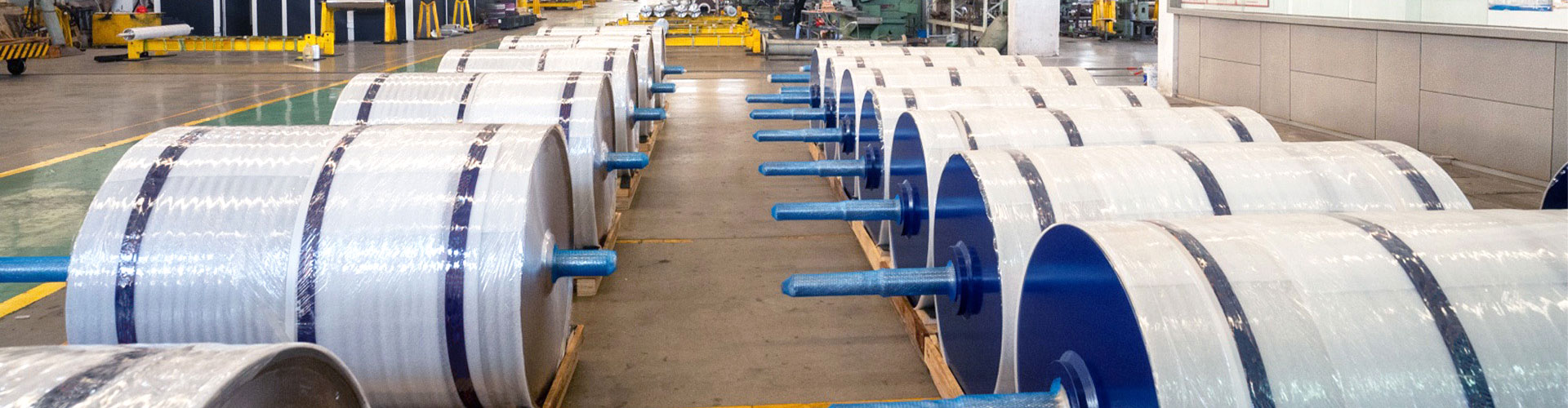
In modern industrial manufacturing, an increasing number of production equipment require stable, uniform, and continuous heating of materials. Industries such as plastic film casting, lithium battery separator production, rubber calendering, textile calendering, papermaking, printing and laminating, non-woven fabric processing, and new energy material manufacturing all rely heavily on high-precision temperature control systems. Among numerous heating devices, industrial oil-conducting heating rollers have become an important component of modern continuous production lines due to their uniform temperature, high thermal efficiency, precise temperature control, and high safety.
However, a very common question for many equipment purchasers, production managers, and technicians new to industrial heating systems is: "What kind of oil is used in industrial oil-conducting heating rollers? Is ordinary hydraulic oil or lubricating oil sufficient? What are the differences between different types of heat transfer oils?"
In fact, the oil used in industrial oil-conducting heating rollers is not ordinary industrial lubricating oil, but a heat transfer medium specifically designed for heat energy transfer, commonly known as heat transfer oil. The type, performance, and quality of heat transfer oil directly determine the heating efficiency, temperature stability, equipment lifespan, and operational safety of industrial oil-guided heating rollers. Therefore, correctly selecting the heat transfer oil used in industrial oil-guided heating rollers is crucial for ensuring the stable operation of the entire production system.
This article will provide a comprehensive analysis of the types of oil used in industrial oil-guided heating rollers, their working principles, selection principles, performance requirements, maintenance methods, and common misconceptions, helping companies gain a deeper understanding of the core technologies of industrial oil-guided heating rollers.
Why Use Industrial Oil-Guided Heating Rollers?
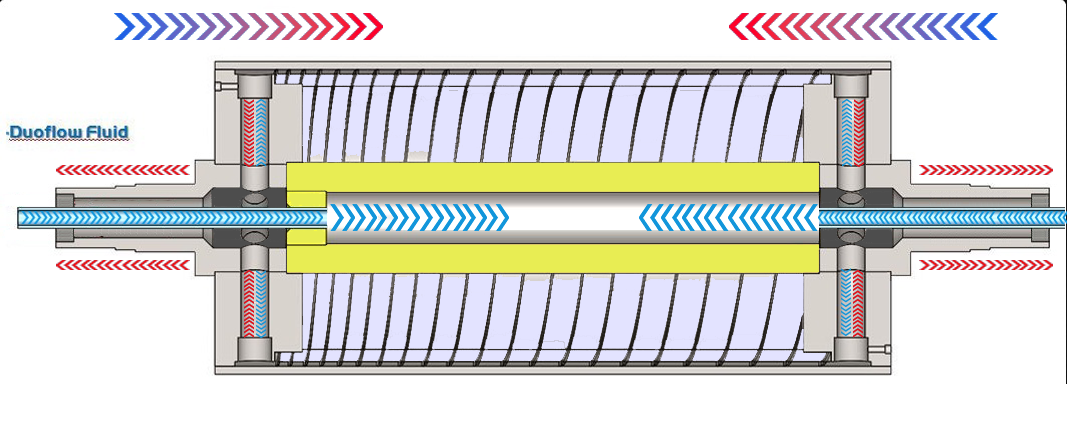
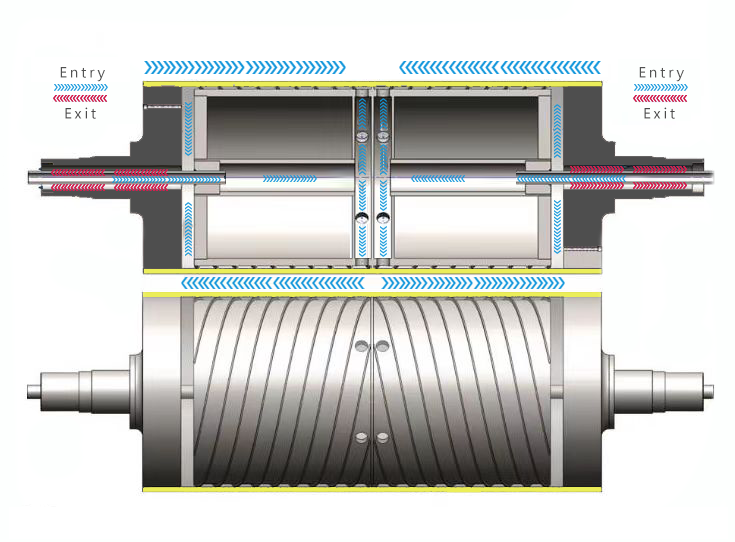
An industrial oil-guided heating roller is an industrial roller with an internal flow channel structure that achieves roller body heating through circulating heat transfer oil. Compared to traditional electric or steam-heated rollers, industrial oil-guided heating rollers can achieve a more uniform and stable temperature distribution, and are therefore widely used in production processes with high requirements for temperature consistency.
An industrial oil-guided heating roller typically consists of a roller body, an internal spiral or multi-flow channel structure, a rotary joint, a circulating oil circuit, a heat transfer oil furnace, a temperature control system, and a circulating pump. After being heated in a thermal oil furnace, the heat transfer oil continuously flows through the industrial oil-conducting heating roller under the action of a circulating pump, evenly transferring heat to the entire roller body. The roller body then stably transfers the heat to the surface of the material being processed.
Due to the excellent fluidity and high specific heat capacity of the heat transfer oil, the industrial oil-conducting heating roller can achieve continuous heating of 150℃, 200℃, 250℃, and even above 300℃ at relatively low system pressures, unlike steam systems which require higher pressures. This is a key reason why industrial oil-conducting heating rollers have become increasingly popular in recent years.
According to industry application statistics, industrial oil-conducting heating rollers have become one of the mainstream heating methods in industries such as high-end cast film, PET sheets, PVC calendering, lithium battery separators, and rubber sheeting.
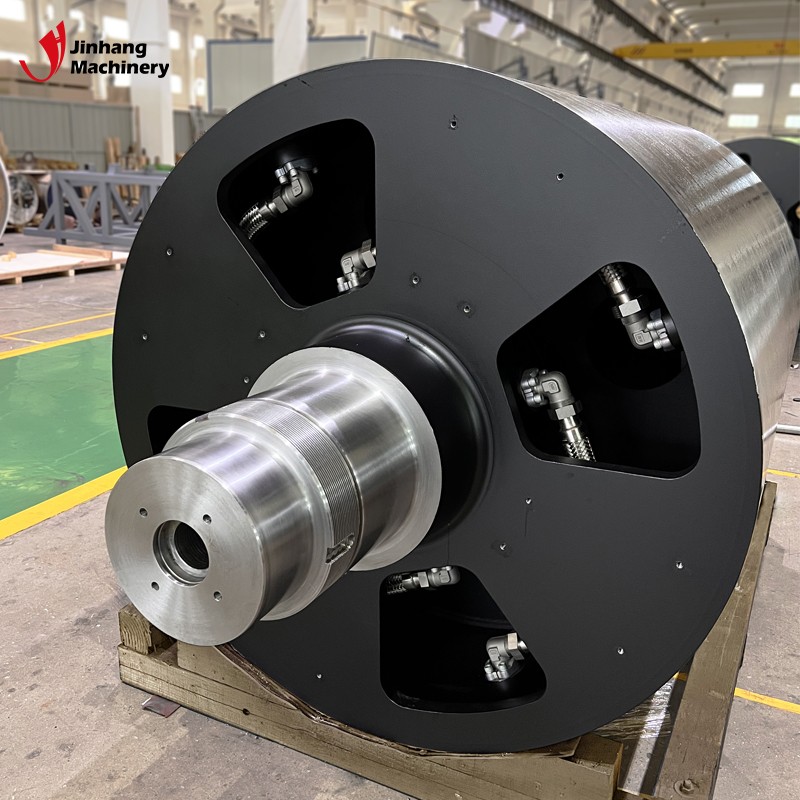
What type of oil is used in industrial oil-conducting heating rollers?
Many people mistakenly believe that industrial oil-conducting heating rollers use hydraulic oil, machine oil, or even ordinary lubricating oil. This understanding is incorrect.
Industrial oil-conducting heating rollers use specialized heat transfer oil, also known as heat conduction oil or heat transfer medium oil. These types of oils are not designed for lubrication, but rather for efficient, safe, and stable heat transfer.
Currently, the heat transfer oils used in industrial oil-guided heating rollers are mainly classified into the following categories:
1. Mineral-based heat transfer oils
Mineral-based heat transfer oils are currently the most widely used type of product in industrial oil-guided heating rollers. They are typically formulated using deeply refined mineral base oils as raw materials, with the addition of antioxidants, corrosion inhibitors, and anti-coking additives.
Mineral-based heat transfer oils have advantages such as low cost, wide availability, and easy maintenance, making them suitable for most industrial oil-guided heating roller systems.
Generally, mineral-based heat transfer oils are suitable for temperatures ranging from -10℃ to approximately 300℃. Some high-quality products can operate stably at around 320℃ for extended periods, thus they are widely used in industries such as plastics, packaging, textiles, and woodworking machinery.
For the vast majority of industrial oil-guided heating rollers, mineral-based heat transfer oils are sufficient to meet production needs and offer high cost-effectiveness.
2. Synthetic heat transfer oils
With the development of high-temperature manufacturing processes, more and more industrial hot oil rollers are beginning to adopt synthetic heat transfer oils.
Synthetic heat transfer oils are primarily composed of artificially synthesized organic compounds, such as biphenyl, diphenyl ether, alkylbenzene, and other high-temperature stable chemicals.
Compared to mineral-based heat transfer oils, synthetic heat transfer oils offer higher thermal stability, lower volatility, and a longer service life.
Some high-performance synthetic heat transfer oils can withstand continuous operating temperatures above 350°C and even short-term temperatures of around 380°C, making them ideal for high-end industrial oil-conducting heating roller systems.
Currently, synthetic heat transfer oils are widely used in new energy materials, lithium battery separators, electronic functional films, and some high-end composite material equipment.
3. Food-Grade Heat Transfer Oils
For industrial oil-conducting heating rollers in food packaging, pharmaceutical packaging, and food processing equipment, food-grade heat transfer oils that meet food safety standards are required.
These products typically meet NSF H1 and other relevant certification requirements, and even if a very small amount accidentally comes into contact with food, it will not pose a serious safety risk.
Although food-grade heat transfer oils are relatively expensive, they have become standard equipment in the food industry.
Why can't ordinary hydraulic oil or lubricating oil be used in industrial hot oil rollers?
Many companies have attempted to replace heat transfer oil with ordinary hydraulic oil in an effort to reduce costs, but this practice carries significant risks.
First, hydraulic oil is designed to transfer pressure, not heat. The long-term operating temperature of hydraulic oil is generally only around 60°C to 90°C; it easily oxidizes and decomposes above 120°C.
However, the normal operating temperature of industrial hot oil rollers is typically between 150°C and 300°C. Using ordinary hydraulic oil will not only cause it to age rapidly but may also lead to carbon buildup, sludge, and even blockage of the flow channels.
Second, ordinary lubricating oils lack sufficient high-temperature resistance. As the temperature continues to rise, the oil viscosity decreases rapidly, and the evaporation rate increases, easily producing fumes and coking products. This not only affects the heat transfer efficiency of the industrial oil-guided heating roller but may also cause equipment failure.
Furthermore, the oxidation of ordinary oils produces a large amount of acidic substances, which will corrode the internal flow channels, circulation pump, and rotary joints of the industrial oil-guided heating roller, shortening the service life of the entire system.
Therefore, from both a safety and economic perspective, industrial oil-guided heating rollers should use specialized heat transfer oils and should not be replaced with ordinary industrial oils.
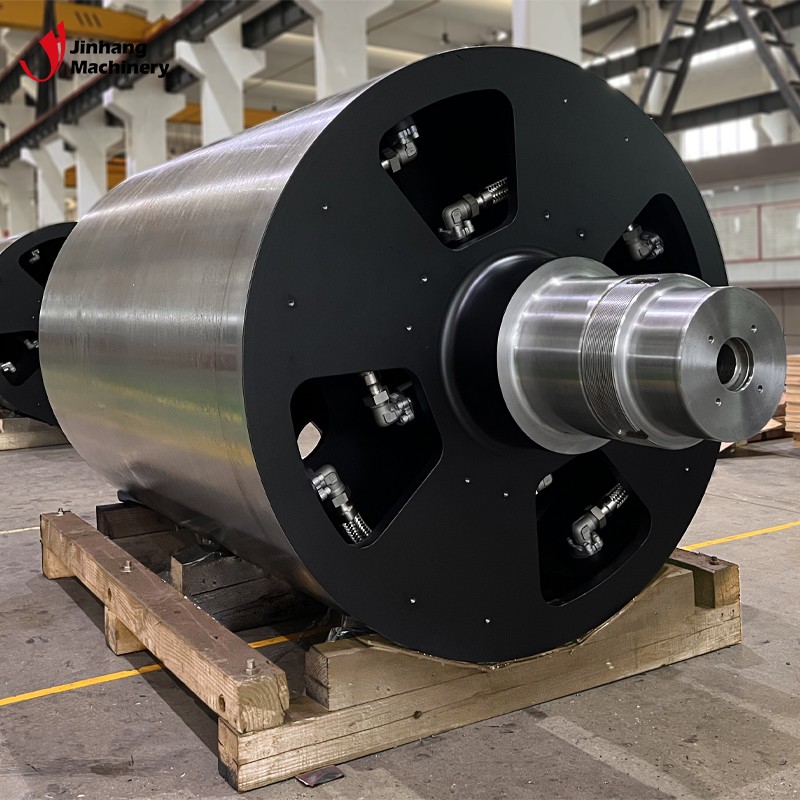
Why choose heat transfer oil instead of steam for industrial hot oil rollers?
Many industrial devices used to use steam rollers for heating, but with continuous upgrades in production processes, industrial hot oil rollers have gradually replaced some steam systems.
First, heat transfer oil can achieve higher temperatures. Ordinary saturated steam requires high pressure to reach temperatures above 200℃, while industrial hot oil rollers using heat transfer oil can achieve stable heating of 250℃ or even above 300℃ under normal or low pressure conditions.
Second, industrial oil-guided heating rollers offer more uniform temperature. Due to the stable circulation speed of the heat transfer oil, coupled with the internal spiral flow channel design, the temperature difference across the entire roller surface can be controlled within ±1℃ to ±2℃, and high-end equipment can even control it to around ±0.5℃.
Furthermore, industrial oil-guided heating rollers offer more precise temperature control. Modern heat transfer oil systems are typically equipped with PLC automatic control and PID temperature control systems, enabling continuous temperature regulation and avoiding the large temperature fluctuations associated with steam systems.
Based on industry experience, under the same production conditions, using industrial oil-guided heating rollers can improve the thickness uniformity of some film products by more than 10%, increase product yield by 3% to 8%, and reduce energy consumption by approximately 10% to 20%.
How to Choose the Right Heat Transfer Oil for Industrial Oil-Guided Heating Rollers?
When selecting heat transfer oil for industrial oil-guided heating rollers, companies should consider multiple technical indicators comprehensively, rather than focusing solely on price.
First, the heat transfer oil should be selected based on the maximum operating temperature. If the long-term operating temperature of the industrial oil-guided heating roller is around 200℃, ordinary mineral-based heat transfer oil is sufficient; if the long-term operating temperature exceeds 300℃, it is recommended to prioritize high-performance synthetic heat transfer oil.
Second, pay attention to thermal conductivity and specific heat capacity. Better thermal conductivity results in faster heating and more uniform temperature distribution, effectively improving production efficiency.
Third, consider thermal stability and oxidation resistance. High-quality heat transfer oil can maintain stable performance over a long period, reducing coking and carbon buildup, and extending the service life of the industrial hot oil roller.
In addition, attention should be paid to indicators such as low-temperature fluidity, flash point, pour point, evaporation loss rate, and environmental performance to ensure the long-term safe and stable operation of the entire industrial oil-conducting heating roller system.
How to maintain the heat transfer oil during the use of industrial oil-conducting heating rollers?
Although heat transfer oil is a long-term service medium, it is not permanently exempt from replacement.
Under normal circumstances, the color, viscosity, acid value, and residual carbon content of the heat transfer oil should be tested regularly. If a significant darkening of the color, an increase in viscosity, or the presence of a large amount of deposits are observed, the oil should be tested promptly.
Many companies conduct a professional analysis of the heat transfer oil every 6,000 to 12,000 hours, deciding whether to continue using it or replace it based on the test results.
At the same time, the industrial oil-conducting heating roller system should be kept well-sealed to prevent air from entering the oil circuit. Oxygen in the air will accelerate the oxidation of the heat transfer oil, leading to a shortened lifespan.
Furthermore, the filter and circulation pipeline should be cleaned regularly to prevent carbon buildup and blockage, which would affect the heat exchange efficiency of the industrial oil-conducting heating roller.
FAQ: Frequently Asked Questions about Industrial Oil-Conducting Heating Rollers
1. Can hydraulic oil be used instead of heat transfer oil in industrial hot oil rollers?
No. The high-temperature resistance and thermal stability of hydraulic oil are far lower than those of heat transfer oil. At the operating temperature of industrial oil-conducting heating rollers, it is prone to oxidation, coking, and even damage to the entire circulation system.
2. How often should the heat transfer oil in industrial hot oil rollers be changed?
The specific replacement cycle depends on the operating temperature, operating time, and heat transfer oil quality. It is generally recommended to test every 6,000 to 12,000 hours and decide whether to replace the oil based on the test results, rather than simply replacing it according to time.
3. What is the difference between mineral-based and synthetic heat transfer oils?
Mineral-based heat transfer oils are less expensive and suitable for operating conditions below approximately 300°C; synthetic heat transfer oils have higher thermal stability and a longer service life, making them more suitable for industrial oil-conducting heating roller systems that operate at long-term high temperatures.
4. Why can industrial hot oil rollers achieve uniform heating?
Industrial oil-conducting heating rollers employ a spiral or multi-channel flow structure internally. The heat transfer oil flows continuously under the action of a circulating pump, evenly distributing heat throughout the roller body, thus effectively controlling the temperature difference on the roller surface.
5. How to determine if the heat transfer oil in an industrial hot oil roller has aged?
If the heat transfer oil is found to have a significantly darker color, an abnormal odor, increased viscosity, elevated acid value, or decreased system heat exchange efficiency, it may indicate that the heat transfer oil has aged and should be professionally tested and treated promptly.