
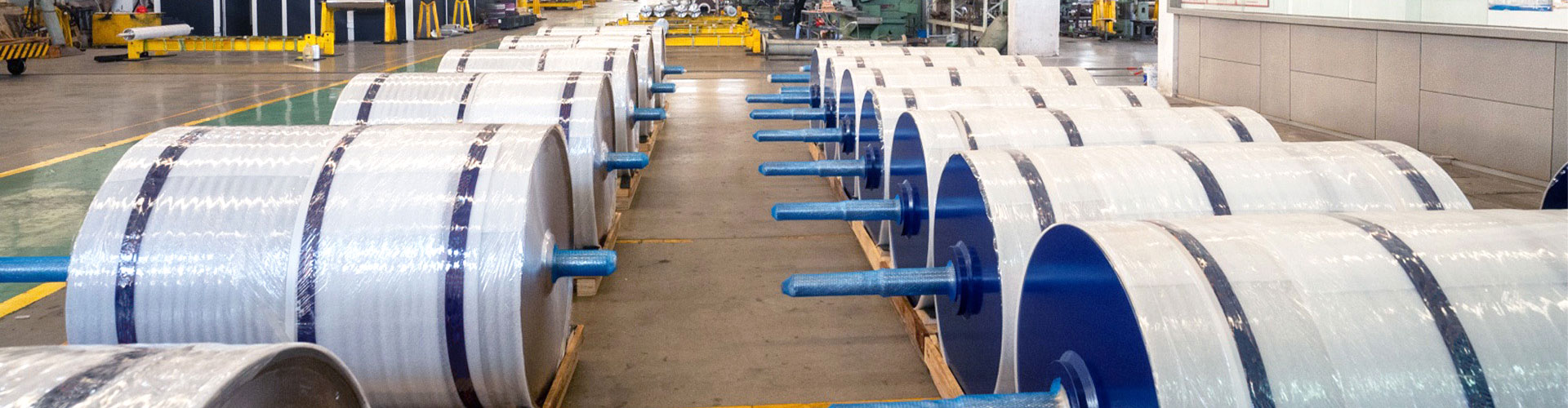
In the field of industrial rubber roller applications, the surface condition of the roller often directly determines equipment operating efficiency and the quality of the final product. Whether in printing, papermaking, textiles, steel processing, packaging, coating, or new energy manufacturing, rubber rollers perform critical functions such as material transport, pressing, tension control, coating transfer, and surface treatment. Among the various industrial rubber materials available, EPDM rubber rollers are widely used in environments involving high temperatures, high humidity, steam, and certain chemical media due to their excellent weather resistance, ozone resistance, heat resistance, and chemical stability. They demonstrate particularly stable performance compared to natural rubber or some general-purpose synthetic rubber rollers, especially on production lines requiring long-term exposure to hot air, ozone, or water vapor.
However, despite their outstanding overall performance, EPDM rubber rollers are not immune to aging or damage. Over time, issues such as wear, cracking, scratching, localized debonding, hardening, pitting, blistering, or even coating delamination may appear on the roller surface. For enterprises, surface damage leads directly to a decline in product quality—manifesting as uneven coating, increased indentation marks, abnormal tension, drive slippage, or even total production line downtime. Consequently, maintenance personnel and procurement managers often ask: Can the coating of an EPDM rubber roller be repaired? And if so, how?
While the question seems simple, the answer is not a straightforward "yes" or "no." The feasibility of repairing an EPDM rubber roller depends on several factors, including the type and depth of the damage, the condition of the roller core, the extent of rubber aging, and the cost of repair. Some rollers can be restored to service with simple localized patching and regrinding; others, however, may have compromised internal structures despite seemingly minor surface damage, making repair efforts counterproductive. Therefore, when faced with damaged EPDM rubber rollers, enterprises should adopt a sound assessment and repair strategy rather than blindly attempting repairs or immediately scrapping the rollers. This article provides a comprehensive analysis of the topic "Can EPDM rubber roller coatings be repaired? How?" by examining material properties, common types of damage, criteria for assessing repairability, specific repair processes, and preventive measures, helping you fully understand the logic behind EPDM rubber roller repair.
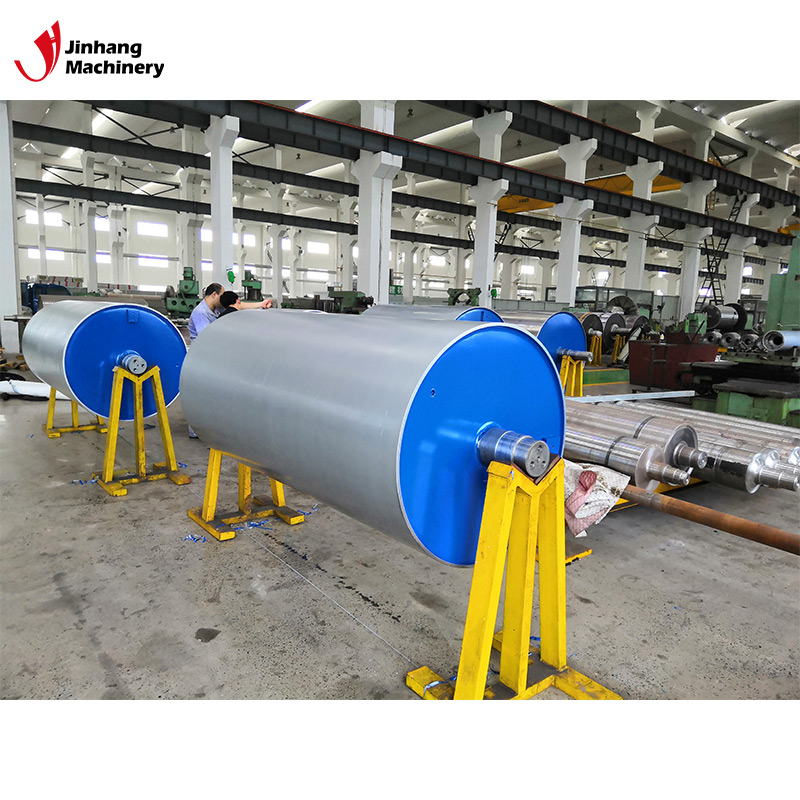
What is an EPDM rubber roller? Why does its coating get damaged?
EPDM stands for Ethylene Propylene Diene Monomer rubber. The defining characteristic of EPDM rubber is that its molecular backbone contains almost no double bonds, granting it exceptional resistance to oxidation, ozone, and ultraviolet (UV) radiation. Compared to many general-purpose rubber materials, EPDM rubber rollers exhibit a slower rate of performance degradation when exposed to long-term hot-air environments.
A typical EPDM rubber roller consists of three components: a metal core, a bonding layer, and an outer EPDM rubber coating. The metal core provides structural support and torque transmission; the bonding layer ensures a secure bond between the rubber and the metal; and the outer EPDM rubber coating makes direct contact with the material and performs the operational function.
Although EPDM rubber rollers possess excellent weather and heat resistance, they remain susceptible to the following factors:
•Prolonged mechanical friction
•Aging due to continuous high temperatures
•Chemical erosion
•Overload compression
•Scratches from sharp foreign objects
•Cyclic fatigue stress
These factors gradually lead to a decline in the surface performance of the EPDM rubber roller.
Industry data indicates that under normal industrial operating conditions, the average service life of an EPDM rubber roller is typically 2 to 6 years. In high-temperature steam environments—specifically where long-term operating temperatures exceed 120°C and pressures are high—the service life may be reduced to 1.5 to 3 years. This means that even high-performance EPDM rubber rollers are subject to aging and damage over time.
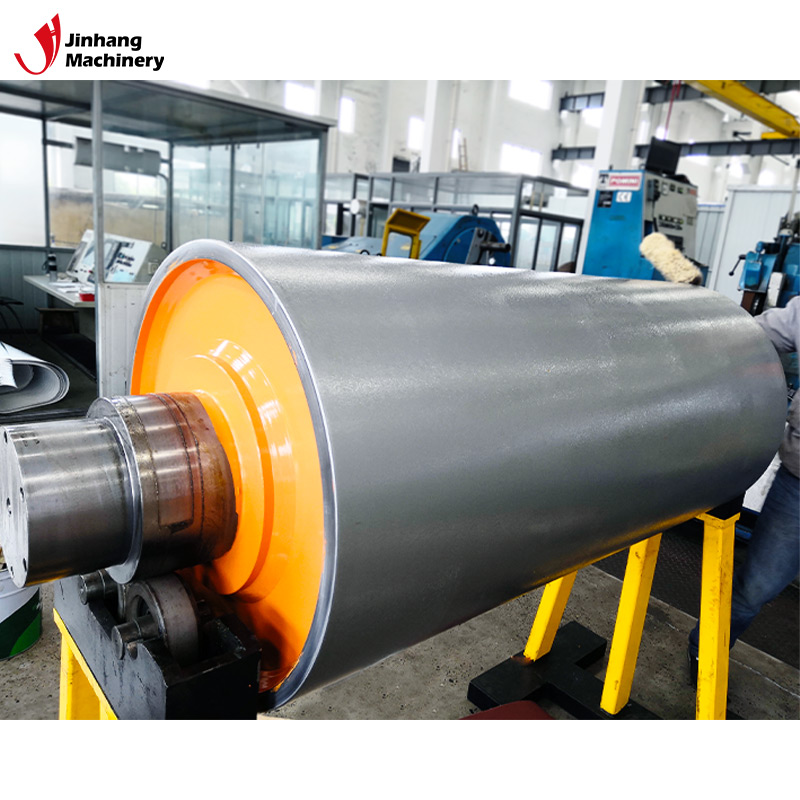
Which types of EPDM rubber roller damage can be repaired?
This is the first step in determining whether repair is a viable option.
Not all damaged EPDM rubber rollers are worth repairing. Generally speaking, repairable damage is primarily limited to the surface layer, whereas irreparable cases often involve structural failure.
Common repairable damages include:
•Mild surface wear
•Localized shallow scratches
•Small nicks or gouges
•Minor pitting
•Minor surface hardening
•Localized, mild debonding
For example, if an EPDM rubber roller shows only 0.2–1 mm of surface wear and the core structure remains intact, it can usually be restored to service through surface patching, re-covering, or grinding.
Common situations where repair is impossible or not cost-effective include:
•Extensive deep cracking
•Severe corrosion of the roller core
•Widespread debonding
•Severe embrittlement of the rubber layer
•Failure of the internal bond
•Significant deformation of the roller body
For instance, if the internal bonding layer of an EPDM rubber roller fails, the rubber may quickly peel off again even after the surface is patched.
Therefore, the key to repairing EPDM rubber rollers is not just assessing "how bad the surface looks," but determining whether the damage has penetrated the structural layers.
How do you determine if an EPDM rubber roller is worth repairing?
Enterprises can generally evaluate whether an EPDM rubber roller is worth repairing based on four dimensions.
First, consider the remaining thickness of the rubber layer. Most industrial EPDM rubber rollers have an initial rubber layer thickness of approximately 6–25 mm. If the remaining layer is too thin—for example, less than 2 mm—there is limited scope for repair.
Second, look at changes in hardness. EPDM rubber rollers gradually harden due to long-term aging. Normal hardness typically ranges from 50 to 90 Shore A. If the hardness deviates from the design specification by more than 10–15 Shore A, it usually indicates severe material aging.
Third, assess the condition of the roller core. If the core exhibits rust, eccentricity, deformation, or damage to the bearing seats, repair costs will increase significantly.
Fourth, compare the repair cost to the price of a new roller. Common industry benchmarks are:
•Repair cost < 50% of new roller price → Usually worth repairing
•Repair cost > 70% of new roller price → Usually better to replace
This serves as a practical economic guideline.
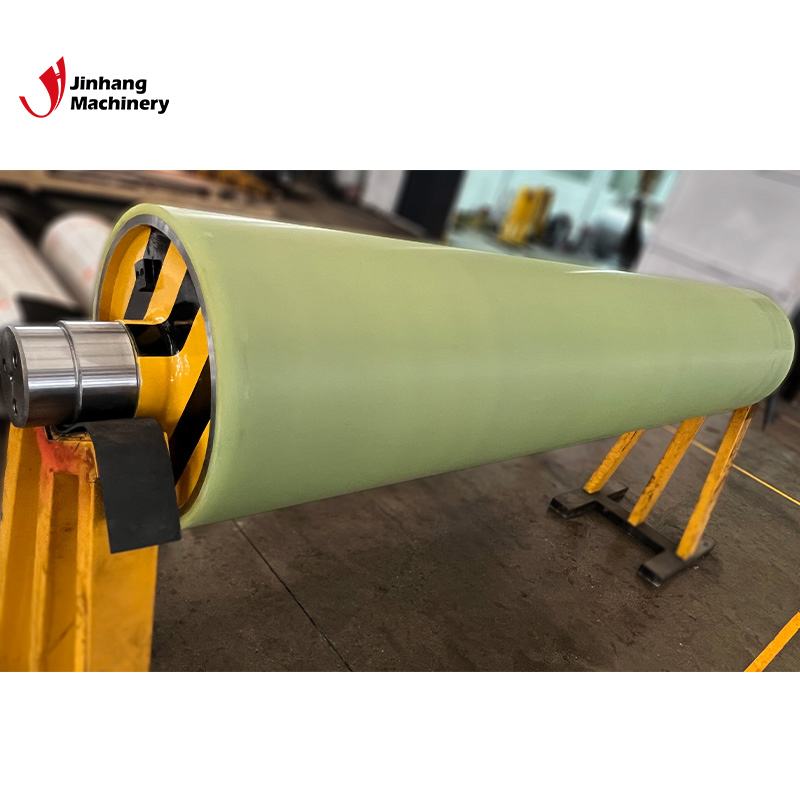
What are the common repair methods for EPDM rubber rollers?
There is no single method for repairing EPDM rubber rollers; different solutions are applied depending on the severity of the damage.
Surface Grinding and Refinishing: Suitable for Minor Damage
If an EPDM rubber roller has only minor surface scratches, localized wear, or shallow indentations, grinding is the most common repair method.
Grinding and refinishing typically involve:
•Cleaning the roller surface
•Inspecting the damaged area
•Precision grinding/turning
•Surface refinishing
•Dynamic balancing
Removing the damaged surface layer restores the EPDM roller's roundness and surface uniformity.
This method is suitable for shallow damage; it is the most cost-effective approach and usually has the shortest turnaround time, potentially taking anywhere from a few hours to a single day.
However, a drawback is that each grinding operation reduces the thickness of the EPDM rubber layer, meaning the process cannot be repeated indefinitely.
Localized Rubber Patching: Suitable for Localized Gouges
Localized patching is an option when the EPDM roller surface exhibits localized gouges, pits, or small areas of rubber detachment.
The repair process typically involves:
•Removing the damaged area
•Surface roughening
•Applying adhesive
•Filling with EPDM repair material
•Heat vulcanization/curing
•Grinding and shaping
This method is suitable for localized damage but demands high technical precision.
The repaired area must match the original rubber layer as closely as possible in terms of hardness, elasticity, and bond strength; otherwise, localized stress concentrations may occur after repair.
Re-covering: Suitable for Moderate to Severe Damage
This is the most common and comprehensive repair method.
For EPDM rollers with moderate to severe damage, many repair facilities recommend re-covering the roller entirely rather than attempting localized repairs.
The re-covering process typically involves:
1.Removing the old EPDM rubber layer
2.Inspecting the roller core
3.Sandblasting the core to roughen the surface
4.Applying the bonding system
5.Applying new EPDM rubber
6.Vulcanization and molding
7.Grinding and machining
8.Dynamic balancing
After re-covering, the EPDM roller's performance can typically be restored to 85%–98% of that of a new roller.
This is a highly economical solution for large, high-value EPDM rollers.
Roller Core Refurbishment + Re-covering: Suitable for Older Equipment
If an EPDM rubber roller has issues with the core in addition to damage to the rubber layer, a more comprehensive repair is required.
Examples include:
•Core corrosion
•Core wear
•Shaft end damage
•Coaxiality deviation
In such cases, the metal structure must be repaired before the roller is re-covered with rubber.
While this approach is the most expensive, it can still be more cost-effective than purchasing a new unit, especially for large, custom-made EPDM rubber rollers.
Does the performance of an EPDM rubber roller decline after repair?
It depends on the repair method.
If only a simple localized patch repair is performed, the performance of the repaired area may not fully match the original rubber layer; the service life may be shortened, particularly in high-dynamic-load environments.
However, if a complete re-covering process is used, a high-quality repair can typically restore the EPDM rubber roller's performance to over 90% of that of a new roller.
Key factors include:
•Consistency of the EPDM formulation
•Bonding process
•Vulcanization quality
•Precision of the finishing process
EPDM rubber rollers repaired by high-standard facilities often achieve an actual service life of 70% to 100% that of a new roller.
How can the service life of EPDM rubber rollers be extended and the frequency of repairs reduced?
Prevention is always more cost-effective than repair.
To extend the service life of EPDM rubber rollers, it is recommended to focus on controlling the following factors:
1. Control operating temperatures
Although EPDM rubber rollers have good heat resistance, prolonged exposure to excessive temperatures accelerates aging.
For instance, the rate of EPDM aging increases significantly when temperatures consistently exceed 150°C.
2. Avoid misuse of chemical media
EPDM rubber rollers are suitable for water, steam, and certain polar media, but they have poor resistance to mineral oils and some hydrocarbons.
Exposure to incompatible media can cause swelling or softening.
3. Minimize contact with sharp foreign objects
Sharp foreign objects, such as metal chips or glass fragments, can easily scratch the surface of EPDM rubber rollers.
Implementing cleanliness management protocols is crucial. 4. Periodic Inspections
Regular inspections are recommended for:
•Hardness
•Roundness
•Surface cracks
•Bonding integrity
Early detection of issues can significantly reduce repair costs.
FAQ
Q1: Can an EPDM rubber roller be repaired if it cracks?
Surface-level cracks can usually be repaired, whereas deep structural cracks are generally not worth repairing.
Q2: How long does a repaired EPDM rubber roller last?
A high-quality repair can typically achieve 70% to 100% of the lifespan of a new roller.
Q3: Can I repair the EPDM rubber roller myself?
This is not recommended. Repairing industrial EPDM rubber rollers typically requires specialized equipment and a vulcanization process.
Q4: When should an EPDM rubber roller be replaced instead of repaired?
Replacement is usually recommended when the roller core is severely damaged or when the repair cost approaches the price of a new roller.