
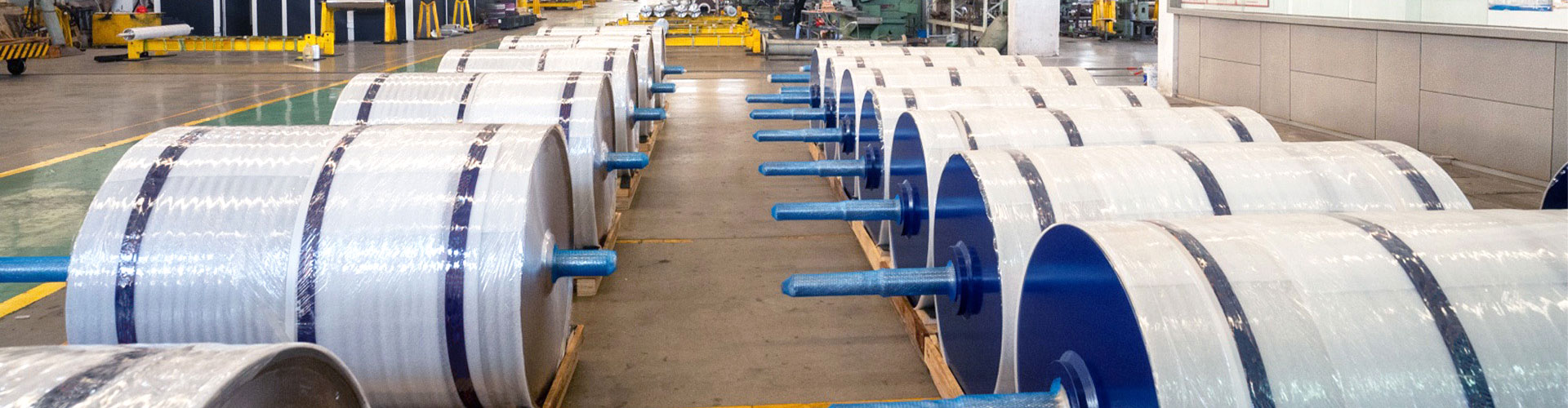
In the manufacturing industries for plastic films, optical films, lithium-ion battery separators, packaging films, functional films, and polymer materials, production equipment typically consists of several process modules: extrusion systems, die systems, cooling systems, haul-off (traction) systems, corona treatment systems, and winding systems. Among these, procurement personnel, equipment engineers, and even some production managers new to film equipment often ask a common question: At which stage are industrial cooling rollers installed, and what function do they actually serve?
In reality, industrial cooling rollers are not merely standard conveyor rollers; they are critical core components of the entire film production line that determine product dimensional stability, thickness uniformity, transparency, surface quality, and suitability for downstream processing. It is fair to say that the ability of a high-quality film production line to consistently produce high-quality products is inextricably linked to the design, installation location, cooling efficiency, and manufacturing precision of the industrial chill rollers.
In recent years, the rapid development of industries such as new energy, electronic materials, high-barrier packaging, and optical displays has led to stricter requirements for film flatness, thickness tolerance, surface finish, and shrinkage rates. This has further elevated the importance of industrial chill rollers. This article provides a comprehensive analysis covering the installation location, working principle, application value, layout configurations across different processes, and selection considerations for industrial cooling rollers, helping enterprises gain a deeper understanding of their pivotal role in modern film manufacturing.
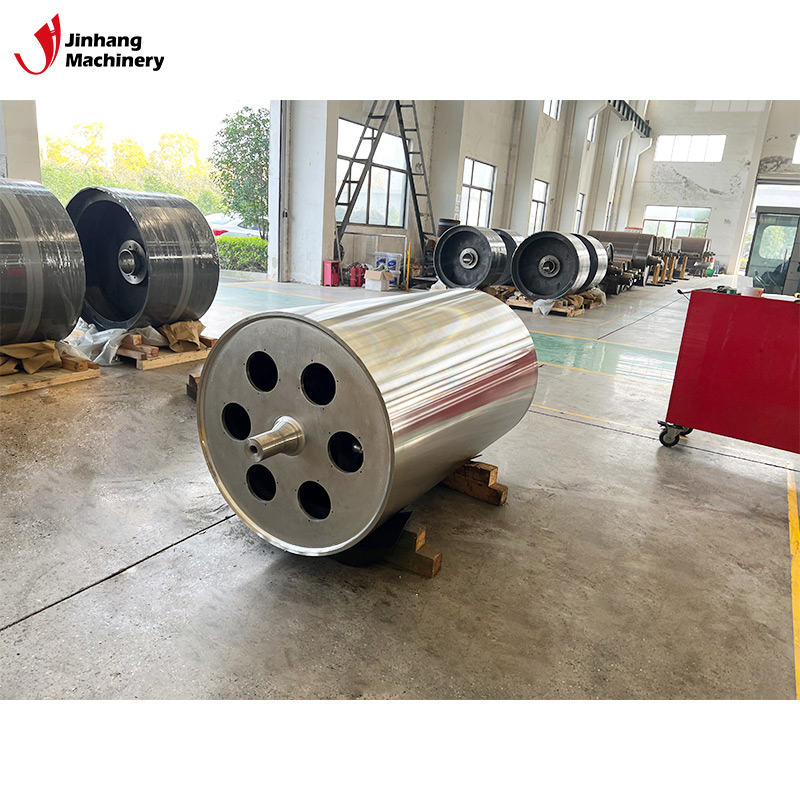
What is an industrial cooling roller? Why is it essential for film production?
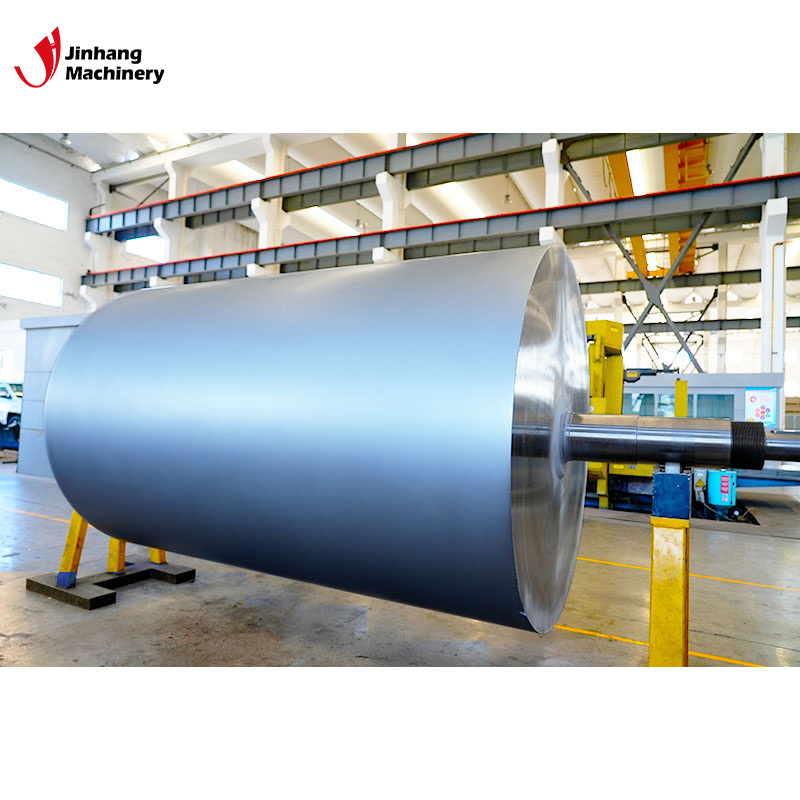
An industrial cooling roller—also commonly referred to as a cooling roller or cooling drum—is a high-precision roller device with an internal circulation system for a cooling medium (typically cooling water or a constant-temperature circulating fluid). Its primary function is to extract heat in a uniform, rapid, and controlled manner from the high-temperature molten film as it exits the die, thereby enabling the film to quickly set and cool.
After plastic raw materials are heated and plasticized in the extruder, the melt temperature typically ranges from 180°C to 320°C, depending on the specific material. For instance, the processing temperature for PE film generally ranges from 180°C to 240°C, while PP materials require approximately 220°C to 280°C, and PET materials may exceed 270°C. If the molten film is not cooled promptly after exiting the die, it can lead to dimensional changes as well as issues such as stretching deformation, thickness fluctuations, an increase in gel particles (fish-eyes), loss of surface gloss, and unstable winding.
Industrial cooling rollers play a crucial role at this critical stage. Utilizing an internal circulating cooling system and a highly thermally conductive metal roller body, they rapidly absorb heat from the melt, quickly lowering the material's temperature to a range suitable for subsequent hauling and winding. In cast film production, for example, industrial cooling rollers can typically cool the freshly extruded, high-temperature melt to between 40°C and 80°C in a very short time, creating stable conditions for downstream processes.
It is fair to say that without industrial cooling rollers, continuous and stable production on modern high-speed film lines would be virtually impossible; they are indispensable equipment, particularly in the manufacture of high-clarity, high-flatness, and high-precision films.
At what stage of the manufacturing process are industrial cooling rollers installed?
For most film production equipment, industrial cooling rollers are not installed at the end of the line; instead, they occupy a vital position at the very beginning of the process flow.
A typical cast film production process includes: raw material conveying → extrusion and plasticization → melt filtration → T-die → industrial cooling roller → haul-off system → corona treatment → slitting and winding.
Thus, industrial chill rollers are typically installed after the die and before the haul-off system; the molten film makes contact with the roller's surface the moment it exits the die. This placement is not accidental but represents an optimal solution established through extensive process validation.
As the molten film exits the die, it retains high fluidity; without immediate contact with the chill roller, the material would undergo thickness variations and dimensional fluctuations due to gravity, air turbulence, and the release of internal stresses. By utilizing a mirror-finish surface and high cooling efficiency, the industrial cooling roller ensures the melt adheres rapidly and undergoes initial setting, thereby guaranteeing greater thickness uniformity across the entire width of the film. On high-speed production lines, this process typically occurs in less than a second. For instance, on a cast film line running at 500 meters per minute, it takes only tens of milliseconds for the melt to travel from the die exit to contact with the industrial cooling roller. Consequently, the industrial cooling roller serves not merely as a cooling device but performs multiple functions, including shaping, calendering, dimensional stabilization, and surface quality control.
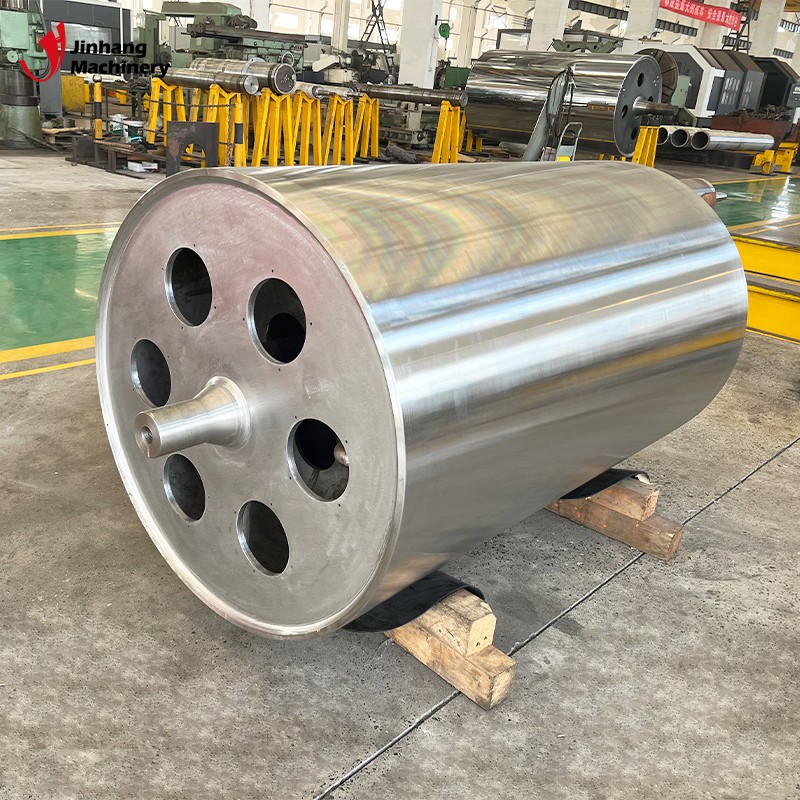
Do industrial chill rollers have the same installation configuration across different film production processes?
Although industrial cooling rollers are generally installed downstream of the die, there are distinct differences in their arrangement depending on the production process.
1. Industrial Cooling Rollers in Cast Film Production Lines
The casting process is one of the most common applications for industrial chill rollers. After molten plastic flows evenly out of a T-die, it adheres directly to the surface of a high-speed rotating industrial cooling roller. Rapid cooling allows the film to quickly achieve a stable thickness, making the casting process particularly suitable for producing transparent films, packaging films, protective films, and optical films.
Many high-end cast film lines utilize a cooling system comprising a main cooling roller paired with auxiliary rollers; this setup allows the film to cool gradually across multiple contact points, thereby enhancing dimensional stability and production efficiency.
2. Industrial Cooling Rollers in BOPP and BOPET Biaxially Oriented Film Lines
Biaxial orientation processes also rely heavily on industrial cooling rollers. The melt first passes over an industrial chill roller to form a thick sheet before entering the longitudinal and transverse stretching systems. Uneven cooling by the roller can lead to issues during subsequent stretching—such as thickness deviations, film breakage, and degraded optical properties. Therefore, high-end biaxial orientation equipment typically employs high-precision mirror-finish industrial chill rollers equipped with automatic temperature control systems.
3. Industrial Cooling Rollers in Lithium-Ion Battery Separator Production
The new energy industry imposes more stringent requirements on industrial chill rollers. Lithium-ion battery separators are typically only 5 to 20 microns thick, meaning even minute temperature fluctuations can result in thickness variations. Therefore, production lines for lithium-ion battery separators typically employ constant-temperature industrial cooling rollers, controlling the temperature variation across the roller surface to within ±1°C (or even tighter tolerances) to ensure product consistency.
How do industrial cooling rollers affect film quality?
Many enterprises mistakenly believe that industrial cooling rollers serve only to lower the temperature; however, this view is incomplete. Industrial chill rollers influence at least the following key parameters:
First is thickness uniformity. As the polymer melt cools, flow velocities vary; the more uniform the cooling, the more stable the thickness control. Modern, high-end industrial cooling rollers often feature designs such as spiral flow channels, multi-channel circulation, or double-spiral internal cavities. These designs keep the roller surface temperature variation within ±1°C, effectively minimizing transverse thickness deviation.
Second is surface finish. Industrial chill roller surfaces typically undergo precision grinding and mirror polishing, achieving a surface roughness (Ra) of 0.01–0.05 μm. A high-quality finish is directly replicated onto the film surface, resulting in superior transparency and gloss.
Third is dimensional stability. Insufficient cooling rates can lead to high levels of residual internal stress in the material, making the film prone to thermal shrinkage, warping, and curling during subsequent processing. Rapid, uniform cooling effectively reduces residual stress and enhances dimensional stability.
Additionally, industrial chill rollers influence crystalline structure. For semi-crystalline materials like PET and PP, varying cooling rates alter crystal grain size, thereby affecting transparency, mechanical properties, and heat resistance. Consequently, industrial chill rollers serve as vital equipment for regulating the material's microstructure.
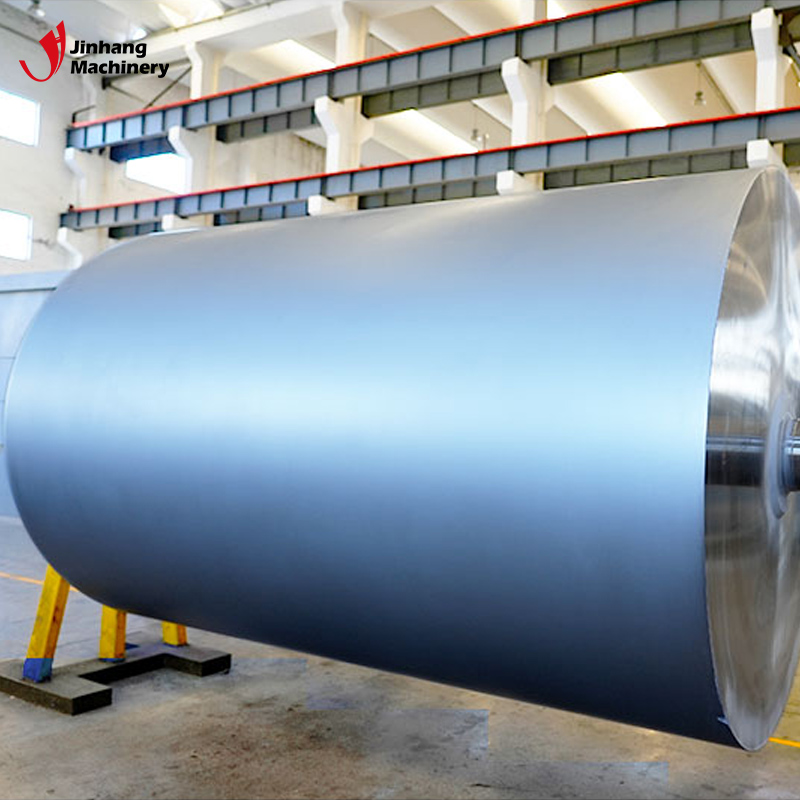
What types of industrial cooling rollers are available, and how should materials be selected?
Current market offerings primarily utilize high-strength steel, stainless steel, or special alloys as the base material, with roller surfaces subjected to various treatments tailored to specific application requirements.
Mirror-finish chrome-plated industrial cooling rollers are the most widely used type. Hard chrome plating combined with mirror polishing enhances wear resistance while ensuring an exceptionally smooth surface finish, making them ideal for products such as optical films and high-clarity packaging films. For production environments requiring high corrosion resistance, stainless steel industrial cooling rollers offer superior performance and are widely used in the manufacture of food packaging films, medical films, and certain functional films.
Some high-end industrial cooling rollers feature special ceramic or wear-resistant composite coatings to further enhance wear resistance and extend service life, making them suitable for high-speed continuous production lines.
How do you evaluate the performance of an industrial cooling roller?
When evaluating industrial cooling rollers, one should look beyond price and consider factors such as manufacturing precision, cooling efficiency, and long-term stability.
First, consider the precision of the roller surface. High-quality industrial chill rollers typically require radial runout to be controlled within 0.01 mm, with high-end units achieving levels as low as 0.005 mm.
Second is dynamic balance. Modern high-speed production lines generally operate at speeds exceeding 300 m/min, with some reaching 800 m/min or higher. Poor dynamic balance in the cooling roller causes vibration, which compromises product quality.
Third is the internal flow channel design. Superior industrial chill rollers ensure uniform cooling and prevent the formation of localized hot spots, thereby maintaining consistent temperature across the entire roller surface.
Finally, consider the surface treatment process. The surface hardness of industrial chill rollers typically exceeds HRC60, ensuring wear resistance while maintaining a mirror-like finish over the long term.
Industry experience shows that high-quality industrial cooling rollers can achieve a continuous service life of 5 to 10 years or more with proper maintenance; furthermore, high-quality chrome plating and optimized flow channel designs significantly reduce maintenance costs and downtime.
FAQ: Common questions about industrial cooling rollers
1. Where are industrial cooling rollers typically installed on a film production line?
Industrial cooling rollers are usually installed after the T-die and before the haul-off system. They are the first critical piece of equipment the molten film contacts after exiting the die, serving primarily to rapidly cool and initially set the film.
2. What is the difference between an industrial chill roller and a standard guide roller?
Standard guide rollers are primarily responsible for conveying and guiding the material. In contrast, industrial chill rollers feature an internal circulating cooling system that rapidly dissipates heat from the film, while also performing functions such as setting, calendering, and enhancing surface quality.
3. Why do industrial chill rollers require a mirror finish?
Mirror-finish industrial chill rollers reduce surface roughness on films, enhancing transparency and gloss while minimizing scratches and indentations; this is particularly critical for high-end products such as optical films, packaging films, and lithium-ion battery separators.
4. Do industrial chill rollers require regular maintenance?
Yes. Regular inspections are recommended to monitor roller surface wear, the flow of the circulating water system, bearing performance, and dynamic balance. Additionally, keeping the roller surface clean is essential to ensure long-term, stable operation.
5. How do you select the right industrial chill roller?
Enterprises should make their selection based on a comprehensive assessment of factors—such as film material type, production speed, product precision requirements, roller width, cooling capacity, and budget—rather than simply prioritizing a low price. For high-speed, high-precision production lines, it is advisable to prioritize high-precision mirror-finish rollers and to carefully evaluate the roller body material, surface treatment process, temperature control system, and the manufacturer's technical capabilities.